You can stop your rabbit from licking its stitches by wrapping the incision site with a gauze pad and vet wrap, using a soft Elizabethan collar, or fitting your rabbit with a specially designed rabbit diaper. The best approach depends on where the stitches are located and how aggressively your rabbit is licking. Before trying any of these methods, contact your veterinarian first, because excessive licking often signals a problem with pain management or the surgical wound itself.
Post-surgical care is one of the most stressful parts of rabbit ownership. You just watched your rabbit go through a major procedure, and now you need to keep them from undoing all the veterinarian's work. In this guide, we cover why rabbits lick their stitches, every method available to stop it, and the warning signs that something more serious is going on.
Why Do Rabbits Lick Their Stitches?
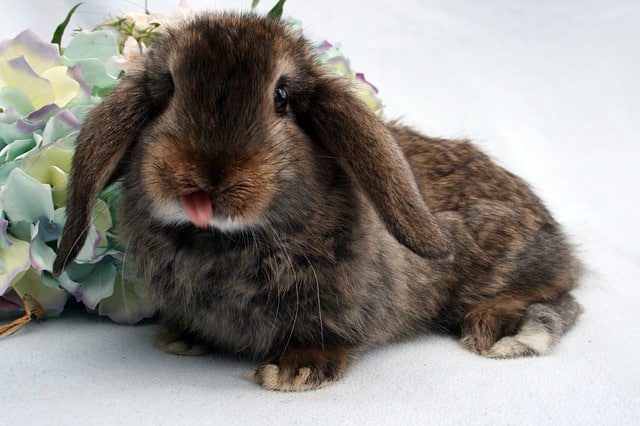
Licking a wound is a natural instinct for rabbits. When they feel pain, irritation, or discomfort in a specific area, their first response is to groom that spot. After surgery, the incision site is sore, itchy, and foreign-feeling, so your rabbit will instinctively try to "clean" it by licking.
A small amount of licking is normal and generally harmless. The problem starts when your rabbit licks obsessively, pulls at the sutures, or chews at the wound. This level of interference can reopen the incision, introduce bacteria, and delay healing significantly.
Common Reasons for Excessive Licking
Not all stitch-licking is created equal. If your rabbit is licking occasionally and gently, that is typical post-surgical behavior. But if your rabbit is fixated on the wound, licking for extended periods, or actively pulling at the sutures, there is likely an underlying cause.
According to the House Rabbit Society, excessive licking of surgical wounds is most commonly caused by:
- Inadequate pain medication: If the pain relief wears off too quickly or the dosage is too low, your rabbit will lick the area in response to unmanaged pain.
- Poor surgical technique: Sutures that are too tight, improperly placed, or using the wrong material can cause extra irritation at the wound site.
- Wound infection: If bacteria enters the incision, the resulting inflammation and discomfort will drive your rabbit to lick more aggressively.
- Itching during healing: As the wound begins to heal, the skin around the sutures can become itchy. This is normal, but some rabbits respond to it more intensely than others.
- Stress or anxiety: Rabbits that are stressed after surgery may over-groom the wound area as a coping mechanism.
The key takeaway here is that excessive licking is a symptom, not just a behavior problem. Before reaching for an e-collar or bandage, call your veterinarian and discuss whether your rabbit's pain medication needs adjusting.
What Happens If Your Rabbit Licks Its Stitches?
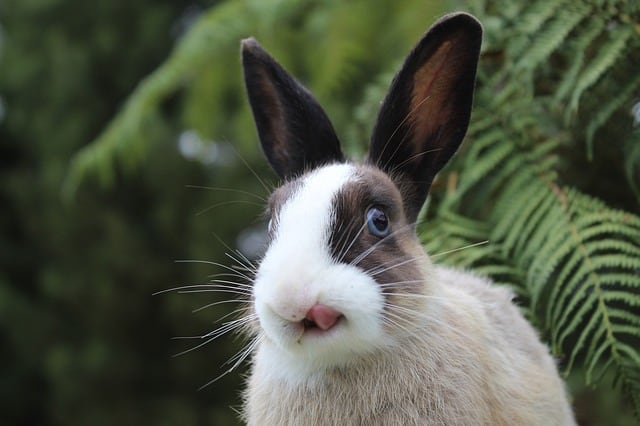
Letting your rabbit lick its stitches without any intervention can lead to several complications, some of which are serious enough to require a second surgery.
Reopened Incision
The most immediate risk is that your rabbit pulls out or loosens the sutures, causing the incision to reopen. This is called wound dehiscence. If it happens, your veterinarian will need to re-close the wound under anesthesia. Every time your rabbit goes under anesthesia, there is a small but real risk, so avoiding a second procedure is important.
Wound Infection
A rabbit's mouth contains bacteria that can enter the wound through persistent licking. Signs of wound infection include redness that spreads beyond the incision line, swelling, warmth around the area, and discharge that is yellow, green, or foul-smelling. If you notice any of these signs, contact your veterinarian immediately.
Antibiotic Ingestion
Your veterinarian may have applied a topical antibiotic to the wound site. If your rabbit licks this off, it can disrupt the balance of gut bacteria and cause antibiotic-associated diarrhea. This is particularly dangerous for rabbits because their digestive system relies on a delicate balance of gut flora.
According to the Textbook of Rabbit Medicine, the following topical antibiotics are generally considered safe if accidentally ingested by rabbits:
- Gentamicin
- Tobramycin
- Fluoroquinolones
- Metronidazole
- Chloramphenicol
Ask your veterinarian which antibiotic they used on the wound and whether it poses an ingestion risk. If they used something not on this list, preventing licking becomes even more critical.
Delayed Healing
Even if the sutures stay intact, constant licking keeps the wound moist and irritated, which slows the healing process. A wound that should close in 10 to 14 days can take significantly longer if your rabbit is constantly disturbing it.
How To Stop Your Rabbit From Licking Its Stitches
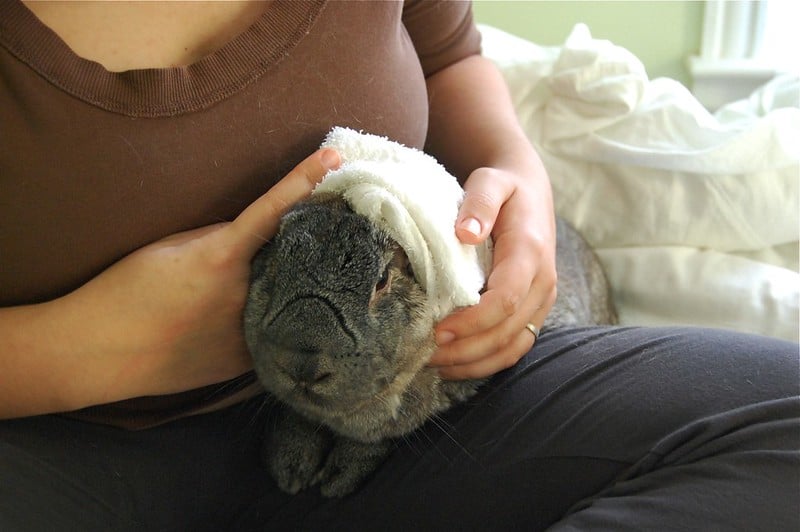
There are several methods to prevent your rabbit from accessing its stitches. Each has pros and cons, and the right choice depends on your rabbit's temperament, the location of the incision, and your veterinarian's recommendation.
Method 1: Gauze Pad and Vet Wrap
This is often the best first option because it is the least disruptive to your rabbit's normal behavior. Vet wrap (also called cohesive bandage) is a self-clinging bandage that sticks to itself without adhesive, so it will not pull on your rabbit's fur when removed.
How to apply it:
- Place a clean, sterile gauze pad directly over the incision site.
- Wrap the vet wrap around your rabbit's body to hold the gauze in place.
- Make sure the wrap is snug but not tight. You should be able to slide two fingers underneath it.
- Check the wrap every few hours to make sure it has not shifted or become too tight.
- Remove the wrap for 30 to 60 minutes at a time to let the wound breathe.
Important considerations: Do not leave the wrap on for extended periods without checking it. Wounds heal faster with air exposure, so use wrapping only when you cannot supervise your rabbit. Never wrap so tightly that it restricts breathing or blood flow. If your rabbit seems distressed, is breathing rapidly, or is not moving normally, remove the wrap immediately.
Method 2: Soft Elizabethan Collar
Elizabethan collars (e-collars or "cones of shame") are the standard solution for preventing wound access in most animals. However, rabbits are not most animals. Standard rigid e-collars can cause serious problems for rabbits because they prevent them from eating cecotropes, the soft droppings rabbits produce and re-ingest directly from their rear end. Cecotropes are essential for proper nutrition and digestion.
If your veterinarian recommends an e-collar, ask for or make a soft e-collar instead of a rigid plastic one. Soft collars made from foam or fabric are flexible enough that many rabbits can still reach their cecotropes and eat from a bowl normally.
The risks of using collars on rabbits are real. A rigid e-collar can cause your rabbit to become depressed and stop eating, which can trigger GI stasis, a life-threatening condition where the digestive system slows down or stops completely.
When to use an e-collar:
- When other methods have failed to prevent licking
- When the incision is in a location that cannot be wrapped (such as the face or ears)
- When your veterinarian specifically recommends it
- Only for short periods under supervision
When to avoid an e-collar:
- If your rabbit stops eating while wearing it
- If your rabbit shows signs of extreme stress or panic
- If your rabbit cannot drink water with it on
- If you notice your rabbit is not producing cecotropes or normal droppings
Method 3: Rabbit Diaper or Onesie
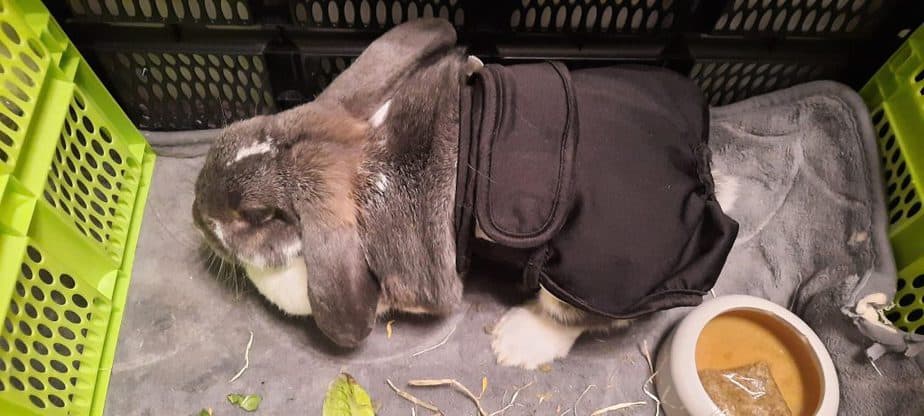
For abdominal incisions (common after spay or neuter surgery), a small rabbit diaper or a modified baby onesie can cover the wound while still allowing relatively normal movement. This method works well for rabbits that panic with e-collars but keep pulling off bandages.
Ask your veterinarian if they have rabbit-sized diapers available. Some veterinary clinics stock them specifically for post-surgical recovery. If not, you can modify a newborn-sized baby onesie by cutting a hole for the tail.
Keep in mind: Like e-collars, diapers can prevent your rabbit from eating cecotropes. Use them only when you cannot supervise your rabbit, and remove them regularly to let your rabbit groom normally and access its cecotropes.
Method 4: Distraction and Environmental Management
Sometimes the simplest approach works best. Keeping your rabbit distracted and comfortable can reduce the urge to lick the wound.
- Provide plenty of hay: A rabbit that is busy eating is not licking its stitches. Keep unlimited timothy hay within easy reach at all times.
- Offer safe chew toys: Willow sticks, apple wood, and untreated wooden blocks give your rabbit something to focus on.
- Sit with your rabbit: Your presence can be calming. Gentle petting (away from the surgical site) can redirect their attention.
- Keep the recovery area quiet: A calm, quiet environment reduces stress and the anxiety-driven licking that comes with it.
Post-Surgery Recovery: What To Expect Day by Day
Understanding the normal recovery timeline helps you know when licking is expected and when it signals a problem.
| Timeframe | What to Expect | Licking Concern Level |
|---|---|---|
| First 24 hours | Drowsiness, reduced appetite, minimal movement | Low (still under pain medication effects) |
| Days 2 to 3 | Appetite should return, more alert, may start noticing stitches | Medium (pain medication may be wearing off) |
| Days 4 to 7 | More active, wound beginning to heal, itching may increase | High (itching peaks during this period) |
| Days 7 to 10 | Wound mostly closed, activity levels returning to normal | Medium (healing itch subsiding) |
| Days 10 to 14 | Sutures ready for removal (if non-dissolvable), nearly healed | Low (wound no longer as irritating) |
If your rabbit is not eating after being spayed or neutered, this is a separate and serious concern that needs immediate veterinary attention. Appetite loss after surgery can lead to GI stasis within 12 to 24 hours.
When Should You Call Your Veterinarian?
According to the BSAVA Manual of Rabbit Medicine, you should contact your veterinarian if your rabbit is actively interfering with the surgical site. Beyond that, watch for these specific warning signs.
Call your vet immediately if you notice:
- Stitches that are visibly loose, pulled out, or missing
- The incision has opened, even partially
- Discharge from the wound that is colored or has an odor
- Redness or swelling that is spreading away from the incision line
- The wound area feels hot to the touch
- Your rabbit has stopped eating or drinking for more than 12 hours
- Your rabbit is hunched, grinding its teeth loudly, or pressing its belly to the ground (signs of severe pain)
- Diarrhea or absence of droppings after surgery
Teeth grinding in rabbits can mean two different things. Soft, gentle grinding (called purring) indicates contentment, while loud, forceful grinding signals pain. Learn how to tell the difference between rabbit purring and pain grinding so you can accurately assess your rabbit's comfort level after surgery.
How To Check Your Rabbit's Wound Properly
You should inspect the surgical site at least twice a day during the first week of recovery. Here is how to do it without causing additional stress.
- Wash your hands thoroughly before touching near the wound area.
- Place your rabbit on a clean towel on a flat surface. Do not hold your rabbit on its back, as this causes trance-like stress (tonic immobility).
- Gently part the fur around the incision site to get a clear view.
- Look for: intact sutures, clean wound edges that are coming together, minimal redness limited to the incision line itself, and no discharge.
- Compare to yesterday: The wound should look the same or slightly better each day. Any worsening is a reason to call your veterinarian.
Normal healing looks like: slight redness along the incision line (not spreading), dry wound edges, sutures intact, and the skin on either side of the incision gradually closing together. A thin scab forming along the incision is normal and should not be picked at or removed.
Can You Prepare Your Rabbit Before Surgery To Reduce Post-Op Licking?
Yes. Good preparation before surgery can make the recovery period smoother and may reduce how much your rabbit bothers its stitches.
- Choose an experienced rabbit veterinarian: Rabbits are exotic animals that require specialized surgical knowledge. A vet who regularly operates on rabbits will use appropriate suture materials and techniques that cause less irritation.
- Discuss pain management in advance: Ask your vet about their pain medication plan. Rabbits should receive pain relief before, during, and after surgery. Meloxicam (a non-steroidal anti-inflammatory) is commonly used for rabbits and can be continued at home for several days.
- Know what to feed your rabbit before and after surgery: Unlike cats and dogs, rabbits should not be fasted before surgery. Their digestive system needs to keep moving. Ask your vet for specific feeding instructions.
- Prepare a recovery area: Set up a clean, quiet space with low sides (no jumping required), fresh hay, water, and familiar items that smell like home.
- Have supplies ready: Buy gauze pads, vet wrap, and a soft e-collar before the surgery so you are prepared if your rabbit starts licking.
Frequently Asked Questions
How long does it take for rabbit stitches to heal?
Most rabbit surgical incisions heal within 10 to 14 days. Dissolvable sutures break down on their own during this period, while non-dissolvable sutures need to be removed by your veterinarian. Keep monitoring the wound and preventing excessive licking throughout the entire healing period.
Can I use a regular dog or cat e-collar on my rabbit?
Standard rigid e-collars designed for dogs and cats are not recommended for rabbits. They prevent rabbits from eating cecotropes, which are essential for nutrition and digestive health. Use a soft, flexible e-collar instead, and only under veterinary guidance. Monitor your rabbit's eating and droppings closely while the collar is on.
Is it normal for my rabbit to lick its stitches a little?
Occasional, gentle licking of the surgical area is a normal grooming response and usually not a concern. The problem arises when licking becomes persistent, aggressive, or when your rabbit starts pulling at the sutures. If you notice the licking escalating, intervene with one of the methods described above.
Should I use bitter spray to stop my rabbit from licking stitches?
No. Bitter apple spray and similar deterrents should never be applied near a surgical wound. These products can irritate the incision, introduce chemicals into an open wound, and cause additional discomfort. Stick to physical barriers like wraps, soft collars, or diapers instead.
My rabbit pulled out a stitch. What should I do?
Contact your veterinarian right away. A single missing stitch may not require re-suturing if the wound is mostly healed and the edges are staying together. However, if the incision is gaping open, bleeding, or showing signs of infection, your rabbit will likely need to be re-sutured under anesthesia. Do not try to close the wound yourself.
Cite this article:
Cite this article:
BunnySync (March 7, 2026) How To Stop Your Rabbit From Licking Stitches After Surgery. Retrieved from https://bunnysync.com/blog/how-to-stop-rabbit-from-licking-stitches.
"How To Stop Your Rabbit From Licking Stitches After Surgery." BunnySync - March 7, 2026, https://bunnysync.com/blog/how-to-stop-rabbit-from-licking-stitches