Caring for newborn rabbits (called kits) starts well before they arrive. If your doe is pregnant, your main jobs are to provide a warm nesting box, feed her high-quality pellets and unlimited hay, and then check the kits daily to confirm they are nursing. For wild newborn rabbits, the best thing you can do is leave them alone, because their mother returns only once or twice a day to feed them.
That said, newborn kit care does get more involved as the days and weeks go on. Below is a detailed, week-by-week guide covering everything from pre-birth preparation to weaning at 7 to 8 weeks old.
Should You Care for a Wild Newborn Rabbit?
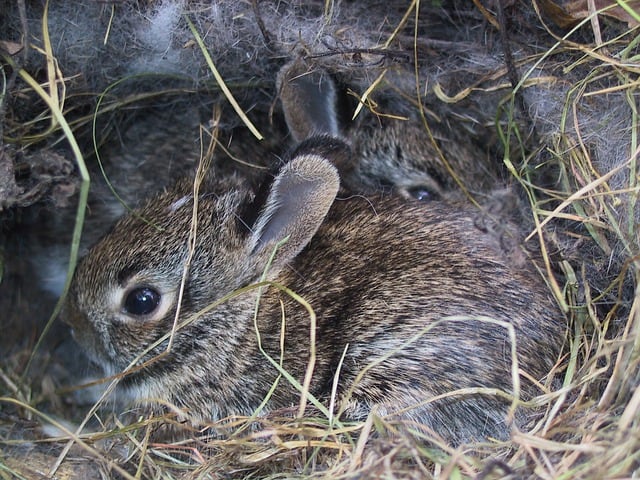
If you find a nest of baby rabbits outdoors, resist the urge to "rescue" them. Wild cottontail does leave their kits unattended for most of the day. They return at dawn and dusk to nurse, then leave again so their scent does not attract predators to the nest.
Here is how to tell if the kits actually need help:
- Healthy kits have round, full bellies, warm skin, and no visible injuries. Leave them where they are.
- Orphaned or injured kits appear thin, dehydrated, cold to the touch, or have open wounds. In this case, contact a licensed wildlife rehabilitator or your local veterinarian immediately.
According to the City Wildlife Foundation, fewer than 10% of orphaned wild rabbits survive in human care, even with expert help. Their digestive systems are extremely fragile, and they need their mother's milk for the antibodies that protect them from deadly infections like mucoid enteritis.
A simple test: lay two pieces of string in an "X" pattern over the nest. If the strings are disturbed by the next morning, the mother is returning. If the strings remain untouched for 24 hours, contact a wildlife professional.
Bottom line: Never attempt to raise wild rabbit kits yourself. Their survival rate is dramatically higher when their mother or a trained rehabilitator provides care. If you are interested in interacting with wild rabbits, read our guide on how to befriend a wild rabbit the right way.
What Supplies Do You Need Before Your Rabbit Gives Birth?
Preparation is everything. Rabbit pregnancies last about 28 to 33 days (average 31 days for most breeds), so you have roughly four weeks from confirmed breeding to gather supplies. Here is what you need:
| Supply | Purpose | Notes |
|---|---|---|
| Nesting box | Keeps kits warm and contained | Should be slightly larger than the doe |
| Bedding material | Insulation for the nest | Straw, grass hay, or shredded paper |
| High-quality pellets | Increased nutrition for late pregnancy and lactation | 16 to 18% protein recommended |
| Unlimited timothy or alfalfa hay | Fiber and nest-building material | Alfalfa preferred during lactation for extra calcium |
| Fresh water supply | Lactating does drink 2 to 3 times more water than normal | Check and refill twice daily |
| Kitchen scale | Weigh kits daily to track growth | Healthy kits gain weight every day |
How to Prepare the Nesting Box
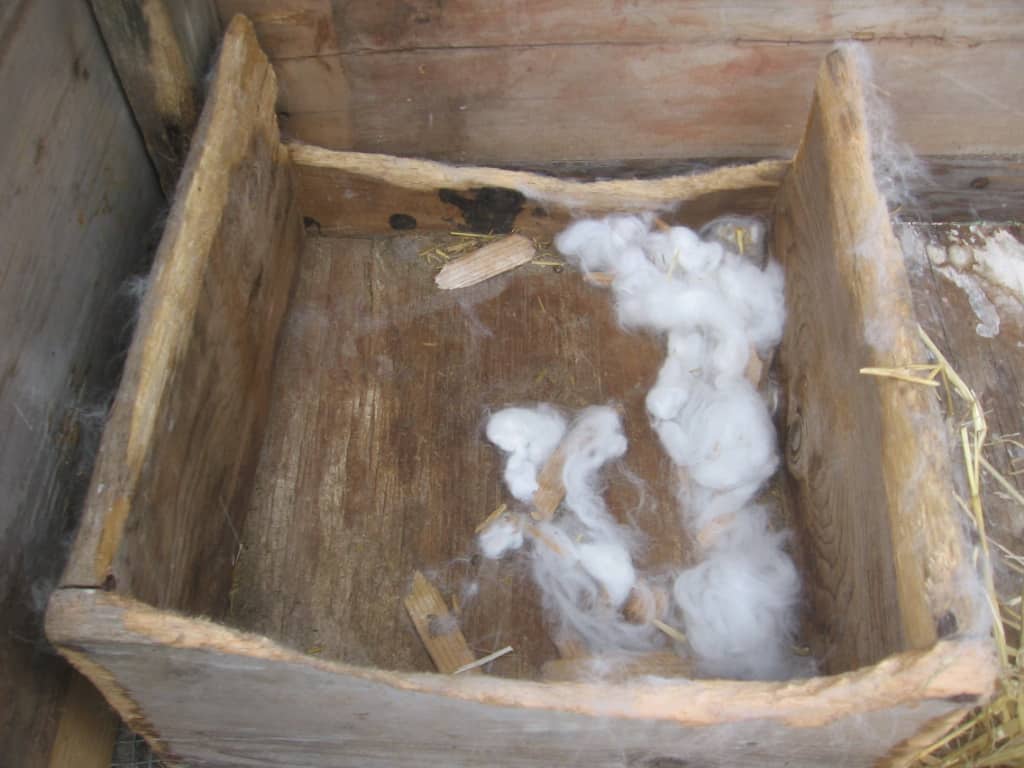
Place the nesting box inside the doe's cage around day 26 to 28 of pregnancy. Adding it too early means she might use it as a litter box. Adding it too late means she may kindle (give birth) on the wire floor, which can be fatal for kits.
Building or Choosing the Right Nesting Box
You can buy a commercial nesting box or build one from untreated wood. A simple cardboard box works in a pinch, but wood lasts longer and provides better insulation. The box should be:
- About 2 to 3 inches longer than the doe on each side
- Tall enough that kits cannot crawl out (at least 5 to 6 inches high)
- Open on one side or have a low entry point so the doe can hop in and out
Filling the Nesting Box
Fill the box about halfway with straw or grass hay. The doe will rearrange this material and pull fur from her chest and belly to line the nest in the final day or two before kindling. This fur layer is critical for keeping the kits warm, since newborn rabbits are born hairless, blind, and deaf.
If the doe does not pull enough fur (first-time mothers sometimes skip this step), you can gently pluck a small amount from her dewlap or chest area and add it to the nest yourself.
How to Feed a Pregnant and Lactating Doe
Proper nutrition directly affects kit survival. A malnourished doe may reject her litter, produce insufficient milk, or cannibalize her kits out of stress.
Feeding Schedule During Pregnancy
For the first 21 days of pregnancy, feed the doe her normal ration of pellets and unlimited hay. Starting around day 21, gradually increase her pellet intake over the next 10 days leading up to birth.
The amount of pellets your rabbit needs depends on her breed size:
| Breed Size | Daily Pellet Ration (Late Pregnancy) | Example Breeds |
|---|---|---|
| Small (under 5 lbs) | 2 to 3 ounces | Holland Lop, Netherland Dwarf, Mini Rex |
| Medium (5 to 9 lbs) | 3.5 to 4 ounces | Dutch, English Spot, Standard Rex |
| Large (over 9 lbs) | 4 to 8 ounces | New Zealand, Californian, Flemish Giant |
According to the American Rabbit Breeders Association guidelines, rabbit pellets should contain 14 to 18% protein, 12 to 22% fiber (not less than 18% is ideal), 3% fat or less, and less than 1% calcium.
Feeding During Lactation
Once the doe kindles, switch to free-choice (unlimited) pellets and unlimited alfalfa hay. Lactation is the most nutritionally demanding phase of a rabbit's life. A doe nursing a litter of 8 kits can consume three to four times her normal feed intake.
Keep her water supply full at all times. Lactating does are at high risk of dehydration, and even brief water shortages can cause her milk supply to drop or dry up entirely.
What to Do Immediately After Birth
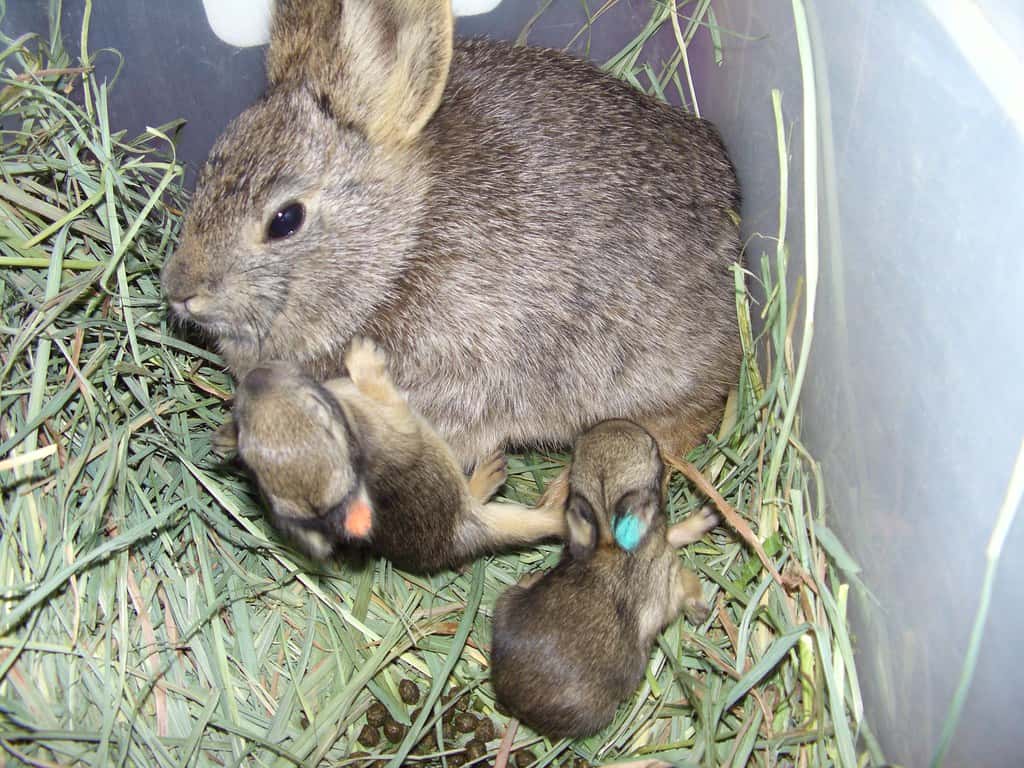
Most does kindle in the early morning hours. You will often wake up to find the kits already born, cleaned, and tucked into the nest. Here is your checklist for that first day:
- Count the kits. Gently move the fur aside and count how many were born. Litter sizes range from 1 to 14 depending on breed, with 6 to 8 being average.
- Remove any dead kits or placenta. The doe usually eats the placenta (this is normal), but remove anything she has left behind.
- Check for kits outside the nest. First-time mothers sometimes kindle on the cage floor. If you find kits outside the box, place them in the nest immediately and cover them with fur. They can survive surprisingly low temperatures if you warm them quickly.
- Separate the buck. If the buck is still in the same cage, move him immediately. Does can become pregnant again within hours of giving birth, and back-to-back pregnancies are extremely hard on her body and reduce kit survival rates.
Should You Handle Newborn Kits?
Yes, it is perfectly safe to handle newborn kits. The old myth that a mother rabbit will reject her babies if you touch them is false. Domestic does are accustomed to human scent. Handling the kits daily actually helps with socialization and allows you to monitor their health.
That said, keep handling sessions short (1 to 2 minutes) and always return the kits to the nest afterward, covering them with the fur lining.
How to Tell If Newborn Rabbits Are Being Fed
This is the most important daily check during the first two weeks. Mother rabbits nurse their kits only once or twice per day, usually at night when it is quiet. You will rarely see the doe in the nest box during the day, and this is completely normal.
To check if the kits are being fed:
- Look at their bellies. Well-fed kits have round, plump tummies that look like tiny grapes. Underfed kits have wrinkled, sunken bellies.
- Check their skin. Gently pinch the skin on the back of the neck. If it springs back immediately, they are hydrated. If it stays tented, they are dehydrated.
- Weigh them daily. Healthy kits gain weight every single day. A kit that loses weight for two consecutive days is not getting enough milk.
What If the Doe Is Not Nursing?
If you confirm the kits are not being fed after 24 hours, try supervised nursing first. Hold the doe gently over the nest box for 5 to 10 minutes, allowing the kits to find her nipples. Most reluctant mothers will allow nursing when held still.
If supervised nursing fails, contact your veterinarian. Hand-raising rabbit kits with formula (kitten milk replacer or goat milk) is possible but has a high mortality rate, particularly in the first week. A vet can also check for mastitis or other conditions preventing the doe from nursing.
Week-by-Week Newborn Rabbit Development
Understanding what is normal at each stage helps you spot problems early.
| Age | Development Milestones | Your Actions |
|---|---|---|
| Days 1 to 3 | Hairless, blind, deaf. Rely entirely on mother's milk and nest warmth. | Check bellies daily. Remove dead kits. Keep nest clean and warm. |
| Days 4 to 7 | Fuzz of fur appears. Ears begin to separate from the head. | Continue daily belly checks. Weigh kits if possible. |
| Days 8 to 10 | Eyes begin to open. Fur thickens noticeably. | Watch for eye infections (crusty, sealed eyes). Clean gently with warm water if needed. |
| Days 11 to 14 | Eyes fully open. Kits begin exploring the nest box. | Lower or remove nest box lip so kits can exit. They will start nibbling hay. |
| Weeks 3 to 4 | Kits hop around the cage. Begin eating pellets and hay alongside nursing. | Provide a shallow water dish. Ensure pellets are accessible at kit height. |
| Weeks 5 to 6 | Kits eat solid food regularly. Nursing frequency decreases. | Monitor for diarrhea (a leading cause of kit death at this age). |
| Weeks 7 to 8 | Fully weaned. Independent eating and drinking. | Separate kits from the doe. House by sex to prevent early breeding. |
How to Clean the Nesting Box
A dirty nest box is a breeding ground for bacteria and parasites. Clean it regularly following this approach:
- Gently lift the kits out and place them in a warm, towel-lined container.
- Remove all soiled bedding and any feces or urine-soaked material.
- Wipe the box with a damp cloth (no harsh chemicals).
- Add fresh straw or hay bedding.
- Replace the fur lining from the original nest on top.
- Return the kits and cover them with fur.
During the first week, clean the nest box every 2 to 3 days. After the first week, you may need to clean daily as the kits produce more waste.
When Can Baby Rabbits Start Eating Solid Food?
Kits begin nibbling on hay and pellets around 2 weeks of age, but they still rely on their mother's milk as their primary nutrition until about 6 to 7 weeks old. Weaning too early is one of the most common causes of kit mortality in domestic breeding programs.
Here is the feeding progression from birth through adulthood:
| Age | Hay | Pellets | Vegetables | Fruits |
|---|---|---|---|---|
| Birth to 2 weeks | None (mother's milk only) | None | None | None |
| 2 to 7 weeks | Nibbling alfalfa hay | Small amounts alongside nursing | None | None |
| 7 weeks to 7 months | Unlimited alfalfa hay | Unlimited | None | None |
| 12 weeks onward | Unlimited alfalfa hay | Unlimited | Introduce one vegetable at a time, under 0.5 oz (15 g) | None |
| 7 months to 1 year | Transition to grass hay, reduce alfalfa | Reduce to 1/2 cup per 6 lbs body weight | Increase daily amount gradually | Up to 1 to 2 oz per 6 lbs body weight |
Source: LaFeber Veterinary Basic Rabbit Care Guide
The key takeaway: kits need their mother's milk until at least 7 weeks of age. The antibodies in rabbit milk protect kits from enteritis and other gut infections that are the number one killer of young rabbits. Weaning before 6 weeks dramatically increases mortality.
Common Problems with Newborn Rabbit Kits
Kits Found Outside the Nest
Sometimes a kit latches onto a nipple while the doe hops out of the box and gets dragged out. If you find a cold kit on the cage floor, warm it slowly by cupping it in your hands or placing it against your body under a shirt. Once warm, return it to the nest. Kits can recover from surprisingly cold temperatures if warmed within a few hours.
Runt of the Litter Not Growing
In large litters (10 or more), smaller kits may get pushed away from the nipples by larger siblings. If one kit consistently fails to gain weight, try rotating the litter: remove the larger, well-fed kits for a few minutes and give the runt first access to the doe during supervised nursing.
Doe Scattering Kits
First-time mothers sometimes scatter kits around the cage instead of keeping them in the nest. This usually resolves after the first day. Gather the kits, return them to the nest box, and give the doe time. If scattering continues beyond 48 hours, try supervised nursing as described above.
Eye Infections at 10 to 14 Days
If a kit's eyes appear swollen, crusty, or fail to open by day 14, the eye may be infected. Soak a cotton ball in warm saline solution and gently clean the area. If pus is present or the eye does not open after cleaning, see a veterinarian. Untreated eye infections can cause permanent blindness.
When to Wean and Separate Baby Rabbits
Weaning should happen gradually between 6 and 8 weeks of age. By this point, the kits should be eating pellets and hay independently. Here is the process:
- Week 6: Kits are eating solid food regularly but still nursing occasionally.
- Week 7: Remove the doe from the litter's cage (not the other way around). This is less stressful for the kits because they stay in familiar surroundings.
- Week 8: Separate kits by sex. Rabbits can reach sexual maturity as early as 3 to 4 months in small breeds, so early separation prevents unwanted litters.
For more details on rabbit growth timelines, check out our article on how long it takes for a rabbit to mature.
Frequently Asked Questions
Can you touch newborn rabbits right after birth?
Yes, you can safely touch newborn rabbit kits right after birth. The myth that a doe will abandon her babies if she smells human scent on them is false for domestic rabbits. Handle them briefly to count the litter and remove any stillborns or placenta.
How long can newborn rabbits survive without milk?
Newborn rabbit kits can survive roughly 24 to 48 hours without milk before they become critically dehydrated. If you suspect the doe is not nursing, check the kits' bellies for fullness and perform the skin-pinch test for dehydration. Contact a vet if nursing has not occurred within 24 hours.
Do newborn rabbits need a heat lamp?
Newborn rabbits do not need a heat lamp if the nesting box is properly insulated with straw and the doe has pulled enough fur. The combined body heat of the litter and the fur lining keeps kits warm even in cool temperatures. Heat lamps can actually be a fire hazard and may overheat the kits.
How many babies do rabbits usually have?
Domestic rabbits typically have litters of 4 to 12 kits, with 6 to 8 being the most common range. Larger breeds like Flemish Giants tend to have bigger litters, while dwarf breeds often have smaller ones. First-time mothers may have smaller litters than experienced does.
When can baby rabbits leave their mother?
Baby rabbits should stay with their mother until they are fully weaned at 7 to 8 weeks old. Removing kits before 6 weeks significantly increases the risk of gut infections and death because they lose access to the protective antibodies in their mother's milk.
Cite this article:
Cite this article:
BunnySync (March 6, 2026) How to Care for Newborn Rabbits: Complete Kit Survival Guide for 2026. Retrieved from https://bunnysync.com/blog/how-to-care-for-newborn-rabbit-babies.
"How to Care for Newborn Rabbits: Complete Kit Survival Guide for 2026." BunnySync - March 6, 2026, https://bunnysync.com/blog/how-to-care-for-newborn-rabbit-babies