Rabbits have red eyes for two main reasons: albinism or an eye condition. If your rabbit has bright white fur and red or pink eyes, it is almost certainly an albino. The red color comes from blood vessels showing through an iris that has no pigment. If your rabbit has colored fur but suddenly develops red, irritated eyes, an infection or injury is the more likely cause. Understanding why rabbits have red eyes helps you tell the difference between a harmless genetic trait and a medical problem that needs veterinary attention.
Below, we cover everything you need to know about red-eyed rabbits, from the genetics of albinism to common eye diseases and how to care for rabbits with light-sensitive eyes.
What Is Albinism in Rabbits?
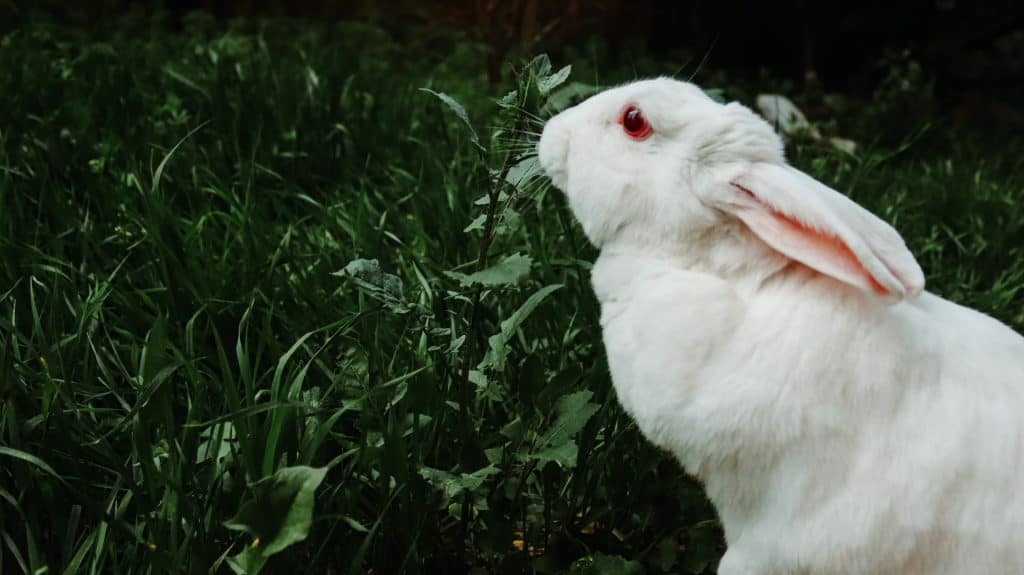
Albinism is a genetic condition caused by a mutation at the C locus, the gene responsible for producing melanin. Melanin is the pigment that gives color to fur, skin, and eyes. When a rabbit inherits two copies of the recessive albino allele (cc), its body cannot produce melanin at all. The result is a rabbit with pure white fur and eyes that appear red or pink.
The red color in an albino rabbit's eyes is not caused by red pigment. Instead, the iris has no pigment whatsoever, making it transparent. Light passes through the iris and reflects off the blood vessels at the back of the eye. Those blood vessels are what give the eyes their distinctive red or pinkish glow.
How Albinism Is Inherited
The C locus in rabbits has multiple alleles that control color intensity. The full-color allele (C) is dominant, while the albino allele (c) is fully recessive. For a rabbit to be albino, it must inherit the c allele from both parents. Two carrier rabbits (Cc) have a 25% chance of producing an albino kit in each litter.
This is why albinism can appear unexpectedly. Two normally colored rabbits can produce albino offspring if both carry the recessive gene. Breeders who want to produce albino rabbits consistently will pair two albino parents (cc x cc), which guarantees all kits will be albino.
Ruby-Eyed White vs. Blue-Eyed White
Not all white rabbits are albino. The Vienna White gene (also called BEW, or Blue-Eyed White) produces rabbits with pure white fur and bright blue eyes. These rabbits still produce melanin in their irises, which is why their eyes appear blue rather than red. If you see a white rabbit with blue eyes, it is not an albino. Only white rabbits with red or pink eyes carry the true albino genotype.
Which Rabbit Breeds Are Prone to Albinism?
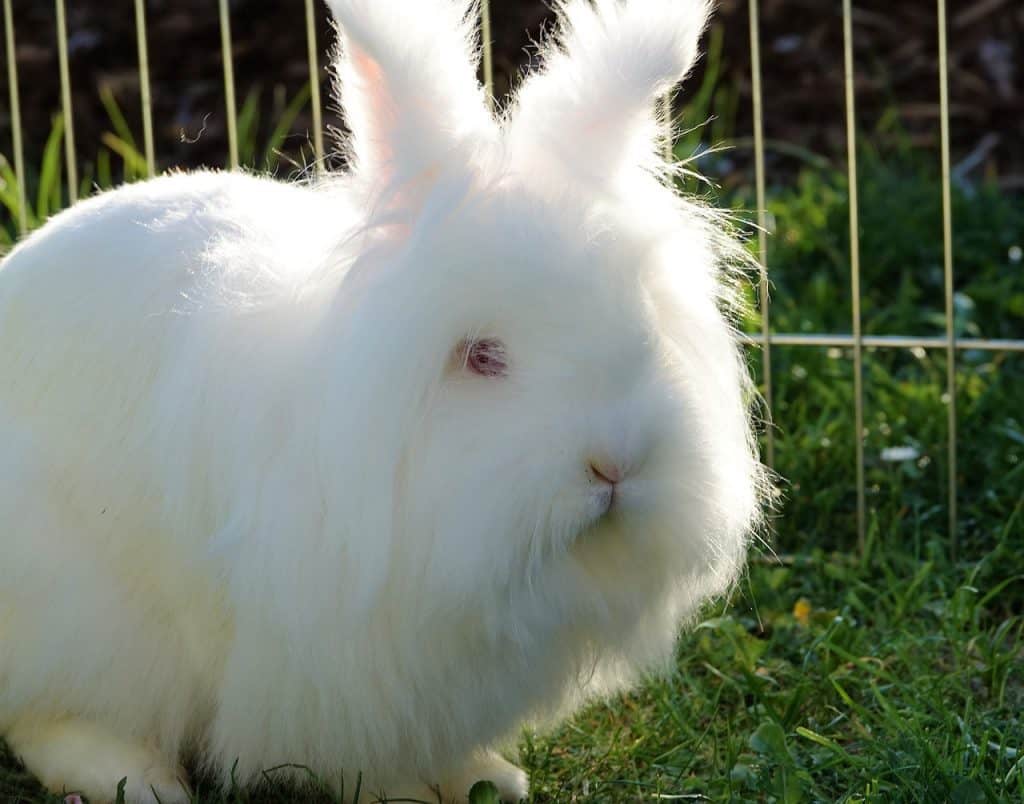
Any rabbit breed can carry the albino gene since it is a simple recessive trait. However, some breeds have been selectively bred to produce the Ruby-Eyed White (REW) variety as a recognized color. The Florida White, for example, was specifically developed as an all-white, red-eyed breed.
Here are the most common breeds where the REW variety is recognized or frequently seen:
| Breed | Size Category | REW Recognized? |
|---|---|---|
| Florida White | Small (4-6 lbs) | Yes, breed standard |
| New Zealand White | Large (9-12 lbs) | Yes, most common variety |
| Californian | Large (8-10.5 lbs) | Himalayan pattern, not full albino |
| Netherland Dwarf | Dwarf (2-2.5 lbs) | Yes |
| Holland Lop | Small (3-4 lbs) | Yes |
| Mini Lop | Medium (4.5-6.5 lbs) | Yes |
| Polish | Dwarf (2.5-3.5 lbs) | Yes |
| Jersey Wooly | Dwarf (2.5-3.5 lbs) | Yes |
| Lionhead | Small (2.5-3.75 lbs) | Yes |
| Angora (English, French, Satin) | Medium-Large | Yes |
| Rex | Medium (7.5-10.5 lbs) | Yes |
| Satin | Large (8.5-11 lbs) | Yes |
| Flemish Giant | Giant (13+ lbs) | Yes |
| Himalayan | Small (2.5-4.5 lbs) | Partial albino with color points |
The Californian and Himalayan breeds deserve a special note. These breeds carry the Himalayan allele (ch), which is a temperature-sensitive form of albinism. Their bodies are mostly white with darker color on the ears, nose, feet, and tail, which are the coolest parts of the body. Their eyes are typically ruby or pinkish. This is partial albinism, not full albinism, but it produces a similar red-eye appearance.
Health Concerns for Albino Rabbits
The good news is that albinism itself does not make a rabbit unhealthy. Albino rabbits have normal lifespans, normal immune systems, and can reproduce without complications. The gene only affects pigment production, nothing else. However, the lack of pigment does create a few care considerations that owners should be aware of.
Light Sensitivity
Melanin in the iris acts as a natural filter, controlling how much light enters the eye. Without this pigment, albino rabbits let in far more light than their non-albino counterparts. This makes them more sensitive to bright environments. You may notice your albino rabbit squinting or turning away from direct sunlight or strong indoor lighting.
To protect your albino rabbit's eyes:
- Place their enclosure away from windows that get direct sunlight
- Avoid fluorescent or harsh overhead lights near their living space
- Provide shaded hiding spots, such as wooden hideouts or tunnels, so they can escape bright light
- If taking your rabbit outdoors, choose early morning or late afternoon when sunlight is less intense
Sunburn Risk
Without melanin in their skin, albino rabbits are more vulnerable to sunburn, especially on their ears, nose, and around the eyes where fur is thinnest. Extended outdoor time in direct sunlight can cause painful burns and increase the long-term risk of skin damage. Keep outdoor sessions short and always provide shade.
Vision Differences
Some albino rabbits have slightly reduced visual acuity compared to pigmented rabbits. Research published in Experimental Brain Research found that albino rabbits can have differences in the way their visual cortex processes information. In practice, this means some albino rabbits may take a bit longer to assess their surroundings before moving. They might appear more cautious or hesitant in new environments.
This is rarely a major problem in domestic settings. Rabbits rely heavily on smell and hearing alongside vision, so most albino rabbits navigate their homes perfectly well. If you notice your rabbit bumping into objects or seeming disoriented, consult a veterinarian, as this could indicate a separate eye condition rather than normal albino vision. You can learn more about recognizing vision problems in our guide on how to tell if your rabbit is blind.
Eye Conditions That Cause Red Eyes in Non-Albino Rabbits
If your rabbit is not albino (meaning it has colored fur) but its eyes appear red, swollen, or irritated, an eye condition is likely the cause. Red eyes in non-albino rabbits always warrant a veterinary visit, as most of these conditions require treatment.
Conjunctivitis (Pink Eye)
Conjunctivitis is inflammation of the conjunctiva, the thin membrane that covers the white of the eye and lines the eyelids. It is one of the most common eye problems in rabbits. Symptoms include redness, swelling, discharge (clear or pus-like), and excessive tearing. Bacterial infections, particularly Pasteurella multocida, are a frequent cause, but dust, ammonia from urine-soaked bedding, and allergies can also trigger it.
Treatment typically involves antibiotic eye drops prescribed by your vet. Keeping the living environment clean and well-ventilated helps prevent recurrence. If you notice strong ammonia odors coming from your rabbit's enclosure, that is a sign the bedding needs changing more frequently. Learn more about keeping your rabbit's cage from smelling.
Corneal Ulcers
A corneal ulcer is an open sore on the surface of the eye, usually caused by a scratch from hay, bedding, or another rabbit's nail. Ulcers cause intense redness, pain, squinting, and sometimes a cloudy spot on the eye's surface. Left untreated, ulcers can deepen and lead to permanent vision loss.
Veterinarians diagnose corneal ulcers using a fluorescein stain test, where a special dye highlights the damaged area under blue light. Treatment includes antibiotic drops and pain medication. Severe ulcers may need surgery.
Glaucoma
Glaucoma occurs when fluid pressure inside the eye increases, damaging the optic nerve. In rabbits, it can be inherited (particularly in New Zealand Whites) or develop secondary to another condition like lens luxation or uveitis. Signs include a visibly enlarged eye, cloudiness, redness, and pain. The affected eye may bulge outward over time.
Glaucoma is a serious condition. Without treatment, it leads to blindness and chronic pain. Medical management with pressure-reducing eye drops can slow progression, but in advanced cases, surgical removal of the eye (enucleation) may be the most humane option.
Dental Disease
This connection surprises many rabbit owners. The roots of a rabbit's upper teeth sit very close to the tear ducts and the tissue behind the eyes. When teeth become overgrown or develop abscesses, they can press against these structures, causing eye discharge, redness, and swelling. Dental-related eye problems are often accompanied by drooling, reduced appetite, or a lump along the jawline.
E. cuniculi
Encephalitozoon cuniculi is a microscopic parasite that can infect rabbits' kidneys, brain, and eyes. When it affects the eyes, it causes a condition called phacoclastic uveitis, where a white mass forms inside the lens, often accompanied by redness and inflammation. Many rabbits carry E. cuniculi without showing symptoms, but stress or a weakened immune system can trigger an active infection.
A blood test can check for E. cuniculi antibodies. Treatment involves a course of fenbendazole (an anti-parasitic medication) typically given for 28 days, along with anti-inflammatory eye drops. If you notice your rabbit showing neurological signs like a head tilt along with eye redness, stress-related triggers may have activated a latent E. cuniculi infection.
Other Causes
- Allergies: Dust from hay or bedding, cleaning products, or air fresheners can irritate rabbit eyes and cause redness
- Fungal infections: Less common than bacterial infections but can occur, especially in damp environments
- Scratched eye: Rabbits housed together can accidentally scratch each other's eyes during play or scuffles. This is more common when housing different breeds together
- Myxomatosis: A viral disease spread by fleas and mosquitoes that causes severe eye swelling and redness, along with skin lumps. Vaccination is available in some countries
When to See a Veterinarian
If your rabbit has always had red eyes with white fur, it is likely a healthy albino and no veterinary visit is needed for the eye color alone. However, seek veterinary care promptly if you notice any of the following:
- Sudden onset of redness in a rabbit that previously had normal-colored eyes
- Swelling around one or both eyes
- Discharge, whether clear, white, yellow, or green
- Squinting or keeping one eye closed
- Cloudiness or a white spot on the eye surface
- Visible enlargement of one eye
- Rubbing the face against objects or pawing at the eye
- Loss of appetite alongside eye symptoms (which may indicate dental disease)
Rabbit eye problems can worsen quickly. A minor irritation can become a serious ulcer within 24 to 48 hours. Early treatment almost always produces better outcomes and lower veterinary bills.
How to Care for a Red-Eyed (Albino) Rabbit
Caring for an albino rabbit is mostly the same as caring for any rabbit. They need unlimited hay, fresh water, appropriate pellets, and daily vegetables. The main differences relate to light and sun exposure.
- Control lighting: Use soft, indirect lighting in the room where your rabbit lives. LED bulbs with warm color temperatures (2700K-3000K) are gentler on sensitive eyes than cool white or fluorescent options.
- Provide hiding spots: Make sure your rabbit has at least two enclosed hiding areas in its living space where it can retreat from light.
- Limit sun exposure: Keep outdoor playtime to 15 to 20 minutes in shaded areas. Avoid midday sun entirely.
- Use low-dust bedding: Airborne dust particles are more irritating to eyes without pigment protection. Choose paper-based or kiln-dried wood shavings over dusty hay bedding.
- Monitor for eye discharge: Check your albino rabbit's eyes daily. Because their eyes are already red, it can be harder to spot the early signs of irritation. Look for wetness around the eyes, crustiness, or squinting.
Frequently Asked Questions
Can you breed albino rabbits safely?
Yes, breeding albino rabbits is both safe and common. The albino gene only affects pigment production and does not cause health problems. Many popular breeds like the Florida White and New Zealand White are specifically bred for the albino phenotype.
Are rabbits with red eyes more aggressive than other rabbits?
No. The myth that red-eyed rabbits are mean or aggressive has no basis in reality. Albino rabbits have the same range of temperaments as any other rabbit. Some breeders actually report that albino rabbits tend to be calmer, though this varies by individual and breed.
Do albino rabbits have good eyesight?
Albino rabbits can see, but their vision may be slightly less sharp than pigmented rabbits. They tend to be more sensitive to bright light and may scan their surroundings more carefully before moving. In a normal home environment, this rarely causes problems.
Can albino rabbits survive in the wild?
Albino rabbits are extremely rare in wild populations because their white fur offers no camouflage. Predators spot them easily, so albino wild rabbits rarely survive long enough to reproduce. Domesticated albino rabbits should always be kept safely indoors or in secure outdoor enclosures.
Can a rabbit's eyes turn red suddenly?
If a previously normal-eyed rabbit develops red eyes, this is not albinism. Sudden redness indicates an eye infection, injury, or disease. Common causes include conjunctivitis, corneal ulcers, and dental problems pressing on eye structures. See a rabbit-savvy veterinarian as soon as possible.
Cite this article:
Cite this article:
BunnySync (March 7, 2026) Why Do Some Rabbits Have Red Eyes? Albinism, Eye Infections, and More. Retrieved from https://bunnysync.com/blog/why-do-rabbits-have-red-eyes.
"Why Do Some Rabbits Have Red Eyes? Albinism, Eye Infections, and More." BunnySync - March 7, 2026, https://bunnysync.com/blog/why-do-rabbits-have-red-eyes