To keep your rabbit's cage from smelling, focus on three core areas: use the right cage material, choose absorbent bedding, and change the litter regularly. Most cage odor comes from ammonia in urine that soaks into porous surfaces and builds up over time. A plastic or metal cage paired with wood-based litter, cleaned daily, will eliminate most cage odor within days. If the smell persists after fixing these basics, the cause is usually hormonal (unneutered rabbits) or diet-related.
Why Does Your Rabbit's Cage Smell?
Before jumping into solutions, it helps to understand what actually causes the smell. Rabbit poop itself is mostly odorless when your rabbit is healthy. The real culprit is almost always urine, specifically the ammonia that forms when urine breaks down. Several factors determine how bad the smell gets.
Urine Buildup and Ammonia
Fresh rabbit urine has a mild smell, but as it sits, bacteria break it down and release ammonia gas. This is the sharp, pungent odor most rabbit owners complain about. The longer urine stays in contact with bedding, cage surfaces, or litter, the more ammonia builds up. If your rabbit's pee smells strongly of ammonia, the fix is almost always more frequent cleaning.
Ammonia concentration also depends on your rabbit's hydration. A rabbit that drinks plenty of water produces more diluted urine with less concentrated ammonia. Make sure fresh water is always available.
Cecotropes and Digestive Issues
Healthy rabbit droppings (the round, dry pellets) barely smell at all. But cecotropes, the soft, grape-like clusters rabbits produce and re-eat, have a much stronger odor. If your rabbit isn't eating their cecotropes or has "poopy butt" where soft stool sticks to their fur, the cage will smell noticeably worse.
Digestive problems that cause excess cecotropes or diarrhea are often linked to too many pellets, too much sugar from treats, or not enough hay in the diet. If you're seeing uneaten cecotropes regularly, that's a sign to adjust the diet.
Hormonal Scent Marking
Unneutered rabbits, especially males, produce urine with a much stronger scent. They also spray urine on cage walls, furniture, and even their owners to mark territory. This hormonal marking is one of the biggest contributors to cage odor, and it gets significantly worse once a rabbit reaches sexual maturity at 3 to 6 months old.
How To Keep Your Rabbit's Cage From Smelling (Step by Step)
These six steps work together. You'll see the biggest improvement by combining all of them rather than relying on just one.
1. Choose the Right Cage Material
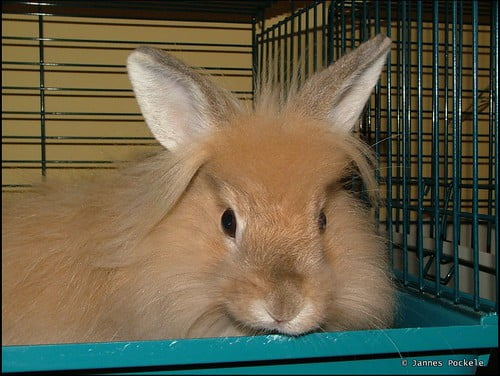
Wood cages absorb urine like a sponge. Once urine soaks into untreated wood, the smell is nearly impossible to remove completely, no matter how much you scrub. The wood fibers trap moisture and bacteria deep inside, creating a permanent odor source.
Plastic and metal cages solve this problem entirely. They don't absorb liquids, so cleaning removes 100% of the urine and the smell along with it. Wire cages with plastic or metal trays at the bottom are the best option for odor control. They provide airflow through the wire sides while keeping waste contained in the easy-to-clean tray.
If you already have a wood cage and can't replace it, seal the interior surfaces with a pet-safe, non-toxic waterproof sealant. This creates a barrier that prevents urine absorption, though it's still not as effective as plastic or metal.
2. Use Absorbent, Odor-Controlling Bedding
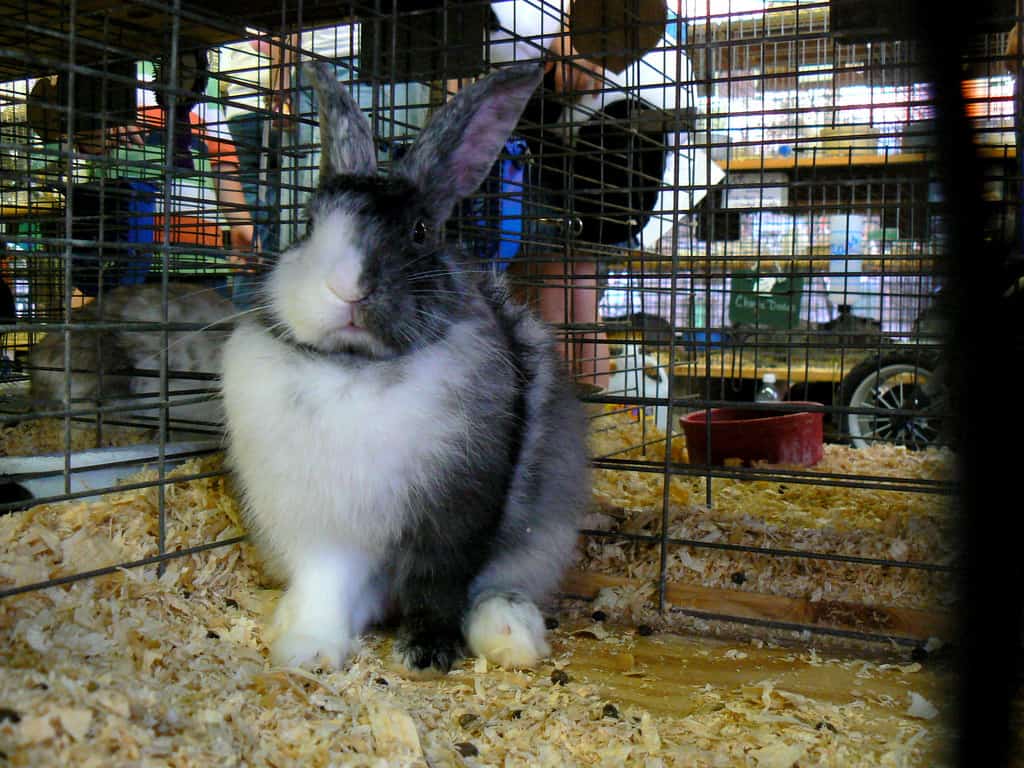
Your bedding choice makes a massive difference in how much your rabbit's cage smells. Not all bedding materials absorb urine equally, and some actually make the smell worse.
Here's how common bedding types compare for odor control:
| Bedding Type | Odor Control | Absorbency | Safe for Rabbits |
|---|---|---|---|
| Kiln-dried pine shavings | Excellent | High | Yes (kiln-dried only) |
| Paper-based litter (Carefresh) | Good | High | Yes |
| Aspen shavings | Good | Medium | Yes |
| Timothy hay (as bedding) | Poor | Low | Yes |
| Cedar shavings | High odor masking | Medium | No (toxic phenols) |
| Clumping clay cat litter | Good | High | No (dangerous if eaten) |
| Newspaper/shredded paper | Poor | Low | Yes |
Kiln-dried pine shavings are the top choice for most breeders. They naturally absorb moisture and neutralize ammonia better than almost any other option. The key is "kiln-dried," as this process removes the harmful phenols found in raw pine and cedar. If you're exploring alternatives, learn whether rabbits can safely use cat litter in their box.
Avoid cedar shavings entirely. While they smell pleasant to humans, the phenols in cedar are toxic to rabbits and can cause respiratory problems and liver damage over time.
3. Clean the Litter Box Daily
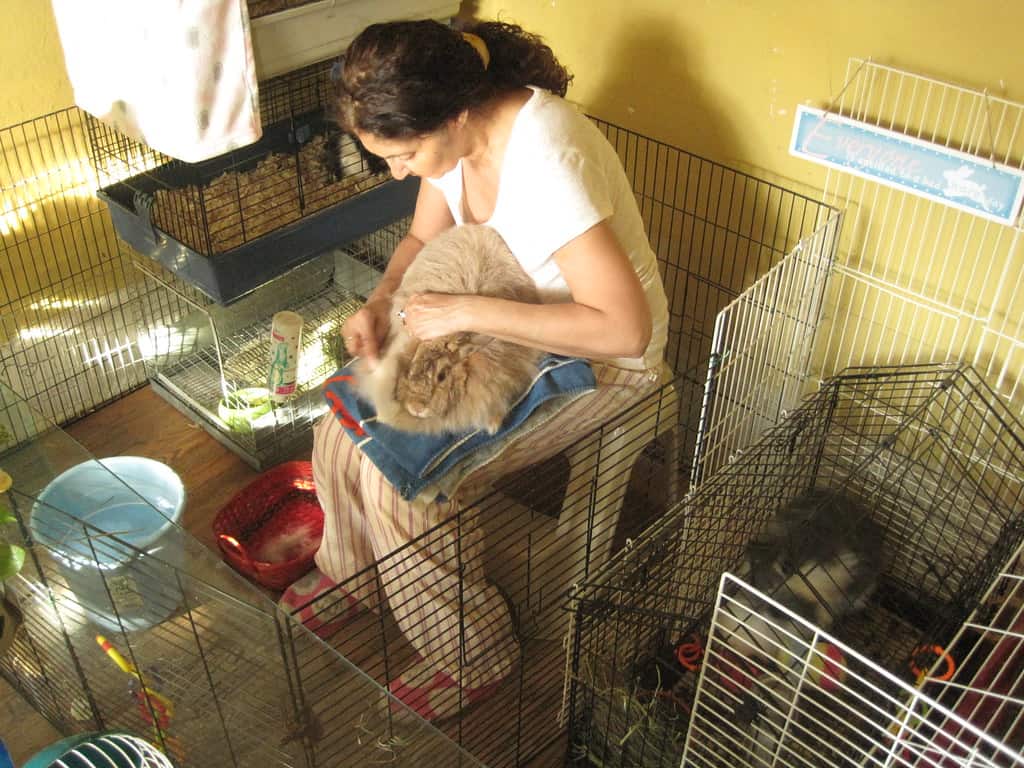
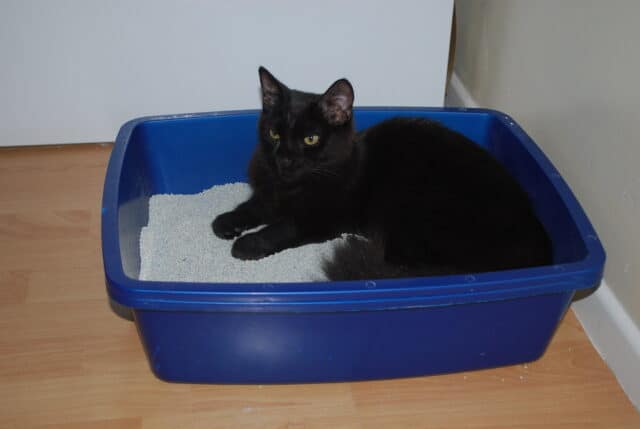
The single most effective thing you can do to reduce cage odor is clean the litter box every single day. Rabbits produce 200 to 300 droppings per day, plus multiple rounds of urination. All of that waste sitting in a litter box for even two days creates a significant ammonia buildup.
Daily litter box cleaning takes about 2 to 3 minutes once you establish a routine:
- Dump the used litter into a compost bin or trash bag.
- Give the litter box a quick rinse with water (no soap needed daily).
- Add fresh litter, about 1 to 2 inches deep.
- Place the box back in the cage.
If daily cleaning feels like too much, you can extend it to every other day by using a thicker layer of absorbent bedding (2 to 3 inches). But anything beyond two days will result in noticeable odor regardless of what bedding you use.
4. Deep Clean the Entire Cage Weekly
Beyond daily litter box maintenance, the whole cage needs a thorough scrub once a week. Urine splashes and residue accumulate on cage walls, bars, and floor surfaces that a daily spot clean won't reach.
Here's how to deep clean a rabbit cage properly:
- Move your rabbit to a safe, enclosed area outside the cage.
- Remove all bedding, litter, toys, food bowls, and water bottles.
- Spray all cage surfaces with a solution of one part white vinegar to one part water. Vinegar is safe for rabbits and excellent at breaking down rabbit urine stains and calcium deposits.
- Let the vinegar solution sit for 5 to 10 minutes.
- Scrub with a stiff brush, paying extra attention to corners and the cage floor.
- Rinse thoroughly with clean water.
- Dry completely before adding fresh bedding. Moisture left behind encourages bacterial growth.
White vinegar is the best cleaning agent for rabbit cages. It neutralizes ammonia, dissolves urine scale, and leaves no harmful residue. Avoid harsh chemical cleaners like bleach or commercial bathroom cleaners, as the fumes and residue can be dangerous for rabbits.
5. Improve Airflow Around the Cage
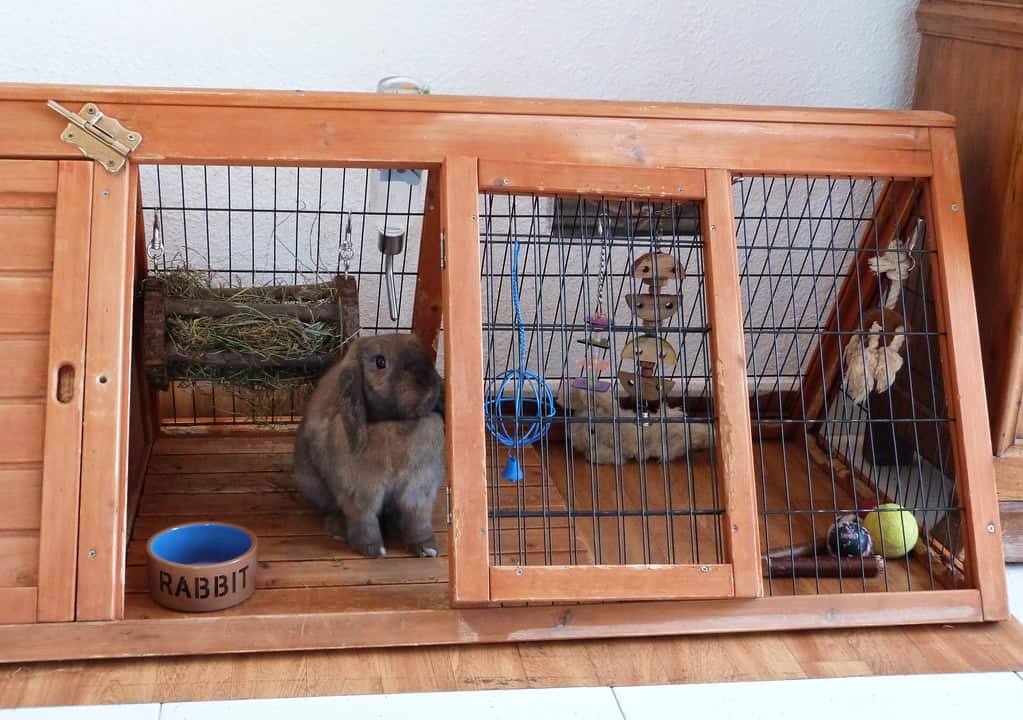
Poor ventilation traps ammonia fumes around the cage, making the smell far worse than it actually is. If your rabbit's cage is tucked in a corner, against a wall, or in a room with no windows, the odor will concentrate and intensify.
To improve airflow:
- Position the cage away from walls, leaving at least 6 inches of clearance on all sides.
- Place the cage near a window that can be opened (but avoid direct drafts on the rabbit).
- Use a room fan on low speed to circulate air, pointed away from the cage, not directly at it.
- If the cage is indoors, consider placing it in a room with cross-ventilation.
Outdoor placement works well for odor control, but only if temperatures stay within a safe range. Rabbits are sensitive to heat and cannot tolerate temperatures above 85F (29C). Check the ideal temperature range for rabbits before moving their cage outdoors.
6. Get Your Rabbit Spayed or Neutered
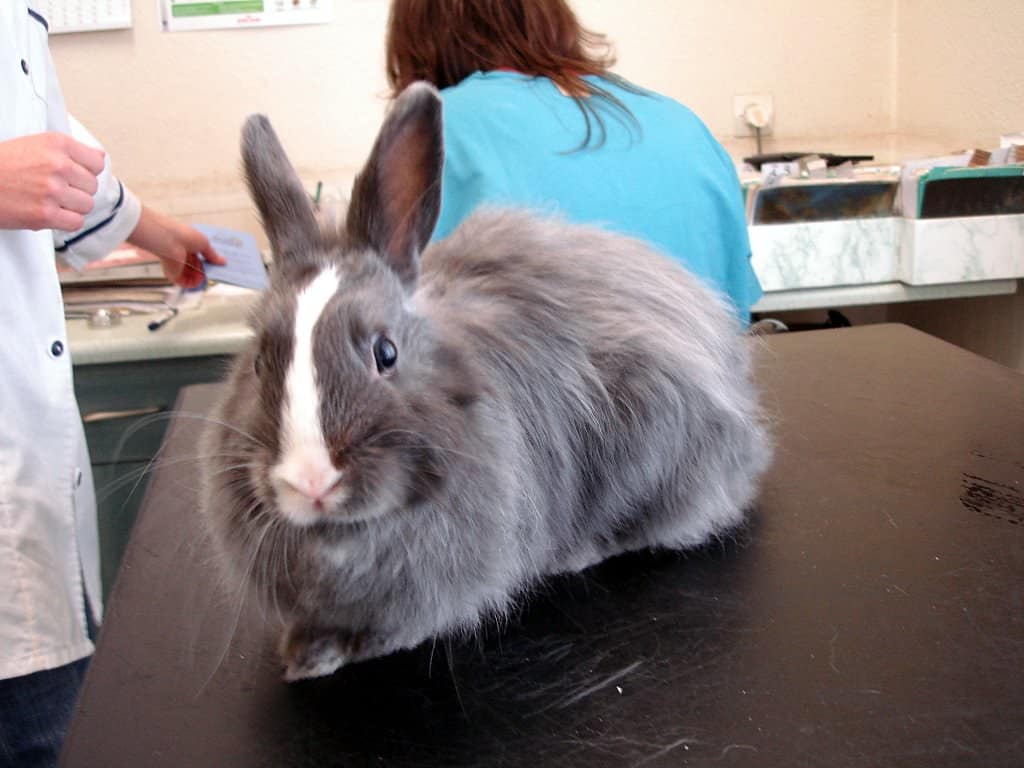
Spaying or neutering is one of the most impactful changes you can make for odor control. Intact rabbits, especially males, produce urine with significantly higher concentrations of hormonal compounds that create a strong, musky smell. They also spray urine to mark territory, coating cage walls, floors, and anything nearby.
After neutering, most owners notice a dramatic reduction in urine odor within 4 to 6 weeks as hormone levels drop. Spraying behavior usually stops entirely within 2 to 8 weeks post-surgery.
The recommended age for neutering is 4 to 6 months for males and 5 to 6 months for females. Beyond odor control, spaying and neutering also prevent reproductive cancers (which affect up to 80% of unspayed female rabbits by age 5), reduce aggression, and make litter training much easier.
What Type of Bedding Controls Rabbit Cage Odor Best?
Kiln-dried pine shavings consistently outperform other bedding options for odor control. They absorb up to 4 times their weight in moisture, and the natural wood compounds neutralize ammonia on contact. Paper-based bedding like Carefresh is a close second, offering high absorbency without the dust that some rabbits react to.
Regardless of which bedding you choose, the depth matters. A thin layer of bedding saturates quickly and stops absorbing, letting urine pool at the bottom. Aim for 1 to 2 inches in the litter box and the same thickness across the cage floor if your rabbit isn't litter trained.
Never mix bedding types in the litter box. Stick to one material so you can accurately gauge when it's saturated and needs changing.
Can Your Rabbit's Diet Make Their Cage Smell Worse?
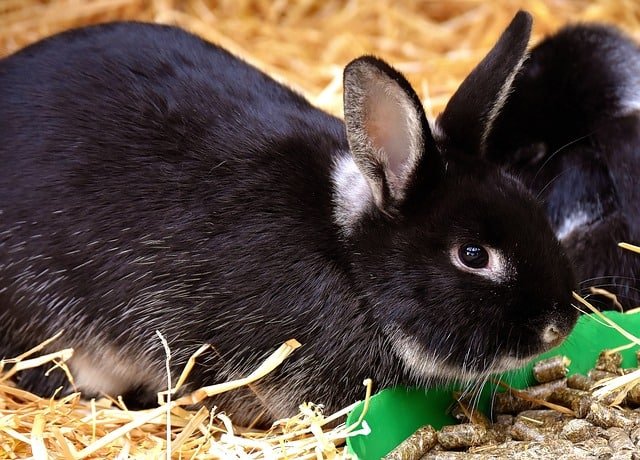
Yes, and this is one of the most overlooked causes of a smelly rabbit cage. A rabbit's diet directly affects the odor of both their urine and droppings. The wrong diet can turn mild cage odor into something genuinely unpleasant.
Common dietary causes of increased cage odor include:
- Too many pellets: Excess protein and starch from overfeeding pellets leads to stronger-smelling urine and softer, smellier droppings. Adult rabbits need only 1/4 cup of pellets per 5 pounds of body weight daily.
- Too many sugary treats: Fruits, yogurt drops, and commercial treats high in sugar disrupt gut bacteria and cause cecal dysbiosis, which produces excess cecotropes with a very strong smell.
- Not enough hay: Hay should make up 80% or more of a rabbit's diet. It keeps the digestive system moving properly and produces firm, low-odor droppings.
- Sudden diet changes: Switching foods too quickly causes digestive upset, diarrhea, and temporarily smellier waste.
The ideal diet for minimal cage odor is simple: unlimited timothy hay, a measured amount of quality pellets, and a small daily portion of fresh leafy greens. According to the House Rabbit Society, leafy greens should make up about 15% of the diet, with fruits limited to no more than 1 to 2 tablespoons per 5 pounds of body weight.
How Often Should You Clean Your Rabbit's Cage?
Cleaning frequency depends on how many rabbits share the cage and whether they're litter trained. Here's a practical schedule that keeps odor under control:
| Task | Frequency | Time Required |
|---|---|---|
| Litter box: dump and refill | Daily | 2-3 minutes |
| Spot clean cage floor | Daily | 1-2 minutes |
| Replace all cage bedding | Every 2-3 days | 5 minutes |
| Full cage scrub with vinegar | Weekly | 15-20 minutes |
| Deep clean (disassemble cage) | Monthly | 30-45 minutes |
If you have multiple rabbits in one cage, increase the frequency. Two rabbits produce double the waste, and ammonia builds up faster in shared spaces. For pairs, consider cleaning the litter box twice daily.
Does Litter Training Help Reduce Cage Odor?
Absolutely. Litter training is one of the best things you can do for cage hygiene. When a rabbit is litter trained, about 90% of their urine and 70% of their droppings end up in one contained area. This means you only need to clean one spot daily instead of scrubbing the entire cage floor.
Most rabbits take to litter training naturally because they tend to pick one corner of their cage as a bathroom spot. You can work with this instinct by placing the litter box in the corner they already prefer. Spayed and neutered rabbits are significantly easier to litter train than intact rabbits, which is another reason to consider the surgery.
For the litter box itself, use a box large enough for your rabbit to sit in comfortably with a layer of hay on top of the litter. Many rabbits eat hay while using the litter box, so this setup encourages both good bathroom habits and proper hay consumption.
Common Mistakes That Make Rabbit Cages Smell Worse
Even well-intentioned rabbit owners sometimes make choices that accidentally increase cage odor. Here are the most common mistakes to avoid:
- Using air fresheners or scented sprays near the cage: These mask the smell temporarily but don't address the source. Worse, artificial fragrances can irritate a rabbit's sensitive respiratory system.
- Using cedar or raw pine shavings: While they smell nice to humans, untreated softwood shavings release phenols that are toxic to rabbits. Always use kiln-dried pine or choose aspen instead.
- Reusing wet bedding: Some owners try to save money by only removing the visibly soiled portions. The remaining bedding is still saturated with urine and will continue releasing ammonia.
- Not using enough bedding: A thin layer of litter saturates within hours. Use at least 1 to 2 inches so the bedding can actually absorb a full day's worth of urine.
- Placing the cage on carpet: Urine splashes and residue can seep through cage bars onto carpet underneath, creating a smell source you might not even realize is there. Place a waterproof mat or plastic sheet under the cage.
- Ignoring health issues: If the cage suddenly starts smelling worse than usual despite your cleaning routine, it could signal a urinary tract infection, digestive illness, or dental problems. See a rabbit-savvy veterinarian if the smell changes suddenly.
When Should You See a Vet About Cage Odor?
Sometimes a smelly cage points to a medical issue rather than a hygiene one. Schedule a vet visit if you notice any of these signs alongside increased cage odor:
- Urine that is dark brown, red-tinged, or extremely thick
- Persistent soft or watery droppings lasting more than 24 hours
- Uneaten cecotropes piling up in the cage regularly
- Your rabbit straining to urinate or urinating very frequently in small amounts
- Strong odor from the rabbit's body, not just the cage
- Loss of appetite or lethargy combined with increased smell
Urinary tract infections, bladder sludge (excess calcium buildup), and GI stasis can all cause significantly stronger-smelling waste. These conditions require veterinary treatment, and no amount of cage cleaning will resolve the odor until the underlying health problem is addressed. The Merck Veterinary Manual provides detailed information on common rabbit urinary and digestive conditions.
Frequently Asked Questions
Why does my rabbit's cage smell so bad even after cleaning?
The most common reason is urine absorbed into porous cage materials like untreated wood. If the smell persists after cleaning, your cage material itself may be holding the odor. Switch to a plastic or metal cage, and check whether your rabbit is unneutered, as hormonal urine has a much stronger scent that lingers longer.
Can I use baking soda to reduce rabbit cage odor?
A thin layer of baking soda under the litter (not on top where the rabbit sits) can help neutralize ammonia. However, rabbits should never ingest baking soda in large quantities, so always place it beneath a thick layer of bedding. It works as a supplement to regular cleaning, not a replacement for it.
How long does it take for a rabbit cage to stop smelling after cleaning?
A properly cleaned cage with fresh bedding should be nearly odorless immediately. If the smell returns within hours, you're either not using enough bedding, your rabbit isn't neutered, or there may be urine residue soaked into porous surfaces that needs deeper cleaning with white vinegar.
Is it normal for rabbit urine to have a strong smell?
Mild ammonia odor in rabbit urine is normal, especially in concentrated urine from overnight. However, extremely strong or foul-smelling urine can indicate dehydration, a urinary tract infection, or an unbalanced diet too high in protein. Ensure your rabbit has constant access to fresh water and see a vet if the smell is unusually intense.
Do female rabbits' cages smell less than male rabbits' cages?
Intact male rabbits generally produce stronger-smelling urine than females due to testosterone-driven scent marking. However, once both sexes are spayed or neutered, the difference in urine odor becomes minimal. Both will have similar, mild-smelling urine after the procedure.
Cite this article:
Cite this article:
BunnySync (March 4, 2026) How To Keep Your Rabbit's Cage From Smelling: 6 Proven Steps. Retrieved from https://bunnysync.com/blog/how-to-keep-a-bunny-cage-from-smelling.
"How To Keep Your Rabbit's Cage From Smelling: 6 Proven Steps." BunnySync - March 4, 2026, https://bunnysync.com/blog/how-to-keep-a-bunny-cage-from-smelling