No, rabbits should not use cat litter. Cat litter is made from clay, silica, and synthetic minerals that are toxic when ingested, and rabbits will almost certainly try to eat their litter. Clumping cat litter is especially dangerous because it expands and hardens inside a rabbit's digestive tract, potentially causing life-threatening intestinal blockages that require emergency surgery. Safe rabbit litter options include kiln-dried wood pellets, paper-based bedding, and aspen shavings.
As breeders who have managed dozens of rabbit litter boxes over the years, we have seen firsthand what happens when a well-meaning owner grabs cat litter from the pet store shelf. The results range from mild digestive upset to emergency veterinary visits. This guide covers exactly why cat litter is harmful, what to watch for if your rabbit has already eaten some, and which safe alternatives actually work best in a rabbit litter setup.
Why Is Cat Litter Dangerous for Rabbits?
Understanding the specific risks helps you appreciate why this is not just a preference but a genuine safety issue. Cat litter products are engineered for cats, animals that do not eat their litter. Rabbits, on the other hand, naturally nibble on whatever is in their enclosure.
Clumping Clay Litter
Clumping clay litter, the most common type sold for cats, contains sodium bentonite. This mineral absorbs moisture and expands to many times its original size. When a rabbit eats clumping clay litter, the material swells inside the stomach and intestines. The clumps can fuse together and form a solid mass that blocks the digestive tract entirely.
A rabbit's gastrointestinal system is designed for continuous movement. Food must pass through steadily. When a blockage forms, the gut slows down or stops completely, a condition called gastrointestinal (GI) stasis. GI stasis is one of the leading causes of death in pet rabbits, and it can progress from early symptoms to organ failure in as little as 24 to 48 hours.
Crystal and Silica Gel Litter
Silica gel litter absorbs urine through tiny porous crystals. These crystals are not digestible and can cause irritation to the mouth, throat, and stomach lining if eaten. While silica gel is generally labeled "non-toxic" for cats (who do not eat it), the sharp edges of the crystals can damage a rabbit's delicate GI mucosa. Repeated ingestion may lead to chronic inflammation and reduced nutrient absorption.
Scented and Chemical-Treated Litter
Many cat litters include added fragrances, baking soda, antimicrobial agents, or deodorizing chemicals. Rabbits have extremely sensitive respiratory systems. The dust and fumes from scented litter can irritate their lungs and nasal passages even without ingestion. Combined with the fact that rabbits spend long periods sitting directly in their litter box, the prolonged exposure to these chemicals poses a real respiratory health risk.
Pine and Cedar Cat Litter
Some cat litters use pine or cedar shavings that have not been kiln-dried. These contain phenols, aromatic compounds that give the wood its strong scent. Phenols are toxic to rabbits and can cause liver damage with prolonged exposure. This is different from kiln-dried pine pellets (sold specifically as small animal bedding), where the heat treatment removes the harmful phenols. If a product is labeled as cat litter and uses pine or cedar, it likely has not gone through the kiln-drying process needed to make it rabbit-safe.
What Happens If Your Rabbit Eats Cat Litter?
If your rabbit has already eaten cat litter, the severity depends on the type and amount consumed. Here is what to watch for and how to respond.
Immediate Signs to Watch For
- Reduced or absent droppings: A healthy rabbit produces 200 to 300 fecal pellets per day. Any significant drop in output signals a potential blockage or slowdown.
- Loss of appetite: A rabbit that refuses food, especially hay, for more than 8 to 12 hours needs veterinary attention.
- Hunched posture: Rabbits in abdominal pain tuck their bodies tight and press their bellies to the ground.
- Teeth grinding: Loud, audible teeth grinding (different from the soft "purring" grind of contentment) indicates pain.
- Bloated or hard abdomen: Gently feel your rabbit's belly. A swollen, firm stomach suggests gas buildup or obstruction.
When to See a Veterinarian
Take your rabbit to a rabbit-savvy veterinarian immediately if you witness them eating a significant amount of clumping cat litter, or if any of the signs above appear within 24 hours. Your vet will likely perform an X-ray or ultrasound to check for obstructions. Treatment options include:
- Fluid therapy: Subcutaneous or IV fluids help hydrate the gut contents and encourage movement.
- Motility drugs: Medications like metoclopramide or cisapride stimulate the GI tract to push material through.
- Pain management: Meloxicam or other rabbit-safe analgesics reduce pain and encourage the rabbit to eat.
- Enema: In some cases, a veterinarian may administer an enema to help break up and move a lower-GI blockage.
- Surgery: If imaging reveals a complete obstruction that cannot be resolved medically, surgical intervention becomes necessary. Rabbit GI surgery carries significant risk, which is why prevention is so important.
Safe Litter Options for Rabbits
The golden rule for rabbit litter is simple: it must be safe if ingested, because your rabbit will eat it. Rabbits spend hours in their litter box eating hay, and they inevitably nibble on the litter beneath it. Here are the best options ranked by effectiveness.
Kiln-Dried Wood Pellets
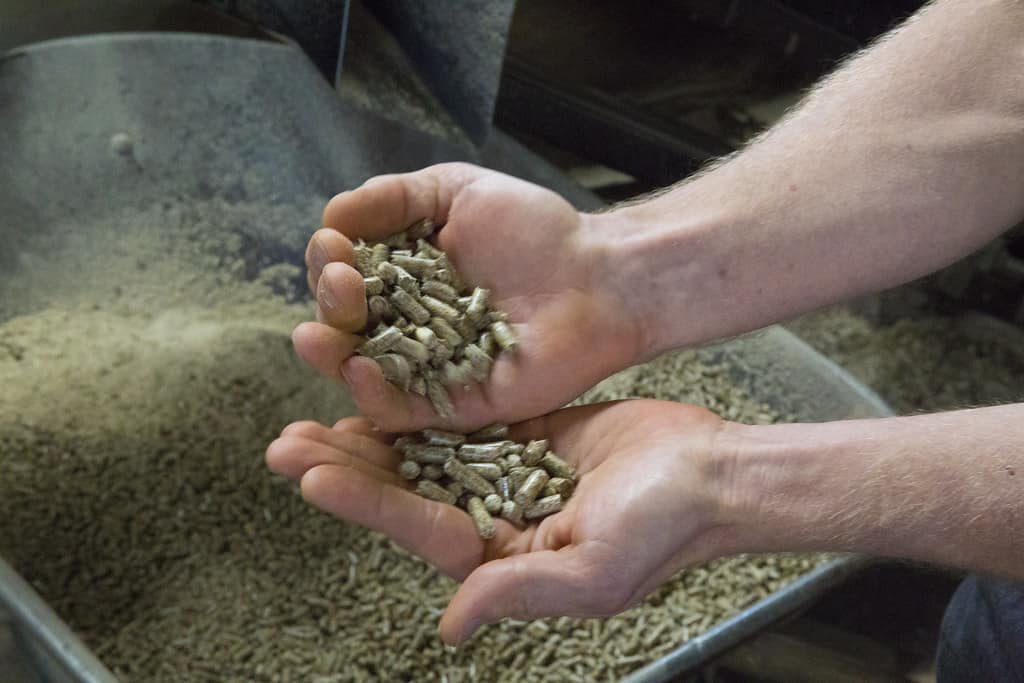
Wood pellets are the top choice among experienced breeders and rabbit rescues. They are made from compressed sawdust (usually pine) that has been kiln-dried to remove phenols and moisture. Wood pellets are:
- Highly absorbent: A single pellet can absorb several times its weight in liquid.
- Excellent at odor control: They neutralize ammonia from rabbit urine far better than most alternatives.
- Affordable: A 40-pound bag of wood stove pellets (the same product repackaged as "small animal bedding" at triple the price) costs around $5 to $7 at most hardware stores.
- Safe to ingest: If your rabbit chews on them, the kiln-dried wood poses no toxicity risk.
- Easy to clean: Wet pellets break down into sawdust, making it obvious which areas need changing.
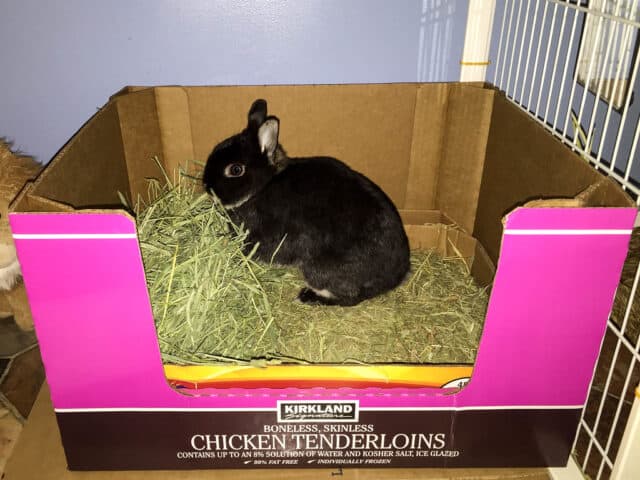
For best results, add a layer of wood pellets about 2.5 cm (1 inch) deep in the litter box, then top with a generous layer of timothy hay. Your rabbit will sit in the box eating hay, which naturally encourages good litter habits.
Paper-Based Litter (Cellulose Bedding)
Paper-based bedding like Carefresh or similar brands is made from recycled paper pulp processed into soft, absorbent pieces. It is dust-free, non-toxic, and widely available at pet stores. Paper bedding works well for rabbits with respiratory sensitivities since it produces virtually no dust.
The downsides are cost (it is more expensive per volume than wood pellets) and slightly weaker odor control. You will need to change paper-based litter more frequently, roughly every 2 to 3 days compared to every 4 to 5 days for wood pellets.
Aspen Shavings
Aspen shavings are a safe hardwood option. Unlike pine and cedar, aspen does not contain harmful phenols even without kiln-drying. Aspen shavings are dust-free, absorbent, and readily available. They work best as a secondary layer under hay or mixed with paper bedding.
Aspen is slightly less absorbent than wood pellets, so you may need a thicker layer (about 5 cm or 2 inches) to achieve the same level of moisture control.
Shredded Paper
If budget is a concern, shredded paper is the most affordable option. Use paper printed with vegetable-based or soy-based inks (most modern newspapers use these). Avoid glossy magazine paper or heavily printed marketing materials, as these may use chemical-based inks.
Shredded paper has the weakest absorbency and odor control of all the options. You will need to change it daily, and it can become damp and messy quickly. It works best as a temporary solution or supplemental bedding rather than a primary litter material.
Litter Comparison Table
| Litter Type | Absorbency | Odor Control | Cost | Change Frequency | Safe If Eaten |
|---|---|---|---|---|---|
| Kiln-dried wood pellets | Excellent | Excellent | Low | Every 4-5 days | Yes |
| Paper-based (Carefresh) | Good | Moderate | High | Every 2-3 days | Yes |
| Aspen shavings | Good | Good | Medium | Every 3-4 days | Yes |
| Shredded paper | Low | Poor | Very low | Daily | Yes |
| Clumping cat litter | High | High | Medium | N/A | No - Dangerous |
| Crystal cat litter | High | High | High | N/A | No - Dangerous |
How to Set Up the Perfect Rabbit Litter Box
Choosing safe litter is only half the equation. A properly set up litter box makes all the difference for cleanliness, odor control, and encouraging your rabbit to use it consistently.
Choosing the Right Box
Use a litter box large enough for your rabbit to sit in comfortably with room to turn around. For most medium-sized breeds (2 to 4 kg), a cat-sized litter pan works well. For larger breeds like Flemish Giants, you may need a storage container or cement mixing tub. The box should have low sides on one end (about 7 to 10 cm) so your rabbit can hop in and out easily.
The Layering Method
- Bottom layer: Place a 2.5 cm (1 inch) layer of kiln-dried wood pellets or your chosen safe litter.
- Top layer: Add a generous pile of fresh timothy hay on top of or beside the litter. Rabbits eat and poop at the same time, so having hay in the box is the single best way to encourage litter box use.
- Placement: Put the litter box in the corner your rabbit has already chosen as their bathroom spot. Rabbits are creatures of habit and will naturally pick a corner.
Cleaning Schedule
Spot-clean the litter box daily by removing any soiled hay and the wettest litter. Do a complete litter change based on the type you use (see the comparison table above). A thorough weekly cleaning with white vinegar and water keeps odors under control and prevents urine scale buildup.
Common Mistakes When Choosing Rabbit Litter
Beyond cat litter, several other common products are unsafe or unsuitable for rabbits. Knowing what to avoid saves you from trial-and-error at your rabbit's expense.
Corn Cob Bedding
Corn cob litter is sometimes marketed for small animals, but it is a poor choice for rabbits. It molds quickly when damp, can cause blockages if eaten in large amounts, and has weak odor control.
Straw as Sole Litter
Straw is sometimes confused with hay, but it has almost no absorbency. It works as insulation in outdoor hutches during cold weather but is not effective as litter box material. It stays damp, harbors bacteria, and does not control odor.
Softwood Shavings (Non-Kiln-Dried Pine or Cedar)
Raw pine and cedar shavings contain phenolic compounds that are linked to liver damage and respiratory irritation in rabbits. Only use pine products that are explicitly labeled "kiln-dried" and intended for small animals. Cedar should be avoided entirely as even kiln-drying may not remove all harmful compounds.
Clay-Based or Clumping "Small Animal" Litter
Some products marketed for small animals still contain clay or clumping agents. Always read the ingredient list regardless of what animal is pictured on the packaging. If it contains bentonite, silica, or any clumping agent, it is not safe for rabbits.
Litter Training Your Rabbit with Safe Materials
Switching to rabbit-safe litter is also a great time to reinforce litter training habits. Spayed and neutered rabbits are much easier to litter train since hormonal marking behaviors are reduced. Most rabbits can be reliably trained within 1 to 2 weeks with consistent setup.
Place a few of your rabbit's droppings in the new litter box to signal that this is the designated bathroom area. If your rabbit starts using a different corner, move the box to that location rather than fighting their instinct. Once the habit is established, you can gradually reposition the box if needed.
Frequently Asked Questions
Can I use non-clumping cat litter for my rabbit?
No. Even non-clumping cat litter is made from clay, silica, or synthetic materials that are not safe for rabbits to ingest. Rabbits eat their litter, so any product not designed for herbivores poses a risk. Stick with wood pellets, paper bedding, or aspen shavings instead.
What is the cheapest safe litter for rabbits?
Kiln-dried wood stove pellets are the most affordable option. A 40-pound bag costs $5 to $7 at hardware stores and lasts weeks for a single rabbit. They are the same product sold as "small animal wood pellets" at pet stores for three to four times the price.
How often should I change my rabbit's litter?
With wood pellets, a full change every 4 to 5 days works well with daily spot-cleaning. Paper bedding needs changing every 2 to 3 days. Shredded paper should be replaced daily. The frequency depends on your rabbit's size, how many rabbits share the box, and the litter type you use.
Can cat litter kill a rabbit?
Yes. If a rabbit eats enough clumping cat litter, it can cause a complete intestinal blockage. Untreated blockages lead to GI stasis, organ failure, and death, sometimes within 48 hours. If your rabbit eats cat litter, contact a rabbit-savvy veterinarian immediately.
Is pine litter safe for rabbits?
Kiln-dried pine pellets are safe because the heat treatment removes toxic phenols. Raw or air-dried pine shavings are not safe. Always check that the product is labeled "kiln-dried" before using it with rabbits. Avoid cedar entirely.
Cite this article:
Cite this article:
BunnySync (March 12, 2026) Can Rabbits Use Cat Litter? Safe Alternatives for Your Bunny. Retrieved from https://bunnysync.com/blog/can-rabbits-use-cat-litter.
"Can Rabbits Use Cat Litter? Safe Alternatives for Your Bunny." BunnySync - March 12, 2026, https://bunnysync.com/blog/can-rabbits-use-cat-litter