The proper rabbit litter box size depends on your rabbit's breed and weight, but the minimum dimensions should be 16 inches long by 12 inches wide for a small adult rabbit weighing under 5 pounds. Medium breeds (5 to 10 pounds) need at least 18 by 14 inches, and giant breeds like Flemish Giants require 24 by 18 inches or larger. Your rabbit should be able to sit, turn around, and stretch out comfortably inside the box without any part of their body hanging over the edge.
Getting the right litter box is one of the most important steps in successful litter training. A box that is too small leads to missed droppings, a frustrated rabbit, and a messy living area. A box that is too large wastes litter and takes up valuable cage space. This guide covers exactly how to size, choose, and set up the perfect litter box for your rabbit.
What Size Litter Box Does Your Rabbit Need?
The golden rule is simple: your rabbit should be able to sit fully inside the litter box with room to spare on all sides. Rabbits like to eat while they do their business, so they need enough space to sit comfortably and reach their hay at the same time.
Here is a quick sizing guide based on rabbit weight:
| Rabbit Size | Weight Range | Minimum Litter Box Dimensions | Example Breeds |
|---|---|---|---|
| Small | Under 5 lbs | 16" L x 12" W x 5" H | Netherland Dwarf, Mini Rex, Holland Lop |
| Medium | 5 to 10 lbs | 18" L x 14" W x 6" H | Dutch, Mini Lop, English Angora |
| Large | 10 to 14 lbs | 20" L x 16" W x 6" H | New Zealand, Californian, Rex |
| Giant | Over 14 lbs | 24" L x 18" W x 8" H | Flemish Giant, Continental Giant, French Lop |
If your rabbit is still growing, always size up. Buy for their expected adult weight, not their current size. This saves you from replacing the litter box in a few months.
Wall Height Matters Too
The walls of the litter box should be tall enough to contain litter and droppings (at least 4 to 6 inches) but low enough on one side for easy entry. Many breeders cut a U-shaped dip into the front wall, creating an entrance that is about 2 to 3 inches high. This works especially well for senior rabbits or those with mobility issues.
If your rabbit tends to spray urine against the back wall, look for a litter box with a higher back panel (8 to 10 inches). This prevents urine from hitting the cage or wall behind the box.
What Type of Litter Box Should You Get for Your Rabbit?
Not all litter boxes are created equal. Each type has strengths and weaknesses depending on your rabbit's habits, your cage setup, and how much time you want to spend cleaning.
Litter Box with Hay Rack
This is the top pick for most rabbit owners, and for good reason. Rabbits naturally eat and poop at the same time. A litter box with an attached hay rack takes advantage of this behavior and makes litter training significantly easier.
The hay rack sits on one end of the box, keeping fresh hay within easy reach. Your rabbit sits in the box to munch on hay and naturally deposits droppings in the litter below. It is the most efficient design for encouraging consistent litter box use.
Pros:
- Makes litter training faster and more reliable
- Keeps hay cleaner since it stays above the litter
- Encourages proper eating and elimination habits
- Available in sizes suitable for small to medium breeds
Cons:
- Wooden hay racks can absorb urine over time, so look for plastic or coated options
- May be too small for giant breeds
- Needs regular hay refills (at least twice daily)
If your rabbit is not yet spayed or neutered, be aware that hormonal spraying can soak into wooden components. Getting your rabbit fixed before litter training makes the whole process much smoother.
Enclosed Litter Box
Enclosed or hooded litter boxes mimic the dark, sheltered burrows that rabbits instinctively seek out. Many rabbits feel safer using an enclosed box because it satisfies their natural desire to hide while they are vulnerable.
Pros:
- Provides a sense of security and privacy
- Contains litter scatter better than open designs
- Reduces odor spread in the room
- Some rabbits actually prefer sleeping inside them
Cons:
- Harder to monitor your rabbit's droppings for health changes
- Can trap ammonia fumes if not cleaned frequently
- Some rabbits dislike the confined space and refuse to use it
- Litter can scatter when the rabbit hops out through the opening
To reduce litter scatter with an enclosed box, choose one with a raised lip at the entrance (at least 3 inches). Some owners also place a small mat outside the entrance to catch stray litter on the rabbit's feet.
Corner Litter Box
Corner litter boxes are triangular and designed to fit snugly into the corner of a rabbit hutch or cage. They are the most space-efficient option and work well when cage real estate is limited.
Pros:
- Maximizes usable cage space
- Fits neatly into corners where rabbits often choose to urinate anyway
- Lightweight and easy to remove for cleaning
- Affordable
Cons:
- Only suitable for small to medium rabbits (under 8 pounds)
- Low walls mean more litter scatter, especially with rabbits that dig
- Limited space means your rabbit may hang over the edges
- Not ideal as the primary litter box for free-roaming rabbits
Corner boxes work best as a secondary litter box in a multi-box setup, or for small breeds that live primarily in a cage.
Storage Bins and DIY Litter Boxes
Many experienced breeders skip pet store litter boxes entirely and use large plastic storage bins or under-bed storage containers instead. This is often the best solution for large and giant breed rabbits.
Pros:
- Available in virtually any size
- Much cheaper than purpose-built rabbit litter boxes
- High walls contain litter and urine effectively
- Easy to cut a custom entrance to the exact height you need
Cons:
- Requires some DIY work (cutting an entrance, sanding edges)
- Not as visually polished as commercial options
- Clear bins may make some rabbits feel exposed
To make a DIY litter box, pick a storage bin that is at least as long as your rabbit from nose to tail. Use a rotary tool or heavy-duty scissors to cut a U-shaped entrance in one of the short sides, about 3 inches from the bottom. Sand any sharp edges smooth. This gives you a large, high-walled litter box for a fraction of the cost of commercial options.
Low-Entry Litter Boxes for Senior or Disabled Rabbits
If your rabbit has arthritis, splay leg, or any condition that makes hopping difficult, a standard litter box with high walls becomes a barrier. Low-entry litter boxes have one side cut down to just 1 to 2 inches, allowing the rabbit to walk in without lifting their legs.
You can buy purpose-made low-entry boxes, or modify any plastic container by cutting one side down. Line the inside with a puppy pad under the litter to catch any overflow from the lower wall.
What Is the Best Litter to Put in a Rabbit Litter Box?
The litter material matters just as much as the box itself. The wrong litter can cause respiratory problems, GI blockages, or toxic reactions. Here is what works and what to avoid:
Safe Litter Options
| Litter Type | Absorbency | Odor Control | Cost | Notes |
|---|---|---|---|---|
| Paper-based pellets (Yesterday's News, Carefresh) | High | Good | Medium | Most popular choice among rabbit owners |
| Kiln-dried pine pellets (horse bedding) | Very High | Excellent | Low | Must be kiln-dried to remove phenols |
| Aspen shavings | Moderate | Fair | Low | Safe wood option, though dustier |
| Hemp bedding | Very High | Good | Medium-High | Low dust, highly absorbent, eco-friendly |
Litter Materials to Avoid
- Cedar shavings: Contain aromatic phenols that damage a rabbit's liver and respiratory system
- Non-kiln-dried pine shavings: Same phenol risk as cedar, though less severe
- Clumping cat litter: Rabbits nibble on everything. Clumping litter expands in the digestive tract and can cause fatal blockages
- Crystal/silica cat litter: Toxic if ingested
- Corn cob litter: Molds quickly and can cause GI blockages
- Newspaper alone: Extremely poor absorbency, ink can stain fur
The best approach is to layer about 1 inch of paper-based or kiln-dried pine pellets in the bottom of the box, then pile fresh timothy hay on top. Your rabbit eats the hay, poops into the litter below, and you get easy cleanup.
How Do You Set Up a Rabbit Litter Box Correctly?
Even the best litter box will fail if it is not set up properly. Follow these steps for a clean, effective setup:
- Place the box where your rabbit already goes. Watch where your rabbit chooses to urinate during the first few days. Put the litter box in that exact spot. Rabbits are creatures of habit and prefer to return to the same location.
- Add 1 inch of safe litter. Do not fill the box too deep. One inch is enough for absorbency without wasting litter. Rabbits do not bury their droppings like cats, so deep litter is unnecessary.
- Pile fresh hay on one end. This is the single most effective litter training trick. Rabbits eat and poop simultaneously, so having hay in or right next to the box keeps them sitting there longer.
- Place a few droppings inside. If your rabbit is new to the litter box, pick up some of their droppings and place them in the box. This scent marker tells the rabbit, "This is where you go."
- Secure the box. Lightweight litter boxes can get flipped or pushed around. Use binder clips to attach the box to the cage bars, or place a heavy ceramic tile under it for stability.
How Often Should You Clean a Rabbit Litter Box?
Cleaning frequency depends on your rabbit's size, the litter type, and how many rabbits share the box. As a general rule:
- Daily: Remove soiled hay and top up with fresh hay. Spot-clean any wet patches if using paper-based litter.
- Every 2 to 3 days: Complete litter change for single-rabbit households. Dump all litter, rinse the box with hot water, and refill with fresh litter and hay.
- Weekly: Deep clean with white vinegar (1 part vinegar to 1 part water). This dissolves calcium deposits from rabbit urine, which can build up as a white chalky residue.
If you notice a strong ammonia smell before your scheduled cleaning day, clean early. Ammonia buildup from urine is harmful to your rabbit's respiratory system and can lead to serious health issues over time. According to the House Rabbit Society, maintaining a clean litter box is one of the most critical aspects of indoor rabbit care.
How Many Litter Boxes Does a Rabbit Need?
The number of litter boxes depends on your rabbit's living situation:
- Cage-only rabbits: One litter box inside the cage is usually sufficient, as long as it is properly sized.
- Free-roaming rabbits (one room): Two litter boxes: one in their home base area and one in the room where they spend the most time.
- Free-roaming rabbits (whole house): One litter box per room the rabbit has access to, plus one in their enclosure. Most owners use 3 to 4 boxes total.
- Bonded pairs: At least two litter boxes. Some bonded pairs share a single large box, but having a backup prevents territorial accidents.
More litter boxes means fewer accidents, especially during the initial training period. You can gradually reduce the number once your rabbit proves reliable.
Why Is Your Rabbit Not Using the Litter Box?
If your rabbit suddenly stops using the litter box, or never took to it in the first place, there is almost always an identifiable cause. Here are the most common reasons:
The Box Is Too Small
This is the number one reason for litter box failure. If your rabbit has outgrown the box, their droppings and urine end up outside the edges. Upgrade to a larger box and the problem often resolves immediately.
The Box Is Too Dirty
Rabbits are clean animals. Many will refuse to use a litter box that has not been cleaned in several days. If your rabbit starts going next to the box instead of inside it, that is a sign you need to clean more frequently.
Hormonal Behavior
Unspayed or unneutered rabbits spray urine to mark territory. Spaying or neutering almost always resolves this behavior and dramatically improves litter box habits. Most veterinarians recommend fixing rabbits between 4 and 6 months of age.
Medical Issues
Sudden changes in litter box behavior can signal urinary tract infections, bladder sludge, or kidney problems. If your rabbit is straining to urinate, producing red or cloudy urine, or urinating in unusual places, schedule a vet visit promptly.
Territorial Marking
Even fixed rabbits may scatter droppings around a new environment as a way of claiming their space. This is normal and usually decreases as the rabbit settles in. Placing a litter box in the spot where most droppings accumulate helps redirect this behavior.
Can You Use a Cat Litter Box for a Rabbit?
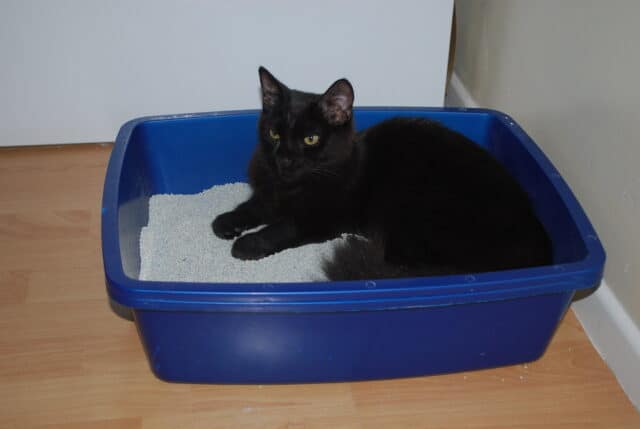
Yes, standard cat litter boxes work well for rabbits, and many breeders actually prefer them over purpose-built rabbit litter boxes. Cat litter boxes tend to be larger, have higher walls, and come in more sizes. Just make sure you use rabbit-safe litter, not cat litter, inside it.
A medium-sized cat litter box (roughly 18 by 14 inches) fits most rabbit breeds up to about 10 pounds. For giant breeds, look at the jumbo-sized cat litter boxes or large storage bins.
Avoid automatic or self-cleaning cat litter boxes. The mechanical parts can injure a curious rabbit, and the noise may scare them away from using the box entirely.
Tips for Keeping a Rabbit Litter Box Clean and Odor-Free
Rabbit urine has a strong smell, especially in warmer weather. Here are practical tips from experienced breeders for keeping odor under control:
- Use kiln-dried pine pellets. They are the most cost-effective option for odor control. A 40-pound bag of horse stall pellets costs around $6 to $8 and lasts months.
- Sprinkle baking soda under the litter. A thin layer of baking soda on the bottom of the box (under the litter, never on top where the rabbit sits) neutralizes ammonia.
- Add a splash of white vinegar during cleaning. Vinegar dissolves the calcium deposits from rabbit urine and eliminates lingering odor.
- Change litter before it smells. If you can smell it, your rabbit can smell it ten times stronger. Fresh litter every 2 to 3 days prevents odor buildup.
- Ensure good ventilation. Do not place the litter box in a closed cabinet or poorly ventilated area. Air circulation helps dry the litter and reduces ammonia concentration.
Research published by the Merck Veterinary Manual confirms that ammonia levels above 10 ppm in a rabbit's environment can cause respiratory inflammation and increase susceptibility to pasteurella infections.
Frequently Asked Questions
Can you use newspaper as rabbit litter?
Newspaper alone is not a good choice because it absorbs very little liquid and quickly becomes a soggy mess. However, you can use shredded newspaper as a bottom layer underneath paper-based pellets for extra absorbency. Just avoid glossy or colored inserts, as the ink may irritate your rabbit's skin.
How deep should the litter be in a rabbit litter box?
One inch of litter is sufficient for most setups. Rabbits do not bury their droppings like cats, so deep litter just gets wasted. Layer 1 inch of absorbent pellets on the bottom and pile timothy hay on top. This creates an efficient, easy-to-clean setup.
Should you put hay directly in the litter box?
Yes. Placing hay in or directly next to the litter box is the single best trick for litter training. Rabbits eat and poop at the same time, so having hay available in the box keeps them sitting there and depositing droppings exactly where you want them.
At what age can you start litter training a rabbit?
You can begin litter training as early as 8 weeks old, but rabbits become much easier to train after being spayed or neutered at 4 to 6 months. Fixed rabbits have fewer hormonal urges to mark territory and tend to develop consistent litter habits faster.
Do you need a litter box if your rabbit lives in a cage?
Absolutely. Without a dedicated litter box, your rabbit sits in its own waste between cage cleanings. A litter box confines the mess to one area, keeps the rest of the cage clean, and makes daily maintenance much faster. Even rabbits in large hutches benefit from a designated litter spot.
Cite this article:
BunnySync (March 8, 2026) Rabbit Litter Box Size Guide: How to Choose the Right One in 2026. Retrieved from https://bunnysync.com/blog/rabbit-litter-box.
"Rabbit Litter Box Size Guide: How to Choose the Right One in 2026." BunnySync - March 8, 2026, https://bunnysync.com/blog/rabbit-litter-box