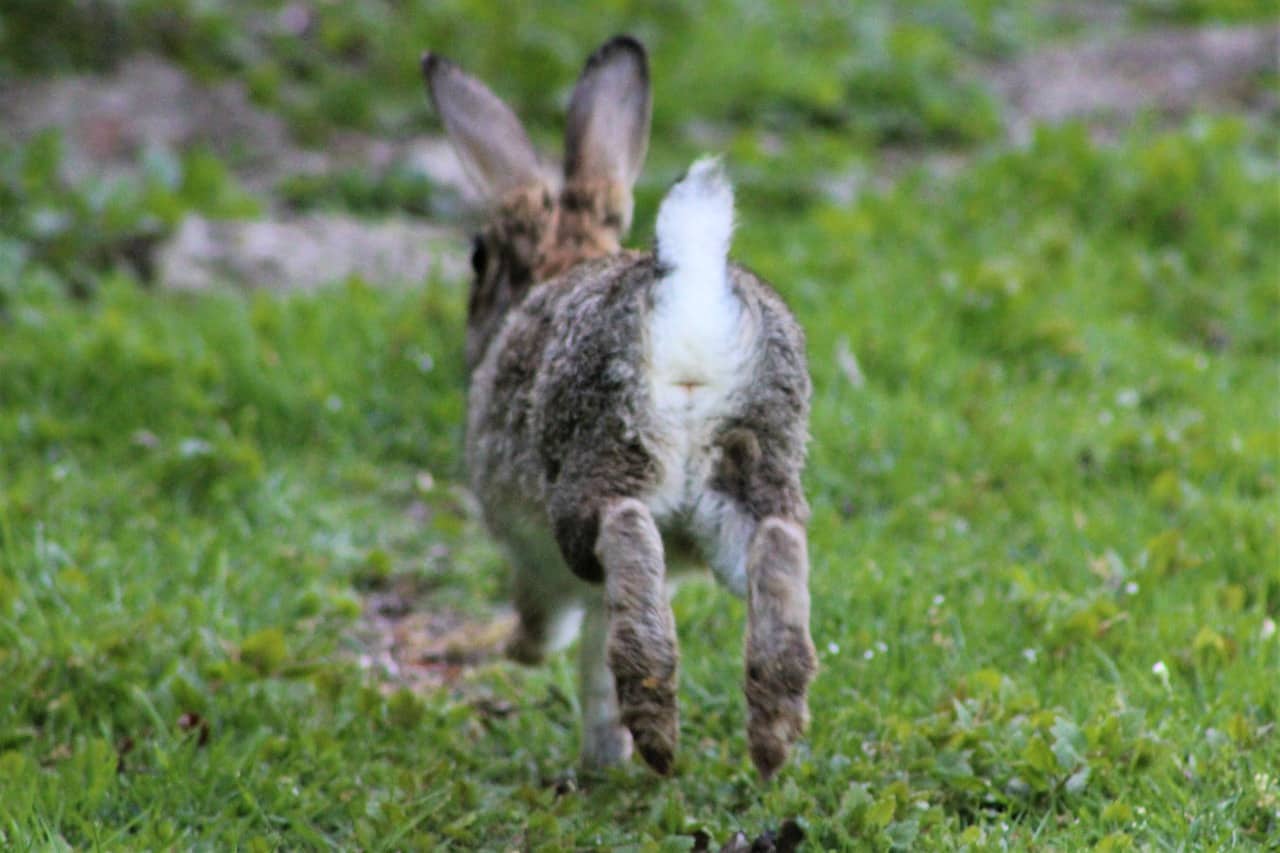
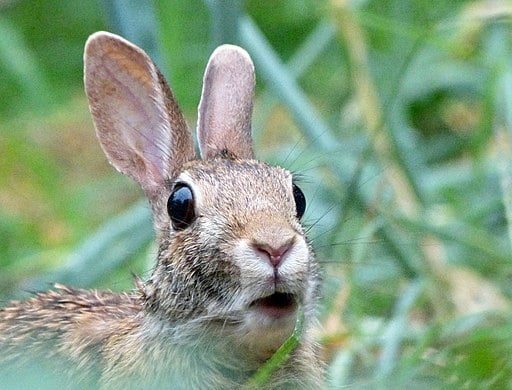
Rabbits stand on their hind legs for several reasons: to get a better view of their surroundings, to scan for predators, to beg for food or attention, to reach something high up, or to fight rival rabbits in what breeders call "the boxing behavior." Wild rabbits rely on this posture for survival, while pet rabbits use it mostly for communication and curiosity. Understanding why your rabbit stands upright helps you respond to their needs and recognize when something might be wrong.
Why Do Rabbits Stand on Their Hind Legs?
When a rabbit rises onto its back legs, it is performing a behavior known as "periscoping." The term comes from the way a submarine periscope rises above water to survey the area. Rabbits do the same thing, lifting their body higher to give their eyes, ears, and nose a wider range.
This behavior is completely natural in both wild and domestic rabbits. However, the motivation behind it differs depending on the context. A wild cottontail periscoping in a meadow is likely checking for hawks or foxes. A pet Holland Lop doing the same thing next to your kitchen counter is probably hoping you will drop a piece of banana.
Below are the five most common reasons rabbits stand on their hind legs, along with what each one looks like and how you should respond.
1. Your Rabbit Is Surveying Its Surroundings
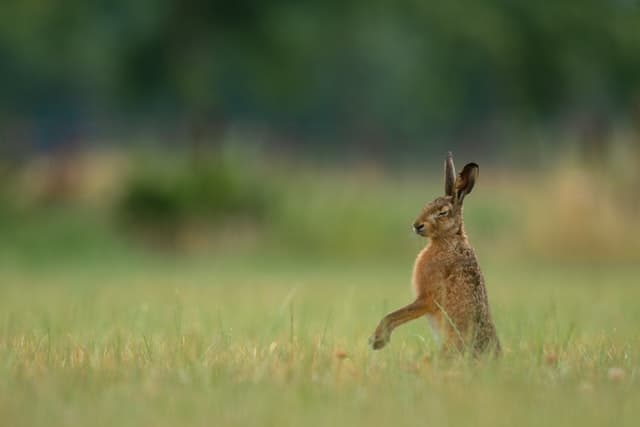
Rabbits are prey animals, and their survival depends on staying aware of what is happening around them. Standing on their hind legs gives them a higher vantage point, which is especially useful in tall grass or uneven terrain where threats might be hidden at ground level.
Even though rabbits already have nearly 360-degree vision thanks to their laterally placed eyes, periscoping adds vertical range. From a higher position, a rabbit can see over obstacles, detect movement at a greater distance, and pick up scents carried on air currents above ground level.
Pet rabbits do this too, even though they face no real predators indoors. You might notice your rabbit standing up when you rearrange furniture, introduce a new object to their space, or open a window that brings in unfamiliar smells. This is your rabbit's way of protecting itself by gathering information about changes in its environment.
What It Looks Like
When a rabbit is surveying, it typically stands tall with ears fully upright and rotating. The nose twitches rapidly as it processes scent information. The body is tense but not aggressive. The rabbit will hold this posture for several seconds to a minute before either relaxing or moving to a different spot to check again.
How to Respond
If your pet rabbit is periscoping because of a new change in its environment, give it time to investigate. Avoid making sudden movements or loud noises while it is in this alert state. Once the rabbit determines there is no threat, it will relax on its own. Forcing interaction while your rabbit is in survey mode can increase stress.
2. Your Rabbit Is Scanning for Predators

This is closely related to surveying, but predator scanning is more urgent. Wild rabbits perform this behavior before leaving their burrow, before eating in an open area, and at regular intervals while grazing. Research published by the University of California, Davis notes that rabbits rely on a combination of excellent hearing, wide-angle vision, and elevated posture to detect threats from nearly any direction (UC Davis, Rabbits: From the Animal's Point of View).
A rabbit scanning for predators will often freeze in the upright position. Unlike casual surveying, the rabbit's muscles are visibly tense, and the ears lock in one direction rather than rotating freely. If the rabbit detects danger, it will either thump its hind foot as a warning to other rabbits or bolt immediately.
Pet rabbits may display this predator-scanning behavior when they hear unfamiliar sounds, such as a doorbell, a dog barking, or thunder. If your rabbit seems scared or anxious while standing upright, speak to it softly and remove the source of the noise if possible.
Predator Scanning vs. Casual Surveying
| Behavior | Casual Surveying | Predator Scanning |
|---|---|---|
| Ear position | Rotating freely | Locked in one direction |
| Body tension | Relaxed but alert | Visibly tense, ready to flee |
| Duration | A few seconds | Prolonged, may thump foot |
| Nose movement | Steady twitching | Rapid, intense twitching |
| Trigger | New smells, changes in room | Loud sounds, unfamiliar animals |
3. Your Rabbit Is Exhibiting the Boxing Behavior
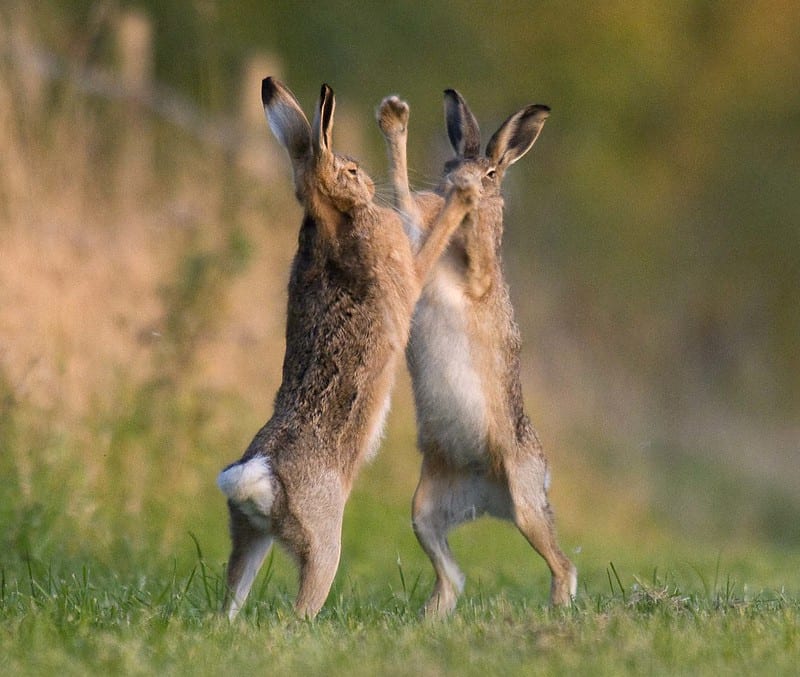
The boxing behavior is one of the most dramatic reasons rabbits stand on their hind legs. Two rabbits will face each other upright and strike with their front paws, scratching and pushing at their opponent. In the wild, this is a territorial display, most often seen between males competing for dominance or mating rights.
According to the Denver Dumb Friends League (DDFL House Rabbit Behavior Guide), domestic rabbits can also exhibit boxing behavior, especially unneutered males. The behavior communicates a clear message: "Back off, this is my space."
Here is an example of two wild rabbits fighting using the boxing behavior:
Boxing in Pet Rabbits
Pet rabbits sometimes direct boxing behavior at their owners. This usually happens when you are blocking their path to a favorite spot, when they are frustrated by being confined, or when they want you to move. In my experience, rabbits are more likely to box when they feel their personal space is being invaded, especially during cage cleaning.
If your rabbit boxes at you regularly, check that its nails are trimmed to prevent scratches. Rabbits with sharp claws can cause real injuries during a boxing episode. Also consider whether your rabbit is getting enough exercise and enrichment, as pent-up energy can increase aggressive displays.
When Boxing Becomes a Problem
Occasional boxing between bonded rabbits is normal, but frequent boxing can signal a breakdown in the bond. If two rabbits that used to get along are suddenly boxing and chasing each other, you may need to re-evaluate their living situation. Spaying or neutering often reduces territorial aggression significantly. If the boxing escalates to biting or fur pulling, separate the rabbits immediately and consult a rabbit-savvy veterinarian about next steps.
4. Your Rabbit Wants Your Attention

This is the reason most pet owners notice first. Your rabbit stands up on its hind legs next to your chair, stretches toward your hand, and looks at you with wide eyes. It is saying, "Hello, notice me."
Pet rabbits learn quickly that standing upright gets a reaction from their owners. If you have ever given your rabbit a treat or a head scratch when it stood up, you have reinforced the behavior. Over time, your rabbit will repeat this posture whenever it wants food, attention, or to be let out of its enclosure.
You can tell this is an attention-seeking behavior rather than a fear response by looking at the ears. A happy, curious rabbit will have its ears pointing upward and slightly forward. The body posture is relaxed, the nose twitches at a normal pace, and the rabbit may nudge your hand or clothing with its nose.
Should You Reward This Behavior?
There is nothing wrong with giving your rabbit attention when it stands up. In fact, this type of interaction strengthens the bond between you and your pet. Just be careful not to reward it exclusively with treats, or your rabbit may start standing up constantly as a way to beg for food. Mix in head scratches, gentle petting, and verbal praise to keep the interaction varied and healthy.
If you are working on understanding your rabbit's body language, the attention-seeking stand is one of the easiest signals to identify. It is always paired with a calm, open posture and a clear focus on you or whatever the rabbit wants.
5. Your Rabbit Is Trying to Reach Something
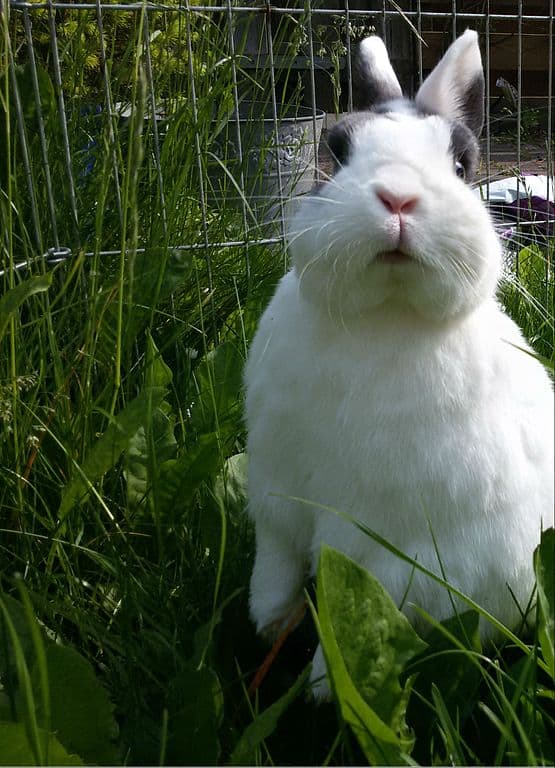
Sometimes the reason is purely practical. Your rabbit smells something interesting on a shelf, a table edge, or in your hands, and it stands up to get closer. Rabbits have an excellent sense of smell, and they can detect food from across a room. If your rabbit catches a whiff of fresh herbs, banana, or its favorite pellets, it will make a beeline toward the source and stretch as tall as possible.
This behavior is a good sign. A rabbit that stands up to reach for something you are holding shows a high level of trust. Rabbits are vulnerable in the upright position because they cannot sprint away quickly. The fact that your rabbit willingly puts itself in this position near you means it feels safe.
Safety Considerations
While reaching is natural, it can lead to problems if your rabbit stretches too far and loses balance. Rabbits have delicate spines, and a fall from even a short height can cause serious injury. If your rabbit regularly stands up against furniture or cage walls to reach things, make sure the surfaces are stable and cannot tip over.
Also be mindful of what your rabbit is trying to reach. Electrical cords, houseplants, and small objects on low shelves can all be hazardous. Rabbit-proof any areas where your pet free-roams to prevent accidental ingestion of toxic plants or dangerous items.
Is It Normal for Rabbits to Stand on Their Hind Legs?
Yes, standing on the hind legs is completely normal rabbit behavior. Both wild and domestic rabbits do it regularly, and it is not a cause for concern on its own. The behavior is instinctive and serves important functions related to survival, communication, and exploration.
However, if your rabbit is standing on its hind legs constantly and seems agitated, it may be a sign of stress, boredom, or an uncomfortable living environment. Rabbits kept in enclosures that are too small may stand up repeatedly because they feel confined. The House Rabbit Society recommends that enclosures should be at least four times the rabbit's stretched-out length to allow comfortable movement in all directions.
If the standing behavior is paired with foot thumping, teeth grinding, or refusal to eat, consult a rabbit-savvy veterinarian. These combined signals can indicate pain, illness, or significant stress that needs professional attention.
How High Can Rabbits Reach When Standing?
The height a rabbit can reach depends on its breed and size. Here is a general guide:
| Rabbit Size | Example Breeds | Approximate Standing Height |
|---|---|---|
| Small (2-4 lbs) | Netherland Dwarf, Mini Rex | 10-12 inches |
| Medium (5-8 lbs) | Holland Lop, Dutch | 14-16 inches |
| Large (9-12 lbs) | New Zealand, Californian | 18-22 inches |
| Giant (13+ lbs) | Flemish Giant, Continental Giant | 24-30+ inches |
Knowing your rabbit's reach is important for rabbit-proofing. Items placed at the edge of a table or countertop may be within reach of a determined rabbit standing at full height. Electrical cords, in particular, should be secured well above your rabbit's maximum standing reach or enclosed in protective tubing.
Tips for Responding to Your Rabbit's Upright Behavior
- Read the context. Look at ear position, body tension, and the environment to determine whether your rabbit is curious, scared, or begging.
- Stay calm. If your rabbit is scanning for threats, avoid sudden movements that could escalate its fear.
- Reward appropriately. Use head scratches and verbal praise alongside treats to avoid creating a begging habit.
- Keep nails trimmed. Boxing rabbits with sharp claws can cause scratches. Trim nails every 4 to 6 weeks, or learn how to naturally wear down your rabbit's claws.
- Rabbit-proof your space. If your rabbit stands to reach things, make sure hazardous items are out of reach.
- Provide enrichment. A bored rabbit may stand and box more often. Offer tunnels, chew toys, and daily free-roam time.
Frequently Asked Questions
Why does my rabbit stand on its hind legs and look at me?
Your rabbit is most likely asking for attention, food, or treats. Pet rabbits quickly learn that standing up gets a response from their owners. If the ears are upright and the body is relaxed, your rabbit is happy and curious, not stressed or afraid.
Is it bad for rabbits to stand on their hind legs?
No, standing on the hind legs is a natural behavior that all rabbits do. It only becomes a concern if your rabbit loses balance and falls, which can injure their delicate spine. Make sure surfaces around your rabbit are stable and the floor is not slippery.
Why do wild rabbits stand up before eating?
Wild rabbits periscope before eating to scan for predators. By standing tall, they can see, hear, and smell threats from a greater distance. Once they confirm the area is safe, they lower down and begin grazing, repeating the check at regular intervals.
How do I stop my rabbit from boxing me?
Avoid blocking your rabbit's path or cornering it. Give your rabbit space to move freely, and keep its nails trimmed to prevent scratches. Spaying or neutering can reduce hormonal aggression that drives boxing behavior in both male and female rabbits.
Do all rabbit breeds stand on their hind legs?
Yes, all rabbit breeds periscope. Larger breeds like Flemish Giants can reach impressive heights of 24 to 30 inches when standing. Smaller breeds like Netherland Dwarfs stand up just as frequently but reach only 10 to 12 inches tall.
Cite this article:
Cite this article:
BunnySync (March 7, 2026) Why Do Rabbits Stand On Their Hind Legs? 5 Reasons Explained. Retrieved from https://bunnysync.com/blog/why-do-rabbits-stand-on-their-hind-legs.
"Why Do Rabbits Stand On Their Hind Legs? 5 Reasons Explained." BunnySync - March 7, 2026, https://bunnysync.com/blog/why-do-rabbits-stand-on-their-hind-legs
Sources and further reading
- Buseth, Marit Emilie., and Richard A. Saunders. Rabbit Behaviour, Health, and Care. CABI, 2014.
- Lebas, F. The Rabbit: Husbandry, Health, and Production. Food and Agriculture Organization of the United Nations, 1997.
- Patry, Karen, et al. The Rabbit-Raising Problem Solver: Your Questions Answered about Housing, Feeding, Behavior, Health Care, Breeding, and Kindling. Storey Publishing, 2014.
- Rabbits: From the Animal's Point of View. University of California, Davis.
- House Rabbit Behavior. Denver Dumb Friends League.