A rabbit should eat a pile of hay roughly the size of its own body every single day. That works out to about 80% or more of their total diet. The best approach, though, is to provide unlimited hay at all times and let your rabbit eat as much as they want. Rabbits self-regulate their hay intake well, and restricting it only increases the risk of GI stasis, dental disease, and other serious health problems.
Timothy hay is the best all-around option for adult rabbits, while alfalfa hay is appropriate for kits under 7 months old due to its higher protein and calcium content. If your rabbit is not eating enough hay, that usually signals a problem with the hay quality, their teeth, or too many pellets and treats filling them up instead.
How Much Hay Does a Rabbit Need Per Day?
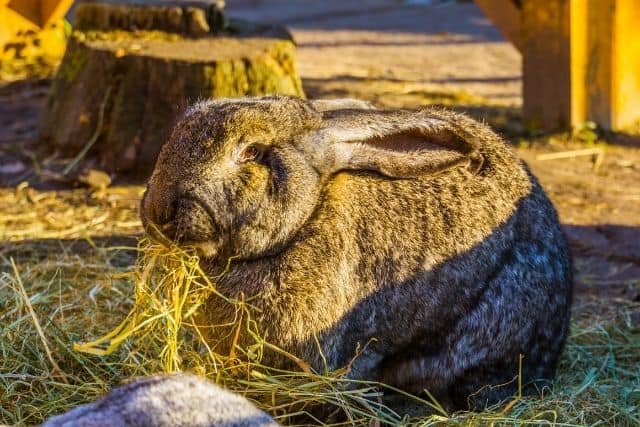
The general rule is a body-sized pile of hay per day, but the actual amount varies by your rabbit's weight. Here is a more specific breakdown:
| Rabbit Weight | Daily Hay Amount | Notes |
|---|---|---|
| 2 to 4 lbs (dwarf breeds) | 1 to 2 large handfuls | Still needs unlimited access. Smaller rabbits eat less but graze constantly. |
| 4 to 7 lbs (medium breeds) | 2 to 4 large handfuls | This is the most common pet rabbit weight range. Refill hay twice daily. |
| 8 to 12 lbs (large breeds) | 4 to 6 large handfuls | Large breeds need proportionally more. Use a large hay rack or hay box. |
| 12+ lbs (giant breeds) | 6+ large handfuls | Giants like Flemish or Continental eat massive amounts. Buy hay in bulk. |
These numbers are minimums. In practice, the best strategy is to always have hay available. If your rabbit's hay rack is empty at any point during the day, you are not providing enough. We keep our hay racks full around the clock in our rabbitry and our rabbits eat whenever they feel like it.
A rabbit's digestive system is designed for continuous fiber intake. Unlike dogs or cats that eat meals, rabbits are hindgut fermenters that need a constant flow of fiber moving through their cecum. When the gut is empty for too long, bacteria overproduce gas, motility slows, and GI stasis sets in.
Why Is Hay So Important for Rabbits?
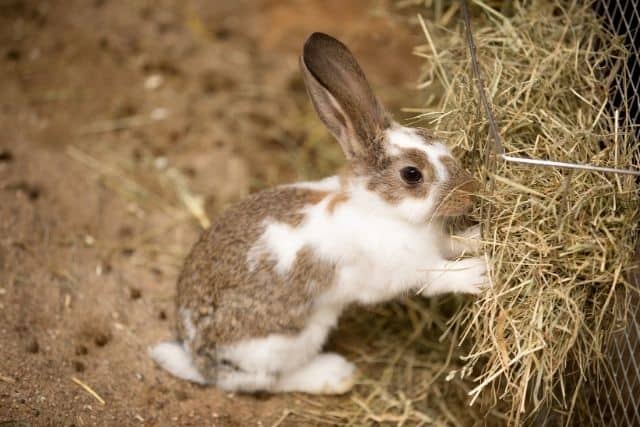
Hay is not just food for rabbits. It serves multiple critical functions that no other food can replace.
Digestive Health
The long fiber strands in hay are what keep a rabbit's gut moving. The cecum (a large pouch at the junction of the small and large intestines) relies on a constant supply of fiber to maintain healthy bacterial fermentation. Without enough fiber, the bacterial balance shifts, gas production increases, and gut motility slows or stops entirely.
According to the Veterinary Times, a diet high in starch and low in fiber is the primary cause of GI stasis in rabbits. This is the single most common reason rabbits end up at the emergency vet.
Dental Health
Rabbit teeth grow continuously at a rate of approximately 2 to 3 mm per week. The side-to-side grinding motion that rabbits use when chewing hay is the primary mechanism that wears their teeth down to a safe length. Without enough hay, the molars overgrow, develop sharp spurs that cut into the cheeks and tongue, and eventually make eating impossible.
Overgrown teeth can kill rabbits if left untreated. Pellets and vegetables do not require the same grinding motion as hay, so they do not provide adequate dental wear even if the rabbit is getting enough calories from other sources.
Mental Stimulation
Wild rabbits spend 6 to 8 hours per day foraging and grazing. Domestic rabbits have the same behavioral drive. Hay gives them something to do. Rabbits that do not have enough hay to chew on often develop destructive behaviors like chewing cage bars, digging at carpet, or overgrooming themselves. Providing unlimited hay satisfies their natural foraging instinct and reduces boredom.
Healthy Cecotropes
Rabbits produce two types of droppings: regular fecal pellets and cecotropes (soft, dark, nutrient-rich clusters that they eat directly from their bottom). A proper fiber intake is what produces healthy, well-formed cecotropes. When the diet is too low in fiber or too high in carbohydrates, cecotropes become mushy, the rabbit does not eat them, and they end up stuck to the rabbit's fur.
What Kind of Hay Is Best for Rabbits?
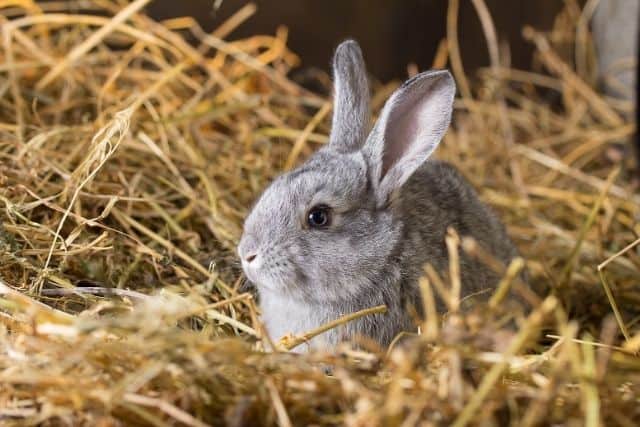
Not all hay is created equal. The type of hay matters just as much as the amount, and the best choice depends on your rabbit's age.
| Hay Type | Protein | Calcium | Fiber | Best For |
|---|---|---|---|---|
| Timothy hay (1st cut) | ~8% | ~0.4% | ~34% | Adult rabbits (standard choice). Higher stem content, maximum fiber. |
| Timothy hay (2nd cut) | ~9% | ~0.4% | ~32% | Adult rabbits. Softer and leafier. Picky eaters prefer this cut. |
| Timothy hay (3rd cut) | ~10% | ~0.5% | ~28% | Picky eaters or seniors with dental issues. Very soft, less fiber. |
| Orchard grass | ~10% | ~0.3% | ~32% | Adult rabbits. Good alternative or mix with timothy. Slightly sweeter smell. |
| Oat hay | ~10% | ~0.4% | ~31% | Adult rabbits. Good variety hay. Crunchy seed heads are a favorite. |
| Alfalfa hay | ~17% | ~1.4% | ~28% | Kits under 7 months, pregnant does, underweight rabbits ONLY. |
Timothy Hay for Adult Rabbits
Timothy hay is the gold standard for adult rabbits over 7 months old. It has the right balance of fiber, protein, and calcium. First-cut timothy has the highest fiber content and the most stem, which provides the best dental wear. Second-cut is softer and leafier, which some rabbits prefer. If your rabbit picks through first-cut timothy and only eats the leaves, try second-cut instead.
Alfalfa Hay for Young Rabbits
Alfalfa hay is higher in protein (17% vs 8%) and calcium (1.4% vs 0.4%) compared to timothy. This makes it ideal for growing kits who need the extra nutrients to develop properly. Pregnant and nursing does also benefit from alfalfa's higher calorie and calcium content.
However, alfalfa should not be fed to healthy adult rabbits as their primary hay. The excess calcium is excreted through the urine, which over time can lead to bladder sludge and urinary stones. If you notice your rabbit's urine is consistently thick and chalky white, excess calcium from alfalfa is a likely cause.
Mixing Hay Types
Many breeders mix two or three hay types to provide variety and encourage eating. A mix of timothy and orchard grass is popular. Adding a handful of oat hay on top gives your rabbit the crunchy seed heads they love, which makes the hay pile more appealing. Variety keeps rabbits interested in their hay, which means they eat more of it.
How Much Hay Should a Rabbit Eat by Age?
Hay requirements change as rabbits grow. Here is a complete feeding guide by life stage:
| Age | Hay Type | Amount | Additional Notes |
|---|---|---|---|
| Birth to 3 weeks | None (nursing only) | None | Kits nurse exclusively from the doe. |
| 3 to 7 weeks | Alfalfa | Unlimited | Kits start nibbling hay alongside nursing. Make sure hay is within reach. |
| 7 weeks to 7 months | Alfalfa | Unlimited | Primary growth phase. Alfalfa provides the protein and calcium needed. |
| 7 months to 1 year | Transition: alfalfa to timothy | Unlimited | Gradually mix in timothy over 2 to 3 weeks. Reduce alfalfa slowly. |
| 1 to 5 years (adult) | Timothy, orchard, or oat hay | Unlimited | Hay is 80%+ of the diet. Pellets are a supplement, not the main food. |
| 6+ years (senior) | Timothy + some alfalfa | Unlimited | Reintroduce small amounts of alfalfa if the rabbit is losing weight. Monitor calcium. |
The transition from alfalfa to timothy at 7 months is one of the most important dietary changes you will make. Do it gradually over 2 to 3 weeks by mixing increasing amounts of timothy into the alfalfa. A sudden switch can upset the gut bacteria balance and cause digestive issues.
What Happens If a Rabbit Does Not Eat Enough Hay?
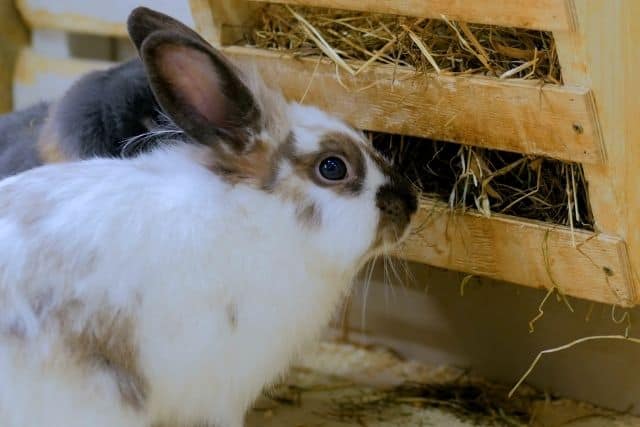
A rabbit that is not eating enough hay will eventually develop one or more of these problems:
- GI stasis. The gut slows down or stops completely due to insufficient fiber. This is a medical emergency that can kill a rabbit within 24 to 48 hours without treatment. A rabbit that stops pooping for more than 12 hours is likely in GI stasis.
- Dental disease. Teeth overgrow, spurs develop, abscesses form. Once dental disease is advanced, it often requires repeated veterinary interventions under anesthesia. Prevention through hay is far easier than treatment.
- Obesity. Rabbits that fill up on pellets and treats instead of hay gain weight rapidly. Obese rabbits cannot groom themselves properly, which leads to urine scald, fly strike, and cecotropes matted in the fur.
- Soft cecotropes. Without enough fiber, cecotropes are poorly formed, mushy, and smelly. The rabbit does not eat them, leading to nutritional deficiency and a messy bottom that attracts flies.
- Behavioral problems. Bored rabbits with nothing to chew become destructive. They chew baseboards, electrical cords, furniture, and cage bars. Unlimited hay gives them an appropriate outlet.
Why Is Your Rabbit Not Eating Hay?
If your rabbit is refusing hay or eating very little, do not ignore it. Here are the most common causes and what to do about each:
Too Many Pellets
This is the number one reason rabbits do not eat enough hay. If your rabbit fills up on pellets, they have no appetite left for hay. An adult rabbit should get no more than 1/4 cup of plain timothy pellets per 5 pounds of body weight. Some rabbit owners give far more than this, and their rabbit predictably ignores the hay.
Cut back pellets to the recommended amount and your rabbit will start eating more hay within a few days. They may protest at first, but they will not starve themselves.
Stale or Low-Quality Hay
Hay that has been sitting in a bag for months loses its smell and flavor. Rabbits are more attracted to fresh, green, fragrant hay than brown, dusty, old hay. Buy hay in smaller quantities if you have a single rabbit, and store it in a cool, dry place with good airflow. Never store hay in sealed plastic containers, as this traps moisture and promotes mold.
Dental Problems
A rabbit with overgrown molars, molar spurs, or tooth root abscesses will avoid eating hay because chewing is painful. If your rabbit grinds their teeth loudly, drools, or drops food from their mouth, get a veterinary dental exam. You cannot see the back molars without an otoscope, so this is not something you can diagnose at home.
Wrong Type of Hay
Some rabbits genuinely prefer one hay type over another. If your rabbit picks through timothy and only eats the leaves, try second-cut timothy (softer and leafier) or orchard grass. If they ignore hay entirely, try mixing in oat hay with its crunchy seed heads. Experimenting with different cuts and types often solves the problem.
Can Rabbits Survive on Just Hay?
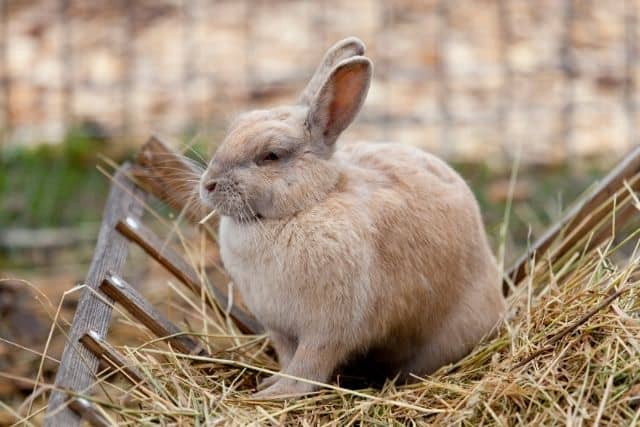
Yes, rabbits can survive on hay alone. Wild rabbits eat nothing but grass and wild plants, which are nutritionally similar to grass hay. Rabbits cannot survive without hay (or a hay equivalent), but they can survive without pellets, vegetables, or treats.
That said, a hay-only diet is not optimal. Pellets in small amounts provide concentrated vitamins and minerals. Fresh vegetables add variety and hydration. The ideal adult rabbit diet looks like this:
- 80% or more: Unlimited grass hay (timothy, orchard, oat, or a blend)
- 10%: Fresh leafy greens (safe vegetables like romaine, cilantro, parsley)
- 5%: Plain timothy pellets (1/4 cup per 5 lbs body weight)
- 5%: Occasional treats (small pieces of fruit, no more than 1 to 2 tablespoons per day)
Tips for Getting Your Rabbit to Eat More Hay
If your rabbit is not eating enough hay, try these strategies that we use in our own rabbitry:
- Reduce pellets first. This is the fastest fix. A hungry rabbit will eat hay. A full rabbit will not.
- Try a different hay type or cut. Second-cut timothy, orchard grass, and oat hay are all worth trying.
- Use a large hay rack. Small hay balls and tiny racks discourage eating. Use a rack that holds a day's worth of hay and lets your rabbit pull freely.
- Place hay near the litter box. Rabbits love to eat while they use the litter box. Putting a hay rack right next to or above the litter box dramatically increases hay consumption.
- Refresh hay twice daily. Remove old hay and add fresh hay morning and evening. Rabbits are more attracted to freshly placed hay.
- Mix hay into the litter box. Spreading hay on top of the litter creates a natural foraging environment that encourages eating.
- Buy from a farm if possible. Farm-fresh hay is greener, more fragrant, and more appealing than pet store hay that has been sitting in a warehouse for months.
Frequently Asked Questions
Can rabbits eat too much hay?
No. Rabbits cannot overeat timothy, orchard, or oat hay. Their digestive systems are built for continuous fiber processing. The only hay that should be limited is alfalfa for adult rabbits, because its high calcium content can cause urinary problems over time.
Should I remove old hay from the cage?
Remove soiled or wet hay daily, but do not throw away clean hay that your rabbit has not finished. Many rabbits are selective and eat the leafy parts first, then return to the stems later. Refresh the hay rack twice a day so there is always a mix of fresh and existing hay available.
How do I store hay to keep it fresh?
Store hay in a cool, dry area with good airflow. A cardboard box, breathable fabric bag, or open-topped container works well. Never seal hay in airtight plastic bins because trapped moisture causes mold growth. Keep hay off the ground and away from direct sunlight.
Is it normal for rabbits to eat hay at night?
Yes. Rabbits are crepuscular, meaning they are most active at dawn and dusk. Many rabbits do most of their hay eating in the evening and early morning hours. Always make sure hay is available overnight so your rabbit can graze whenever they wake up.
Can I feed my rabbit grass instead of hay?
Fresh grass can supplement hay but should not fully replace it. Grass has higher moisture content and lower fiber density than dried hay. Also, grass must be pesticide-free and introduced gradually to avoid digestive upset. Never feed lawn mower clippings, as the cutting process causes rapid fermentation that can make your rabbit seriously ill.
Cite this article:
BunnySync (February 21, 2026) How Much Hay Should a Rabbit Eat?. Retrieved from https://bunnysync.com/blog/how-much-hay-should-a-rabbit-eat.
"How Much Hay Should a Rabbit Eat?." BunnySync - February 21, 2026, https://bunnysync.com/blog/how-much-hay-should-a-rabbit-eat