Yes, rabbits can eat grapes in small amounts as an occasional treat. A healthy adult rabbit (7 months or older) can safely have 1 to 2 grapes once or twice per week. Grapes are not toxic to rabbits, but their high sugar content means they should never replace the core diet of unlimited timothy hay, fresh leafy greens, and a measured portion of quality pellets. As breeders, we use grapes primarily as training treats and bonding rewards because rabbits find them irresistible.
Are Grapes Safe for Rabbits to Eat?
Grapes (Vitis vinifera) are safe for rabbits when fed correctly. Unlike dogs and cats, where grapes can cause acute kidney failure, there is no evidence that grapes damage rabbit kidneys or cause toxicity. The real concern with grapes is overconsumption. A rabbit's digestive system is built to process high-fiber, low-sugar foods. Grapes contain roughly 16 grams of sugar per 100 grams, which is the opposite of what a rabbit's gut was designed to handle in large quantities.
Whether grapes are safe for your specific rabbit depends on several factors:
- Age: Rabbits must be at least 7 months old before introducing any fruit treats, including grapes. Young rabbits have developing digestive systems that cannot handle sugar properly.
- Weight: Overweight or obese rabbits should not be given sugary treats until their weight is under control. Consult your rabbit-savvy veterinarian before offering grapes to an overweight rabbit.
- Current health: Rabbits with diarrhea, GI stasis, or any ongoing digestive issues should not receive grapes or any other sugary treat.
- Diet balance: Grapes should only be offered if your rabbit is already eating a proper diet of hay, greens, and appropriate pellets.
How Many Grapes Can a Rabbit Eat?
The correct portion size depends on your rabbit's body weight and breed size. As a general rule, fruit treats (including grapes) should make up no more than 5% of your rabbit's total daily food intake. For grapes specifically, follow these guidelines:
| Rabbit Size (Breed Category) | Body Weight | Grapes Per Serving |
|---|---|---|
| Small breeds (Netherland Dwarf, Mini Rex, Holland Lop) | 1.1 to 3.5 lbs (0.5 to 1.6 kg) | Half a grape to 1 small grape |
| Medium breeds (Dutch, Mini Lop, Rex) | 6 to 10 lbs (2.7 to 4.5 kg) | 1 to 2 grapes |
| Large breeds (New Zealand, Californian, Flemish Giant) | 9 to 14+ lbs (4 to 6.3+ kg) | 2 to 3 grapes |
Frequency matters just as much as portion size. Offer grapes no more than 1 to 2 times per week, and never on the same day as other sugary treats. If you gave your rabbit strawberries on Monday, wait until Wednesday or Thursday before offering grapes.
Grapes by Rabbit Age: When Can You Start?
Age plays a critical role in determining when a rabbit can safely eat grapes. Here is a breakdown by life stage:
| Age Range | Can They Eat Grapes? | Notes |
|---|---|---|
| 0 to 7 weeks | No | Mother's milk and alfalfa hay only |
| 7 weeks to 7 months | No | Hay, limited pellets, and gradual introduction of leafy greens only |
| 7 months to 1 year | Yes, slowly | Start with a tiny piece (quarter grape) and monitor droppings for 24 hours |
| 1 to 5 years (adult) | Yes | Follow the portion guide above based on body weight |
| 6+ years (senior) | Ask your vet | Senior rabbits may need dietary adjustments; get personalized advice |
Source: Lafeber Veterinary Basic Rabbit Care Guide
What Nutrients Do Grapes Provide for Rabbits?
Grapes are not a nutritional powerhouse for rabbits, and that is perfectly fine for a treat. Here is the nutritional profile of 100 grams of raw grapes:
| Nutrient | Amount per 100g | Relevance for Rabbits |
|---|---|---|
| Calories | 69 kcal | Moderate; can contribute to weight gain if overfed |
| Water | 80.5g | Good hydration supplement |
| Sugar | 15.5g | High; primary reason to limit portions |
| Fiber | 0.9g | Very low; not a meaningful fiber source |
| Vitamin C | 3.2mg | Rabbits produce their own vitamin C, so less relevant |
| Vitamin K | 14.6mcg | Supports blood clotting |
| Potassium | 191mg | Supports heart and muscle function |
| Copper | 0.127mg | Supports red blood cell production |
The main benefit of grapes is not their nutritional content but their usefulness as a high-value treat. Rabbits love the sweet taste, making grapes ideal for positive reinforcement during training, nail trimming sessions, or vet visits. Just remember that your rabbit's real nutrition should come from hay, which provides the fiber essential for healthy gut motility.
Risks of Overfeeding Grapes to Rabbits
Feeding too many grapes, or feeding them too frequently, can lead to several serious health problems. These risks apply to any high-sugar treat, not just grapes.
Gastrointestinal Stasis (GI Stasis)
GI stasis is one of the most dangerous conditions a rabbit can develop, and it can be fatal within 24 to 48 hours if untreated. It occurs when the normal movement of the gut slows down or stops entirely. A diet too high in sugar and too low in fiber is a primary trigger. When a rabbit fills up on sweet treats like grapes instead of hay, the delicate balance of gut bacteria shifts, gas builds up, and the digestive system can shut down. According to VCA Animal Hospitals, GI stasis requires immediate veterinary attention.
Obesity
At 69 calories per 100 grams and nearly 16 grams of sugar, grapes are calorie-dense relative to a rabbit's small body. A 4-pound rabbit only needs about 100 to 120 calories per day total. Even a few extra grapes per week can tip the scales over time. Obese rabbits face higher risks of arthritis, heart disease, liver problems, and difficulty grooming themselves properly.
Dental Problems
Sugar promotes bacterial growth in the mouth, which can contribute to dental disease over time. Rabbit teeth grow continuously throughout their lives, and a proper high-fiber diet (primarily hay) is what keeps them worn down to a healthy length. When sugar replaces fiber in the diet, teeth can become overgrown, leading to painful spurs, abscesses, and difficulty eating.
Diarrhea and Soft Cecotropes
Excess sugar disrupts the balance of beneficial bacteria in your rabbit's cecum, the specialized fermentation chamber in their gut. This imbalance can cause true diarrhea (watery stool), which is a veterinary emergency in rabbits, or soft, mushy cecotropes that the rabbit cannot eat properly. If you notice your rabbit producing uneaten cecotropes after eating grapes, cut back on treats immediately and increase hay availability.
Uneaten Cecotropes
Even without full diarrhea, too much sugar can cause cecotropes to become soft and sticky. Rabbits normally re-ingest these nutrient-rich droppings directly from their body. When cecotropes are too soft, rabbits leave them behind, missing out on essential B vitamins and beneficial bacteria. You will notice them as clusters of dark, smelly, grape-like pellets in the cage or stuck to your rabbit's fur.
When Should You Not Feed Grapes to Your Rabbit?
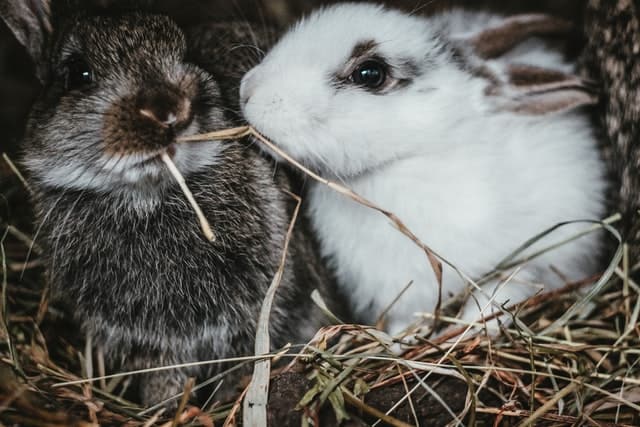
There are specific situations where grapes should be completely off the menu:
- Diarrhea or soft stools: If your rabbit already has loose droppings, adding sugar will make things worse. Remove all treats and offer only hay and water until stools return to normal.
- Under 7 months old: Young rabbits' digestive systems are still developing. They cannot process sugar safely and are more vulnerable to GI upset.
- Obesity: If your rabbit is overweight, skip all sugary treats until your vet confirms they have reached a healthy weight.
- Post-surgery or illness: Rabbits recovering from surgery or illness need easy-to-digest foods. Stick to hay, water, and vet-approved critical care if needed.
- GI stasis history: Rabbits that have experienced GI stasis before are more susceptible to recurring episodes. Be extra cautious with sugary treats.
If your rabbit shows signs of digestive distress after eating grapes such as refusing food, hunching up, grinding teeth loudly, or producing no droppings, treat it as an emergency and contact a rabbit-experienced veterinarian immediately.
Can Rabbits Eat Grape Seeds, Skin, Stems, and Leaves?
Different parts of the grape plant have different safety profiles for rabbits. Here is what you need to know about each one.
Grape Seeds
Remove grape seeds before feeding grapes to your rabbit. Seeds are small enough to pose a choking risk, and they offer no nutritional benefit worth the danger. The simplest approach is to buy seedless grapes, which eliminates this concern entirely.
Grape Skin
Grape skin is safe for rabbits and actually contains some beneficial antioxidants. The important step is washing grapes thoroughly under running water before serving them. Conventional grapes frequently carry pesticide residues on their skin, and the Environmental Working Group consistently ranks grapes among the "Dirty Dozen" produce items with highest pesticide levels. Washing reduces but may not fully eliminate residues, so buying organic grapes when possible is a good practice for your rabbit's health.
Grape Stems (Stalks)
Rabbits can safely nibble on grape stems. The woody texture actually provides a small amount of fiber and gives your rabbit something to chew on, which is beneficial for dental wear. As with the fruit itself, wash stems thoroughly to remove pesticides. Offer stems in moderation since they are not a significant nutritional source.
Grape Leaves
Grape leaves are safe for rabbits and some rabbits enjoy them. They are lower in sugar than the fruit itself and provide a small amount of fiber. Wash them well, and only offer leaves from vines that have not been treated with pesticides or herbicides. If you grow your own grapevines and use no chemicals, grape leaves can be an occasional leafy green option for your rabbit.
How to Safely Introduce Grapes to Your Rabbit
If your rabbit has never eaten grapes before, follow these steps to introduce them safely:
- Confirm your rabbit is old enough. Wait until they are at least 7 months old and already eating a stable diet of hay, pellets, and several types of leafy greens.
- Start very small. Offer a piece about the size of your thumbnail, roughly a quarter of a grape. Place it near their food bowl and let them discover it on their own.
- Watch and wait 24 hours. Monitor your rabbit's droppings over the next day. You are looking for normal, round, dry fecal pellets. If you see soft stool, mushy cecotropes, or no droppings at all, do not offer grapes again.
- Increase gradually. If droppings remain normal, you can offer a slightly larger piece the following week. Work up to the full portion size for your rabbit's weight category over 2 to 3 weeks.
- Rotate with other treats. Do not feed grapes every time you offer a treat. Rotate with other safe fruits like blueberries, apple slices (no seeds), or small pieces of banana to provide variety and prevent fixation on a single treat.
Red Grapes vs. Green Grapes vs. Black Grapes: Does Color Matter?
All grape colors are safe for rabbits, and the nutritional differences between varieties are minimal from a rabbit feeding perspective. Here is a quick comparison:
| Grape Variety | Sugar Content | Notable Differences |
|---|---|---|
| Green (Thompson Seedless) | ~16g per 100g | Slightly tarter, most commonly available seedless |
| Red (Flame, Crimson) | ~16g per 100g | Contains more antioxidants (resveratrol) in the skin |
| Black (Concord, Black Muscat) | ~16 to 18g per 100g | Slightly sweeter, higher antioxidant content, often has seeds |
From a practical standpoint, seedless green or red grapes are the most convenient choice since you will not need to remove seeds. The small differences in antioxidant content between varieties do not matter at the tiny portions rabbits should eat.
Safe Fruit Alternatives to Grapes for Rabbits
Variety keeps treat time interesting for your rabbit and helps prevent them from becoming fixated on a single food. Here are safe fruit alternatives that you can rotate with grapes, all given in small amounts no more than 1 to 2 times per week:
- Strawberries: Lower in sugar than grapes with good vitamin C content. Offer 1 to 2 small berries per serving.
- Blueberries: Rich in antioxidants. Give 2 to 3 berries per serving for a medium-sized rabbit.
- Apple slices: Always remove all seeds and the core first, as apple seeds contain cyanogenic compounds. One thin slice is plenty.
- Papaya: Contains papain, an enzyme that some breeders believe supports digestion. A 1-inch cube per serving is appropriate.
- Banana: Very high in sugar, so keep portions small. Roughly a half-inch slice per serving.
- Pear: Similar sugar content to grapes. Remove seeds and offer a thin slice.
- Raspberry: Lower in sugar with a good fiber-to-sugar ratio. Two to three berries per serving.
Regardless of which fruit you choose, the same rules apply: offer treats sparingly, keep portions appropriate for your rabbit's size, and always prioritize hay as the foundation of the diet.
Frequently Asked Questions
Can rabbits eat grape seeds?
No, you should remove grape seeds before feeding grapes to your rabbit. Seeds are a choking hazard for rabbits due to their small size and they offer no nutritional benefit. Buy seedless grape varieties to avoid this issue entirely and keep treat preparation simple and safe.
Can rabbits eat grape skin?
Yes, grape skin is safe for rabbits to eat. Wash grapes thoroughly under running water before serving to remove pesticide residues. Grape skin contains antioxidants and a small amount of fiber. Buying organic grapes reduces pesticide exposure when you plan to feed grapes with their skin on.
Can rabbits eat grape leaves and stems?
Yes, both grape leaves and stems are safe for rabbits. They are lower in sugar than the fruit itself and provide some chewing enrichment. Wash them thoroughly to remove chemicals. Only offer grape leaves and stems from vines that have not been sprayed with herbicides or pesticides.
Are grapes toxic to rabbits like they are to dogs?
No, grapes are not toxic to rabbits. Unlike dogs and cats, where grapes can cause acute kidney failure, there is no evidence that grapes damage rabbit kidneys. The primary concern for rabbits is the high sugar content, which can disrupt digestion and cause weight gain if overfed.
How often can I give my rabbit grapes?
Offer grapes no more than 1 to 2 times per week, and do not give them on the same day as other fruit treats. A healthy adult rabbit can have 1 to 2 grapes per serving depending on body weight. Always ensure your rabbit eats plenty of hay before offering any sweet treats.
Cite this article:
BunnySync (February 22, 2026) Can Rabbits Eat Grapes? Safe Feeding Guide for 2026. Retrieved from https://bunnysync.com/blog/can-rabbits-eat-grapes.
"Can Rabbits Eat Grapes? Safe Feeding Guide for 2026." BunnySync - February 22, 2026, https://bunnysync.com/blog/can-rabbits-eat-grapes