Yes, rabbits can die from overgrown teeth, and it happens more often than most owners realize. Overgrown teeth, a condition called malocclusion, prevents rabbits from eating properly. When a rabbit stops eating, its gut shuts down within 24 to 48 hours, leading to a deadly condition called gastrointestinal (GI) stasis. Untreated dental overgrowth can also cause jaw abscesses that spread infection throughout the body. The good news is that overgrown teeth are preventable and treatable when caught early.
Rabbit teeth grow continuously throughout their entire lives, at a rate of roughly 1 cm per month. In healthy rabbits, this growth is naturally worn down by chewing on hay, grass, and fibrous materials. When the teeth do not wear down properly, they overgrow, causing pain, inability to eat, and eventually life-threatening complications.
How Do Overgrown Teeth Kill Rabbits?
Overgrown teeth do not kill a rabbit directly. Instead, they trigger a chain of secondary conditions that become fatal. Understanding this progression helps you recognize how urgent dental problems really are.
GI Stasis from Not Eating
The most common way overgrown teeth lead to death is through GI stasis. When a rabbit's teeth overgrow, chewing becomes painful or physically impossible. The rabbit stops eating, or eats far less than it needs. Rabbits require a constant flow of fiber through their digestive system to keep gut bacteria balanced and the intestines moving. Without enough fiber, the gut slows down and eventually stops, which is called GI stasis.
GI stasis can kill a rabbit in as little as 24 to 48 hours. You can learn more about this timeline in our guide on how long a rabbit can survive without food.
Jaw Abscesses and Sepsis
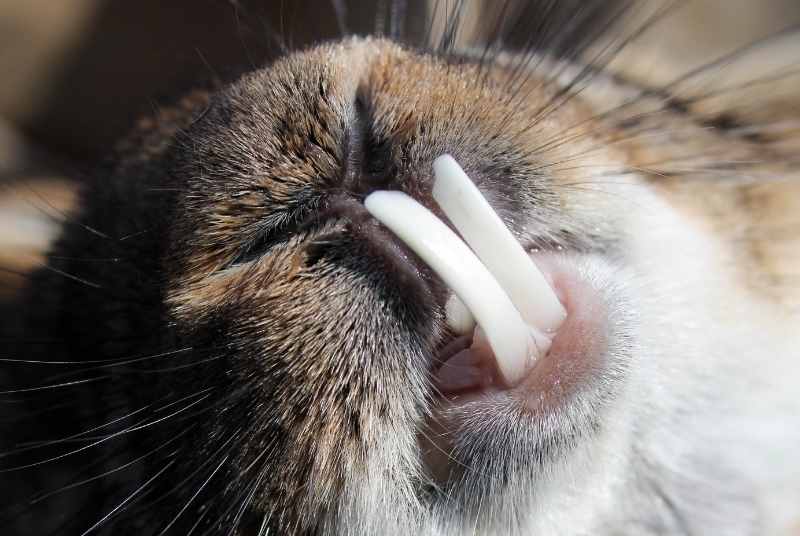
Overgrown teeth can grow in abnormal directions. Upper incisors may curl inward toward the roof of the mouth, while lower incisors can grow outward like tusks. When teeth dig into the soft tissue of the mouth, they create open wounds that become infected.
These infections often form abscesses in the jaw. Rabbit abscesses are notoriously difficult to treat because rabbit pus is thick and caseous (cheese-like), making it hard to drain. If the infection spreads from the jaw into the bloodstream, it causes sepsis, a systemic infection that is almost always fatal without emergency veterinary intervention.
Dehydration and Organ Failure
A rabbit that cannot eat properly also tends to drink less water. Dehydration compounds the problem by further slowing gut motility and stressing the kidneys and liver. The combination of starvation, dehydration, and potential infection creates a cascade of organ failure that can kill a rabbit within days.
What Types of Teeth Can Overgrow in Rabbits?
Rabbits have 28 teeth in total: 6 incisors (4 upper, 2 lower) and 22 cheek teeth (premolars and molars). Any of these teeth can overgrow, but the problems they cause differ.
| Tooth Type | Location | Common Overgrowth Signs | Visibility |
|---|---|---|---|
| Incisors | Front of mouth | Curling, crossing, tusk-like protrusions | Visible without tools |
| Premolars | Behind incisors | Sharp spurs cutting into cheeks or tongue | Requires vet examination |
| Molars | Back of mouth | Sharp points, uneven wear, root elongation | Requires vet examination |
Incisor overgrowth is the easiest to spot because you can see the front teeth by gently lifting your rabbit's lips. Molar and premolar overgrowth is far more dangerous because it is invisible without a proper veterinary exam using an otoscope or oral speculum. Many rabbits suffer from molar spurs for weeks before owners notice any symptoms.
What Are the Signs of Overgrown Teeth in Rabbits?
Rabbits are prey animals and instinctively hide pain. By the time you notice obvious symptoms, the dental problem may already be advanced. Regular tooth checks every two weeks are essential. Here are the warning signs to watch for:
- Weight loss. A rabbit in dental pain will eat less or stop eating entirely. Gradual weight loss over a few weeks is often the first sign owners notice. Weigh your rabbit weekly to catch subtle changes early.
- Drooling (slobbers). Overgrown teeth or molar spurs prevent a rabbit from closing its mouth properly. Wet fur around the chin, dewlap, or chest is a clear sign of dental trouble. Drooling can also cause skin irritation and fur loss around the chin.
- Stool changes. Smaller, fewer, or misshapen droppings indicate that your rabbit is not eating enough fiber. This directly links to dental pain making chewing difficult. Left unchecked, this leads to GI stasis.
- Uneaten cecotropes. Rabbits normally eat their cecotropes directly from the anus. A rabbit with overgrown teeth physically cannot reach or chew these nutrient-rich droppings. You will find clusters of soft, dark, grape-like droppings in the cage.
- Facial swelling or abscesses. A lump on the jaw, cheek, or under the eye often signals a tooth root abscess. The swelling may feel hard or soft depending on how advanced the infection is.
- Eye discharge or watery eyes. The roots of upper premolars sit very close to the tear ducts. When these roots elongate from overgrowth, they press on the tear ducts, causing chronic watery eyes or even bulging of the eye. Learn more about eye-related issues in our guide on how to tell if your rabbit is blind.
- Wet front paws. Rabbits with drooling problems repeatedly wipe their mouths with their front paws, leaving them chronically damp.
- Teeth grinding (loud). Soft, quiet tooth purring is a sign of contentment. Loud, audible grinding is a sign of pain. If your rabbit is grinding loudly, it could indicate dental discomfort. Our article on what it means when rabbits grind their teeth explains the difference between happy purring and pain grinding.
- Selective eating. A rabbit that picks up food and then drops it, or only eats soft foods while avoiding hay, is likely experiencing dental pain. Some rabbits will show interest in food but walk away after attempting to chew.
- Nasal discharge. Upper tooth root infections can extend into the nasal cavity, causing chronic sneezing or nasal discharge that gets misdiagnosed as a respiratory infection.
How to Check Your Rabbit's Teeth at Home
You can check your rabbit's incisors at home every two weeks. Here is a step-by-step process:
- Place your rabbit on a non-slip surface or hold it securely on your lap.
- Gently cup your rabbit's head with one hand, supporting the jaw.
- Use your thumb and forefinger to part the lips, exposing the front teeth.
- Check that the upper incisors slightly overlap the lower incisors.
- Look for cracks, chips, discoloration, or excessive length.
- Feel along the jawline for any lumps or swelling.
Healthy rabbit incisors should be white to cream-colored, smooth, and chisel-shaped. The upper incisors should be about 1 cm long and rest just in front of the lower incisors. If the teeth appear longer than normal, angled to one side, or if you can see a visible gap between upper and lower teeth, schedule a vet visit.
You cannot check molars at home. Only a veterinarian with proper instruments can examine the cheek teeth. This is why annual dental exams (or every 6 months for breeds prone to dental issues) are so important.
Here is a helpful video by PDSA showing how to check your rabbit's teeth:
What Causes Overgrown Teeth in Rabbits?
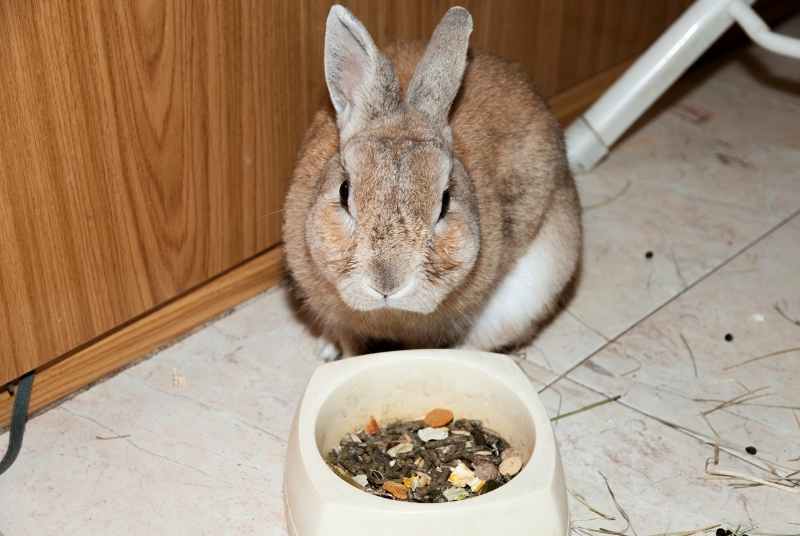
Several factors contribute to overgrown teeth in rabbits. Most cases come down to diet, but genetics and trauma also play a role.
Insufficient Hay in the Diet
This is the number one cause of overgrown teeth in domestic rabbits. Hay should make up 80 to 85% of a rabbit's diet. The lateral chewing motion required to grind hay is what naturally files down the molars and premolars. Pellets, vegetables, and treats do not require the same grinding motion and do not wear teeth effectively.
Wild rabbits spend 6 to 8 hours per day grazing on grass and fibrous plants, which keeps their teeth at the proper length. Pet rabbits that are fed too many pellets and not enough hay miss out on this critical tooth-wearing activity. Check our guide on how much hay a rabbit should eat daily to make sure your rabbit is getting enough.
Genetics and Breed Predisposition
Some rabbit breeds are genetically predisposed to dental problems. Dwarf breeds (Netherland Dwarf, Mini Rex, Holland Lop) have shortened skulls (brachycephaly) that compress the jaw, leaving less room for teeth to align properly. Lop-eared breeds also have higher rates of dental disease due to their altered skull shape.
Congenital malocclusion, where a rabbit is born with misaligned teeth, cannot be corrected. These rabbits require lifelong dental management with regular veterinary tooth trims every 4 to 8 weeks.
Trauma or Injury
A rabbit that breaks a tooth from chewing on cage bars, falling, or being handled roughly can develop malocclusion. When one tooth breaks, the opposing tooth has nothing to grind against and overgrows rapidly. Even after the broken tooth regrows, the alignment may be permanently altered.
Calcium and Vitamin D Imbalance
There is growing evidence that inadequate vitamin D levels in indoor rabbits contribute to weakened tooth structure. Vitamin D enables calcium absorption, which is essential for strong, properly growing teeth. Rabbits kept exclusively indoors without access to natural sunlight or supplemental UV light may develop softer teeth that wear unevenly.
Age-Related Wear
Senior rabbits (over 6 years old) sometimes develop dental problems even with a proper diet. Years of chewing can cause uneven tooth surfaces, and aging can affect the tooth roots, leading to elongation and altered growth patterns.
How Long Can a Rabbit Survive with Overgrown Teeth?
The timeline depends entirely on the severity of the overgrowth and the complications that develop.
| Complication | Timeline to Death | Urgency Level |
|---|---|---|
| GI stasis (complete food refusal) | 24 to 48 hours | Emergency |
| Partial food refusal with weight loss | 1 to 3 weeks | Urgent |
| Jaw abscess with spreading infection | Days to weeks | Emergency |
| Chronic mild malocclusion | Months (with declining quality of life) | Needs treatment |
A rabbit that completely stops eating due to dental pain is in immediate danger. GI stasis can kill within 24 to 48 hours. A rabbit that is still eating some food but losing weight may survive weeks, but the condition will worsen without treatment. Any sign of facial swelling or abscess formation requires emergency veterinary care.
How Do Veterinarians Treat Overgrown Teeth?
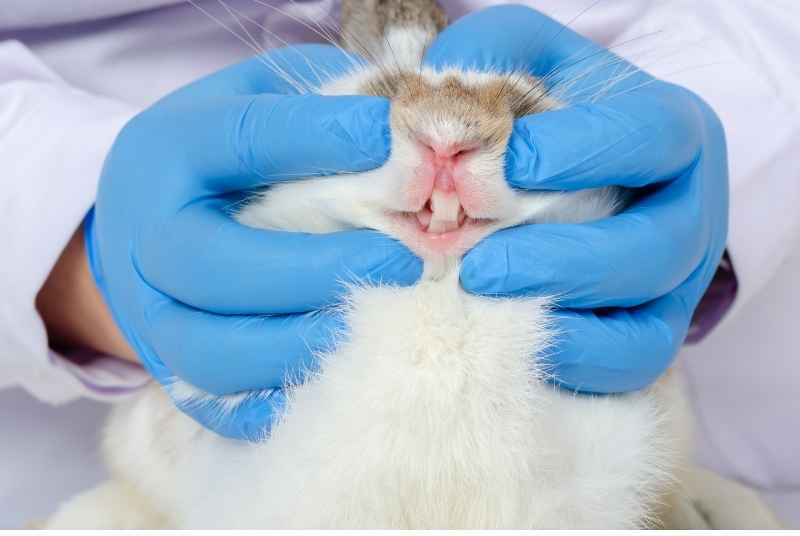
Veterinary treatment for overgrown teeth depends on which teeth are affected and whether complications like abscesses have developed.
Incisor Trimming
For overgrown incisors, a veterinarian uses a dental burr (a high-speed rotary tool) to grind the teeth down to the correct length. This is painless when done correctly and usually takes only a few minutes. Most rabbits do not need sedation for incisor trims.
Never attempt to trim your rabbit's teeth at home with nail clippers, wire cutters, or pliers. These tools can crack the tooth lengthwise down to the root, causing extreme pain, infection, and permanent damage. Always leave tooth trimming to a qualified veterinarian.
Molar Filing (Dental Float)
Overgrown molars with sharp spurs require sedation and specialized instruments. The veterinarian will use a dental burr to file down the sharp points and restore a smooth chewing surface. This procedure typically needs to be repeated every 4 to 12 weeks for rabbits with chronic molar problems.
Tooth Extraction
In severe cases or when a tooth is repeatedly causing problems, extraction may be the best option. Rabbit teeth have long, curved roots, making extraction a complex surgical procedure that requires an experienced rabbit-savvy veterinarian. After extraction, the opposing tooth will need regular trimming since it no longer has a surface to grind against.
Abscess Treatment
Jaw abscesses from dental disease are among the most challenging conditions to treat in rabbits. Treatment typically involves surgical debridement (removal of infected tissue), long-term antibiotic therapy (often weeks to months), and addressing the underlying dental problem. Some abscesses require multiple surgeries. The success rate depends on how early the abscess is caught and how deeply the infection has spread.
How to Prevent Overgrown Teeth in Rabbits
Prevention is far easier, cheaper, and less stressful than treatment. Here are the key strategies every rabbit owner should follow.
Feed Unlimited Timothy Hay
Hay is the single most important item in your rabbit's diet for dental health. Timothy hay, orchard grass, and oat hay all provide the tough fiber that requires extensive lateral chewing, which naturally files down both incisors and molars. Your rabbit should have unlimited access to fresh hay at all times, and it should make up at least 80% of its total diet.
If your rabbit is not eating enough hay, try different varieties, offer it in different ways (hay racks, stuffed in toilet paper tubes, scattered on the floor), and reduce pellet portions. Sometimes rabbits fill up on pellets and ignore hay. Our guide on the right pellet portions for rabbits can help you get the balance right.
Provide Safe Chew Materials
In addition to hay, offer your rabbit safe items to chew on. These help wear down incisors specifically:
- Apple, willow, or pear tree branches (untreated, pesticide-free)
- Willow balls and wicker toys
- Compressed hay cubes or hay-based toys
- Untreated wood blocks (avoid pine and cedar)
- Cardboard tubes and boxes
Avoid mineral chews and salt licks. Despite being marketed for rabbits, they do not effectively wear down teeth and can cause mineral imbalances.
Schedule Regular Dental Checkups
Take your rabbit to a rabbit-savvy veterinarian for a full dental exam at least once a year. For breeds prone to dental problems (dwarfs, lops), schedule exams every 6 months. A vet can detect molar spurs and early root elongation that you would never spot at home.
Check Incisors at Home Every Two Weeks
Between vet visits, check your rabbit's front teeth biweekly. Look for proper alignment, appropriate length (about 1 cm for upper incisors), and any signs of cracking or discoloration. Make this part of your regular grooming routine alongside nail checks.
Monitor Eating Habits and Weight
Weigh your rabbit weekly using a kitchen scale. A healthy adult rabbit's weight should stay consistent within 50 to 100 grams. Any unexplained weight loss could signal dental problems or other health issues. Also watch for changes in eating behavior: dropping food, preferring soft foods over hay, or taking longer to finish meals. These can be early indicators of stress or pain in rabbits.
Can You Fix Overgrown Teeth at Home?
No. You should never attempt to trim or file your rabbit's teeth at home. Here is why:
- Nail clippers and wire cutters apply pressure that can split the tooth vertically down to the root. This is extremely painful and causes far worse damage than the original overgrowth.
- Files and sandpaper are ineffective on hard enamel and stress the rabbit unnecessarily.
- You cannot see the molars without proper instruments and training. Most dental problems involve the back teeth.
- Sedation is needed for molar work, and only a veterinarian can safely sedate a rabbit.
The only thing you can do at home is provide the right diet and environment to prevent overgrowth, and recognize the symptoms early enough to get veterinary treatment before the condition becomes critical.
How Much Does Rabbit Dental Treatment Cost?
Dental treatment costs vary by location and severity. Here are typical ranges as of 2026:
| Procedure | Approximate Cost (USD) |
|---|---|
| Dental exam | $50 to $100 |
| Incisor trim (no sedation) | $30 to $75 |
| Molar filing under sedation | $150 to $400 |
| Tooth extraction | $300 to $800+ |
| Abscess surgery | $500 to $2,000+ |
| Follow-up antibiotics (4-6 weeks) | $50 to $150 |
Regular dental exams are far cheaper than emergency treatment. A $75 checkup can catch problems early and save you hundreds or thousands in emergency surgery costs later. Consider pet insurance that covers dental procedures if you have a breed prone to dental issues.
Frequently Asked Questions
How fast do rabbit teeth grow?
Rabbit teeth grow approximately 1 cm (about 0.4 inches) per month, or roughly 2 to 3 mm per week. Both incisors and molars grow continuously throughout the rabbit's life. This constant growth is why a diet rich in hay is essential for natural tooth wear.
Can overgrown teeth grow back to normal on their own?
No, once teeth are overgrown and misaligned, they will not self-correct. The misalignment causes uneven wear patterns that make the problem worse over time. A veterinarian must trim the teeth to the proper length, and in cases of congenital malocclusion, the rabbit will need regular trims for life.
How often should I have my rabbit's teeth checked by a vet?
Most rabbits should have a professional dental exam at least once per year. Breeds prone to dental issues like Netherland Dwarfs, Holland Lops, and Mini Rex should be checked every 6 months. Rabbits with a history of dental problems may need exams every 4 to 8 weeks.
Do wild rabbits get overgrown teeth?
Wild rabbits rarely develop overgrown teeth because their natural diet of grasses, bark, twigs, and wild plants provides constant abrasive chewing that keeps teeth worn to the proper length. They also do not carry the genetic predisposition to malocclusion seen in selectively bred domestic breeds like dwarfs and lops.
What is the best hay for rabbit dental health?
Timothy hay is the gold standard for rabbit dental health due to its coarse, fibrous texture that requires extensive chewing. Orchard grass and oat hay are also excellent options. Avoid alfalfa hay for adult rabbits as it is too high in calcium and protein, though it is appropriate for rabbits under 6 months old.
Cite this article:
Cite this article:
BunnySync (March 1, 2026) Can Rabbits Die From Overgrown Teeth? Signs, Causes, and Prevention. Retrieved from https://bunnysync.com/blog/can-rabbits-die-from-overgrown-teeth.
"Can Rabbits Die From Overgrown Teeth? Signs, Causes, and Prevention." BunnySync - March 1, 2026, https://bunnysync.com/blog/can-rabbits-die-from-overgrown-teeth