No, you should never hold a rabbit like a baby. Cradling a rabbit on its back triggers a fear response called tonic immobility, where the rabbit appears calm but is actually terrified. This position removes their feet from the ground, taking away their only defense mechanism, and a sudden panic can cause them to thrash hard enough to break their own spine.
As breeders, we handle rabbits every day for health checks, grooming, and weighing. Proper handling technique is one of the first skills any rabbit owner needs to learn. Holding a rabbit incorrectly puts both you and your rabbit at serious risk. In this guide, we will cover exactly why the "baby hold" is dangerous, what tonic immobility really does to your rabbit, and how to hold your rabbit safely and confidently.
Why You Should Never Hold a Rabbit on Its Back
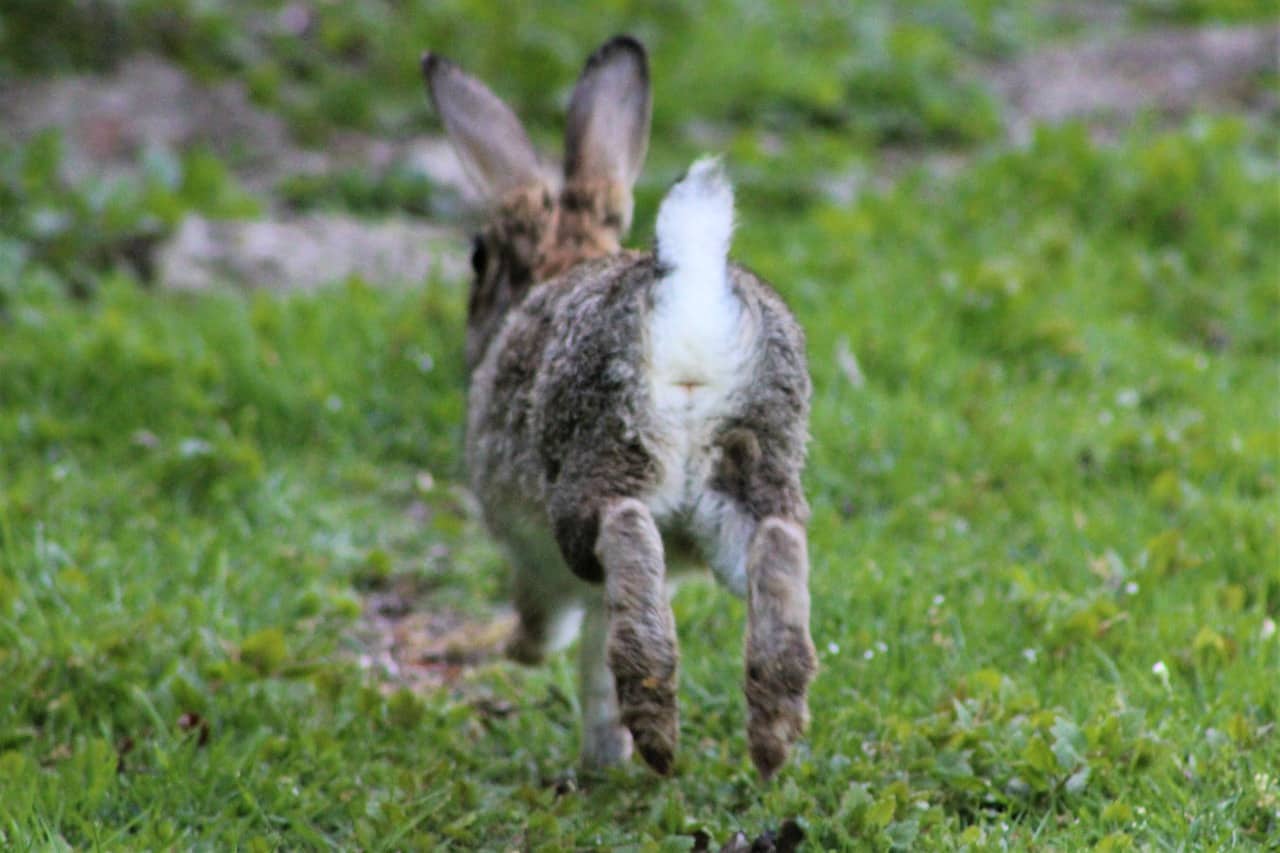
A rabbit's entire survival strategy revolves around keeping all four feet on the ground. In the wild, rabbits protect themselves from predators primarily by running. They can sprint at speeds up to 35 mph and make sharp turns that predators cannot follow.
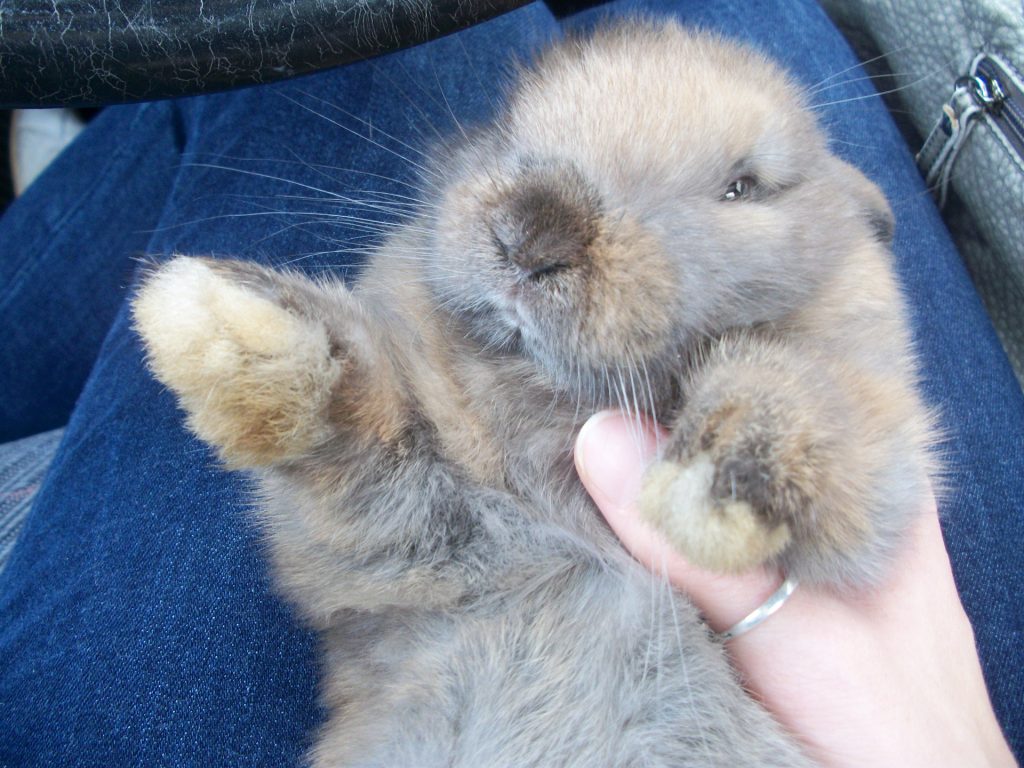
When you flip a rabbit onto its back, you strip away that survival mechanism entirely. The rabbit cannot run, cannot kick, and cannot orient itself. From your rabbit's perspective, being on its back mimics the exact position it would be in while being pinned down by a predator.
This is not a relaxation position. Despite what some viral social media videos show, a rabbit lying still on its back is not "chilling out" or "enjoying belly rubs." That stillness is a last-resort survival response, and it comes with real physiological consequences.
Rabbits held in this position experience elevated heart rates, increased stress hormones (particularly corticosterone), and shallow, rapid breathing. A 2004 study published in the journal Animal Welfare confirmed that rabbits in tonic immobility show clear signs of physiological stress, even though their outward appearance suggests calmness.
What Is Tonic Immobility in Rabbits?
Tonic immobility, sometimes called "trancing" or "playing dead," is an involuntary fear response that prey animals use as a last-ditch survival tactic. When a predator has already caught the rabbit and pinned it down, the rabbit's nervous system triggers a state of temporary paralysis.
How Tonic Immobility Works
The response works on a simple principle: many predators lose interest in prey that stops moving. Foxes, hawks, and cats are stimulated by movement, so a motionless rabbit may be dropped or left unattended long enough to escape. The rabbit is not asleep, unconscious, or comfortable. Its brain is fully active, processing fear at maximum capacity.
During tonic immobility, the following changes occur inside your rabbit's body:
- Heart rate spikes dramatically, sometimes exceeding 300 beats per minute
- Cortisol and corticosterone levels surge, flooding the body with stress hormones
- Breathing becomes irregular, alternating between rapid shallow breaths and brief pauses
- Muscle tone drops, making the rabbit appear limp and relaxed
- Pain perception may decrease, which is why the rabbit does not react to touch
The Rabbit Welfare Association explicitly advises against inducing tonic immobility, stating that it causes significant stress and poses a direct injury risk.
Signs Your Rabbit Has Entered a Trance
Recognizing tonic immobility is important so you can respond immediately if it happens accidentally during handling:
- Sudden stillness with glazed or half-closed eyes
- Limp body with no resistance to repositioning
- Ears flat against the head or splayed to the sides
- Shallow, barely visible breathing
- No response to gentle touch or sounds
If your rabbit enters a trance, gently and slowly rotate them back to an upright position with all four feet on a solid surface. Do not make sudden movements, as the rabbit may snap out of the trance violently and kick hard enough to injure itself or you.
Can Holding a Rabbit Like a Baby Kill Them?
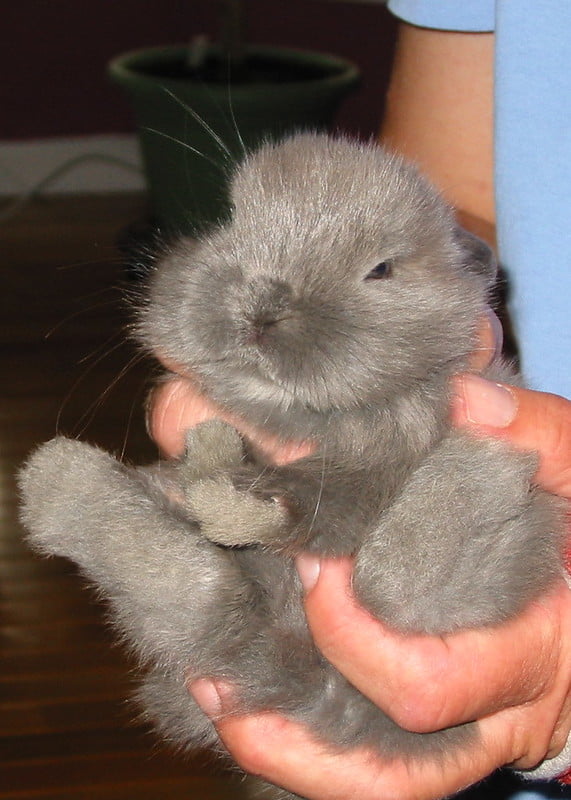
Yes, holding a rabbit like a baby can lead to fatal injuries. The primary risk is a broken spine. Rabbit skeletons are extremely lightweight, making up only about 8% of their total body weight (compared to roughly 13% in cats). Their powerful hind leg muscles are attached to this fragile skeletal frame, which means a single strong kick or thrash can fracture vertebrae.
A spinal fracture in a rabbit is almost always fatal. Even when the rabbit survives the initial break, the resulting paralysis typically leads to euthanasia because rabbits can die from fright and shock alone, and paralyzed rabbits develop secondary complications like urine scald, pressure sores, and GI stasis within days.
Beyond spinal injuries, a rabbit that panics while on its back can also:
- Dislocate or fracture a limb from violent kicking
- Scratch or bite you severely as it tries to right itself
- Aspirate (inhale fluid) if it regurgitates while inverted
- Suffer cardiac arrest from extreme stress, particularly in older rabbits or those with underlying heart conditions
Why Do Some People Still Trance Their Rabbits?
Despite the clear dangers, some rabbit owners intentionally trance their rabbits for grooming tasks like nail trimming, fur brushing, or checking the underside for matted cecotropes. The logic seems practical on the surface: the rabbit is still, making the task easier.
The problem is that every trance episode puts your rabbit through extreme stress and genuine physical danger. There are far safer alternatives for every grooming task that requires access to the rabbit's underside:
| Grooming Task | Unsafe Method | Safe Alternative |
|---|---|---|
| Nail trimming | Trancing the rabbit on its back | Burrito wrap in a towel, or have a partner hold the rabbit upright while you clip |
| Checking underside | Flipping the rabbit over | Lift gently with one hand supporting the chest and one under the rump; tilt slightly |
| Cleaning scent glands | Holding rabbit on its back in your lap | Place rabbit on a raised surface, gently lift the tail while rabbit remains upright |
| Removing matted fur | Trancing to access belly | Use a partner, work in short sessions with the rabbit on all fours |
A veterinary technician at your local rabbit-savvy vet can also demonstrate safe restraint techniques that do not involve trancing.
How to Properly Pick Up a Rabbit
Knowing how to lift your rabbit correctly is just as important as knowing what not to do. Many handling injuries happen during the pickup itself, before the rabbit is even fully off the ground.
Step-by-Step Guide to Lifting a Rabbit
- Approach calmly. Crouch down to your rabbit's level. Never swoop down from above, as this mimics a bird of prey and triggers an immediate flight response.
- Let your rabbit see you. Rabbits have a blind spot directly in front of their nose. Approach slightly from the side so they can see your hand coming.
- Place one hand under the chest. Slide your hand under the rabbit's body, just behind the front legs, with your fingers wrapping gently around the ribcage.
- Support the hindquarters immediately. Your second hand goes under the rabbit's rump, supporting the full weight of the back legs. This is critical. An unsupported rabbit will kick, and those kicks carry enough force to fracture their spine.
- Lift smoothly and bring the rabbit to your body. Scoop the rabbit up in one fluid motion and tuck them against your chest or into the crook of your arm. The rabbit should feel secure contact along its body.
Common Mistakes When Picking Up a Rabbit
- Grabbing by the scruff alone: Unlike cats, rabbits should never be picked up by the scruff without full body support. Their skin is not designed to bear their body weight, and it causes pain and fear.
- Lifting by the ears: This is cruel and can cause permanent cartilage damage. Never lift or restrain a rabbit by its ears.
- Not supporting the back legs: This is the single most common mistake. If the hind legs dangle freely, the rabbit will kick, twist, and potentially fracture its spine.
- Chasing the rabbit first: If your rabbit runs from you, do not chase it around the room. This destroys trust and makes future handling harder. If your rabbit is suddenly scared of you, work on rebuilding trust before attempting regular handling.
How to Hold a Rabbit Safely
Once your rabbit is off the ground, how you hold them matters just as much as how you picked them up. There are several safe holding positions, and the best one depends on the rabbit's size, temperament, and what you need to do.
The Chest Hold
This is the most common and generally safest hold for everyday handling. The rabbit sits upright against your chest with its head near your shoulder. One hand supports the rump and hind legs while the other arm wraps around the body to keep the rabbit secure. The rabbit can see the environment, feels your heartbeat, and has all four feet touching your body.
The Football Hold
Named after the way you might carry a football, this hold tucks the rabbit along your forearm with its head near your elbow and its rump supported by your hand. The rabbit's body rests along your arm, and your other hand stays on top for security. This position works well for larger breeds and for carrying a rabbit over short distances.
The Lap Hold
For bonding sessions and gentle petting, sitting down with the rabbit on your lap is ideal. Place the rabbit with all four feet on your thighs, and let them settle in their own time. Some rabbits prefer to face you, while others like to face outward. Keep one hand gently on the rabbit's back for security, and never force a rabbit to stay if it wants to leave. Learning how to get your rabbit to cuddle with you takes patience but pays off enormously.
Here is a helpful video demonstrating proper rabbit handling technique:
What to Do If Your Rabbit Struggles While Being Held
Even with perfect technique, some rabbits will struggle. This is normal, especially with rabbits that are not yet comfortable with handling. The key is how you respond.
Never tighten your grip. Squeezing harder makes the rabbit panic more and increases the risk of injury. Instead, lower yourself toward the ground immediately. Crouch or kneel, bringing the rabbit closer to floor level so that if it does jump, the fall distance is minimal.
If the rabbit is kicking violently, hold it firmly but gently against your body and lower to the ground as quickly as you safely can. Place the rabbit down on all four feet and release. Let the rabbit hop away. Trying to regain control of a panicking rabbit mid-air is one of the most common causes of spinal injuries.
Watch for signs that your rabbit is stressed during handling sessions. Heavy breathing, wide eyes showing the whites (sometimes called "whale eye"), thumping, or grunting all indicate that the rabbit needs to be put down.
How to Build Trust With a Rabbit Who Hates Being Held
Most rabbits do not naturally enjoy being picked up. In the wild, being lifted off the ground means a predator has caught you. It takes consistent, patient work to teach a domestic rabbit that being held is safe.
Here is a trust-building progression that works well for most rabbits:
- Spend time at floor level. Sit or lie on the floor in your rabbit's space for 15 to 20 minutes daily. Let the rabbit approach you on its own terms. Do not reach for the rabbit during these sessions.
- Offer treats from your hand. Once your rabbit voluntarily approaches you, start offering small treats (a piece of cilantro, a sliver of banana) from your open palm. This builds a positive association with your hands.
- Progress to gentle petting. When the rabbit is comfortable eating from your hand, begin stroking the forehead and behind the ears. Most rabbits find head rubs calming once they trust the person doing it.
- Practice partial lifts. Slide your hand under the chest and apply just enough pressure to suggest a lift without actually picking the rabbit up. Reward immediately with a treat. Repeat over several days.
- Short, supported lifts. Lift the rabbit just an inch or two off the ground with full body support, then set it back down and reward. Gradually increase height and duration over weeks, not days.
This process can take anywhere from two weeks to several months depending on the rabbit's personality and history. Rescued rabbits or rabbits that have been mishandled in the past may take longer.
When Veterinarians Use Trancing
It is worth noting that some veterinarians do use tonic immobility briefly during examinations, particularly to check the underside of a rabbit, examine teeth, or perform quick procedures. In a clinical setting, this is done under controlled conditions by experienced professionals who can monitor the rabbit's vital signs and respond immediately if something goes wrong.
This does not mean trancing is safe for home use. Veterinarians also use anesthesia, surgical instruments, and medications that would be dangerous in untrained hands. The fact that a professional uses a technique in a controlled setting does not make it appropriate for everyday handling at home.
According to the RSPCA's guidelines on rabbit welfare, rabbit owners should avoid trancing their rabbits and instead use safe restraint techniques or seek professional help for grooming tasks that require immobilization.
Frequently Asked Questions
Do rabbits like being held on their back?
No. A rabbit lying still on its back is experiencing tonic immobility, a fear-based survival response. The apparent calmness is actually physiological shutdown. The rabbit's heart rate and stress hormones spike during this state, confirming that it is a fear response, not a sign of comfort or enjoyment.
Is it okay to trance a rabbit for nail trimming?
No. While trancing makes a rabbit temporarily still, it puts the rabbit under extreme stress and risks spinal injury if it snaps out of the trance suddenly. Safer alternatives include wrapping the rabbit in a towel (burrito method) or having a second person hold the rabbit upright while you clip the nails.
How long can a rabbit stay in tonic immobility?
Tonic immobility episodes typically last anywhere from a few seconds to several minutes. The duration depends on the individual rabbit and the level of fear. Longer episodes indicate higher stress levels. If your rabbit enters a trance accidentally, gently rotate it back to an upright position immediately.
Why does my rabbit go limp when I pick it up?
If your rabbit goes completely limp during handling, it may be entering tonic immobility due to the angle you are holding it at. Check that you are keeping the rabbit upright with all four feet against your body. A rabbit going limp is a stress signal, not a sign of relaxation. Adjust your hold to keep the rabbit more vertical.
What is the safest way to hold a rabbit?
The safest way is the chest hold: rabbit upright against your chest, one hand supporting the hindquarters, and one arm wrapped around the body. The rabbit should feel secure with all four feet touching your body. Always support the hind legs to prevent dangerous kicking that can fracture the spine.
Cite this article:
Cite this article:
BunnySync (February 28, 2026) Is It Okay To Hold A Rabbit Like A Baby?. Retrieved from https://bunnysync.com/blog/holding-a-rabbit-like-a-baby.
"Is It Okay To Hold A Rabbit Like A Baby?." BunnySync - February 28, 2026, https://bunnysync.com/blog/holding-a-rabbit-like-a-baby