You should change your rabbit's litter every one to two days for the best results. Daily spot cleaning combined with a full litter swap every two to three days works well for most single-rabbit households. The exact frequency depends on several factors: your rabbit's size, the type of litter you use, whether your rabbit is spayed or neutered, and how many rabbits share the box. Letting litter sit too long leads to ammonia buildup, bacterial growth, and a stressed, unhappy rabbit. As experienced breeders, we have tested dozens of litter setups, and the schedule below reflects what actually works in practice.
How Often Should You Clean a Rabbit's Litter Box?
The ideal cleaning schedule for a rabbit's litter box breaks down into two types of maintenance: daily spot cleaning and full litter changes.
Daily spot cleaning means scooping out soiled litter, removing urine-soaked patches, and discarding any uneaten hay that fell into the box. This takes about two minutes and makes a noticeable difference in odor control. If you want to keep your rabbit's cage from smelling, daily scooping is the single most effective habit you can build.
For full litter changes, where you dump all the litter, rinse the box, and add fresh material, follow this general schedule:
| Situation | Full Litter Change Frequency |
|---|---|
| Single rabbit, wood pellet or paper-based litter | Every 2-3 days |
| Single rabbit, hay or newspaper litter | Every 1-2 days |
| Two rabbits sharing one box | Every 1-2 days |
| Unneutered or unspayed rabbit | Daily |
| Rabbit with digestive issues | Daily |
| Large breed (over 9 lbs) | Daily to every 2 days |
These are guidelines, not rigid rules. Use your nose and your rabbit's behavior as the real indicators. If the litter box starts smelling before the scheduled change, clean it sooner. A rabbit that starts avoiding its litter box is often telling you the box is not clean enough.
What Factors Determine How Often to Change Rabbit Litter?
Several factors affect how quickly your rabbit's litter box gets dirty. Understanding each one helps you find the right cleaning rhythm for your specific situation.
Rabbit Size and Breed
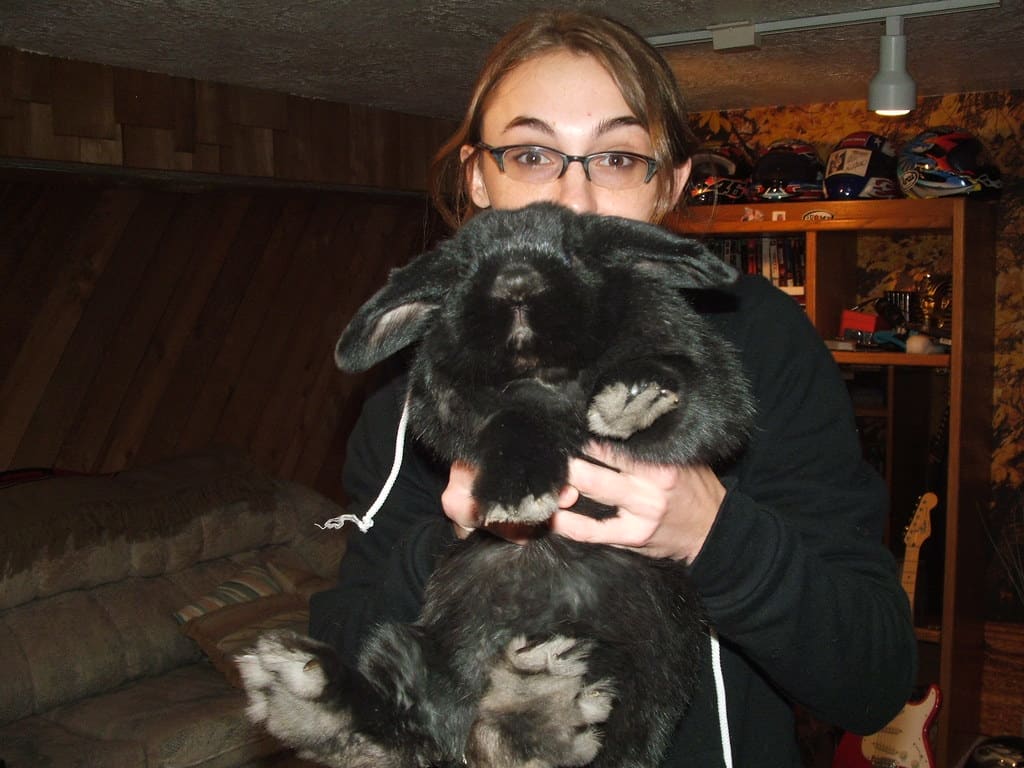
Larger rabbits produce significantly more waste than smaller breeds. A small rabbit weighing 1 to 3.5 pounds may produce less than 113 grams of fecal pellets per day, while a large breed over 9 pounds can produce more than 1,000 grams daily. The same scaling applies to urine output. To understand the full picture, check out how much poop a rabbit produces each day.
Here is a breakdown of daily waste production by rabbit size:
| Rabbit Size (by breed) | Poop Produced Per Day |
|---|---|
| Small breed (1.1-3.5 lbs) | Less than 113 grams |
| Medium breed (6-10 lbs) | 220-450 grams |
| Large breed (9-12+ lbs) | Over 1,000 grams |
| Rabbit Size (by breed) | Urine Produced Per Day |
|---|---|
| Small breed (1.1-3.5 lbs) | 60-180 ml |
| Medium breed (6-10 lbs) | 330-560 ml |
| Large breed (9-12+ lbs) | 500-675 ml |
A large rabbit can produce over eight times the fecal output of a small rabbit. If you own a Flemish Giant, French Lop, or similar large breed, expect to change the litter more frequently than someone with a Netherland Dwarf or a Mini Rex.
Number of Rabbits Sharing the Litter Box
If you have a bonded pair using the same litter box, you essentially double the waste output. Two medium-sized rabbits produce roughly 440 to 900 grams of poop and 660 to 1,120 ml of urine every single day. With multiple rabbits, daily full litter changes become the norm rather than the exception.
Adding a second litter box can help distribute the waste and extend the time between changes. Most breeders with bonded pairs keep at least two boxes available: one in the main living area and one in the exercise space.
Type of Litter Material
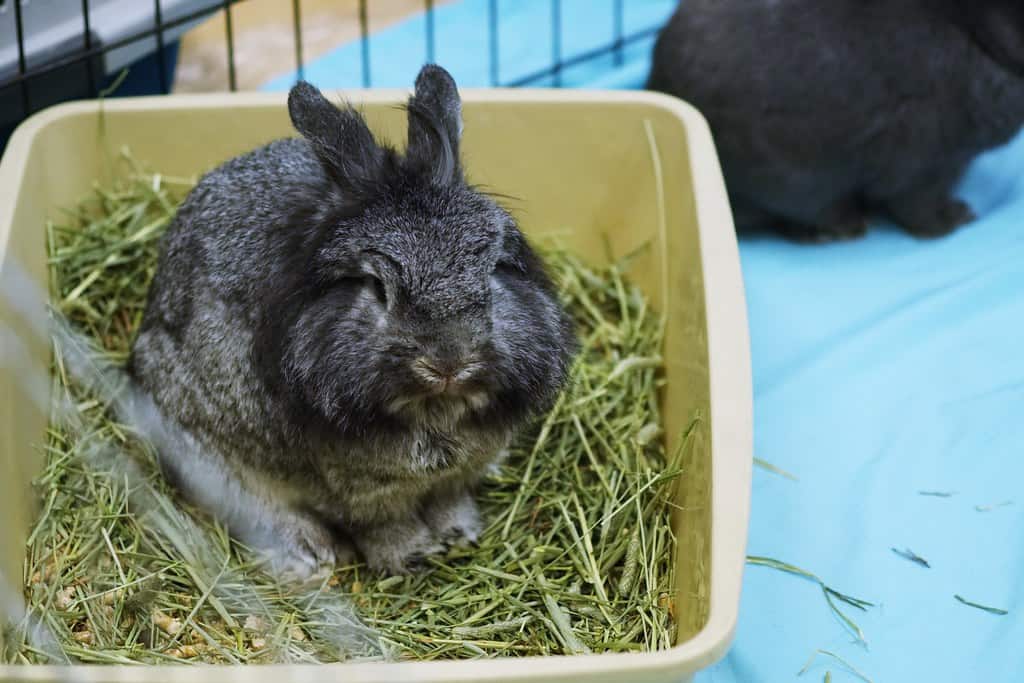
The litter material you choose has a huge impact on how often you need to change it. Some materials absorb moisture and neutralize odors far better than others.
Wood-based pellet litters, specifically kiln-dried pine pellets, are among the best options. They absorb several times their weight in liquid and break down into sawdust when saturated, giving you a clear visual indicator of when they need replacing. Paper-based litters also work well and offer good absorption without dust issues.
Hay and newspaper, on the other hand, are poor absorbers. They trap moisture against the surface, create a breeding ground for bacteria, and need changing every day or even twice daily in warm weather. If you are wondering whether rabbits can safely use cat litter, the short answer is that clay and clumping cat litters are dangerous for rabbits and should never be used. Stick to rabbit-safe options like wood pellets, paper-based pellets, or aspen shavings.
Spay and Neuter Status
Unneutered male rabbits and unspayed females produce stronger-smelling urine due to higher hormone levels. The ammonia concentration in their urine is noticeably higher, and unneutered males tend to spray urine to mark territory. If you have noticed that your rabbit's urine smells like ammonia, hormonal status is one of the primary causes.
For intact rabbits, daily litter changes are practically mandatory. After spaying or neutering, most owners find that cleaning every two to three days is sufficient, and the overall odor drops significantly. This is one of many good reasons to have your pet rabbit fixed.
Health Conditions
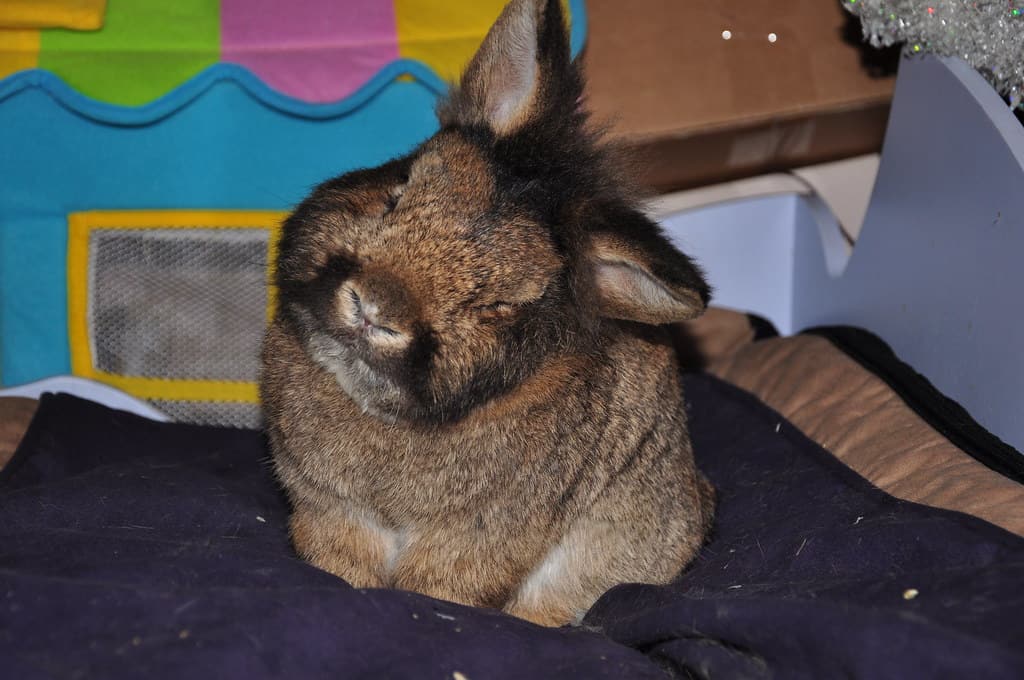
Rabbits with digestive problems such as diarrhea, cecal dysbiosis, or GI stasis produce abnormal stool that smells much worse than healthy rabbit droppings. Healthy rabbit poop is actually quite mild because rabbits eat a plant-based diet, but loose or cecal stool can be surprisingly pungent.
If you notice a sudden change in your rabbit's stool consistency or smell, increase the cleaning frequency and schedule a vet visit promptly. Digestive issues in rabbits can escalate quickly, and monitoring their litter box output is one of the best early warning systems you have. Changes in poop size, color, or quantity can signal problems hours before other symptoms appear.
Rabbits on medications or recovering from surgery may also produce different-smelling waste. During recovery periods, plan on daily litter changes until your rabbit returns to normal.
What Is the Best Litter for Rabbits?
Choosing the right litter material is just as important as cleaning frequency. Here is a side-by-side comparison of common rabbit litter options:
| Litter Type | Odor Control | Absorption | Safety | Change Frequency |
|---|---|---|---|---|
| Kiln-dried pine pellets | Excellent | High | Safe | Every 2-3 days |
| Paper-based pellets (e.g., Carefresh) | Good | High | Safe | Every 2-3 days |
| Aspen shavings | Moderate | Moderate | Safe | Every 1-2 days |
| Hay (as sole litter) | Poor | Low | Safe (edible) | Daily |
| Newspaper or shredded paper | Poor | Low | Safe | Daily |
| Cedar shavings | Good | Moderate | UNSAFE | Do not use |
| Clay cat litter | Good | High | UNSAFE | Do not use |
| Clumping cat litter | Excellent | Very high | UNSAFE | Do not use |
The clear winners for rabbit litter are kiln-dried pine pellets and paper-based pellets. Both offer excellent absorption and odor control at a reasonable price. Cedar shavings contain phenols that are toxic to rabbits, and clay or clumping cat litters pose serious ingestion and respiratory risks.
Many experienced breeders, including our team, use a layered setup: a thin base of pine pellets topped with a generous layer of timothy hay. The pellets handle moisture absorption while the hay gives the rabbit something to munch on while using the box. Since rabbits naturally eat and poop at the same time, this combination actually encourages consistent litter box habits.
How to Clean a Rabbit's Litter Box Step by Step
Follow these steps for a thorough litter box cleaning that keeps your rabbit healthy and your home smelling fresh:
- Remove your rabbit from the area. Place them in an exercise pen or a second enclosure while you clean. This prevents stress and keeps them away from cleaning products.
- Dump all used litter into a trash bag or compost bin. Rabbit waste mixed with paper or wood pellet litter makes excellent garden compost after it has aged for several months.
- Rinse the litter box with hot water. For daily spot cleans, a quick rinse is enough. For deeper weekly cleanings, use a splash of white vinegar (about one part vinegar to four parts water). Vinegar breaks down calcium deposits from rabbit urine without leaving harmful residues.
- Scrub any stubborn urine stains. A paste of baking soda and water works well for removing calcium buildup. For tough deposits, our guide on removing rabbit urine stains from the cage covers more detailed techniques.
- Rinse thoroughly and let the box air dry. Any cleaning product residue can irritate your rabbit's respiratory system or paws. A few minutes of air drying is all you need.
- Add fresh litter. Pour in about one to two inches of your chosen litter material. If you use the pellet-and-hay method, add the pellet layer first, then top with fresh hay.
- Return the box to its spot and let your rabbit back in. Leave two or three dry droppings in the fresh box as a scent marker to remind your rabbit where to go.
The whole process takes about five to ten minutes for a daily clean and fifteen to twenty minutes for a deep clean. That small time investment pays off in a healthier rabbit and a fresher-smelling home.
What Are the Benefits of Changing Rabbit Litter Regularly?
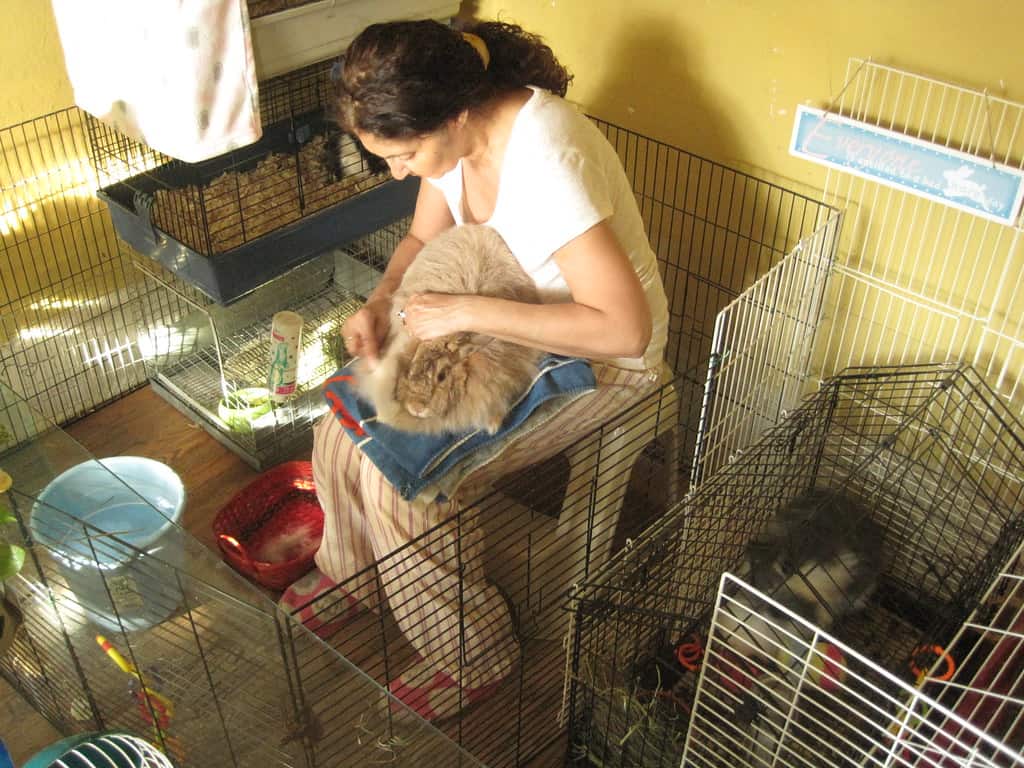
Keeping a clean litter box is not just about aesthetics or odor. Regular cleaning directly affects your rabbit's health, behavior, and overall quality of life.
Healthier Rabbit
Ammonia from urine buildup irritates a rabbit's sensitive respiratory system. Rabbits are obligate nasal breathers, and prolonged exposure to ammonia fumes can cause upper respiratory infections, eye irritation, and chronic sneezing. According to the House Rabbit Society, maintaining a clean living environment is one of the most important factors in preventing respiratory illness in domestic rabbits.
Clean litter also reduces the risk of pododermatitis (sore hocks), a painful condition where the bottom of a rabbit's feet become inflamed from sitting on wet, soiled bedding. This is especially common in larger breeds and rex-furred rabbits whose foot fur provides less padding.
Better Odor Control
Regular cleaning is the most effective way to control litter box odor. Rabbit feces are relatively mild when fresh, but urine odor intensifies rapidly as bacteria break down urea into ammonia. By day three or four without cleaning, a single rabbit's box can make an entire room smell unpleasant.
Daily spot cleaning combined with full changes every two to three days keeps odors at a level most people cannot detect. This is particularly important if your rabbit lives in a shared family space like a living room or bedroom.
Easier Long-Term Maintenance
Cleaning a litter box every two days is actually less work overall than cleaning it once a week. A two-day-old box takes about two minutes to scoop and five minutes to fully change. A week-old box takes fifteen to twenty minutes of scrubbing, scraping, and dealing with hardened urine deposits that bond to plastic surfaces.
Here is the math for a medium-sized rabbit. After two days, you are dealing with roughly 440 to 900 grams of poop and 660 to 1,120 ml of urine. After seven days, that becomes 1,540 to 3,150 grams of poop and 2,310 to 3,920 ml of urine. Imagine scrubbing three kilograms of waste mixed with nearly four liters of urine. Frequent small cleanings are always easier than infrequent big ones.
Stronger Litter Box Habits
Rabbits are naturally clean animals and prefer to use a designated spot for their waste. A dirty litter box can cause a rabbit to start going elsewhere, which defeats the purpose of litter training entirely. If your rabbit starts avoiding the box, a dirty environment is often the first thing to investigate.
Regular cleaning reinforces good litter box habits and helps maintain the association between the box and bathroom behavior. This is especially important for rabbits that are still being litter trained or for older rabbits you are litter training for the first time.
Common Mistakes to Avoid When Cleaning Rabbit Litter
Even experienced rabbit owners sometimes make cleaning mistakes that can affect their rabbit's health or litter habits. Here are the most common ones:
- Using scented cleaners or bleach. Strong chemical residues irritate a rabbit's respiratory system. Stick to white vinegar and water for routine cleaning.
- Scrubbing with abrasive pads. Scratches in the plastic create crevices where bacteria hide and odors linger. Use a soft brush or cloth instead.
- Changing litter brands suddenly. Rabbits are creatures of habit. If you switch litter types, mix the new litter with the old for about a week to help your rabbit adjust.
- Washing the litter box in a kitchen sink. Rabbit urine can carry the parasite Encephalitozoon cuniculi. According to the MSD Veterinary Manual, this parasite can be zoonotic. Always clean litter boxes in a utility sink, bathtub, or outdoors with a garden hose.
- Removing every trace of scent. When doing a full litter change, leave two or three dry fecal pellets in the box. This scent marker helps your rabbit remember that this is their bathroom spot. Removing all traces of scent can confuse younger rabbits and lead to accidents.
- Skipping the weekly deep clean. Even with daily spot cleaning, do a thorough vinegar scrub of the entire box at least once a week. Bacteria and mineral deposits build up in corners and seams that daily cleaning misses.
Frequently Asked Questions
Can I clean my rabbit's litter box with bleach?
No. Bleach fumes are dangerous to rabbits and can cause respiratory distress even after rinsing. Use a mixture of white vinegar and warm water instead. Vinegar safely dissolves urine calcium deposits and kills most bacteria without leaving harmful residue behind.
How many litter boxes does a rabbit need?
One litter box is enough for a single rabbit in a cage or pen. If your rabbit has free roam of a room or your entire home, add one box per room they frequent. Bonded pairs do well with two boxes to reduce competition and keep both boxes cleaner longer.
Should I put hay in the litter box?
Yes. Placing fresh hay at one end of the litter box encourages your rabbit to eat while using the box, which reinforces litter training. Rabbits naturally eat and eliminate at the same time, so combining the two helps build consistent bathroom habits.
What should I do if my rabbit stops using the litter box?
First, check if the litter box is clean enough, since dirty boxes are the most common cause. Then check for medical issues, hormonal changes in unneutered rabbits, or environmental stress. Going back to basics with confined litter training often resolves the issue within a few days.
Is it normal for rabbit urine to leave white residue?
Yes. Rabbits excrete excess calcium through their urine, which gives it a cloudy, milky, or chalky appearance. This is completely normal and explains the white deposits on cage surfaces. If the urine looks gritty or sludge-like, consult a veterinarian, as this could indicate bladder sludge.
Cite this article:
Cite this article:
BunnySync (March 1, 2026) How Often Should You Change a Rabbit's Litter? Complete Guide. Retrieved from https://bunnysync.com/blog/how-often-to-change-rabbit-litter.
"How Often Should You Change a Rabbit's Litter? Complete Guide." BunnySync - March 1, 2026, https://bunnysync.com/blog/how-often-to-change-rabbit-litter
Sources and further reading
- Buseth, Marit Emilie., and Richard A. Saunders. Rabbit Behaviour, Health, and Care. CABI, 2014.
- Lebas, F. The Rabbit: Husbandry, Health, and Production. Food and Agriculture Organization of the United Nations, 1997.
- Patry, Karen, et al. The Rabbit-Raising Problem Solver: Your Questions Answered about Housing, Feeding, Behavior, Health Care, Breeding, and Kindling. Storey Publishing, 2014.
- House Rabbit Society - Litter Training FAQ
- MSD Veterinary Manual - Rabbits