To stop male rabbits from fighting, you need to separate them immediately, get both rabbits neutered, check for injuries or illness, and then carefully re-introduce them on neutral territory. Neutering is the single most effective step because it eliminates the hormonal aggression that drives most male rabbit fights. Without neutering, two male rabbits will almost certainly fight once they reach sexual maturity.
Male rabbit fights are not harmless scuffles. They can result in deep bite wounds, torn ears, eye injuries, and even death. If your bucks are going at each other, you need to act fast and follow a structured plan to restore peace. Below is the complete guide, based on years of hands-on breeding experience.
Why Do Male Rabbits Fight Each Other?
Understanding the root cause of fighting is essential before you can fix it. Male rabbits fight for several specific reasons, and knowing which one applies to your situation will help you choose the right approach.
Hormonal Aggression and Puberty
The most common cause of fighting between male rabbits is hormonal aggression. When bucks hit puberty at around 3 to 4 months old, their testosterone levels surge. This triggers territorial behavior, mounting attempts, urine spraying, and direct aggression toward other males. Two bucks that were perfectly friendly as kits can become bitter enemies almost overnight once puberty kicks in.
This hormonal shift is biological and unavoidable. Even the calmest, most docile buck will start showing territorial behaviors once those hormones activate. If you are thinking about getting a second rabbit, timing neutering before puberty is critical.
Territorial Disputes
Rabbits are naturally territorial animals. In the wild, male rabbits establish and defend territories that can span several acres. Domestic rabbits retain this instinct. When two males share the same space, they both want to claim it as their own. This leads to chasing, lunging, biting, and full-blown fights.
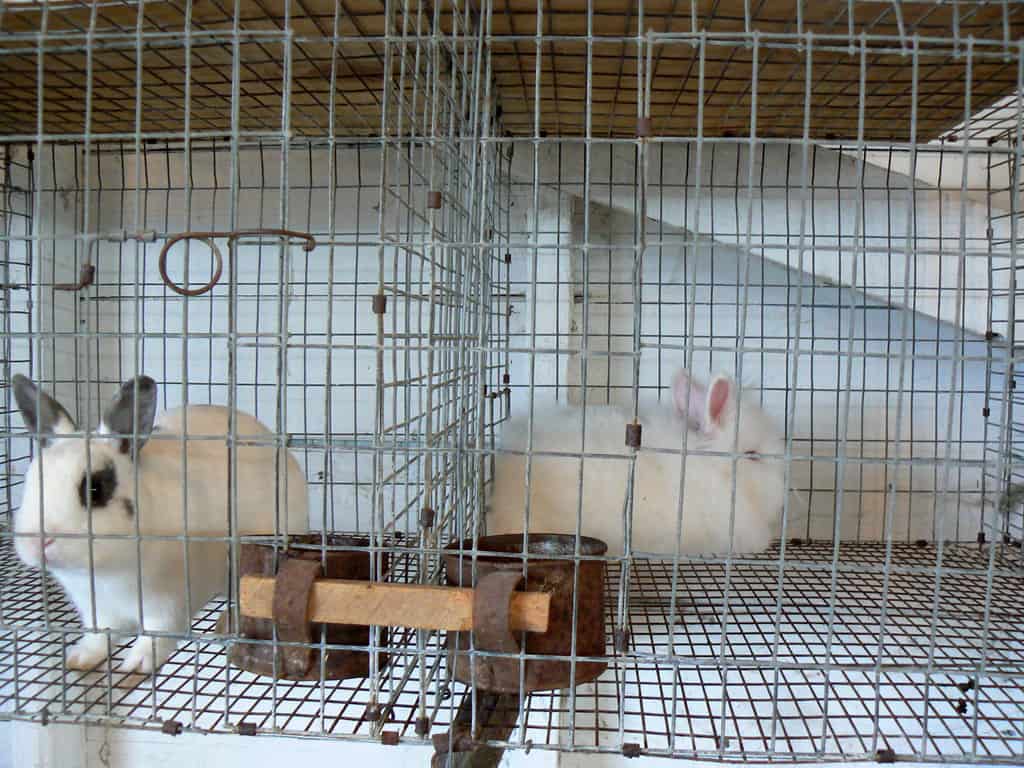
Territorial aggression gets worse in smaller spaces. A cage that is too small forces two territorial bucks into constant confrontation with no escape route. This is why proper cage sizing matters so much when housing multiple rabbits.
Resource Competition
Food bowls, water bottles, hay racks, hiding spots, and even your attention can become resources worth fighting over. If two males are competing for a single food bowl, the dominant rabbit may attack the submissive one to keep him away from food. This can lead to one rabbit losing weight and becoming malnourished while the other overeats.
Pain or Illness
A rabbit that is in pain or feeling unwell may lash out at a cagemate. If your rabbits were living peacefully and then started fighting all of a sudden, pain or illness could be the trigger. Dental problems, ear infections, GI issues, and hidden injuries can all cause a normally gentle rabbit to become aggressive.
Step 1: How to Safely Separate Fighting Rabbits
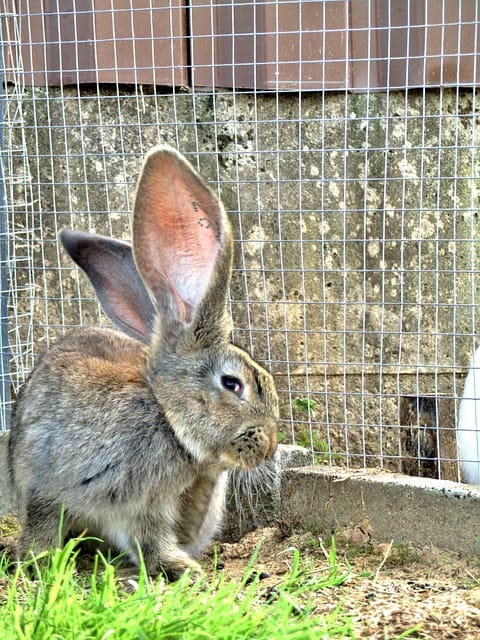
When you see two male rabbits fighting, your first priority is to separate them. Do not wait to see if they work it out on their own. Rabbit fights escalate quickly and can cause serious harm in seconds.
Here is how to separate fighting rabbits safely:
- Use a barrier, not your bare hands. Grab a towel, thick gloves, a piece of cardboard, or a broom. Slide it between the two rabbits to break their line of sight and physical contact. Reaching in with bare hands risks getting bitten or scratched.
- Try a spray bottle first. A quick spray of water to the face often startles rabbits enough to stop the fight. Most rabbits will pause to wipe their face, giving you a window to separate them.
- Move them to separate enclosures. Each rabbit needs their own cage with their own food bowl, water bottle, and hay. Do not put them in cages side by side where they can still reach each other through the bars.
- Keep them separated until you complete the remaining steps. Putting them back together without addressing the root cause will only lead to another fight.
Here is an example of the kind of injuries that can result from a rabbit fight:
As you can see, the injuries can be severe. Male rabbits fight with powerful kicks from their hind legs, sharp teeth, and claws. They will not stop until one rabbit submits or flees.
Step 2: Should You Neuter Male Rabbits to Stop Fighting?

Yes, neutering is the most important step for stopping male rabbits from fighting. Testosterone is the primary driver of territorial aggression, and neutering eliminates that hormonal fuel. Without neutering, bonding two male rabbits is essentially impossible long-term.
The ideal time to neuter a male rabbit is between 10 and 16 weeks of age, as soon as the testicles descend. If you neuter before puberty hits (around 3 to 4 months), you can often prevent fighting from ever starting.
Benefits of Neutering Male Rabbits
| Benefit | Details |
|---|---|
| Reduced aggression | Eliminates testosterone-driven territorial fighting |
| No urine spraying | Stops the marking behavior that triggers territorial disputes |
| Easier litter training | Neutered rabbits are significantly easier to litter box train |
| Cancer prevention | Eliminates the risk of testicular cancer |
| Calmer temperament | Less destructive behavior, less cage chewing and biting |
| Reduced odor | Urine and droppings smell noticeably less strong |
| Better bonding success | Neutered pairs bond more reliably and maintain bonds longer |
Post-Neutering Timeline
Do not expect immediate results after neutering. Testosterone does not leave the body overnight. Here is what to expect:
- Week 1 to 2: Recovery from surgery. Keep the rabbit calm, clean, and separated. Monitor the incision site for infection.
- Week 2 to 4: Hormone levels begin dropping. You may still see some territorial behavior, but it should decrease noticeably.
- Week 4 to 6: Most rabbits are hormonally settled by this point. This is when you can begin the re-introduction process.
- Week 6 to 8: Full hormonal clearance in most rabbits. According to the Rabbit Welfare Association, waiting at least 6 weeks after neutering before attempting to bond rabbits gives the best chance of success.
Step 3: How to Check for Injuries After a Rabbit Fight

After separating fighting rabbits, check both of them thoroughly for injuries. Rabbit bites can be deep and easily missed under thick fur. Run your hands gently over the entire body, paying special attention to the face, ears, neck, and hindquarters.
Common Fight Injuries to Look For
- Bite wounds: Deep punctures, often hidden under fur. Part the fur and look for broken skin, blood, or scabbing.
- Torn ears: Ears are common targets. Check for rips, swelling, or bleeding.
- Scratches: Long, shallow scratches from hind leg kicks, usually on the belly, sides, or face.
- Missing fur patches: Clumps of pulled-out fur indicate a serious altercation.
- Eye injuries: Swollen, watery, or cloudy eyes need immediate veterinary attention.
- Abscesses: These can develop days after a bite wound. Monitor for hard lumps under the skin in the weeks following a fight.
Signs Your Rabbit Is in Pain
Rabbits hide pain instinctively, so you need to watch for subtle signs. A rabbit in pain may also become aggressive toward its companion, which could be causing fights you did not realize were pain-related.
- Loud or frequent teeth grinding (different from the soft grinding of contentment)
- Hunched posture with eyes half-closed
- Reluctance to move or eat
- Rapid, shallow breathing
- Excessive grooming or pulling fur from a specific spot
- Flinching when touched in a particular area
If you find any wounds deeper than a surface scratch, or if your rabbit is showing signs of pain, take them to a rabbit-savvy veterinarian. Bite wounds are prone to infection and may need antibiotics or wound care.
Step 4: How to Re-Introduce Male Rabbits After Fighting
Once both rabbits are neutered and have had at least 4 to 6 weeks for hormones to clear, you can start the re-introduction process. This is not something you rush. Re-bonding male rabbits that have fought before requires patience, consistency, and a methodical approach.
Step-by-Step Bonding Process
- Choose a completely neutral space. This must be a room or area neither rabbit has ever been in before. A bathroom, laundry room, or a pen set up in a new room works well. Both rabbits should feel equally unfamiliar with the space.
- Start with side-by-side cages. Place the rabbits in separate enclosures next to each other, close enough to see and smell each other but far enough apart that they cannot bite through the bars. Keep them like this for 3 to 7 days.
- Swap scents. Switch their blankets, litter boxes, or toys between cages daily. This helps each rabbit get used to the other's scent without direct contact.
- Short supervised sessions. Start with 10 to 15 minute face-to-face sessions in the neutral space. Stay close and keep a towel or spray bottle ready. Watch their body language closely.
- Gradually increase session length. If sessions go well (grooming, ignoring each other, or lying near each other), increase the time by 5 to 10 minutes each day.
- Watch for positive signs. Mutual grooming, lying side by side, and sharing food are all signs the bond is forming. When you see these behaviors consistently across multiple sessions, they are ready to share a space full-time.
- Move them into a shared, freshly cleaned space. When they finally move in together, clean the enclosure thoroughly so neither rabbit's territorial scent is dominant.
Here is a helpful video from Howcast on the proper way to re-introduce two rabbits:
According to the House Rabbit Society, the bonding process for male pairs can take anywhere from a few days to several months. Male-male pairs are the most challenging combination to bond, so expect this process to take longer than it would for a male-female pair.
What Does Normal Bonding Behavior Look Like vs. Fighting?
During the bonding process, it can be hard to tell the difference between normal dominance behavior and actual fighting. Here is a comparison to help you know when to intervene:
| Normal Bonding Behavior | Dangerous Fighting Behavior |
|---|---|
| Light chasing (short bursts, no biting) | Prolonged chasing with lunging and biting |
| Mounting (establishing dominance) | Biting while mounting, drawing blood |
| Nose bumping or nudging | Biting at the face, ears, or genitals |
| One rabbit lowering its head (asking for grooming) | Both rabbits refusing to back down, circling |
| Brief thumping or grunting | Lunging with a "tornado" of fur flying |
| Ignoring each other | Constant chasing with no rest periods |
If you see any fur flying, biting, or hear screaming, separate them immediately. Wait at least 24 hours before trying again. If fights happen during three consecutive sessions, take a longer break of a week or more before trying again.
Can Two Male Rabbits Ever Live Together Peacefully?
Yes, two neutered male rabbits can absolutely live together peacefully. Many breeders and pet owners successfully keep bonded male pairs. The keys to success are:
- Both rabbits must be neutered. Bonding two intact males is not realistic.
- Adequate space. The enclosure needs to be large enough for both rabbits to have their own area. A minimum of 12 square feet of living space for a bonded pair is recommended.
- Duplicate resources. Provide two food bowls, two water sources, two hay racks, and multiple hiding spots. This eliminates resource competition.
- Proper bonding process. Rushing introductions is the number one reason bonds fail.
- Compatible personalities. Some rabbits, regardless of sex, simply do not get along. If repeated bonding attempts fail over several months, the rabbits may need to live separately. Not every pairing works, and that is okay.
If you are wondering whether different breeds of rabbits can live together, breed matters less than individual personality. A calm Holland Lop can bond with an energetic Mini Rex as long as both are neutered and properly introduced.
Tips for Preventing Future Fights Between Male Rabbits
Once your rabbits are bonded, follow these guidelines to keep the peace long-term:
- Never separate a bonded pair unnecessarily. If one rabbit needs to go to the vet, take both. Separating a bonded pair, even briefly, can break the bond and require re-bonding.
- Maintain enough space. Overcrowding is a top cause of stress and aggression. Give them room to move apart when they want personal space.
- Watch for signs of stress in either rabbit. Changes in eating, litter habits, or increased hiding can signal that tension is building.
- Keep the environment enriched. Boredom leads to frustration, which can lead to aggression. Provide tunnels, chew toys, digging boxes, and regular out-of-cage exercise time.
- Monitor during seasonal changes. Even neutered rabbits can show increased restlessness during spring when daylight hours increase. Be extra vigilant during these periods.
- Do not introduce a third rabbit without careful planning. Adding a new rabbit to an established pair can disrupt the existing bond and cause fighting.
Frequently Asked Questions
How long does it take for male rabbits to stop fighting after neutering?
Most male rabbits see a significant reduction in aggression within 4 to 6 weeks after neutering. Testosterone needs time to leave the body completely. Some rabbits calm down within 2 weeks, while others may take up to 8 weeks for full hormonal clearance before re-introduction can begin.
Can unneutered male rabbits live together without fighting?
In most cases, no. Unneutered male rabbits will almost always fight once they reach puberty at around 3 to 4 months old. Littermates may tolerate each other slightly longer, but hormonal aggression eventually overrides any sibling bond. Neutering is essential for peaceful cohabitation.
Is it normal for bonded male rabbits to chase each other?
Short bursts of chasing are a normal part of establishing and maintaining a hierarchy between bonded rabbits. As long as there is no biting, no fur pulling, and both rabbits are eating and behaving normally, occasional chasing is nothing to worry about. Prolonged or aggressive chasing is a warning sign.
What should I do if my neutered male rabbits still fight?
If neutered males continue fighting after hormones have cleared (6 or more weeks post-surgery), there may be an underlying health issue causing pain and irritability. Visit a rabbit-savvy veterinarian to rule out dental problems, ear infections, or internal pain. If health is not the issue, try re-bonding from scratch in a completely neutral territory.
Should I let male rabbits fight it out to establish dominance?
Never let rabbits "fight it out." Unlike some animals, rabbits do not resolve conflicts through controlled dominance fights. Rabbit fights escalate quickly and can cause life-threatening injuries within seconds. Always separate fighting rabbits immediately and address the underlying cause.
Cite this article:
BunnySync (March 1, 2026) How to Stop Male Rabbits Fighting: Complete Guide for 2026. Retrieved from https://bunnysync.com/blog/how-to-stop-male-rabbits-fighting.
"How to Stop Male Rabbits Fighting: Complete Guide for 2026." BunnySync - March 1, 2026, https://bunnysync.com/blog/how-to-stop-male-rabbits-fighting