Yes, you can breed half-sibling rabbits. Breeding related rabbits, known as linebreeding, is a common and accepted practice among experienced rabbit breeders worldwide. Half-siblings share one parent, either the same doe or the same buck, and can be paired together safely as long as both animals are healthy and free of genetic defects. Breeders use this technique to lock in desirable traits like body type, fur quality, and temperament. The key is understanding what you are doing, tracking your pedigrees carefully, and knowing when to bring in fresh genetics.
In this guide, we will cover what linebreeding actually means, how to do it responsibly, what risks to watch for, and how professional breeders use half-sibling pairings to improve their lines. Whether you are a new breeder with limited stock or a seasoned exhibitor refining a bloodline, this information will help you make informed breeding decisions.
What Is Linebreeding in Rabbits?
Linebreeding is the practice of breeding rabbits that share common ancestors. Unlike outcrossing (pairing completely unrelated rabbits), linebreeding concentrates the genetics of a specific ancestor or group of ancestors to produce more consistent offspring. Half-sibling pairings fall under this umbrella.
There is an important distinction between linebreeding and inbreeding, though the line between them is a matter of degree rather than kind. In general usage among breeders:
- Linebreeding refers to pairings between relatives that are at least one generation removed, such as half-siblings, uncle to niece, or grandparent to grandchild. The goal is to concentrate desirable traits gradually.
- Inbreeding refers to very close pairings, such as full siblings or parent to offspring. These pairings concentrate genetics more aggressively and carry higher risk if undesirable recessive genes are present.
Half-sibling breeding sits at the milder end of this spectrum. Because half-siblings share only about 25% of their DNA (compared to 50% for full siblings), the concentration of genetics is more moderate and the risk of exposing harmful recessive traits is lower.
Can You Safely Breed Half-Sibling Rabbits?
Yes, and many professional breeders do it regularly. A half-sibling pairing, where two rabbits share one parent but not both, is one of the safest forms of linebreeding. The shared genetics are enough to reinforce the traits of the common parent while still allowing for genetic diversity from the unrelated parent.
Here is a practical example. Say you have a buck with outstanding body type and fur density. You breed him to two different does, producing two separate litters. A doe from the first litter and a buck from the second litter are half-siblings. Pairing those two concentrates the sire's genetics while bringing in the unique traits of each dam. The result is offspring that are more likely to carry the sire's best qualities.
This approach is especially useful when you are working with a rabbit that has reached maturity and proven itself through show results or consistent production of quality kits.
What Makes a Half-Sibling Pairing Work
For a half-sibling pairing to produce good results, both rabbits should:
- Be free of obvious genetic defects. Check for malocclusion (misaligned teeth), splay leg, poor bone density, and any chronic health issues.
- Complement each other. If the doe is slightly weak in hindquarters, the buck should be strong there. Linebreeding amplifies traits, both good and bad.
- Come from the same line intentionally. Random accidental pairings of related rabbits are not linebreeding. The breeder should have a clear goal for what traits they are trying to fix or improve.
- Be of breeding age. Does should be at least 6 months old (depending on breed), and bucks should be sexually mature and proven if possible.
What Happens When You Breed Brother and Sister Rabbits?
Full sibling pairings are more intense than half-sibling pairings because full siblings share approximately 50% of their DNA. This means any recessive genes, whether desirable or not, have a much higher chance of being expressed in the offspring.
Many experienced breeders breed full siblings without issues, particularly when both rabbits are known to be free of genetic defects. The practice is common in meat rabbit operations and show breeding programs where a breeder is trying to lock down a specific type quickly.
That said, breeding full siblings carries more risk than half-sibling pairings. Problems that can surface include:
- Reduced litter sizes over successive generations of close breeding
- Lower kit vitality, meaning weaker kits that are slower to grow
- Expression of recessive defects like malocclusion, splay leg, or poor fur quality
- Reduced immune function in kits born from repeated close pairings
The important thing to understand is that sibling breeding does not create genetic defects. It reveals defects that were already present but hidden as recessive genes. If both parents carry a recessive gene for malocclusion, for example, approximately 25% of their offspring will express that defect, whether the parents are siblings or not. Sibling breeding simply increases the odds that both parents carry the same recessive genes, since they inherited them from the same source.
Is It Okay to Breed Father and Daughter Rabbits?
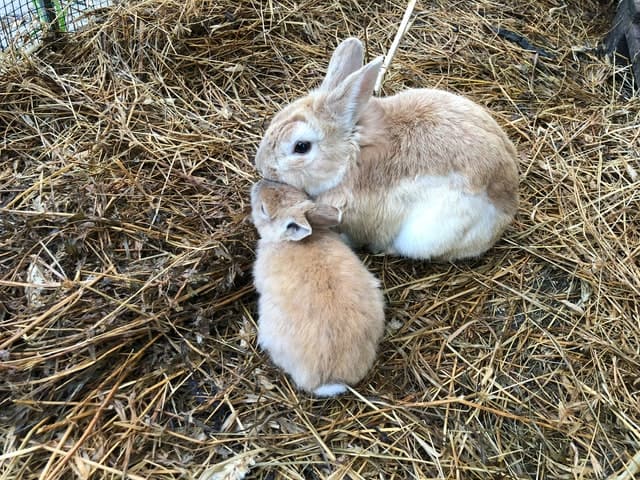
Yes, sire-to-daughter breeding is one of the most common linebreeding pairings and is actually preferred by many breeders over sibling pairings. The reason comes down to genetics: a father-daughter pairing produces offspring with roughly 75% of the sire's genetic contribution and 25% from the dam's outside genetics. This creates a tighter concentration on the sire's traits without the full overlap that sibling pairings produce.
This pairing is especially popular when a breeder has a proven buck that consistently produces excellent offspring. By breeding him back to his best daughters, the breeder can create a line that reliably produces his type. Many award-winning show lines have been built using this exact strategy.
The same principle works in reverse: breeding a dam back to her best sons is also practiced, though less commonly, since bucks can be paired with more does and are typically the more influential factor in a breeding program.
Common Linebreeding Pairings Ranked by Genetic Intensity
| Pairing | Shared DNA (%) | Genetic Intensity | Common Use |
|---|---|---|---|
| Full siblings | ~50% | High | Locking traits quickly |
| Parent to offspring | ~50% | High | Concentrating proven sire/dam traits |
| Half-siblings | ~25% | Moderate | Balanced trait reinforcement |
| Uncle/aunt to niece/nephew | ~25% | Moderate | Maintaining line consistency |
| Grandparent to grandchild | ~25% | Moderate | Preserving older generation traits |
| Cousins | ~12.5% | Low | Gentle line maintenance |
Why Do Breeders Choose to Breed Related Rabbits?
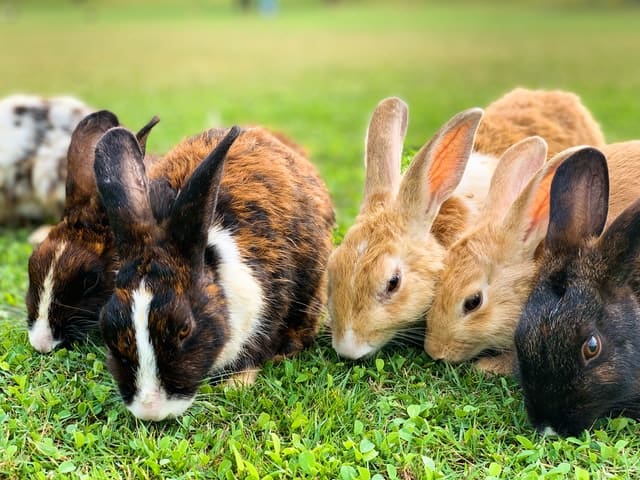
Linebreeding is not done out of laziness or lack of options (though limited stock can be a factor). It is a deliberate breeding strategy with specific goals. Here are the main reasons experienced breeders pair related rabbits.
1. Preserving a Valuable Bloodline
When a breeder develops a line with exceptional qualities, whether it is body type, fur density, color, or temperament, linebreeding is the primary tool for preserving those traits. Outcrossing to unrelated rabbits introduces unknown genetics and can dilute the traits that took years to develop. By breeding half-siblings or other related pairs, the breeder maintains a higher concentration of the genetics they worked hard to establish.
2. Improving Consistency
One of the biggest advantages of linebreeding is predictability. When two rabbits share common genetics, their offspring tend to be more uniform. Instead of getting a litter where every kit looks different, linebred litters often produce kits that are strikingly similar in type. This consistency is especially valued in show breeding, where the goal is to produce rabbits that meet a specific breed standard.
3. Identifying Hidden Genetic Defects
This is one of the less obvious benefits of linebreeding, but it is extremely valuable. When you breed related rabbits, recessive genes are more likely to pair up and express themselves. If your line carries a hidden defect, linebreeding will reveal it within a few generations. Once identified, you can cull the affected animals from your breeding program and select only carriers that are free of the defect. Over time, this cleans up your line and produces healthier, more genetically sound rabbits.
4. Limited Breeding Stock
New breeders or those working with rare breeds sometimes have no choice but to work with related animals. If you start with a trio (one buck and two does) from the same breeder, the offspring will be related. In these situations, half-sibling breeding is a practical necessity, and it works perfectly well as long as you monitor your results and plan to introduce unrelated stock within a few generations.
What Are the Risks of Breeding Related Rabbits?
While linebreeding is a powerful tool, it comes with real risks that every breeder should understand. The problems are not caused by the act of breeding related animals itself. They come from concentrating genetics without proper selection.
Inbreeding Depression
Repeated close breeding over many generations without introducing fresh genetics can lead to inbreeding depression. This shows up as:
- Smaller litter sizes
- Lower birth weights
- Reduced growth rates
- Weaker immune systems
- Lower fertility in both bucks and does
- Increased kit mortality
A single half-sibling pairing will not cause inbreeding depression. The risk increases when breeders continue to breed closely related rabbits generation after generation without ever outcrossing. Think of it as a tool that becomes dangerous when overused.
Expression of Recessive Defects
Every rabbit carries recessive genes that are not visible in its phenotype. When two carriers of the same recessive defect are bred together, some of their offspring will express the defect. Common recessive issues in rabbits include:
- Malocclusion (misaligned teeth that grow continuously and need trimming)
- Splay leg (legs that splay outward, preventing normal movement)
- Max factor (a lethal gene that causes severe skin and developmental issues)
- Megacolon (associated with certain color genetics in breeds like English Spots and Dutch)
When these issues appear in a linebred litter, it is actually a sign that your linebreeding program is working. The problem was always there; now you can see it and take action to remove it from your line.
Loss of Vigor
Even without specific defects showing up, heavily linebred rabbits can gradually lose what breeders call "vigor." Does may produce less milk, bucks may have lower fertility, and kits may be slower to reach full maturity. This is a signal that it is time to introduce an outcross.
How to Linebreed Half-Sibling Rabbits Responsibly
Successful linebreeding is not about randomly pairing related rabbits and hoping for the best. It requires planning, record-keeping, and honest evaluation of your results. Here is a practical approach.
Step 1: Start with Quality Foundation Stock
Your linebreeding results will only be as good as the rabbits you start with. If your foundation stock has poor type, no amount of linebreeding will fix that. Start with the best animals you can find, ideally from a breeder with a proven, established line.
Step 2: Define Your Breeding Goals
Before making any pairing, know exactly what you are trying to achieve. Are you trying to improve head type? Strengthen hindquarters? Fix fur density? Your goals determine which pairings make sense. A half-sibling pairing is only useful if both rabbits carry the traits you want to reinforce.
Step 3: Keep Detailed Pedigree Records
You cannot linebreed effectively without knowing the ancestry of every rabbit in your program. A three-generation pedigree is the minimum. Many serious breeders track four or five generations. Record not just names and ear numbers, but notes about each animal's strengths, weaknesses, and any defects that have appeared in their offspring.
Step 4: Evaluate Every Litter Honestly
When a linebred litter is born, evaluate the kits critically as they grow. Look for improvements in the traits you were targeting, but also watch for any new problems. If defects appear, do not breed the affected animals. If the mother rabbit is feeding her babies well and the kits are growing at a normal rate, that is a good sign that the pairing was healthy.
Step 5: Know When to Outcross
Even the most successful linebreeding program needs fresh genetics periodically. Most breeders recommend outcrossing every 3 to 5 generations, or sooner if you notice any signs of inbreeding depression. The outcross rabbit should be carefully selected to complement your line while being completely unrelated.
When Should You Avoid Breeding Related Rabbits?
Not every situation calls for linebreeding. Here are cases where you should avoid pairing related rabbits:
- When either rabbit has a known genetic defect. Breeding two carriers will produce affected offspring. Remove the defect from your line before continuing.
- When you have already done several generations of close breeding. If your line has been linebred for 4+ generations without an outcross, adding another related pairing increases risk significantly.
- When you are unsure of the rabbits' pedigrees. If you do not know how the rabbits are related, you cannot predict the outcome. Get pedigree information before breeding.
- When both rabbits share the same weaknesses. Linebreeding amplifies faults just as effectively as it reinforces strengths. If both half-siblings have weak shoulders, pairing them will likely produce kits with even weaker shoulders.
- When the rabbits are not in good health. Breeding should only happen when both animals are at peak condition, regardless of whether they are related.
How to Track Genetics and Lineage in Your Rabbitry
Good record-keeping is the foundation of any successful breeding program, and it becomes even more critical when linebreeding. Without accurate records, you are flying blind.
At minimum, every breeder should track:
- Pedigree information for at least three generations
- Breeding dates and outcomes (litter size, kit survival, any complications)
- Individual rabbit evaluations noting strengths, weaknesses, and faults
- Health records including any genetic issues that appear
- Coefficient of inbreeding (COI) calculations when possible
Many breeders use dedicated breeding management software to track pairings, pedigrees, and production data. Digital tools make it much easier to spot patterns across generations and plan future breedings strategically.
Understanding Coefficient of Inbreeding (COI)
The coefficient of inbreeding is a number that represents how genetically similar two parents are. It is expressed as a percentage:
| COI Range | Risk Level | Typical Pairing |
|---|---|---|
| 0-6.25% | Low | Cousins, distantly related |
| 6.25-12.5% | Moderate | Half-siblings, uncle/niece |
| 12.5-25% | High | Full siblings, parent/offspring |
| 25%+ | Very High | Repeated close pairings over generations |
For most breeding programs, keeping the COI below 12.5% is a reasonable guideline. A single half-sibling pairing typically results in a COI of about 6.25%, which is well within the safe range.
Real-World Examples of Linebreeding Success
Linebreeding is not a fringe practice. It is used by top breeders across virtually every rabbit breed recognized by the American Rabbit Breeders Association (ARBA). Many Best in Show winners at national conventions come from carefully linebred programs.
In meat rabbit production, linebreeding is used to develop commercial lines with consistent growth rates, feed conversion, and litter sizes. Breeds like New Zealand Whites and Californians have been refined through decades of selective linebreeding to become the efficient production animals they are today.
Show breeders in Holland Lops, Mini Rex, Netherland Dwarfs, and other popular breeds rely heavily on linebreeding to maintain the specific type that wins on the table. The tight breed standards in these varieties make consistency essential, and linebreeding is the primary tool for achieving it.
Knowing when your doe is about to kindle becomes especially important in a linebreeding program, since you want to be present to evaluate the litter from the moment they arrive.
Frequently Asked Questions
Can half-sibling rabbits produce healthy babies?
Yes, half-sibling rabbits can produce perfectly healthy babies. Because half-siblings share only about 25% of their DNA, the risk of genetic problems is relatively low. The offspring will be healthy as long as neither parent carries serious genetic defects. Many professional breeders use half-sibling pairings regularly as part of their breeding programs.
How many generations can you linebreed rabbits before problems occur?
Most breeders can safely linebreed for 3 to 5 generations before needing to introduce an outcross. The exact number depends on how closely related the pairings are and the genetic health of your line. Watch for reduced litter sizes, smaller kits, or increased health issues as signals that an outcross is needed.
Is linebreeding the same as inbreeding?
Linebreeding is a form of inbreeding, but the terms are used differently by breeders. Linebreeding generally refers to planned pairings between moderately related animals (half-siblings, uncle/niece, grandparent/grandchild) with a specific goal. Inbreeding typically describes very close pairings (full siblings, parent/offspring) or unplanned matings between related animals.
Should I breed two rabbits from different breeds instead of half-siblings?
Crossbreeding different breeds serves a completely different purpose than linebreeding. Crossbreeding introduces maximum genetic diversity, while linebreeding concentrates existing genetics. If your goal is to produce purebred rabbits for show or to maintain a specific breed standard, stick with linebreeding within the breed. Crossbreeding is primarily used in commercial meat production.
What is the safest way to start linebreeding rabbits?
The safest approach is to start with a half-sibling or uncle/niece pairing from high-quality, health-tested stock. Keep detailed pedigree records, evaluate every litter honestly, and be willing to cull rabbits that do not meet your standards from the breeding program. Plan to introduce an unrelated outcross within 3 to 4 generations.
Cite this article:
Cite this article:
BunnySync (March 2, 2026) Can You Breed Half-Sibling Rabbits? Complete Breeder's Guide. Retrieved from https://bunnysync.com/blog/can-you-breed-half-sibling-rabbits.
"Can You Breed Half-Sibling Rabbits? Complete Breeder's Guide." BunnySync - March 2, 2026, https://bunnysync.com/blog/can-you-breed-half-sibling-rabbits
Sources and Further Reading
- Patry, Karen, et al. The Rabbit-Raising Problem Solver: Your Questions Answered about Housing, Feeding, Behavior, Health Care, Breeding, and Kindling. Storey Publishing, 2014.
- Mating Siblings - Raising Rabbits
- American Rabbit Breeders Association (ARBA)