You can tell your rabbit is in labor by watching for fur pulling, nesting behavior, loss of appetite, mood changes, digging, and small amounts of blood or discharge. Most rabbits give birth quickly, often within 10 to 30 minutes, so knowing the signs of approaching labor is critical. If you know how to tell if your rabbit is in labor, you can prepare the nest box, monitor for complications, and give the doe the space she needs to kindle safely.
Rabbit gestation lasts about 28 to 35 days, with most does kindling around day 31. As a breeder, I always mark the breeding date on my calendar and start watching closely from day 28 onward. The signs of labor often appear hours or even days before the actual birth, giving you time to prepare if you know what to look for.
What Are the Signs That a Rabbit Is About to Give Birth?
Before your doe kindles, she will display several behavioral and physical changes. Some of these appear days before birth, while others show up just hours before delivery. Here is a quick overview of the most common signs:
- Fur pulling from the chest, belly, and legs to line the nest
- Mood changes including aggression, restlessness, or extreme shyness
- Loss of appetite typically 24 to 48 hours before birth
- Digging and nesting in corners, bedding, or the nest box
- Carrying hay or straw in her mouth to build the nest
- Light vaginal discharge or spotting shortly before or during labor
Not every doe will show all of these signs, and first-time mothers may behave differently than experienced ones. Some first-time does skip fur pulling entirely, which means you need to step in and prepare the nest yourself.
How Do You Know When Your Rabbit Is Close to Labor?
The timeline of labor signs can help you estimate when kindling will happen. Here is a breakdown of what to expect and when.
Fur Pulling and Nest Building
One of the most reliable signs that labor is approaching is fur pulling. Your pregnant doe will pluck loose fur from her dewlap, chest, belly, and legs. She uses this fur to line the nest and insulate her kits. Newborn rabbit kits are born hairless, deaf, and blind, making the fur lining essential for keeping them warm during those first critical days.
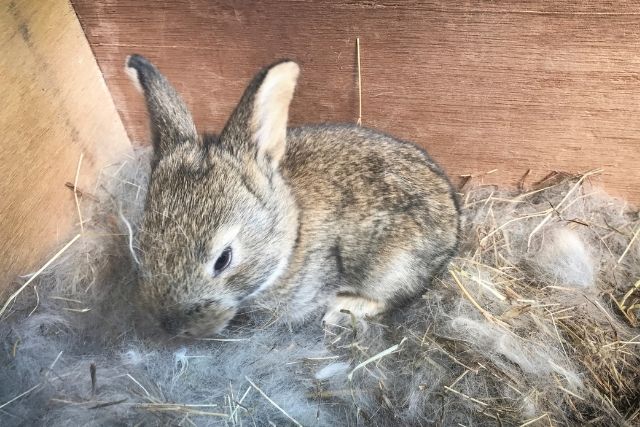
Some does begin pulling fur as early as a week before kindling, while others wait until hours before delivery. In my experience, most does pull fur within 24 to 48 hours of giving birth. If your doe is past day 28 and you see loose fur in the cage or a growing pile of fluff in the nest box, labor is likely close.
First-time mothers sometimes fail to pull enough fur or skip this step entirely. If your doe hasn't pulled fur by day 30 and you suspect she is close, gently pluck some loose fur from her belly and place it in the nest box yourself. You can also add clean, chemical-free straw or hay as extra insulation.
Mood Changes and Aggression

Hormonal shifts during late pregnancy cause noticeable mood changes. A normally friendly doe may suddenly become territorial, grunt when you approach her cage, or even lunge and nip. This is completely normal and driven by instinct. She is protecting her nesting space.
You may also notice your rabbit becoming unusually restless. She might pace around the cage, rearrange bedding repeatedly, or seem unable to settle in one spot. These behaviors are closely linked to signs of stress in rabbits, but in this context, they point toward approaching labor rather than a health problem.
Give your doe extra space during this time. Avoid unnecessary handling, keep noise levels low, and limit how often you open the cage. The calmer her environment, the smoother the kindling process tends to go.
Loss of Appetite
A pregnant rabbit will often stop eating or drastically reduce her food intake about 24 to 48 hours before giving birth. This is one of the more consistent signs across breeds and experience levels. If your doe suddenly ignores her pellets and hay close to her due date, labor is probably imminent.
This loss of appetite is normal and temporary. Do not try to force-feed her or disturb her during this time. Keep fresh water available at all times, since hydration is especially important during and after labor. Once she kindles and begins nursing, her appetite will return, often stronger than before because milk production demands extra calories.
If your rabbit stops eating well before her expected due date (before day 26, for example), that could indicate a health issue unrelated to labor. In that case, consult a rabbit-savvy veterinarian.
Increased Digging and Nesting Behavior

In the wild, pregnant does dig burrows to create a safe, enclosed space for their litter. Pet and breeding rabbits display this same instinct. Your doe may dig frantically in corners of the cage, scratch at the floor, or burrow into her bedding.
If you have not yet provided a nest box, do so immediately when you see this behavior. A nest box should be placed in the cage by day 27 or 28 of gestation at the latest. Fill it with clean hay or straw, and let the doe arrange it herself. She will shape the materials into a bowl-like depression and line it with her pulled fur.
You may also notice your doe carrying mouthfuls of hay or straw around the cage and depositing them in the nest box or a chosen corner. This "hay carrying" behavior is a classic sign that labor is within a day or two.
Vaginal Discharge or Spotting
A small amount of clear or slightly bloody discharge is normal shortly before or during labor. You may notice spots on the bedding or around the doe's rear. This typically appears within hours of delivery, not days.
Light spotting is nothing to worry about. However, heavy bleeding, foul-smelling discharge, or discharge that appears days before the expected due date warrants immediate veterinary attention, as it could signal a miscarriage, infection, or other complication.
How Long Is a Rabbit in Labor?
Rabbit labor is remarkably fast compared to many other animals. Most does complete the entire birthing process in 10 to 30 minutes. Some experienced does can deliver a full litter of 6 to 12 kits in under 15 minutes. This speed is an evolutionary advantage, since wild rabbits need to minimize vulnerability during birth.
Because labor is so quick, many breeders never actually witness it. I have had does that showed clear pre-labor signs in the evening and had a full litter of healthy kits by the time I checked the next morning. This is why preparing the nest box in advance is so important; you cannot count on being present during the actual delivery.
Rabbits almost always give birth in the early morning hours, typically between midnight and dawn. If your doe is showing pre-labor signs in the evening, check the nest first thing in the morning.
What Does Rabbit Labor Look Like?
If you are fortunate enough to observe the delivery, here is what to expect. The doe will typically sit over the nest box or in her chosen nesting spot. She may strain slightly, and you will see each kit emerge one at a time. The doe will clean each kit, eat the placenta and amniotic sac (this is normal and provides essential nutrients), and bite through the umbilical cord.
Between kits, the doe may rest briefly, groom herself, or rearrange the nest. The entire process from first to last kit usually takes less than half an hour. After all the kits are delivered, the doe will cover them with fur and hay, then leave the nest. This "leaving" behavior is instinctive; in the wild, a doe stays away from the nest to avoid attracting predators.
Do not be alarmed if the doe seems to ignore her babies after birth. Mother rabbits typically only feed their babies once or twice a day, usually at dawn and dusk, spending the rest of the time away from the nest.
How to Prepare for Your Rabbit's Labor
Preparation is the most important thing you can do as a breeder. Since you likely will not be present during the actual delivery, getting everything set up in advance ensures the doe and her kits have the best chance of a healthy outcome.
Setting Up the Nest Box
Place a nest box in the cage by day 27 or 28 of gestation. The box should be large enough for the doe to turn around in but small enough to keep the kits contained and warm. A good rule of thumb: the box should be about 1.5 times the length of the doe.
Fill the nest box with 3 to 4 inches of clean hay or straw. Avoid using cedar or pine shavings, as the aromatic oils can irritate the respiratory systems of both the doe and her newborn kits. Timothy hay, orchard grass, or wheat straw all work well. Maintaining the ideal temperature for rabbits is especially critical for hairless newborn kits, so make sure the nesting area is draft-free and insulated.
Keeping the Environment Calm
Stress is a real concern during late pregnancy and labor. A stressed doe is more likely to scatter her kits outside the nest, abandon the litter, or even injure the babies. To reduce stress:
- Keep the doe's cage in a quiet area away from loud noises, other pets, and heavy foot traffic
- Minimize handling during the last week of pregnancy
- Avoid moving the cage or rearranging the setup close to the due date
- If you have other rabbits nearby, consider placing a visual barrier so the doe feels more secure
Supplies to Have on Hand
Keep these supplies ready before your doe's expected kindling date:
| Supply | Purpose |
|---|---|
| Extra hay or straw | Nest box bedding and insulation |
| Clean towels | Handling kits, cleaning up after birth |
| Small heating pad (low setting) | Warming chilled kits if found outside the nest |
| Kitten milk replacer (KMR) | Emergency feeding if the doe cannot nurse |
| Small syringe or eyedropper | Hand-feeding orphaned or rejected kits |
| Veterinarian's phone number | Emergency contact for complications |
What to Do During and After Your Rabbit Gives Birth
During Labor
If you happen to be present during labor, the best thing you can do is observe quietly from a distance. Do not interfere unless there is a clear emergency, such as a kit stuck in the birth canal for more than a few minutes. Most does handle the entire process on their own without any help.
Resist the urge to check the nest immediately after the doe finishes. Give her at least an hour to clean up, cover the kits, and settle down. Checking too soon can stress the doe and increase the risk of her injuring or rejecting her kits.
After Birth
Once the doe has left the nest on her own (usually within an hour or two of kindling), you can carefully check the litter. Here is what to do:
- Count the kits. Note how many were born alive and if any are stillborn.
- Remove any stillborn kits and soiled bedding. Replace with fresh hay if needed.
- Check that all kits are inside the nest. Sometimes a kit will get dragged out of the box while still attached to the placenta. If you find a kit on the cage floor, warm it in your hands and place it back in the nest.
- Make sure the kits are covered with fur. If the doe did not pull enough fur, gently pluck some from her belly and add it over the kits.
- Provide fresh food and water for the doe. She will be hungry and thirsty after delivery, and nursing demands increased nutrition.

Can You Touch Newborn Rabbit Kits?
Yes, you can and should check newborn kits daily. The old myth that a mother rabbit will reject her babies if a human touches them is not true for domestic rabbits. Pet and breeding rabbits are accustomed to their owner's scent, and brief, gentle handling will not cause abandonment.
When checking the kits, look for:
- Round, full bellies that indicate they are being fed. Fed kits have plump, slightly distended stomachs.
- Warm body temperature. Kits should feel warm to the touch, not cold or clammy.
- Wrinkled, deflated skin which signals dehydration or that the doe is not nursing. If you notice this, refer to our guide on how often a mother rabbit feeds her babies and consider supplemental feeding.
Check the nest once daily, ideally at the same time each day. Quick, consistent checks cause less stress than infrequent, prolonged disturbances.
When Should You Call a Veterinarian?
Most rabbit births go smoothly without veterinary intervention. However, you should contact a rabbit-savvy vet immediately if you notice any of the following:
- The doe has been straining for more than 30 minutes without producing a kit
- A kit appears stuck in the birth canal
- Heavy, continuous bleeding that does not stop after delivery
- Foul-smelling vaginal discharge before or after birth
- The doe appears lethargic, refuses water, or shows signs of pain for more than a few hours after kindling
- The doe has not given birth by day 35 of gestation
- You suspect retained kits or placenta (the doe continues straining after apparently finishing)
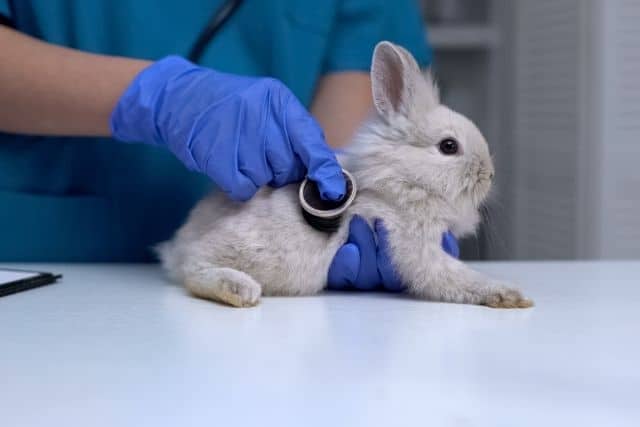
According to the MSD Veterinary Manual, dystocia (difficult birth) is uncommon in rabbits but can be life-threatening when it does occur. Having a vet's number ready before the due date is essential.
Common Rabbit Labor Complications to Watch For
While complications are relatively rare, being aware of them helps you respond quickly if something goes wrong.
Dystocia (Difficult Birth)
Dystocia occurs when a doe cannot deliver her kits naturally. This can happen due to an oversized kit, a kit positioned incorrectly in the birth canal, or uterine inertia (where the uterus stops contracting). Signs include prolonged straining, visible distress, and no kits being produced despite clear labor signs. This is a veterinary emergency that may require manual assistance or a cesarean section.
Stillborn Kits
It is not unusual to find one or two stillborn kits in a litter, especially with first-time mothers or very large litters. Remove stillborn kits promptly to keep the nest clean and reduce the risk of infection. If the entire litter is stillborn, have the doe examined by a veterinarian to rule out underlying health issues.
Scattered Kits
Sometimes a doe, particularly a first-time mother, will scatter her kits around the cage instead of placing them in the nest box. This is dangerous because isolated kits can quickly become hypothermic. If you find kits outside the nest, warm them gently in your hands and place them back in the box, then cover them with fur and hay. Monitor closely over the next 24 hours to ensure the doe is nursing.
Retained Placenta
Does normally eat the placenta after each kit is born, which is a natural behavior that provides nutrition and helps keep the nest clean. In rare cases, a placenta may be retained inside the uterus, leading to infection. Signs include continued straining after delivery, foul discharge, lethargy, and loss of appetite lasting more than 24 hours after birth. This requires veterinary treatment, usually antibiotics or oxytocin.
Rabbit Gestation Timeline: A Quick Reference
This table summarizes what to expect throughout your rabbit's pregnancy and the days leading up to labor:
| Day of Gestation | What to Expect |
|---|---|
| Day 1 to 14 | Embryo implantation and early development. No visible signs yet. |
| Day 14 to 21 | You may be able to gently palpate the abdomen and feel small, marble-sized embryos. The doe may start eating more. |
| Day 21 to 27 | Noticeable weight gain and abdominal enlargement. Increase the doe's food portions, especially hay and pellets. |
| Day 27 to 28 | Place the nest box in the cage. Provide extra hay and straw for nesting. |
| Day 28 to 30 | Watch for nesting behavior, fur pulling, and mood changes. These are pre-labor signs. |
| Day 30 to 33 | Most does kindle during this window. Check the nest box morning and evening. |
| Day 35+ | If no birth has occurred, consult your veterinarian. Overdue pregnancies can pose risks. |
Frequently Asked Questions
How many days is a rabbit pregnant before giving birth?
Rabbits have a gestation period of 28 to 35 days, with most does giving birth around day 31. The exact timing varies by breed, litter size, and individual factors. Mark the breeding date on your calendar and begin watching for labor signs from day 28 onward.
Do rabbits give birth at night?
Yes, most rabbits give birth during the early morning hours, typically between midnight and dawn. This timing is instinctive, as it reduces exposure to predators in the wild. Check the nest box first thing each morning once your doe is past day 28 of gestation.
Should I stay with my rabbit while she gives birth?
You do not need to stay with your rabbit during labor. Most does handle the process entirely on their own. If you happen to be present, observe quietly from a distance and only intervene if a kit appears stuck or there is excessive bleeding.
What do I do if my rabbit gives birth outside the nest box?
Gently gather the kits and place them in the prepared nest box. Cover them with pulled fur and hay to keep them warm. Newborn kits cannot regulate their own body temperature, so getting them into the insulated nest quickly is critical for survival.
How soon after giving birth can a rabbit get pregnant again?
Rabbits can technically become pregnant again immediately after giving birth, as they are induced ovulators. However, responsible breeders allow does to rest and nurse their current litter for at least 4 to 6 weeks before rebreeding. Breeding too soon puts significant physical strain on the doe and can reduce kit survival rates.
Cite this article:
BunnySync (March 2, 2026) How To Tell If Your Rabbit Is In Labor: Signs Every Breeder Should Know. Retrieved from https://bunnysync.com/blog/how-to-tell-if-your-rabbit-is-in-labor.
"How To Tell If Your Rabbit Is In Labor: Signs Every Breeder Should Know." BunnySync - March 2, 2026, https://bunnysync.com/blog/how-to-tell-if-your-rabbit-is-in-labor
Sources and further reading
- Patry, Karen, et al. The Rabbit-Raising Problem Solver: Your Questions Answered about Housing, Feeding, Behavior, Health Care, Breeding, and Kindling. Storey Publishing, 2014.
- MSD Veterinary Manual. Breeding and Reproduction of Rabbits. Merck & Co., Inc.