Yes, you can litter train an older rabbit, and in many cases it is actually easier than training a young one. Older rabbits, especially those that have been spayed or neutered, tend to have calmer temperaments, better focus, and a natural preference for using one spot to do their business. If you have recently adopted a senior rabbit or simply never got around to litter training your bunny, the good news is that age is not a barrier. With the right setup, patience, and consistency, most older rabbits pick up litter habits within one to two weeks.

Why Are Older Rabbits Easier to Litter Train?
One of the biggest misconceptions about rabbits is that they need to be trained young or not at all. In reality, the House Rabbit Society confirms that older rabbits are often easier to litter train than juveniles. There are several reasons for this.
First, older rabbits have longer attention spans. Baby rabbits are curious, hyperactive, and easily distracted. They dart around exploring, and their litter habits are inconsistent because they simply forget. An adult or senior rabbit is more settled and more likely to form a reliable routine.
Second, hormones play a huge role. Young, unneutered rabbits that hit sexual maturity (around 3 to 6 months) develop a strong urge to mark territory by spraying urine and scattering droppings. This hormonal behavior can completely override any prior litter training. An older rabbit that has already been spayed or neutered does not have these hormone-driven urges, which makes training much more straightforward.
Third, older rabbits are creatures of habit. They naturally gravitate toward one or two corners for elimination. You can use this tendency to your advantage by placing the litter box exactly where they already prefer to go.
Does Your Older Rabbit Need to Be Neutered First?
Spaying or neutering is the single most important factor in successful litter training, regardless of age. According to VCA Animal Hospitals, neutering eliminates hormone-driven territorial marking, reduces aggression, and makes rabbits significantly easier to litter train.
If your older rabbit has not been fixed, here is what to expect:
- Unneutered males will spray urine on vertical surfaces, cage walls, and even on you. This is territorial marking, not a litter training failure.
- Unspayed females may scatter droppings outside the box and develop nesting behaviors that interfere with litter habits.
- Fixed rabbits of either sex show a dramatic improvement in litter box consistency, usually within two to four weeks after surgery.
If your rabbit is not yet neutered, schedule the procedure before starting litter training. Trying to train an intact older rabbit is an uphill battle you do not need to fight.
Step-by-Step Guide to Litter Training an Older Rabbit
Here is a proven method that works for adult and senior rabbits. Follow each step in order for the best results.
Step 1: Choose the Right Litter Box
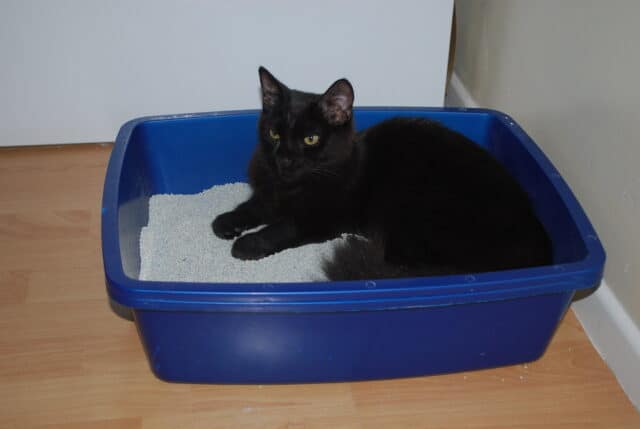
The litter box size matters more than you think. Your rabbit needs enough room to turn around and sit comfortably inside. A box that is too small will be ignored. For most medium-sized breeds (4 to 8 pounds), a large cat litter pan works well. For giant breeds like Flemish Giants, you may need a storage container or cement mixing tray.
Use a box with low sides on at least one end so your older rabbit can hop in easily. Seniors with arthritis or mobility issues will skip the box entirely if entry is difficult.
Step 2: Pick Safe Litter Material
Not all litter is safe for rabbits. Some types of cat litter are dangerous for rabbits because they contain chemicals or clumping agents that can cause intestinal blockages if ingested.
Safe litter options for rabbits include:
| Litter Type | Safety | Odor Control | Cost |
|---|---|---|---|
| Paper-based (Carefresh, Yesterday's News) | Excellent | Good | Moderate |
| Kiln-dried pine shavings | Safe (kiln-dried only) | Very good | Low |
| Aspen shavings | Safe | Fair | Low |
| Hay over newspaper | Safe | Poor | Very low |
Avoid: clumping clay litter, cedar shavings (toxic phenols), scented litter, and crystal/silica litter. These can all harm your rabbit's respiratory system or digestive tract.
Step 3: Observe Your Rabbit's Habits
Before placing the litter box, spend a day or two watching where your rabbit naturally goes to the bathroom. Most rabbits pick one or two favorite corners. Place the litter box in exactly that spot. You are not teaching your rabbit where to go; you are putting the box where they already want to go.
If your rabbit uses multiple corners, start with the spot they use most frequently. You can add a second box to the other location if needed.
Step 4: Set Up the Litter Box Correctly
Layer the bottom of the box with about one inch of safe litter. Then place a generous handful of hay at one end of the box or in a hay rack directly above it. Rabbits love to munch while they do their business, so having hay at the litter box encourages them to spend time there.
Pick up any stray droppings you find outside the box and place them inside. This gives your rabbit a scent signal that says "this is the bathroom." You can also soak up a small amount of urine with a paper towel and place it in the box for the same reason.
Step 5: Confine, Then Gradually Expand
This step is critical and the one most owners skip. Start by confining your older rabbit to a small area, either their enclosure or a pen that is just large enough for the litter box, a food area, and a resting spot. A smaller space makes it easy for the rabbit to find and use the box consistently.
Once your rabbit is reliably using the litter box in the confined space (typically 3 to 7 days), slowly increase their roaming area. Open up one additional room or section at a time. If accidents start happening in the new area, scale back and give them more time in the smaller space.

Step 6: Reinforce Good Habits
When you see your rabbit hop into the litter box on their own, offer a small treat or a gentle head rub. Positive reinforcement builds the connection between using the box and receiving something pleasant. Never yell at or punish a rabbit for having an accident. Punishment does not work with rabbits. It only makes them fearful of you and less likely to learn.
Clean up accidents with white vinegar (not ammonia-based cleaners, which smell like urine to a rabbit and encourage re-marking). Blot the spot thoroughly and place the soiled paper towel in the litter box.
How Long Does It Take to Litter Train an Older Rabbit?
Most spayed or neutered older rabbits develop consistent litter habits within one to two weeks of focused training. Some particularly tidy rabbits figure it out in just a few days. Factors that affect the timeline include:
- Spay/neuter status: Fixed rabbits train 2 to 3 times faster than intact rabbits.
- Previous living conditions: A rescue rabbit that lived in a small cage may already be halfway trained since it was forced to use one corner.
- Health issues: Older rabbits with urinary tract infections, arthritis, or kidney problems may have genuine difficulty reaching the box. See a vet if training stalls completely.
- Consistency: Owners who stick to the confined-then-expand method see results much faster than those who give full roaming access from the start.
Be patient. Even if your rabbit is 5, 7, or 10 years old, they can still learn. Age alone is not a limiting factor.
Common Mistakes When Litter Training Older Rabbits
Avoid these errors that can set back your training progress:
- Giving too much space too soon. This is the number one reason litter training fails. If a rabbit has access to an entire room before mastering the box in a small area, they will pick random corners.
- Using the wrong litter. Clumping cat litter and cedar shavings are harmful to rabbits. Stick with paper-based or kiln-dried pine litter.
- Placing the box in the wrong spot. You should follow the rabbit's preference, not yours. If they like the corner behind the couch, that is where the box goes.
- Cleaning too infrequently. A filthy litter box will be avoided. Change the litter regularly to keep the box inviting.
- Punishing accidents. Rabbits do not understand punishment. It only creates fear and stress, which actually makes litter habits worse.
- Skipping the vet visit. If a previously trained rabbit starts having accidents, the cause may be medical. Urinary infections, sludge, and arthritis all affect litter box use.
What If Your Older Rabbit Keeps Having Accidents?
If your older rabbit is pooping everywhere despite training efforts, consider these possible causes:
Medical Issues
Urinary tract infections cause frequent, urgent urination that the rabbit cannot control. Bladder sludge (excess calcium in the urine) leads to painful urination and avoidance of the litter box. Arthritis or sore hocks make hopping into the box painful, so the rabbit goes next to it instead. E. cuniculi, a parasite common in older rabbits, can affect bladder control.
If your rabbit was using the box consistently and suddenly stops, a vet visit should be your first step.
Territorial Behavior
If you have introduced a new rabbit, moved to a new home, or rearranged furniture, your rabbit may start marking territory again. This is especially common with unneutered rabbits. Adding extra litter boxes in the areas being marked and giving the rabbit time to adjust usually resolves this.
Stress
Loud noises, new pets, construction, or changes in routine can cause a rabbit to lose their litter habits temporarily. Reduce stressors where possible and give your rabbit a quiet, safe space to retreat to.
Litter Training an Older Rabbit vs. a Young Rabbit
Here is a side-by-side comparison of what to expect when training at different ages:
| Factor | Young Rabbit (Under 6 Months) | Older Rabbit (6 Months and Up) |
|---|---|---|
| Attention span | Short, easily distracted | Longer, more focused |
| Hormonal interference | High (especially near puberty) | Low (if spayed/neutered) |
| Training speed | Slower, with frequent setbacks | Faster, more consistent |
| Territory marking | Increases as hormones kick in | Minimal after fixing |
| Habit formation | Habits reset at puberty | Habits stick once formed |
| Typical timeline | 2 to 4 weeks (plus re-training after neuter) | 1 to 2 weeks |
As the table shows, older rabbits have the advantage in nearly every category. The idea that "you can't teach an old rabbit new tricks" simply does not apply to litter training.
Tips for Litter Training Senior Rabbits (5+ Years Old)
Very old rabbits deserve special consideration. Here are some adjustments for seniors:
- Use a low-entry litter box. Cut down one side of a plastic container or buy a pan with a low front lip. Seniors with arthritis need easy access.
- Place multiple boxes. If your senior rabbit has free roam of a large space, put a litter box in each room they frequent. Asking an arthritic rabbit to hop across the house is unreasonable.
- Use softer litter. Paper-based litter is gentler on old, sore hocks than wood shavings.
- Keep the box close to resting areas. Senior rabbits rest more and may not make it to a distant box in time.
- Check for incontinence. Some very old rabbits develop genuine incontinence due to weakened bladder muscles or spinal issues. In these cases, litter training is not a behavior problem but a medical one. Your vet can help determine whether treatment is possible.
Frequently Asked Questions
Can you litter train a rabbit that has never been trained before?
Yes. Rabbits of any age can learn to use a litter box. Older rabbits that have never been trained often pick it up quickly because they already have established bathroom habits in specific spots. Place the box where they naturally go, and most will use it within a week.
Is it harder to litter train an unneutered older rabbit?
Significantly harder. Unneutered rabbits have a strong hormonal drive to mark territory by spraying urine and scattering droppings. Neutering or spaying eliminates most of this behavior within two to four weeks after surgery, making litter training much more achievable.
Why does my litter-trained rabbit suddenly pee outside the box?
Sudden litter box regression in older rabbits is often caused by a urinary tract infection, bladder sludge, arthritis making it hard to get into the box, or stress from environmental changes. Schedule a vet checkup to rule out medical causes before assuming it is a training problem.
How many litter boxes does an older rabbit need?
Start with one box in their primary area. If your rabbit has free roam of multiple rooms, add one box per room. Senior rabbits with mobility issues benefit from having a box within easy reach of their favorite resting spots, so two to three boxes is common for free-roaming seniors.
Can I use regular cat litter for my rabbit's litter box?
No. Clumping clay cat litter is dangerous for rabbits because they may ingest it while grooming, causing fatal intestinal blockages. Use paper-based litter, kiln-dried pine shavings, or aspen shavings instead. Avoid cedar shavings and scented products as well.
Cite this article:
Cite this article:
BunnySync (March 3, 2026) Can You Litter Train An Older Rabbit? Complete Step-by-Step Guide. Retrieved from https://bunnysync.com/blog/can-you-litter-train-an-older-rabbit.
"Can You Litter Train An Older Rabbit? Complete Step-by-Step Guide." BunnySync - March 3, 2026, https://bunnysync.com/blog/can-you-litter-train-an-older-rabbit
Sources and further reading
- Buseth, Marit Emilie., and Richard A. Saunders. Rabbit Behaviour, Health, and Care. CABI, 2014.
- Lebas, F. The Rabbit: Husbandry, Health, and Production. Food and Agriculture Organization of the United Nations, 1997.
- Patry, Karen, et al. The Rabbit-Raising Problem Solver: Your Questions Answered about Housing, Feeding, Behavior, Health Care, Breeding, and Kindling. Storey Publishing, 2014.
- Neutering in Rabbits - VCA Animal Hospitals
- Litter Training - House Rabbit Society