Yes, rabbits can eat beet greens safely. The leafy tops of the beetroot plant are nutritious and most rabbits enjoy them. However, beet greens contain relatively high levels of oxalic acid, so you should rotate them with other vegetables safe for rabbits and limit feeding to one to three times per week. Only feed the leaf portion to rabbits 12 weeks and older, and always introduce them gradually starting with about 15 grams.
What Exactly Are Beet Greens?
Beet greens are the leafy tops that grow above the beetroot bulb. The plant's scientific name is Beta vulgaris, and it belongs to the same family as Swiss chard and spinach. You may also hear beet greens called beet tops, beet leaves, or chard greens depending on the variety.
The plant originates from the Mediterranean region and is now grown worldwide. What makes beet greens particularly interesting for rabbit owners is that they are one of the most nutrient-dense leafy greens available, packed with vitamins A and K, iron, and potassium.
When we talk about feeding beet greens to rabbits, we specifically mean the leaf blades and the thin stems attached to them. The thick beetroot bulb underneath is a different matter entirely and requires separate consideration due to its high sugar content.
Do Rabbits Actually Like Beet Greens?
Most rabbits love beet greens. In our experience raising rabbits, beet green tops are consistently one of the most eagerly accepted leafy greens we offer. The slightly earthy flavor and tender leaf texture seem to appeal to rabbits across all breeds.
We have noticed that some rabbits prefer younger, more tender beet leaves over the larger, tougher ones. If your rabbit seems uninterested at first, try offering smaller, younger leaves. The stems can be a bit fibrous, so some rabbits will eat the leaf portion and leave the thicker stem behind.
That said, every rabbit has individual preferences. If your rabbit refuses beet greens after a few attempts, there are plenty of other safe leafy greens to choose from. Never force a particular vegetable on a rabbit that clearly does not want it.
What Nutrients Do Beet Greens Provide for Rabbits?
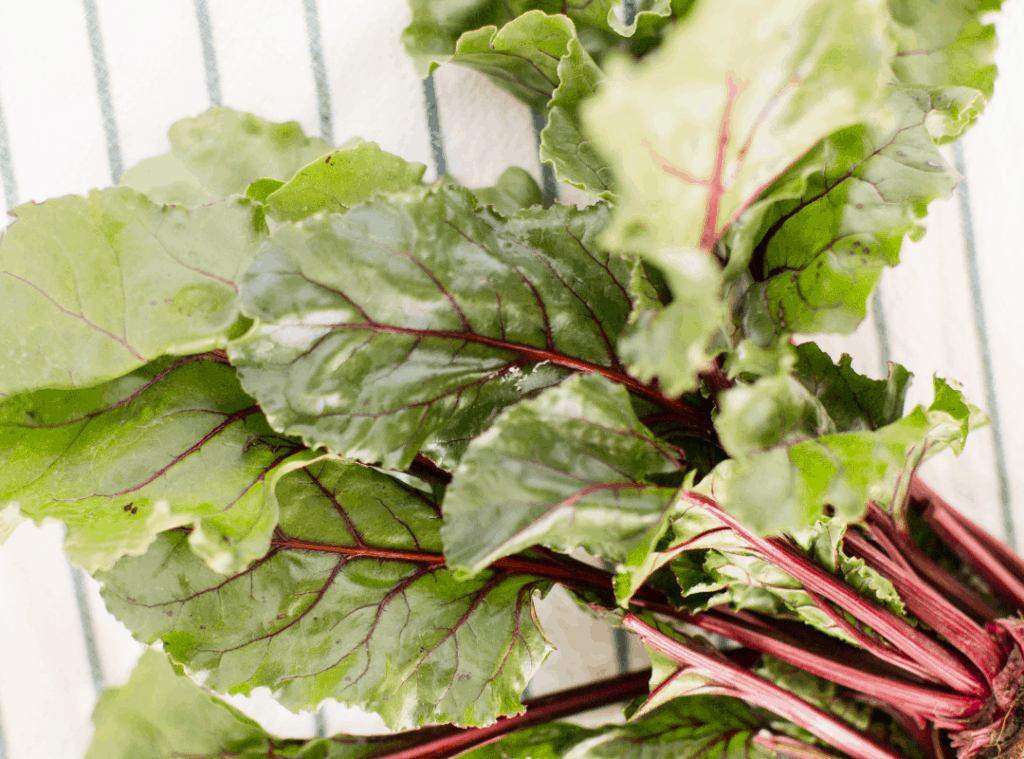
Beet greens are among the most nutrient-dense leafy greens you can offer your rabbit. Per 100 grams of raw beet greens, the nutritional profile is impressive. They contain just 22 calories per 100 grams, which means they provide excellent nutrition without contributing to weight gain.
Vitamin Content in Beet Greens
| Nutrient | Amount per 100g | Benefit for Rabbits |
|---|---|---|
| Vitamin A | 6,326 IU | Supports immune function, vision, and reproductive health |
| Vitamin K | 400 mcg | Essential for blood clotting and bone metabolism |
| Vitamin C | 30 mg | Antioxidant support during periods of stress |
| Folate | 15 mcg | Supports cell growth and development |
| Riboflavin (B2) | 0.22 mg | Energy metabolism and tissue repair |
Mineral Content in Beet Greens
| Mineral | Amount per 100g | Benefit for Rabbits |
|---|---|---|
| Potassium | 762 mg | Muscle function and heart health |
| Iron | 2.57 mg | Oxygen transport in blood |
| Calcium | 117 mg | Bone and teeth health (monitor intake in adults) |
| Magnesium | 70 mg | Nerve and muscle function |
| Fiber | 3.7 g | Supports healthy gut motility |
The standout nutrients are vitamin A and potassium. Vitamin A is critical for maintaining healthy skin, coat condition, and reproductive performance in breeding rabbits. Potassium supports proper muscle function, which is particularly important for active rabbits.
Beet greens also contain a decent amount of dietary fiber at 3.7 grams per 100 grams. While this is nowhere near the fiber content of hay, which should make up 80% of your rabbit's diet, the fiber in beet greens does contribute to healthy gut motility.
One important note about calcium: at 117 mg per 100 grams, beet greens have a moderate calcium level. Rabbits absorb all dietary calcium rather than regulating absorption like most mammals, so keeping an eye on total calcium intake across all foods is good practice, especially for adult rabbits prone to urinary issues.
How Much Beet Greens Should You Feed Your Rabbit?
The amount of beet greens appropriate for your rabbit depends on their body weight, age, and whether they have eaten beet greens before. As a general rule, leafy greens including beet greens should make up roughly 10 to 15% of your rabbit's total daily diet, with hay remaining the primary food source.
Feeding Portions by Rabbit Size
Use the following table as a guideline for maximum daily vegetable portions. Beet greens should be only one component of the vegetable mix, not the entire allowance.
| Rabbit Size | Body Weight | Total Daily Vegetable Allowance | Beet Greens (as part of mix) |
|---|---|---|---|
| Small breed | 1.1 to 3.5 lbs | Up to 128 grams | 30 to 40 grams |
| Medium breed | 6 to 10 lbs | 384 to 640 grams | 80 to 150 grams |
| Large breed | 9 to 12 lbs | 384 to 760 grams | 100 to 180 grams |
The "beet greens as part of mix" column reflects our recommendation to feed beet greens as roughly one-quarter to one-third of the total vegetable serving, combined with two to three other low-oxalate greens.
When Can Baby Rabbits Start Eating Beet Greens?
Rabbits should be at least 12 weeks old before you introduce any leafy green vegetables, including beet greens. Before this age, their digestive systems are still developing and cannot properly handle fresh produce.
Here is a safe timeline for introducing beet greens by age:
| Age | Beet Green Feeding Guidelines |
|---|---|
| Under 12 weeks | Do not feed beet greens or any fresh vegetables |
| 12 weeks to 7 months | Introduce slowly at less than 15 grams, one new vegetable at a time |
| 7 months to 1 year | Gradually increase vegetable portions over several weeks |
| Adult (1 to 5 years) | 1 to 2 cups of mixed vegetables per 6 lbs of body weight |
| Senior (6+ years) | Same as adult, adjust based on individual health and weight |
When you first offer beet greens to a young rabbit, start with a small piece weighing no more than 15 grams. Watch for any changes in stool consistency over the next 24 to 48 hours. If droppings remain normal, you can slowly increase the amount over the following weeks.
Why Are Oxalates in Beet Greens a Concern for Rabbits?
Beet greens contain relatively high levels of oxalic acid, which is the primary reason they should not be fed daily. Oxalic acid binds with calcium in the body to form calcium oxalate crystals. In excessive amounts, these crystals can accumulate in the urinary tract and potentially contribute to bladder sludge or kidney stones.
Rabbits are already prone to calcium-related urinary issues because they absorb all dietary calcium rather than regulating absorption like most other mammals. This makes monitoring high-oxalate foods especially important for rabbit owners.
Other leafy greens that are similarly high in oxalic acid include spinach, parsley, mustard greens, and Swiss chard. You should never combine multiple high-oxalate greens in the same feeding. For example, do not feed beet greens and spinach together in the same meal.
How to Rotate High-Oxalate Greens Safely
The safest approach is to follow the "one high, two to four low" rule. In each vegetable serving, include at most one high-oxalate green and pair it with two to four low-oxalate options. Here is how that looks in practice:
- Monday: Beet greens + romaine lettuce + cilantro + bok choy
- Wednesday: Parsley + carrot tops + arugula + endive
- Friday: Beet greens + cucumber leaves + watercress + spring greens
This rotation ensures your rabbit gets the nutritional benefits of beet greens without excessive oxalate exposure. Limiting beet greens to one to three servings per week is the approach most rabbit nutrition experts recommend.
Can Rabbits Eat the Beetroot Bulb?
The beetroot bulb itself is not toxic to rabbits, but it is not recommended as a regular food. The bulb contains significantly more sugar than the leaves, with approximately 6.76 grams of sugar per 100 grams. For comparison, the leafy greens contain only about 0.5 grams of sugar per 100 grams.
High sugar intake can disrupt the balance of bacteria in your rabbit's cecum, leading to digestive upset, gas, and potentially GI stasis. If you want to offer a tiny piece of beetroot bulb as an occasional treat, keep it to a thumbnail-sized portion no more than once a week.
Also be aware that beetroot will stain your rabbit's fur and can turn their urine reddish. While this is harmless, it can cause unnecessary alarm if you are not expecting it, since red urine in rabbits can sometimes indicate a health issue.
What Are the Risks of Overfeeding Beet Greens to Rabbits?
The problems associated with beet greens almost always come down to overfeeding or feeding them too frequently without rotation. Here are the specific risks to watch for:
- Gastrointestinal stasis: Replacing too much hay with beet greens reduces fiber intake, which can slow or stop gut motility entirely. GI stasis is a life-threatening condition that requires immediate veterinary attention.
- Diarrhea: Introducing too much beet greens too quickly overwhelms the gut bacteria. The cecal microbiome needs time to adjust to new foods, which is why gradual introduction over two to three weeks is essential.
- Uneaten cecotropes: When a rabbit's diet is too rich in fresh greens and lacking in fiber, cecotropes become softer and mushier. The rabbit may not eat them, which means they miss out on essential B vitamins and nutrients produced during cecal fermentation.
- Bladder sludge: The combination of high oxalates and high calcium in beet greens can contribute to urinary issues if fed in excess over prolonged periods without proper rotation with low-oxalate greens.
The solution to all of these issues is straightforward: keep hay as the foundation of the diet, treat beet greens as a supplement rather than a staple, and rotate with other vegetables regularly.
How Should You Prepare Beet Greens for Your Rabbit?
Proper preparation of beet greens takes just a few minutes but makes a meaningful difference for your rabbit's safety. Follow these steps:
- Wash thoroughly: Rinse beet greens under cool running water to remove dirt, pesticide residue, and any insects. Organic beet greens still need washing since they can carry soil-borne bacteria.
- Inspect for damage: Discard any leaves that are yellowing, wilted, slimy, or show signs of mold. Only feed fresh, vibrant green leaves.
- Separate leaves from the bulb: Cut the leafy tops away from the beetroot bulb. You can use the stems attached to the leaves, but remove the thick, woody base where the stems meet the bulb.
- Tear or chop into manageable pieces: For smaller rabbits, tearing leaves into smaller pieces can make them easier to eat. Larger rabbits can handle whole leaves without any issues.
- Serve raw and fresh: Never cook beet greens before feeding them to rabbits. Cooking destroys nutrients and changes the texture in ways that are not beneficial for rabbit digestion. Also avoid frozen or canned beet greens, as these have altered nutrient profiles and textures.
If you grow your own beet greens, harvest them in the morning when they are crispest. Home-grown greens are ideal because you can control what goes on them. Just make sure no pesticides, herbicides, or chemical fertilizers were used that could harm your rabbit.
Store unused beet greens in a sealed bag or container in the refrigerator. They typically stay fresh for three to five days. Remove any leaves that start to wilt or become slimy before offering the remaining greens to your rabbit.
What Are Good Low-Oxalate Alternatives to Beet Greens?
Since beet greens should only be fed one to three times per week, you need a roster of alternative leafy greens to fill the other days. The following low-oxalate greens are excellent choices to rotate with beet greens:
- Romaine lettuce: Low in oxalates, mild flavor, and most rabbits love it. A reliable daily green that serves as the base of many vegetable mixes.
- Cilantro: Low in oxalates with a strong herbal flavor that many rabbits enjoy. Rich in vitamins A and K.
- Bok choy: Nutrient-dense, low in oxalates, and provides a satisfying crunch for rabbits who enjoy more textured greens.
- Kale: Moderate oxalate content but very nutritious. Feed two to three times per week as part of your rotation schedule.
- Carrot tops: Low in oxalates and high in nutrients. Most rabbits find them irresistible, and they are easy to source from whole carrots.
- Arugula: Peppery flavor, low in oxalates, and a good source of calcium and vitamin K for bone health.
- Watercress: Nutrient-rich and low in oxalates. Offers variety in texture and flavor to keep your rabbit engaged.
- Endive and escarole: Both are mild-flavored, low in oxalates, and well-tolerated by most rabbits, even those with sensitive stomachs.
Aim to offer your rabbit three to five different types of leafy greens each day. Variety is not just about nutrition. It also keeps your rabbit mentally stimulated and interested in their food, which encourages consistent eating habits.
When Should You Stop Feeding Beet Greens to Your Rabbit?
There are several situations where you should immediately remove beet greens from your rabbit's diet and revert to hay only:
- Soft or misshapen droppings: If you notice your rabbit's fecal pellets becoming soft, small, or irregularly shaped after eating beet greens, stop feeding them and return to a hay-only diet for 24 to 48 hours.
- Diarrhea: True watery diarrhea in rabbits is a veterinary emergency. Remove all fresh foods immediately and contact your vet without delay.
- Reduced appetite: If your rabbit is eating less hay after consuming beet greens, the vegetable portions may be too large. Cut back or eliminate beet greens temporarily until normal hay consumption resumes.
- Urinary issues: If your rabbit shows signs of bladder sludge such as thick, gritty, or paste-like urine, reduce all high-calcium and high-oxalate foods including beet greens.
- Gas or bloating: A rabbit sitting hunched with a tense belly may be experiencing gas pain. Remove all fresh foods and offer only hay and water.
The standard protocol for any digestive disturbance is to strip the diet back to unlimited hay and fresh water only. Once stools return to normal for at least 48 hours, you can begin reintroducing vegetables one at a time to identify which food caused the problem. If symptoms persist beyond 24 hours, consult a rabbit-savvy veterinarian promptly.
Frequently Asked Questions
Can rabbits eat beet greens every day?
No. Beet greens are high in oxalic acid, which can contribute to urinary problems when consumed daily. Limit beet greens to one to three servings per week and rotate with low-oxalate greens like romaine lettuce, cilantro, and bok choy for the remaining days.
Can baby rabbits eat beet greens?
Rabbits under 12 weeks old should not eat any fresh vegetables, including beet greens. After 12 weeks, you can introduce beet greens in very small amounts of 15 grams or less. Watch for digestive changes over 24 to 48 hours before gradually increasing the portion size.
Are beet greens better than spinach for rabbits?
Both beet greens and spinach are nutritious but high in oxalic acid. Beet greens have a slight edge in vitamin A and potassium content, while spinach offers more folate. Neither is better overall, and the key is rotating both rather than feeding them together in the same meal.
Can rabbits eat beet stems?
Yes, rabbits can eat the thin stems attached to the beet leaves. However, avoid the thick, woody base where the stems connect to the beetroot bulb. Some rabbits will naturally leave the thicker stems behind and only eat the tender leaf portions.
Should I cook beet greens before feeding them to my rabbit?
No. Always feed beet greens raw. Cooking destroys important nutrients and changes the fiber structure in ways that are not suitable for rabbit digestion. Rabbits are designed to eat raw plant material, and their digestive systems work best with fresh, uncooked greens.
Cite this article:
BunnySync (March 1, 2026) Can Rabbits Eat Beet Greens?. Retrieved from https://bunnysync.com/blog/can-rabbits-eat-beet-greens.
"Can Rabbits Eat Beet Greens?." BunnySync - March 1, 2026, https://bunnysync.com/blog/can-rabbits-eat-beet-greens