Adult rabbits should eat roughly 1/4 cup of pellets per 5 pounds of body weight each day. Young rabbits under seven months old can have unlimited pellets to support rapid growth, but once they reach adulthood, controlled portions become essential to prevent obesity and digestive problems. Getting this balance right is one of the most important parts of feeding your rabbit the right daily amount, and the exact amount depends on your rabbit's age, weight, and breed.
We have raised rabbits for years and made every feeding mistake in the book early on. Overfeeding pellets was one of the first. This guide breaks down exactly how much to feed at every life stage so you can avoid the health problems that come with getting it wrong.
How Much Pellets Should You Feed a Rabbit by Age?
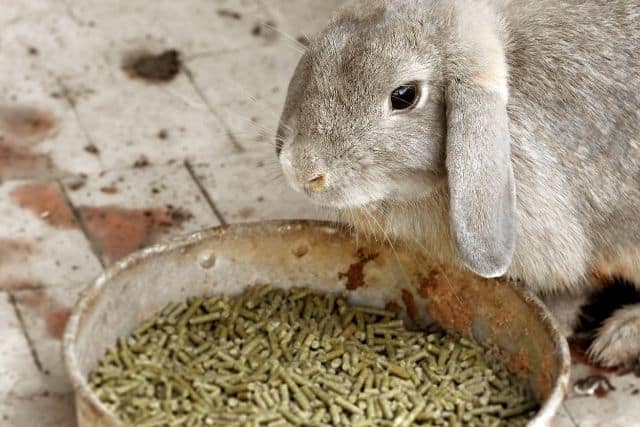
Age is the single biggest factor when deciding how many pellets to give your rabbit. A growing kit needs far more energy from pellets than a four-year-old adult sitting in an enclosure all day. The general rule is simple: the older the rabbit, the fewer pellets it needs.
Here is a breakdown by life stage.
Baby Rabbits (7 Weeks to 7 Months)
Rabbits in this age range should have unlimited access to alfalfa-based pellets. Their bodies are growing quickly, building bone density and muscle mass, and they need the extra protein and calcium that pellets provide. At this stage, pellets and unlimited alfalfa hay work together to fuel healthy development.
Do not restrict pellets during this phase. A growing rabbit that does not get enough calories will develop slowly and may end up underweight. The only time you should limit a young rabbit's pellets is if a veterinarian tells you to.
Juvenile Rabbits (7 Months to 1 Year)
This is the transition period. Start reducing pellets gradually to 1/2 cup per 6 pounds of body weight. At the same time, switch from alfalfa-based pellets and hay to timothy-based options. Alfalfa is too high in calcium and calories for rabbits that have finished their main growth phase.
Make this switch over two to three weeks. Mix the old pellets with the new brand at a 75/25 ratio, then 50/50, then 25/75, and finally full timothy-based pellets. Sudden diet changes can throw off your rabbit's gut bacteria and cause digestive upset.
Adult Rabbits (1 to 5 Years)
Adult rabbits should eat 1/4 to 1/2 cup of timothy-based pellets per 6 pounds of body weight daily. Most medium-sized rabbits (around 5 to 6 pounds) do well on 1/4 cup per day. If your rabbit is on the larger side, stays active, or is a breeding doe, you can go up to 1/2 cup.
At this stage, pellets should make up only about 5% of your rabbit's total diet. The bulk of their nutrition (around 80%) should come from unlimited timothy hay, with the rest coming from fresh leafy greens and a small amount of pellets.
Senior Rabbits (6 Years and Older)
If your senior rabbit maintains a healthy weight, continue with the adult portion of 1/4 cup per 6 pounds. However, older rabbits that start losing weight or become frail may actually benefit from increased pellets. Some seniors struggle to chew hay effectively due to dental issues, and extra pellets can help them maintain body condition.
Monitor your senior rabbit's weight closely. If their spine and hip bones become prominent, talk to your vet about increasing pellet portions or switching to a higher-calorie formula.
Pellet Portions by Age: Quick Reference
| Age | Pellet Type | Daily Amount |
|---|---|---|
| 7 weeks to 7 months | Alfalfa-based | Unlimited |
| 7 months to 1 year | Transition to timothy | 1/2 cup per 6 lbs body weight |
| 1 to 5 years | Timothy-based | 1/4 to 1/2 cup per 6 lbs body weight |
| 6+ years | Timothy-based | 1/4 cup per 6 lbs (more if underweight) |
How Many Pellets Should a Rabbit Eat Based on Weight?
While age gives you a general guideline, your rabbit's actual weight determines the precise amount. A 3-pound Netherland Dwarf has very different calorie needs compared to a 12-pound Flemish Giant.
Here is a weight-based chart for adult rabbits over one year of age.
| Rabbit Weight | Daily Pellet Portion |
|---|---|
| 2 to 4 lbs (small breeds) | 1/8 cup (about 1 tablespoon) |
| 5 to 7 lbs (medium breeds) | 1/4 cup (about 2 tablespoons) |
| 8 to 10 lbs (large breeds) | 1/3 to 1/2 cup |
| 11+ lbs (giant breeds) | 1/2 to 3/4 cup |
These amounts assume your rabbit also has unlimited hay and daily fresh greens. If your rabbit does not eat greens regularly, you may need to adjust pellet portions slightly upward. But this should be temporary while you work on introducing safe vegetables into your rabbit's diet.
How Many Pellets Do Different Rabbit Breeds Need?
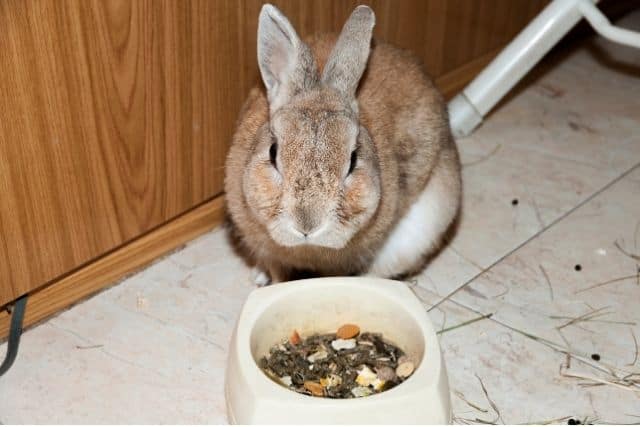
Breed size directly affects pellet needs. Small breeds have faster metabolisms per pound of body weight, while giant breeds need more total volume but proportionally less per pound. Here is a general guide based on breed categories.
| Breed Size | Example Breeds | Daily Pellets |
|---|---|---|
| Dwarf (2-4 lbs) | Netherland Dwarf, Holland Lop, Mini Rex | 1-2 tablespoons |
| Small (4-6 lbs) | Dutch, Mini Lop, Polish | 2-3 tablespoons |
| Medium (6-9 lbs) | Rex, English Spot, Californian | 1/4 to 1/3 cup |
| Large (9-12 lbs) | New Zealand, Satin, Silver Fox | 1/3 to 1/2 cup |
| Giant (12+ lbs) | Flemish Giant, Checkered Giant, Giant Chinchilla | 1/2 to 3/4 cup |
Breeding does and nursing mothers are special cases. A pregnant or lactating doe needs significantly more pellets than a non-breeding adult of the same breed. Most breeders provide free-choice pellets to nursing does until their kits are weaned, then gradually reduce back to maintenance levels over a week.
What Should You Look for in a Quality Rabbit Pellet?
The amount you feed matters, but so does what is in the pellet. Low-quality pellets loaded with fillers, seeds, and dried fruit pieces can cause problems even at proper portion sizes. Here is what to look for on the label.
Nutritional Requirements
According to the American Rabbit Breeders Association (ARBA) and veterinary nutritionists, quality rabbit pellets should meet these standards:
| Nutrient | Recommended Range | Why It Matters |
|---|---|---|
| Fiber | 18% minimum (up to 22%) | Supports healthy gut motility |
| Protein | 14% to 16% | Maintains muscle without excess weight |
| Fat | 3% or less | Prevents obesity |
| Calcium | Less than 1% | Prevents bladder sludge and stones |
Fiber is the most critical number. Pellets with less than 18% fiber do not provide enough roughage to keep your rabbit's digestive system moving properly. Low-fiber pellets are one of the leading causes of GI stasis in pet rabbits.
What to Avoid in Pellets
Skip any pellet mix that contains dried fruit pieces, corn, seeds, nuts, or colorful puffed shapes. These are marketed to make the bag look appealing to humans, but they are unhealthy for rabbits. The added sugars and starches can disrupt gut bacteria and contribute to obesity.
Also avoid pellets with artificial colors or preservatives. A good rabbit pellet is plain, uniform, and green or brown in color. Popular trusted brands include Oxbow Essentials, Science Selective, and Sherwood Forest.
Alfalfa vs. Timothy Pellets
Alfalfa-based pellets are higher in protein (16-18%) and calcium, making them ideal for growing rabbits under seven months. Timothy-based pellets are lower in both, which suits adult rabbits that no longer need the extra calories.
If you are wondering whether rabbits actually need pellets at all, the answer depends on the rest of their diet. Pellets serve as a concentrated source of vitamins and minerals that are harder to get consistently from hay and greens alone.
Can Rabbits Overeat Pellets?
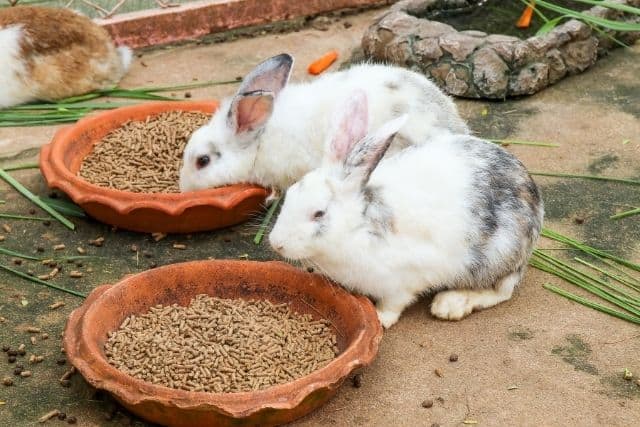
Yes, absolutely. Rabbits will eat as many pellets as you give them. Unlike hay, which requires significant chewing and is self-limiting, pellets are calorie-dense and easy to consume quickly. A rabbit can eat its entire daily pellet ration in under five minutes.
Overfeeding pellets is one of the most common feeding mistakes new rabbit owners make. It seems like such a small amount of food when you measure out 1/4 cup, and it is tempting to add a little more. But those extra pellets add up quickly.
Signs Your Rabbit Is Getting Too Many Pellets
- Refusing hay: If your rabbit ignores hay in favor of pellets, they are eating too many. Pellets taste better to most rabbits, and they will choose pellets over hay every time if given the option.
- Weight gain: You should be able to feel your rabbit's ribs with light pressure. If you cannot, they may be overweight.
- Soft stool or cecal dysbiosis: Excess pellets (especially low-fiber ones) can cause mushy droppings or a buildup of uneaten cecotropes around the rear end.
- Decreased activity: Overweight rabbits tend to be less active and more lethargic.
What Are the Risks of Overfeeding Pellets to Rabbits?
Pellet overfeeding is not just about extra weight. It can trigger a chain of health problems, some of which can be life-threatening. Here are the most serious risks.
Obesity
This is the most obvious consequence. Rabbits that eat too many pellets take in more calories than they burn, and the excess gets stored as fat. Obese rabbits face higher risks of hepatic lipidosis (fatty liver disease), pregnancy toxemia in breeding does, and difficulty grooming themselves.
When a rabbit cannot reach its own rear end to clean, bacteria and moisture build up under the skin folds. This creates a perfect environment for fly strike (myiasis), a condition where flies lay eggs in the soiled fur and the hatching maggots burrow into the skin. Fly strike can be fatal within hours if not treated.
GI Stasis
Gastrointestinal stasis is the slowdown or complete stop of the digestive system. When rabbits fill up on pellets instead of hay, they do not get enough long-strand fiber to keep the gut moving. The result is a dangerous shutdown that requires immediate veterinary care.
Watch for these warning signs of GI stasis:
- Complete loss of appetite
- No droppings for 12 or more hours
- Hunched posture with teeth grinding (bruxism)
- Bloated or tight abdomen
- Lethargy and refusal to move
GI stasis is a medical emergency. If you notice these symptoms, contact a rabbit-savvy veterinarian immediately.
Dental Problems
Rabbits that eat too many pellets and not enough hay do not wear their teeth down properly. Rabbit teeth grow continuously throughout their lives, and the grinding motion of chewing long-strand hay is what keeps them at the right length. Pellets are soft and require minimal chewing.
Over time, this can lead to overgrown molars, molar spurs that cut into the cheeks or tongue, and root elongation that can cause eye problems. Dental disease is painful and expensive to treat.
Cecal Dysbiosis
When a rabbit eats too many pellets and not enough fiber, the balance of bacteria in the cecum shifts. This leads to soft, smelly cecotropes that the rabbit refuses to eat. You may notice dark, mushy clusters stuck to your rabbit's rear end. This condition is called cecal dysbiosis, and while it is not immediately dangerous, it indicates a diet that needs correction.
Urinary Problems
Some pellets, particularly alfalfa-based formulas fed to adult rabbits, contain high levels of calcium. Rabbits absorb all the calcium they eat (unlike most mammals that regulate calcium absorption), and the excess gets excreted through the kidneys. Over time, this can cause calcium sludge in the bladder or even bladder stones that require surgical removal.
How to Measure Rabbit Pellet Portions Correctly
Guessing pellet amounts is a recipe for overfeeding. Here is how to measure accurately every time.
- Use a measuring cup or kitchen scale. A standard 1/4 cup dry measuring cup works well for most rabbits. For more precision, use a kitchen scale: 1/4 cup of pellets weighs roughly 25 to 30 grams depending on the brand.
- Feed once or twice daily. You can give the entire daily portion in one meal or split it into two. Many owners feed pellets in the morning and evening. Learn more about how many times a day to feed your rabbit for a complete feeding schedule.
- Remove uneaten pellets after 20 minutes. If your rabbit does not finish its pellets in a single sitting, remove the leftovers. This prevents stale food from accumulating and gives you a clear picture of how much your rabbit actually eats.
- Weigh your rabbit monthly. Regular weigh-ins help you adjust pellet portions before weight problems develop. A simple bathroom scale works: weigh yourself holding the rabbit, then weigh yourself alone, and subtract.
Should You Feed Pellets to a Rabbit on a Diet?
If your rabbit is overweight, reducing pellets is usually the first step. Many veterinarians recommend cutting pellets down to 1/8 cup per 5 pounds of body weight for overweight rabbits, or even eliminating them temporarily while increasing hay and greens.
Never cut pellets to zero long-term without veterinary guidance. Pellets provide trace minerals and vitamins (particularly vitamin D and certain B vitamins) that are difficult to replace with hay and greens alone. The goal is to reduce, not necessarily eliminate.
Pair the pellet reduction with increased exercise time. Rabbits that get at least three to four hours of free-roaming time outside their enclosure burn significantly more calories than sedentary rabbits.
When Should You Increase Your Rabbit's Pellet Portions?
There are specific situations where more pellets are appropriate:
- Pregnant and nursing does: Free-choice alfalfa pellets during late pregnancy and throughout lactation.
- Underweight rabbits: Gradually increase portions by 1/8 cup every few days until the rabbit reaches a healthy weight.
- Recovering from illness or surgery: Rabbits that have been off food need extra calories to rebuild strength. If your rabbit refuses pellets but still eats hay, that is actually a good sign, but monitor closely.
- Cold weather: Outdoor rabbits in winter burn more calories maintaining body temperature and may benefit from a slight pellet increase.
- Show rabbits in conditioning: Breeders preparing rabbits for shows sometimes adjust pellet portions to achieve ideal body condition for the breed standard.
Common Pellet Feeding Mistakes to Avoid
After years of breeding rabbits and talking with other breeders, these are the most frequent pellet-related mistakes we see.
- Free-feeding adult rabbits. Leaving a full bowl of pellets available at all times almost always leads to obesity. Measure and limit portions once your rabbit is past seven months old.
- Buying pellets with "extras." Mixes with seeds, dried banana chips, yogurt drops, or colored bits are junk food for rabbits. Stick to plain, uniform pellets.
- Not transitioning gradually. Switching pellet brands or types overnight can trigger diarrhea and GI problems. Always transition over two to three weeks.
- Using the same amount for every rabbit. A 3-pound Holland Lop and a 10-pound New Zealand White have very different needs. Always base portions on individual weight.
- Storing pellets too long. Pellets lose nutritional value over time. Buy bags you can use within six weeks, and store them in an airtight container away from heat and moisture. Check the milling date on the bag if available.
Frequently Asked Questions
How many pellets should I feed my rabbit per day?
An adult rabbit should eat 1/4 to 1/2 cup of timothy-based pellets per 6 pounds of body weight daily. For a typical 5-pound rabbit, that means about 1/4 cup per day. Young rabbits under seven months old can have unlimited pellets for growth.
Can I feed my rabbit only pellets and no hay?
No. Hay should make up 80% of your rabbit's diet. Pellets alone do not provide enough long-strand fiber for proper digestion and dental health. Rabbits fed only pellets are at high risk for GI stasis, dental disease, and obesity.
What happens if a rabbit eats too many pellets?
Overeating pellets leads to obesity, soft stools, GI stasis, and dental problems. Rabbits that fill up on pellets tend to eat less hay, which disrupts the entire digestive process and can cause serious, even life-threatening complications.
Should I give my rabbit pellets in the morning or at night?
You can feed pellets at either time. Many owners split the daily portion into two meals: half in the morning and half in the evening. Consistency matters more than timing. Pick a schedule and stick with it so your rabbit knows when to expect food.
At what age should I start limiting my rabbit's pellets?
Begin reducing pellets at seven months of age. Gradually decrease from unlimited access to 1/2 cup per 6 pounds of body weight. By one year old, most rabbits should be on a maintenance portion of 1/4 to 1/2 cup per 6 pounds.
Cite this article:
BunnySync (February 23, 2026) How Much Pellets Should a Rabbit Eat? Complete Feeding Guide. Retrieved from https://bunnysync.com/blog/how-much-pellets-should-a-rabbit-eat.
"How Much Pellets Should a Rabbit Eat? Complete Feeding Guide." BunnySync - February 23, 2026, https://bunnysync.com/blog/how-much-pellets-should-a-rabbit-eat