Yes, rabbits can eat celery safely as long as they are at least 12 weeks old and you serve it in moderation. Celery is one of the most commonly recommended vegetables for rabbits, and as breeders, we include it in our rotation regularly. The key is proper preparation: cut the stalks into small pieces, wash them thoroughly, and never let celery replace hay as your rabbit's primary food source. When prepared correctly, celery provides hydration, vitamins, and a satisfying crunch that most rabbits love.
Can Rabbits Safely Eat Celery?
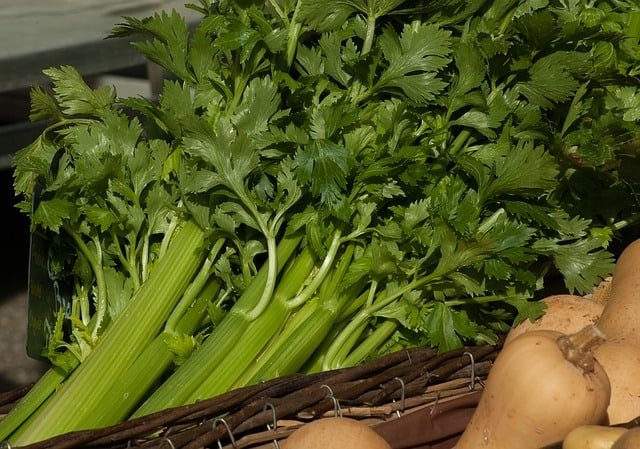
Celery (Apium graveolens) is safe for rabbits when given as a supplementary part of their vegetable rotation. It is not toxic to rabbits, and most bunnies enjoy both the crunchy stalks and the leafy green tops. The House Rabbit Society lists celery as an approved vegetable for domestic rabbits.
In our rabbitry, we have found that nearly every rabbit takes to celery without hesitation. Both of our breeding does, Tyr and Freya, eat it eagerly whenever it shows up in their bowl. We have also spoken with dozens of other rabbit owners and breeders who confirm the same thing: celery is a well-accepted vegetable across all breeds, from Netherland Dwarfs to Flemish Giants.
That said, celery should never be treated as a dietary staple. It is a supplement to your rabbit's core diet of unlimited grass hay, measured pellets, and a daily rotation of fresh leafy greens. Think of celery as one ingredient in a diverse vegetable mix, not the main course. As long as you follow the portion guidelines and preparation steps outlined below, celery is a perfectly healthy and enjoyable addition to your rabbit's menu.
One common misconception is that celery is "just water" with no real value. While celery is indeed about 95% water, it still delivers meaningful amounts of vitamin A, vitamin K, potassium, and folate. The high water content is actually a bonus during warmer months, helping keep your rabbit hydrated between water bowl refills.
What Are the Nutritional Benefits of Celery for Rabbits?
Celery is a low-calorie, high-water vegetable that provides several nutrients beneficial to rabbits. At roughly 95% water content, it serves as an excellent source of supplemental hydration, which is particularly valuable in summer or for rabbits that do not drink enough from their water bottle.
Here is a breakdown of the key nutrients found in 100 grams of raw celery:
| Nutrient | Amount per 100g | Benefit for Rabbits |
|---|---|---|
| Calories | 14 kcal | Low-calorie snack that reduces obesity risk |
| Water | 95.4 g | Supports hydration, especially in warm weather |
| Fiber | 1.6 g | Aids digestive motility and gut health |
| Vitamin A | 449 IU | Supports vision, immune function, and reproduction |
| Vitamin K | 29.3 mcg | Essential for proper blood clotting |
| Vitamin C | 3.1 mg | Provides antioxidant support |
| Potassium | 260 mg | Supports heart and muscle function |
| Folate | 36 mcg | Important for cell growth and development |
| Calcium | 40 mg | Moderate level; excess calcium can cause bladder sludge |
| Phosphorus | 24 mg | Works alongside calcium for bone health |
Source: USDA Nutritional Data for Raw Celery
Compared to sugary vegetables like carrots, celery contains far less sugar: just 1.3 grams per 100g versus 4.7 grams for carrots. This makes celery a smarter choice for rabbits that need to watch their sugar intake, including overweight rabbits or those prone to dental problems.
The vitamin A content deserves special mention. Vitamin A supports healthy vision, skin integrity, and reproductive function in rabbits. For breeding does and bucks, adequate vitamin A intake is essential for maintaining fertility and supporting healthy litter development. While celery alone will not meet all of your rabbit's vitamin A needs, it contributes meaningfully when included in a varied vegetable rotation.
The calcium content in celery (40 mg per 100g) is moderate and generally safe. However, rabbits that are prone to urinary sludge or bladder stones should have their total calcium intake monitored across all food sources. Celery is lower in calcium than vegetables like kale or parsley, making it a reasonable choice for calcium-sensitive rabbits.
How Much Celery Can a Rabbit Eat?
The proper amount of celery depends on your rabbit's body weight and age. As a general guideline, adult rabbits should receive approximately 1 cup of mixed fresh vegetables per 4 pounds (1.8 kg) of body weight each day. Celery should make up no more than about one-quarter of that total daily vegetable portion.
In practical terms, that means no more than half a stalk of celery per day for an average-sized rabbit. Here is a more specific breakdown organized by breed size:
| Breed Size | Weight Range | Max Celery Per Day |
|---|---|---|
| Small breeds (Netherland Dwarf, Mini Rex, Polish) | 1.1 to 3.5 lbs | 1 to 2 small pieces (about 30g) |
| Medium breeds (Holland Lop, Dutch, Mini Lop) | 4 to 8 lbs | 3 to 4 pieces (about 60g) |
| Large breeds (New Zealand, Californian, Rex) | 9 to 12 lbs | Half a stalk (about 80 to 100g) |
| Giant breeds (Flemish Giant, Continental Giant) | 13+ lbs | Up to one full stalk (about 120g) |
Source: Patry, Karen, et al. The Rabbit-Raising Problem Solver. Storey Publishing, 2014.
These amounts assume celery is being fed alongside other vegetables, not as the sole vegetable. If celery is the only vegetable you are offering that day, you can increase the portion slightly, but ideally you should always offer a mix of 3 to 5 different vegetables.
When Can Rabbits Start Eating Celery?
Age matters just as much as weight when deciding how much celery to feed. Baby rabbits under 12 weeks old should not eat any vegetables at all, including celery. Their digestive systems are still developing and colonizing with the beneficial bacteria needed to process plant matter beyond hay.
Here is a recommended timeline for introducing celery at each life stage:
| Age | Celery Feeding Guidelines |
|---|---|
| Under 12 weeks | No celery or vegetables. Mother's milk, hay, and water only. |
| 12 weeks to 7 months | Introduce one small piece (under 15g) at a time. Wait 24 hours and monitor stool before offering more. |
| 7 months to 1 year | Gradually increase vegetable portions, including celery, over several weeks. |
| 1 to 5 years (adult) | Full portions per the breed size table above. Rotate with other safe vegetables for rabbits. |
| 6+ years (senior) | Consult your veterinarian for a diet plan tailored to your aging rabbit's needs. |
Source: Lafeber Veterinary Basic Rabbit Care Guide
When introducing celery for the first time, give your rabbit one small piece and nothing else that is new. Wait a full 24 hours and observe their droppings. If the fecal pellets remain firm and round, you can gradually increase the amount over the following week. If you notice soft stools or diarrhea, stop offering celery and return to a hay-only diet until things normalize.
Are Celery Strings Dangerous for Rabbits?
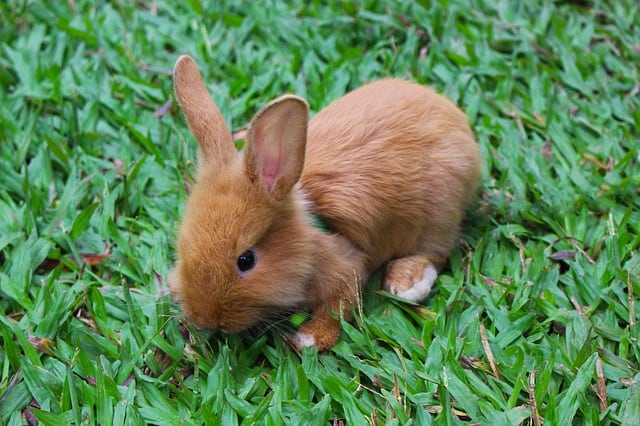
One of the most frequently asked questions about feeding celery to rabbits involves the long, stringy fibers that run along the stalks. These fibrous strings can be quite tough and, in theory, could wrap around a rabbit's teeth or create a choking hazard if swallowed in long, unbroken pieces.
In practice, most adult rabbits chew celery thoroughly enough to break down these strings without any issues. Rabbits have powerful incisors and continuously growing molars specifically designed to grind down fibrous plant material. However, the risk is not entirely zero, particularly with smaller breeds or younger rabbits that may not chew as thoroughly.
The simplest and most effective solution is to cut celery stalks into small pieces, roughly half an inch (1.3 cm) in length. This breaks the long strings into short segments that cannot tangle around teeth or form blockages in the digestive tract. We have used this cutting method in our rabbitry for years with zero incidents.
For extra caution, some breeders peel or strip away the outer layer of the celery stalk before cutting. This removes the majority of the stringy fibers entirely. Another popular approach is to skip the stalks altogether and feed only the celery leaves, which contain no strings at all and are actually more nutrient-dense.
Can Rabbits Eat Celery Leaves, Stalks, and Roots?
Celery Leaves
Celery leaves are not only safe for rabbits, they are the most nutritious part of the entire plant. The leaves contain higher concentrations of vitamin A, vitamin C, and calcium compared to the stalks. Many rabbits actually prefer the leaves because of their softer texture, more delicate flavor, and aromatic smell.
Because celery leaves lack the stringy fibers found in stalks, they eliminate the choking concern entirely. You can include celery leaves as part of your rabbit's daily leafy green rotation, alongside herbs like cilantro, parsley, and romaine lettuce. Just remember that celery leaves still count toward your rabbit's daily vegetable allowance.
Celery Stalks
Celery stalks are safe for rabbits as long as you wash them thoroughly and cut them into small, manageable pieces. The satisfying crunchiness of the stalks provides a texture that most rabbits enjoy, and the chewing action required to break down raw celery helps wear down their continuously growing teeth naturally.
Always serve stalks raw and never cooked. Cooking celery breaks down its fiber content, removes water-soluble vitamins, and changes the texture in ways that are less beneficial for a rabbit's digestive system. Raw is always better.
Celery Root (Celeriac)
Celery root, also known as celeriac, is safe for rabbits in small amounts. It is lower in starch than many common root vegetables like potatoes or sweet potatoes, which makes it a comparatively better option. However, it is denser in calories and carbohydrates than celery stalks or leaves, so treat celeriac more like an occasional root vegetable treat rather than a daily green.
Offer celeriac no more than once or twice per week, cut into small cubes, and always alongside the rabbit's regular hay and leafy green rotation.
When Should You Not Feed Celery to Rabbits?
There are several situations where you should remove celery, and most other vegetables, from your rabbit's diet entirely:
- Digestive upset: If your rabbit has soft stools, diarrhea, or you notice uneaten cecotropes accumulating in the cage, stop all vegetables immediately. Switch to a hay-only diet until droppings return to their normal firm, round shape. This typically takes 24 to 48 hours.
- Under 12 weeks old: Young kits should not eat any vegetables. Their gut flora is still establishing itself, and introducing vegetables too early can disrupt this critical developmental process.
- After surgery or during illness: Follow your veterinarian's specific dietary instructions during recovery periods. Most vets recommend a simplified diet of hay and water for the first few days after a procedure.
- New rabbit in your home: If you have just adopted or purchased a rabbit, do not introduce celery or any new food right away. Wait at least one week for the rabbit to adjust to its new environment and stress levels to normalize, then begin introducing new vegetables one at a time.
- Rabbits with chronic urinary issues: Because celery contains moderate calcium (40 mg per 100g), rabbits with a history of bladder sludge or urinary stones may need a lower-calcium vegetable rotation. Discuss this with your veterinarian.
When in doubt, the safest dietary fallback is always unlimited timothy hay and fresh water. Hay alone can sustain a healthy rabbit through short periods of dietary simplification without any negative consequences.
What Are the Risks of Overfeeding Celery to Rabbits?
The primary danger of celery is not the vegetable itself but the dietary imbalance that results from overfeeding it. When rabbits eat too much celery, or any other vegetable, at the expense of hay, they miss out on the long-strand fiber that their digestive systems absolutely require to function properly.
Here are the most common health issues caused by feeding too much celery:
- Gastrointestinal (GI) stasis: This is the most serious risk. GI stasis occurs when the gut slows down or stops moving entirely, usually triggered by insufficient dietary fiber. According to VCA Animal Hospitals, GI stasis can become life-threatening within 24 hours if not recognized and treated promptly. Symptoms include loss of appetite, small or absent fecal pellets, a hunched posture, and teeth grinding from pain.
- Diarrhea: Introducing too much celery too quickly, or feeding excessive portions in a single sitting, can overwhelm the gut and cause loose stools. This is especially common in younger rabbits that are still being introduced to vegetables for the first time.
- Uneaten cecotropes: A diet too heavy in vegetables and too low in hay often produces softer-than-normal cecotropes. Rabbits normally re-ingest these nutrient-rich droppings directly from the anus, but overly soft cecotropes often go uneaten, leading to nutritional loss, a dirty coat, and an unpleasant-smelling hutch.
- Gradual weight gain: While celery itself is low in calories, feeding large volumes of vegetables often means the rabbit fills up before eating enough hay. Over time, this dietary imbalance contributes to weight gain and the health problems associated with rabbit obesity.
How to Prepare Celery for Your Rabbit
Proper preparation is what makes celery safe and enjoyable for your rabbit. Follow these steps every time you serve celery:
- Wash thoroughly: Rinse the celery under running water for at least 15 to 20 seconds to remove dirt, pesticide residue, and any insects hiding in the ribs. If possible, choose organic celery. Conventionally grown celery frequently appears on the Environmental Working Group's "Dirty Dozen" list for high pesticide contamination.
- Remove the base: Cut off the bottom root end of the bunch, which tends to collect the most dirt and debris.
- Cut into small pieces: Slice the stalks into segments roughly half an inch (1.3 cm) long. This is the single most important step for safety, as it breaks the stringy fibers into short pieces that cannot tangle or cause blockages.
- Separate the leaves: You can serve the leaves whole or roughly tear them into smaller pieces. They do not require fine cutting because they contain no dangerous strings.
- Serve at room temperature: Avoid feeding celery straight from the refrigerator. Very cold food can cause mild digestive discomfort in some rabbits. Let the celery sit at room temperature for 10 to 15 minutes before placing it in the food bowl.
- Remove uneaten portions: Discard any celery your rabbit has not eaten within 2 to 3 hours. Wilted or spoiling celery can harbor harmful bacteria that may upset your rabbit's sensitive digestive system.
What Are Healthy Alternatives to Celery for Rabbits?
Dietary variety is essential for keeping your rabbit healthy and preventing nutritional imbalances. You should rotate between several different vegetables throughout the week rather than offering the same one every day. Here are some excellent alternatives to celery that we regularly use in our own rabbitry:
- Spinach (feed in moderation due to higher oxalic acid content)
- Bell peppers (remove seeds; all colors are safe)
- Cilantro (a favorite aromatic herb for most rabbits)
- Basil (safe in moderate amounts)
- Kale (limit to 2 to 3 times per week due to calcium)
- Parsley (high in vitamin C)
- Romaine lettuce (a safe, low-calorie daily green)
- Bok choy (excellent source of vitamins A and C)
- Dandelion greens (use only pesticide-free sources)
- Wheatgrass (can be grown at home for fresh supply)
A practical rule of thumb: offer 3 to 5 different vegetables per day, making sure at least one is a dark leafy green. This rotation ensures your rabbit receives a broad spectrum of vitamins and minerals without overloading on any single nutrient. For a complete list of rabbit-safe options, see our guide on what vegetables you can feed your rabbit.
Frequently Asked Questions
Can rabbits eat celery every day?
It is best not to feed celery every single day. While celery is safe, feeding the same vegetable daily can lead to nutritional imbalances over time. Rotate celery with other rabbit-safe vegetables like bell peppers, parsley, and romaine lettuce. Aim to offer celery 2 to 3 times per week as part of a varied vegetable rotation.
Can rabbits eat celery hearts?
Yes, celery hearts are completely safe for rabbits. Celery hearts are the tender inner stalks of the celery bunch, and they contain the same nutrients as the outer stalks. Cut them into small, half-inch pieces just as you would with regular stalks. Many rabbits actually prefer celery hearts because they are less fibrous and easier to chew.
Is celery better than carrots for rabbits?
For regular daily feeding, celery is a better choice than carrots. Celery contains significantly less sugar (1.3g per 100g versus 4.7g for carrots) and fewer calories overall. Carrots are perfectly fine as an occasional treat, but celery works better as a routine vegetable in your rabbit's weekly rotation because of its lower sugar content and high water content.
Can baby rabbits eat celery?
No. Baby rabbits under 12 weeks old should not eat celery or any other vegetable. Their digestive systems are not yet mature enough to safely process fibrous vegetables. After 12 weeks of age, you can introduce celery in very small amounts, starting with a piece smaller than 15 grams, and waiting a full 24 hours to check for any adverse reactions before offering more.
Do I need to peel celery before giving it to my rabbit?
Peeling celery is not required but can reduce the stringy fibers that concern some rabbit owners. The simplest and most practical approach is to cut the stalks into half-inch pieces, which effectively breaks up the long strings. If your rabbit is a smaller breed or has a history of dental issues, peeling the outer layer provides an additional margin of safety.
Cite this article:
Cite this article:
BunnySync (February 22, 2026) Can Rabbits Eat Celery? Safe Feeding Guide for 2026. Retrieved from https://bunnysync.com/blog/can-rabbits-eat-celery.
"Can Rabbits Eat Celery? Safe Feeding Guide for 2026." BunnySync - February 22, 2026, https://bunnysync.com/blog/can-rabbits-eat-celery