Rabbits grind their teeth for two very different reasons, and knowing which one your rabbit is doing can be the difference between a happy bonding moment and a medical emergency. Quiet, gentle teeth grinding means your rabbit is content and relaxed. This soft sound is called "purring," and it is the rabbit equivalent of a cat's purr. Loud, forceful teeth grinding, on the other hand, is a clear sign of pain or discomfort that needs immediate attention from a veterinarian.
As breeders who have raised hundreds of rabbits over the years, we have learned to distinguish these two sounds quickly. Here is everything you need to know about rabbit teeth grinding, what causes it, and exactly when you should be worried.
What Is Rabbit Teeth Grinding?
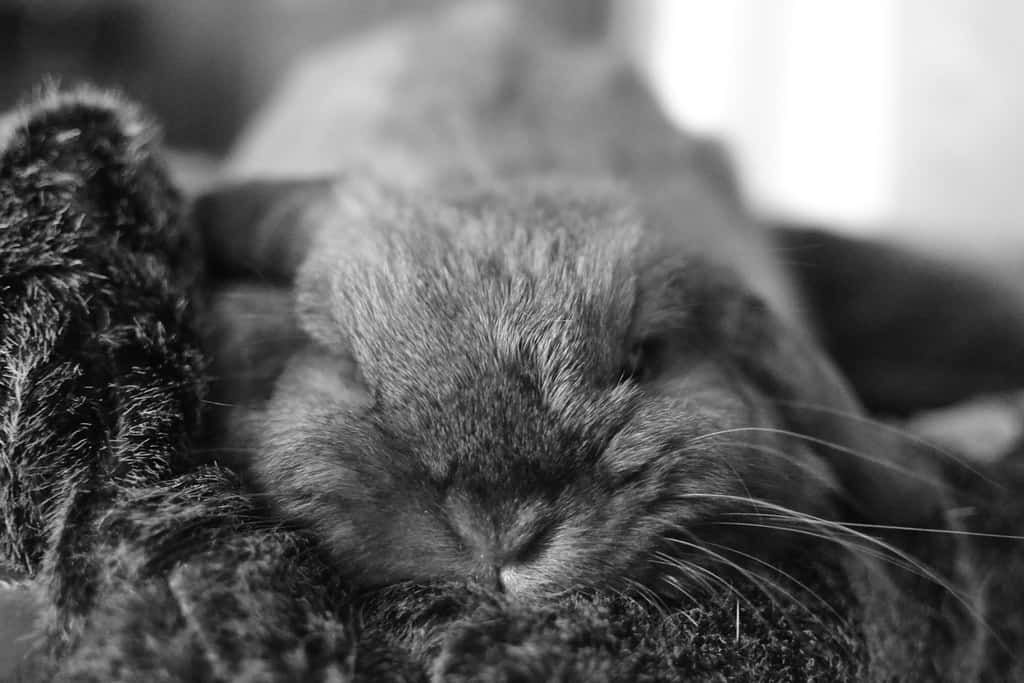
Rabbit teeth grinding, also called bruxism, is when a rabbit moves its jaw back and forth to rub its teeth together. Rabbits have 28 teeth that grow continuously throughout their lives, so some level of tooth-on-tooth contact is normal and even necessary for keeping their teeth worn down to a healthy length.
However, the type of grinding matters enormously. There are two distinct forms of teeth grinding in rabbits:
- Soft grinding (purring): A gentle, quiet vibration you can sometimes feel more than hear. This signals happiness and contentment.
- Loud grinding (bruxism from pain): An audible, harsh grinding or chattering sound that you can hear from across the room. This signals pain, illness, or severe discomfort.
Understanding the difference is critical because one is perfectly normal and the other requires urgent veterinary care. Let us break down each type in detail so you will never confuse the two.
Why Is My Rabbit Quietly Grinding Its Teeth?
Quiet teeth grinding in rabbits is one of the most endearing behaviors you will encounter as a rabbit owner. When your rabbit gently grinds its teeth while being petted or while relaxing next to you, it is expressing pure contentment. Breeders and experienced rabbit owners commonly refer to this as "purring," and it is a strong sign that your rabbit trusts you and feels safe in its environment.
What Does Rabbit Purring Sound Like?
Rabbit purring is a soft, barely audible sound. Unlike a cat's purr, which you can clearly hear from a distance, rabbit purring is much subtler. You might hear a faint clicking or light chattering sound, or you might not hear it at all. Many owners first notice it by feeling a gentle vibration through the rabbit's skull or jaw when they are stroking the rabbit's head or cheeks.
If you place your hand gently on your rabbit's head while it is relaxed and being petted, you may feel a slight trembling sensation. That trembling is purring, and it is one of the highest compliments a rabbit can give you.
When Do Rabbits Purr?
Rabbits typically purr during moments of deep relaxation and trust. The most common situations include:
- Being petted or stroked: Especially around the forehead, behind the ears, and along the cheeks. These are the areas rabbits groom each other, so being touched there feels comforting and natural.
- Lying beside you: When your rabbit flops down next to you and starts purring, it is telling you it feels completely safe in your presence.
- After a satisfying meal: Some rabbits purr while settling down after eating their favorite hay or fresh greens, similar to how a person might sigh contentedly after a good dinner.
- During grooming sessions: Both when being groomed by you and when grooming a bonded partner rabbit.
- While resting in a favorite spot: A rabbit that feels secure in its enclosure may purr softly while loafing or lying in its preferred resting area.
If you want to learn more about positive rabbit body language, check out our guide on how to tell if your rabbit is happy.
Body Language That Accompanies Purring
When a rabbit is purring from contentment, its entire body tells the same story. Look for these accompanying signs:
- Relaxed posture: The rabbit's body is loose, not tense. It may be lying with its legs tucked under (loafing) or stretched out to the side in a full "flop."
- Half-closed eyes: A content rabbit often has droopy, half-shut eyes while purring, sometimes slowly blinking.
- Ears in a neutral or backward position: Not alert and upright, but relaxed and angled back or to the sides.
- Slow nose movement: A content rabbit's nose twitching slows down significantly compared to when it is alert or anxious.
- Still or gently moving body: The rabbit is not shifting around uncomfortably or trying to move away from you.
- Relaxed jaw: The lower jaw moves gently and rhythmically, not forcefully or erratically.
If you see all of these signs together with the quiet teeth grinding, you can be confident your rabbit is happy, comfortable, and bonded to you.
Why Is My Rabbit Loudly Grinding Its Teeth?
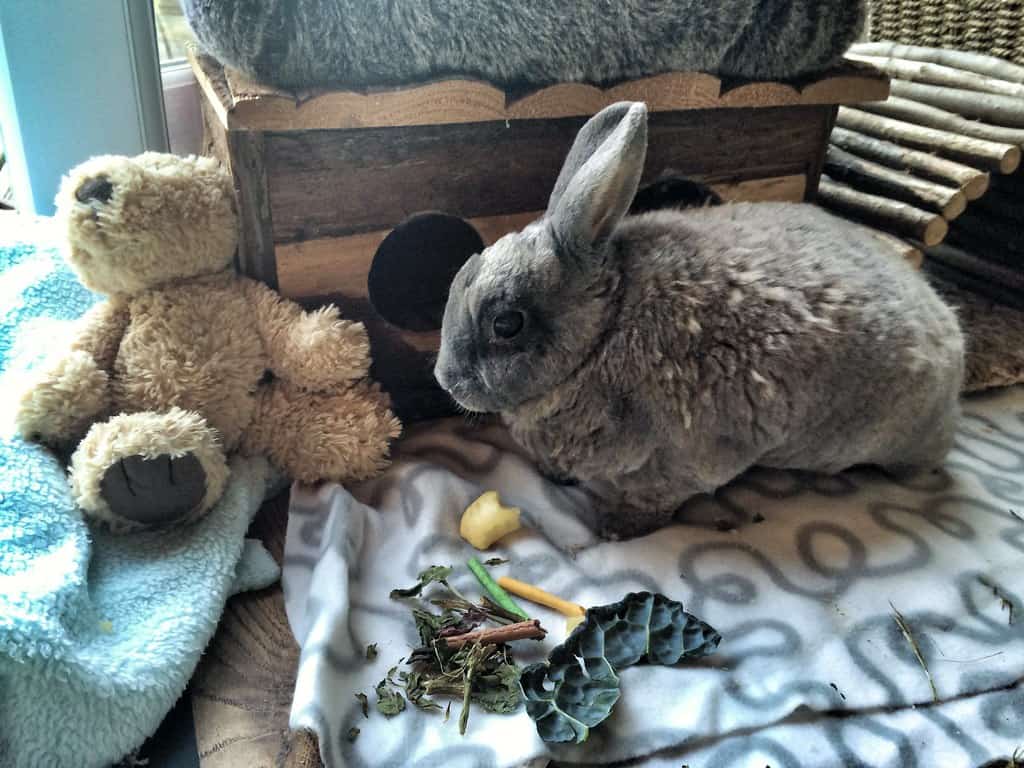
Loud teeth grinding is the opposite of purring, and it is a serious warning sign. When a rabbit grinds its teeth loudly enough that you can hear it clearly from several feet away, the rabbit is in significant pain. This is not a behavior to ignore or "wait out."
According to veterinary pain assessment guidelines, teeth grinding is one of the primary indicators of pain in rabbits. Because rabbits are prey animals, they instinctively hide pain to avoid attracting predators. By the time a rabbit is grinding its teeth loudly, the pain has usually reached a level where the rabbit can no longer mask it. This means the situation is urgent.
Signs Your Rabbit Is Grinding From Pain
Loud teeth grinding alone can sometimes be hard to distinguish from purring if you are new to rabbits. The key is to look at the full picture. A rabbit grinding its teeth from pain will also show several of these symptoms:
- Hunched posture: The rabbit sits in a tight, hunched position with its back arched, often pressing its belly to the ground.
- Low energy and lethargy: The rabbit does not want to move, play, or explore. It may sit in one spot for hours without shifting position.
- Loss of appetite: Refusing food, especially hay, is a major red flag. If your rabbit is not eating pellets or has stopped eating entirely, combined with teeth grinding, seek veterinary help immediately.
- Aggression or flinching: A rabbit in pain may lunge, bite, or flinch when you try to touch it, especially near the area that hurts.
- Rapid or labored breathing: Faster breathing than normal, sometimes with visible effort or flared nostrils.
- Squinting or bulging eyes: Eyes that look different from normal, either squeezed partially shut from pain or unnaturally wide with distress.
- High-pitched squealing: In severe cases, the rabbit may vocalize with squeals or whimpers alongside the grinding.
- Changes in droppings: Smaller, fewer, or no droppings at all can indicate GI problems that are causing the pain.
For a more detailed breakdown of stress indicators, read our article on signs your rabbit is stressed.
Common Causes of Painful Teeth Grinding in Rabbits
Several medical conditions can cause a rabbit to grind its teeth in pain. The most common ones we have encountered in our breeding program include:
- Gastrointestinal stasis (GI stasis): This is the most common and most dangerous cause. GI stasis occurs when a rabbit's digestive system slows down or stops completely. It causes severe abdominal pain and can be fatal within 24 to 48 hours if left untreated. Signs include a bloated or hard belly, no droppings, and complete refusal of food.
- Dental disease: Malocclusion (misaligned teeth), tooth spurs, or abscesses can cause constant oral pain. Rabbit teeth grow 2 to 3 millimeters per week, and if they are not wearing down properly, sharp points can dig into the cheeks or tongue. You can learn more about this in our article on whether rabbits can die from overgrown teeth.
- Urinary problems: Bladder stones or sludge can cause significant pain, leading to teeth grinding along with straining to urinate or blood in the urine.
- Sore hocks (pododermatitis): Pressure sores on the bottom of a rabbit's feet, especially common in rabbits housed on wire flooring or hard surfaces. The pain from inflamed or ulcerated hocks can cause persistent teeth grinding.
- Internal infections: Ear infections, respiratory infections, or other internal issues can trigger teeth grinding as a pain response.
- Injuries: Broken bones, pulled muscles, or wounds from fights with other rabbits can all cause pain-related grinding.
How Can You Tell the Difference Between Purring and Pain Grinding?
This is the most important question for any rabbit owner. Here is a side-by-side comparison to help you quickly determine which type of teeth grinding your rabbit is displaying:
| Feature | Purring (Contentment) | Pain Grinding (Distress) |
|---|---|---|
| Volume | Quiet, barely audible | Loud, clearly audible from a distance |
| Body posture | Relaxed, flopped, loose | Hunched, tense, pressed to ground |
| Eyes | Half-closed, sleepy | Squinting in pain or wide with distress |
| Context | During petting, resting, after eating | Unprompted, while sitting alone |
| Appetite | Normal or just finished eating | Reduced or completely absent |
| Energy level | Normal, willing to interact | Lethargic, reluctant to move |
| Response to touch | Leans in, enjoys it | Flinches, pulls away, or becomes aggressive |
| Duration | Stops when petting stops | Continuous, even without stimulation |
| Droppings | Normal size and quantity | Smaller, fewer, or absent |
The single most reliable indicator is context. If the grinding happens while you are petting your rabbit and the rabbit appears relaxed, it is purring. If the grinding happens on its own while the rabbit is hunched in a corner or refusing food, it is almost certainly pain.
What Should You Do If Your Rabbit Is Grinding Its Teeth in Pain?
If you suspect your rabbit is grinding its teeth because of pain, you need to act quickly. Rabbits deteriorate fast, and what seems like mild discomfort can become life-threatening within hours. Here is a step-by-step approach.
Step 1: Stay Calm and Observe
Take a few minutes to carefully observe your rabbit without disturbing it. Note the following details, as your veterinarian will want to know them:
- When did the grinding start? Was it sudden or gradual?
- Is the rabbit eating and drinking normally?
- Are there any droppings in the litter box? Are they normal-sized, or are they smaller and harder than usual?
- Is the rabbit moving normally or favoring one side?
- Is there any discharge from the eyes, nose, or ears?
- Has anything changed recently, such as diet, environment, or exposure to other animals?
Writing down these observations before calling the vet will save valuable time during the consultation.
Step 2: Check for Visible Issues
Gently examine your rabbit if it will allow you to handle it without causing additional stress. Look for:
- Feet and hocks: Check the bottom of all four feet for redness, swelling, open sores, or missing fur. Sore hocks are one of the most common causes of pain in caged rabbits and are often overlooked.
- Mouth and teeth: If you can safely check, look for overgrown front teeth, drooling, or wet fur around the chin. Dental issues are a frequent cause of teeth grinding in rabbits.
- Abdomen: Gently feel the rabbit's belly. A healthy rabbit's abdomen should feel soft and pliable. If it feels hard, bloated, or the rabbit reacts strongly to being touched there, GI stasis is a likely cause.
- Body surface: Look for any wounds, lumps, swelling, or areas of missing fur that might indicate an injury or abscess.
Step 3: Contact Your Veterinarian Immediately
Call your rabbit-savvy veterinarian right away. Not all vets have experience with rabbits, so it is important to find one who specializes in exotic or small animals. Provide them with your observations from Steps 1 and 2, including when the symptoms started and whether your rabbit is still eating.
While waiting for your appointment:
- Keep your rabbit warm and in a quiet, comfortable space away from loud noises and other pets.
- Offer fresh hay and water, but do not force feed unless instructed by your vet.
- Do not give any human medications. Painkillers like ibuprofen or acetaminophen are toxic to rabbits and can be fatal.
- If your rabbit seems frightened on top of being in pain, try to calm it down using proven, gentle techniques.
- Keep the room at a comfortable temperature between 60 and 70 degrees Fahrenheit (15 to 21 degrees Celsius).
Can Dental Problems Cause Teeth Grinding in Rabbits?
Yes, and dental disease is actually one of the leading causes of loud teeth grinding in domestic rabbits. A rabbit's teeth grow continuously at a rate of approximately 2 to 3 millimeters per week. In healthy rabbits, the constant chewing of hay and fibrous foods wears the teeth down at the same rate they grow, keeping them at a proper length and alignment.
When this balance is disrupted, several dental problems can develop:
- Malocclusion: When the upper and lower teeth do not align properly, they cannot wear each other down evenly. This leads to overgrown teeth, sharp edges called spurs, and significant pain. Malocclusion can be genetic or caused by injury.
- Tooth spurs: Sharp points that develop on the molars when they are not worn down correctly. These spurs can cut into the tongue or cheek lining, causing pain every time the rabbit tries to eat or chew.
- Tooth root abscesses: Infections at the base of a tooth that can cause swelling, pain, and difficulty eating. Abscesses often require surgical intervention and long courses of antibiotics.
- Broken teeth: A cracked or broken tooth can expose the nerve and pulp, causing intense pain and persistent grinding.
If your rabbit grinds its teeth while eating, has started drooling, drops food from its mouth, or only chews on one side, dental disease is very likely the cause. A veterinarian can perform an oral exam and skull X-rays to diagnose the specific problem.
How to Prevent Dental Issues That Cause Teeth Grinding
Prevention is always better than treatment when it comes to rabbit dental health. Here are proven strategies that we use in our own rabbitry to keep teeth healthy:
- Provide unlimited timothy hay: Hay should make up 80% or more of your rabbit's diet. The lateral chewing motion required to grind down hay is the single most important factor in keeping teeth worn to a healthy length. Timothy, orchard grass, and oat hay are all excellent choices.
- Offer a variety of leafy greens daily: Fresh vegetables like romaine lettuce, cilantro, parsley, and herb tops provide additional chewing exercise and essential nutrients that support overall dental health.
- Limit pellet portions: Pellets are ground and compressed, so they do not provide the same abrasive grinding action as long-strand hay. Feed pellets in measured amounts (about 1/4 cup per 5 pounds of body weight), not as a free-choice food.
- Provide safe chew toys: Apple wood sticks, willow branches, and untreated wooden toys give your rabbit additional opportunities to wear down its incisors. Rotate toys regularly to keep your rabbit interested.
- Schedule regular dental checkups: Have your veterinarian examine your rabbit's teeth at least twice a year. Catching dental problems early, before they cause pain and grinding, is much easier and less expensive than treating advanced disease.
- Watch for early warning signs: Changes in eating habits, drooling, weight loss, wet chin, or facial swelling can all indicate developing dental problems before the pain becomes severe enough to cause visible teeth grinding.
Frequently Asked Questions
Is it normal for rabbits to grind their teeth?
Quiet teeth grinding, known as purring, is completely normal and healthy. It means your rabbit is content and relaxed. However, loud, forceful teeth grinding is not normal and indicates your rabbit is experiencing pain that needs veterinary attention as soon as possible.
Why does my rabbit grind its teeth when I pet it?
Your rabbit is purring, which is a sign of happiness and trust. It is the rabbit version of a cat purring when stroked. This gentle grinding often happens when you pet your rabbit's forehead, cheeks, or behind the ears. It means your rabbit enjoys the attention and feels safe with you.
Should I take my rabbit to the vet for teeth grinding?
Only if the grinding is loud and accompanied by other signs of distress such as loss of appetite, lethargy, hunched posture, or aggressive behavior when touched. Quiet grinding during petting or relaxation is normal purring and does not require a vet visit.
Can teeth grinding in rabbits be a sign of GI stasis?
Yes. Loud teeth grinding is one of the earliest and most recognizable signs of GI stasis in rabbits. If your rabbit is grinding its teeth loudly and has also stopped eating, has fewer or no droppings, or seems lethargic, contact your veterinarian immediately. GI stasis can become fatal within 24 to 48 hours without treatment.
How can I tell if my rabbit is purring or in pain?
Look at the overall body language and context. A purring rabbit will be relaxed with half-closed eyes, a loose body, and is usually being petted or resting comfortably. A rabbit in pain will be hunched, tense, lethargic, and may refuse food or react aggressively when touched.
Cite this article:
Cite this article:
BunnySync (February 26, 2026) What Does It Mean When Rabbits Grind Their Teeth?. Retrieved from https://bunnysync.com/blog/what-does-it-mean-when-rabbits-grind-their-teeth.
"What Does It Mean When Rabbits Grind Their Teeth?." BunnySync - February 26, 2026, https://bunnysync.com/blog/what-does-it-mean-when-rabbits-grind-their-teeth
Sources and further reading
- Buseth, Marit Emilie., and Richard A. Saunders. Rabbit Behaviour, Health, and Care. CABI, 2014.
- Lebas, F. The Rabbit: Husbandry, Health, and Production. Food and Agriculture Organization of the United Nations, 1997.
- Patry, Karen, et al. The Rabbit-Raising Problem Solver: Your Questions Answered about Housing, Feeding, Behavior, Health Care, Breeding, and Kindling. Storey Publishing, 2014.
- Pain in rabbits - Litchfield Veterinary Hospital
- Gastrointestinal Stasis in Rabbits - VCA Animal Hospitals
Image credit - "Rabbit Teeth" by phil_websurfer is licensed with CC BY-NC-ND 2.0. To view a copy of this license, visit https://creativecommons.org/licenses/by-nc-nd/2.0/