To stop a rabbit from chewing its cage, you need to find the root cause and address it directly. The most common reasons rabbits chew cage bars include boredom, hormonal aggression in unneutered rabbits, hunger, a cage that is too small, and loneliness. Once you identify the trigger, solutions range from neutering and providing safe chew toys to upgrading your rabbit's living space or transitioning to free-roaming. As breeders, we have dealt with cage chewing across dozens of rabbits, and the eight methods below work consistently.
Cage chewing is one of the most common behavioral complaints rabbit owners face. The constant grinding of teeth on metal bars is not only annoying (especially at 5 AM), but it can also damage your rabbit's teeth and signal that something in their environment needs to change. This guide covers every cause we have encountered, along with practical solutions you can implement today.
Why Do Rabbits Chew Their Cage Bars?
Before jumping to solutions, understanding why your rabbit chews its cage is essential. Cage chewing is never random. It is always a form of communication. Your rabbit is telling you something is wrong with its environment, health, or emotional state. Here are the six most common causes.
Boredom and Lack of Mental Stimulation
Rabbits are intelligent animals with active minds. In the wild, they spend hours foraging, exploring new areas, and navigating complex tunnel systems. A pet rabbit sitting in a cage with nothing to do is going to find something to occupy itself, and cage bars are the most accessible target.
Signs that boredom is the cause include chewing that starts after the rabbit has been confined for several hours, chewing combined with running in circles inside the cage, and a rabbit that stops chewing immediately when you open the cage door.
Hormonal Aggression in Unneutered Rabbits
Rabbits reach sexual maturity between 3 and 6 months of age, depending on the breed. Once hormones kick in, unneutered rabbits often display increased aggression, territorial marking, and destructive behaviors like cage chewing. This type of chewing tends to be more aggressive and persistent compared to boredom-related chewing.
Hormonal cage chewing often comes with other signs: spraying urine, grunting, lunging at hands that enter the cage, and excessive territorial chin-rubbing on everything.
Hunger or an Inadequate Diet
A hungry rabbit will do whatever it takes to get your attention, and biting cage bars is one of the loudest signals it can send. Rabbits need a constant supply of hay to keep their digestive systems functioning properly. If your rabbit runs out of hay overnight or between meals, cage chewing is a predictable result.
Beyond hunger, a diet that lacks sufficient fiber can also trigger chewing. Rabbits have a biological need to chew fibrous material. When their diet is mostly pellets and fresh vegetables without enough timothy hay, they will look for other things to grind their teeth on.
A Cage That Is Too Small
This is one of the biggest causes we see, and it is also one of the easiest to fix. Many commercial rabbit cages sold in pet stores are far too small for an adult rabbit. A rabbit that cannot take three full hops in its cage, stretch out completely, or stand on its hind legs without hitting the top is living in a space that is too cramped.
The minimum recommended cage size for a single medium rabbit (around 2.5 to 4 kg) is at least 4 times the rabbit's body length. For larger breeds like Flemish Giants or New Zealands, you need even more space. Check our guide on proper cage size for your rabbit for breed-specific measurements.
Loneliness and Need for Companionship
Rabbits are social animals that naturally live in groups. A single rabbit kept alone without enough human interaction or a bonded partner can develop behavioral issues including cage chewing, excessive grooming, and even depression.
Loneliness-driven chewing typically gets worse when you leave the room or the house. If your rabbit chews most intensely when it can see you but cannot reach you, loneliness is likely a contributing factor.
Nighttime Activity and Crepuscular Behavior
Many owners notice cage chewing is worst at dawn and dusk. This is because rabbits are crepuscular, meaning they are most active during these twilight hours. If your rabbit is locked in its cage during its peak energy periods, frustration builds quickly.
In the wild, dawn and dusk are when rabbits forage, socialize, and explore. Confining them during these hours goes against their natural instincts, and the cage bars become the outlet for all that pent-up energy.
How to Stop a Rabbit from Chewing Its Cage: 8 Proven Methods
Now that you understand the causes, here are eight methods that work. Most rabbits respond to a combination of two or three of these approaches. Start with the ones that match the cause you have identified.
1. Neuter or Spay Your Rabbit
If your rabbit is over 4 months old and has not been neutered or spayed, this should be your first step. Neutering eliminates hormone-driven aggression and significantly reduces destructive behaviors in most rabbits.
The ideal age for neutering is around 4 to 6 months for males (once the testicles have descended) and 5 to 6 months for females. After the procedure, do not expect immediate results. It typically takes 2 to 6 weeks for hormone levels to drop enough to see behavioral changes.
In our breeding experience, roughly 80% of rabbits that chew their cages due to hormonal aggression stop within a month of being neutered. The remaining 20% usually have additional causes (like a small cage) that also need to be addressed.
2. Provide Daily Exercise Outside the Cage
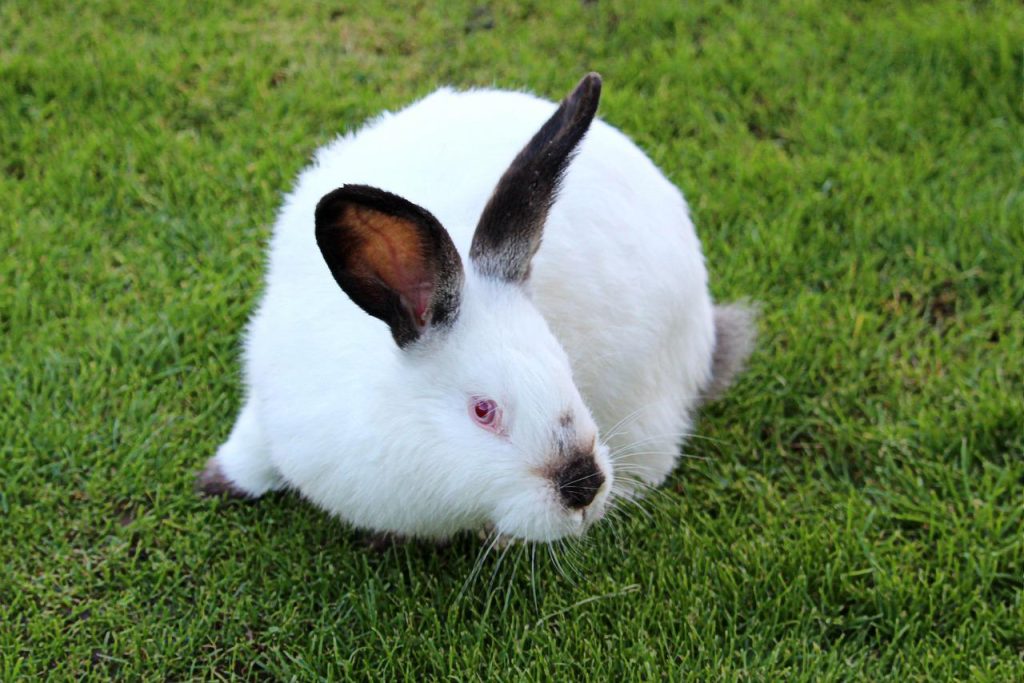
Every rabbit needs a minimum of 3 to 4 hours of exercise outside its cage each day. This is not optional. Rabbits that get enough exercise are far less likely to chew their cage bars because they have already burned off their energy.
The best times to let your rabbit out are early morning and late evening, when they are naturally most active. If your schedule does not allow for supervised exercise during these hours, a rabbit-proofed room or an attached exercise pen is a good alternative.
For rabbits that chew their cage at night, attaching an exercise pen to the cage so the rabbit can move freely between the two spaces often solves the problem overnight. This gives them room to run, binky, and explore during their active hours without requiring your supervision. Lack of exercise can lead to serious health problems beyond just cage chewing, including obesity, GI stasis, and muscle wasting.
3. Offer Safe Chew Toys and Enrichment
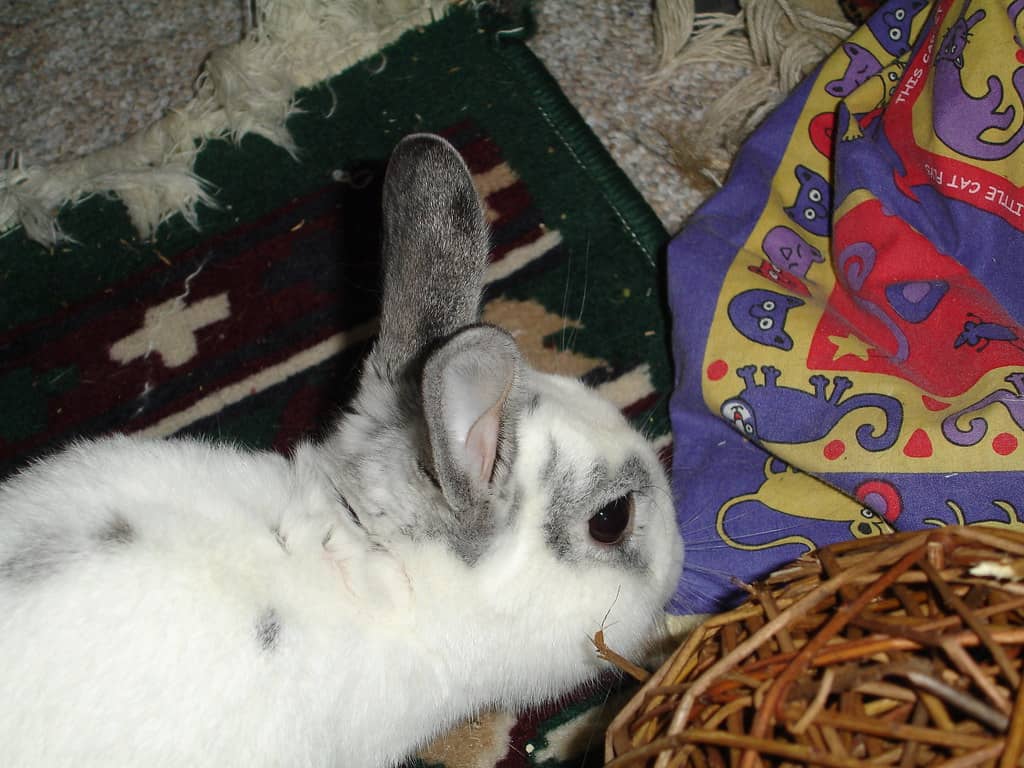
Redirecting your rabbit's chewing from cage bars to appropriate toys is one of the most effective strategies. Rabbits need to chew constantly because their teeth grow 2 to 3 mm per week throughout their entire lives. Without proper chew material, overgrown teeth can become a serious and even fatal problem.
The best chew toys for rabbits include:
- Willow balls and willow sticks: natural, safe, and most rabbits love them
- Apple wood sticks: hard enough to provide good dental wear
- Untreated wooden blocks: avoid pine and cedar, which contain harmful oils
- Cardboard boxes and toilet paper rolls: cheap, effective, and easily replaceable
- Hay-stuffed paper bags: combine foraging enrichment with chewing
- Twig tunnels and willow bridges: serve double duty as hiding spots and chew toys
Rotate toys every few days to keep things interesting. A rabbit that has had the same willow ball for three weeks will lose interest. Swap in a fresh one, and you will see renewed enthusiasm.
Here is a helpful video showing the best toys to keep your rabbit busy:
4. Upgrade to a Larger Cage or Exercise Pen
If your rabbit's cage is smaller than 4 times its body length (measured when fully stretched out), an upgrade is necessary. For a medium-sized rabbit, this means a cage or enclosure that is at least 120 cm (4 feet) long, 60 cm (2 feet) wide, and 60 cm tall.
Better yet, consider switching from a traditional wire cage to an exercise pen (also called an x-pen). Exercise pens provide significantly more floor space, are easy to reconfigure, and most models do not have horizontal bars for the rabbit to chew on. A 120 cm x 120 cm pen gives your rabbit enough room to hop, stretch, and play.
| Rabbit Size | Minimum Cage Length | Minimum Cage Width | Recommended Option |
|---|---|---|---|
| Small (under 2 kg) | 90 cm (3 ft) | 60 cm (2 ft) | Exercise pen or large cage |
| Medium (2 to 4 kg) | 120 cm (4 ft) | 60 cm (2 ft) | Exercise pen |
| Large (4 to 6 kg) | 150 cm (5 ft) | 75 cm (2.5 ft) | Large exercise pen or room |
| Giant (over 6 kg) | 180 cm (6 ft) | 90 cm (3 ft) | Dedicated room or free-roam |
5. Get Your Rabbit a Bonded Companion
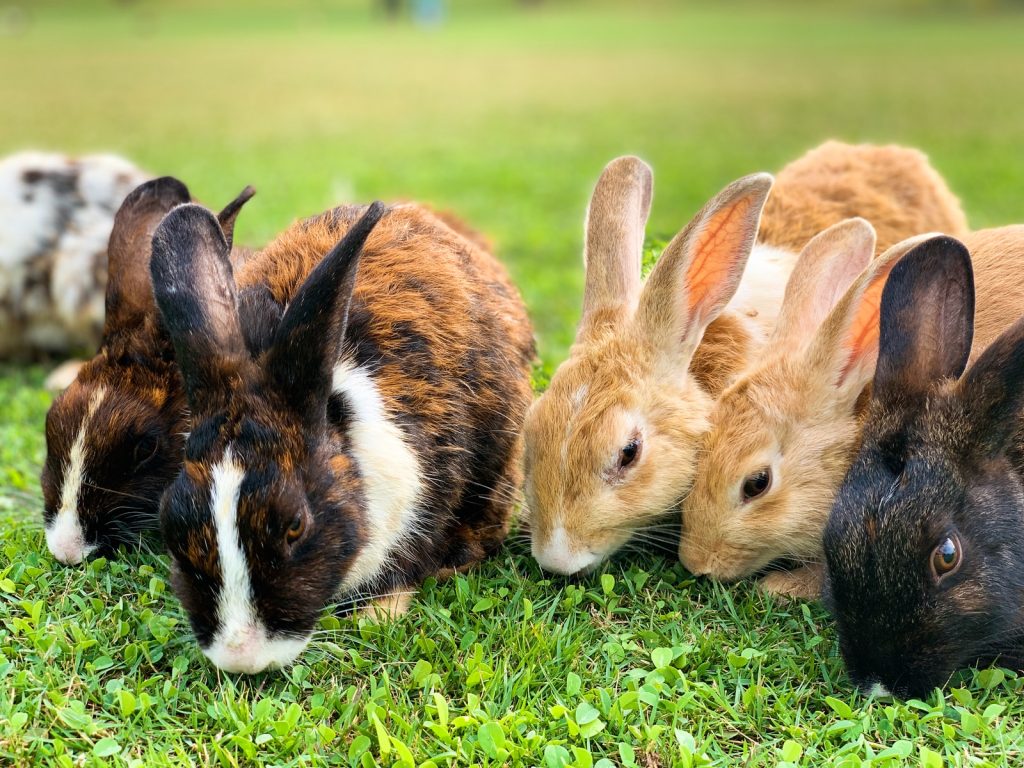
If your rabbit is alone and you cannot provide 4+ hours of daily interaction, getting your rabbit a companion can dramatically reduce cage chewing and other stress-related behaviors. Bonded rabbit pairs groom each other, play together, and provide the social interaction that prevents loneliness.
The most successful pairings are a neutered male with a spayed female. Same-sex pairs can work, but they require more careful bonding and are more prone to fighting, especially two intact males. Always introduce rabbits on neutral territory and expect the bonding process to take anywhere from a few days to several weeks.
Keep in mind that a companion is not a substitute for adequate space and enrichment. Two rabbits in a cage that is too small will both be frustrated.
6. Ensure Unlimited Hay and Fresh Water
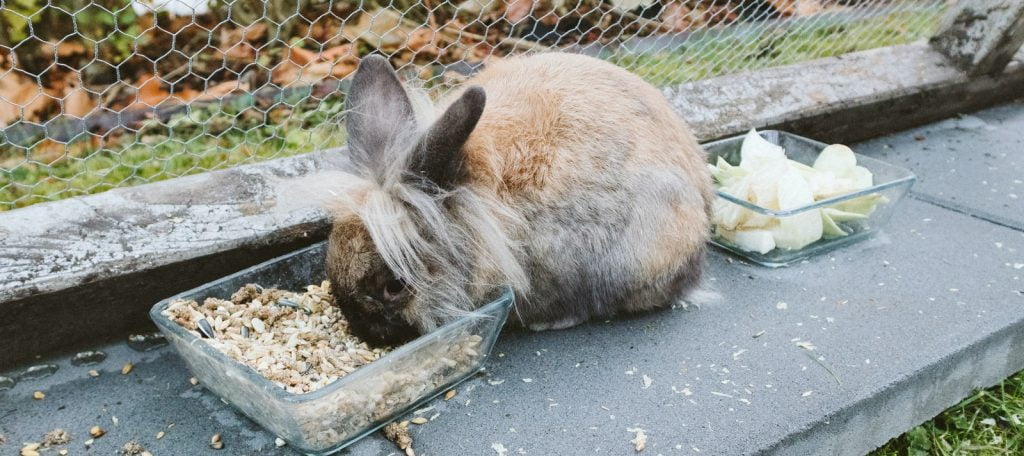
Your rabbit should have access to unlimited timothy hay (or orchard grass for rabbits that prefer it) 24 hours a day, 7 days a week. Hay should make up roughly 80% of a rabbit's diet, and a rabbit that runs out of hay at night will look for other things to chew, including cage bars.
A good rule of thumb: provide a pile of hay at least the same size as your rabbit's body every day. If the hay rack is empty by morning, you are not providing enough. Consider using a hay bag or larger hay rack that holds a full day's supply.
Fresh, clean water should also be available at all times. Dehydrated rabbits eat less hay, which can lead to more cage chewing as well as digestive issues. A water bowl is generally better than a bottle because rabbits can drink more efficiently from a bowl.
7. Apply Bitter Spray to Cage Bars
Bitter apple spray or similar pet-safe deterrent sprays can be applied directly to cage bars to make them less appealing. This is a short-term solution that works best when combined with addressing the root cause.
To use bitter spray effectively:
- Choose a spray labeled safe for small animals (avoid anything with xylitol or artificial sweeteners)
- Apply the spray to all bars your rabbit targets, not just a few
- Reapply every 24 to 48 hours, as the taste fades
- At the same time, provide appropriate chew alternatives so your rabbit has somewhere else to direct its chewing
Some rabbits are unfazed by bitter spray, and a few actually seem to enjoy it. If your rabbit is in that category, skip this method and focus on the others.
8. Transition to Free-Roaming
The ultimate solution to cage chewing is to eliminate the cage entirely. Free-roaming rabbits live in a rabbit-proofed room or area of your home without being confined to a cage. This approach mimics their natural lifestyle most closely and eliminates cage chewing by removing the cage from the equation.
Before transitioning to free-roaming, you need to:
- Cover or hide all electrical cords: rabbits will chew through cords, which is both destructive and dangerous
- Block access behind furniture: rabbits love to explore tight spaces and may get stuck
- Protect baseboards: use plastic guards or bitter spray on wooden baseboards
- Ensure the rabbit is litter-trained: most rabbits take to litter training well, especially after being spayed or neutered
- Remove toxic houseplants: many common houseplants are poisonous to rabbits
If full free-roaming is not possible, a large exercise pen in a rabbit-proofed room is the next best option. Many owners use this as a stepping stone to full free-roaming once the rabbit proves trustworthy.
Is Cage Chewing Dangerous for Rabbits?
Yes, persistent cage chewing can cause real harm to your rabbit. The most common injuries include:
- Broken or misaligned teeth: metal bars are much harder than the wood and hay rabbits are designed to chew. Repeated chewing on metal can crack teeth or cause them to grow at abnormal angles, leading to malocclusion.
- Gum damage and mouth sores: the constant friction of metal against gums can create painful sores that make eating difficult.
- Metal ingestion: while rare, rabbits can chip off small pieces of coating or metal from cage bars and swallow them.
- Chronic stress: cage chewing is a symptom of underlying stress or frustration. Chronic stress weakens a rabbit's immune system and can contribute to GI stasis, one of the leading causes of death in pet rabbits.
If your rabbit has been chewing its cage heavily and you notice drooling, difficulty eating, weight loss, or visible tooth damage, schedule a vet visit right away. Dental problems in rabbits escalate quickly and can become life-threatening if left untreated.
When Should You See a Vet About Cage Chewing?
Most cage chewing is behavioral and can be resolved with the methods above. However, you should consult a rabbit-savvy veterinarian if:
- Your rabbit has visible damage to its teeth (broken, chipped, or visibly misaligned)
- You notice drooling, wet chin, or difficulty eating
- The chewing started suddenly with no environmental changes
- Your rabbit shows signs of stress beyond cage chewing, such as over-grooming, self-harm, or complete withdrawal
- You have addressed all environmental factors and the chewing persists
In rare cases, obsessive chewing can indicate dental pain (the rabbit is trying to relieve discomfort) or a neurological issue. A vet examination with dental X-rays can rule out these less common causes.
Quick Reference: Causes and Solutions
| Cause | Key Signs | Best Solution |
|---|---|---|
| Boredom | Chews after long confinement, stops when cage opens | More exercise time, chew toys, enrichment |
| Hormonal aggression | Spraying, grunting, lunging, started at 3 to 6 months | Neuter or spay |
| Hunger | Empty hay rack, chews near feeding time | Unlimited hay, proper feeding schedule |
| Small cage | Cannot stretch or hop 3 times, constant restlessness | Upgrade cage or switch to exercise pen |
| Loneliness | Chews when owner leaves, clings when you are near | More interaction or a bonded companion |
| Crepuscular energy | Worst at dawn and dusk | Allow out-of-cage time during peak hours |
| Dental discomfort | Drooling, weight loss, difficulty eating | Veterinary dental exam |
Frequently Asked Questions
Why does my rabbit chew its cage at night?
Rabbits are crepuscular, meaning they are most active at dawn and dusk. If your rabbit is confined to a small cage during these peak energy periods, it will chew the bars out of frustration. Attaching an exercise pen to the cage or allowing free-roam in a rabbit-proofed room during nighttime hours typically solves this problem.
Can cage chewing break a rabbit's teeth?
Yes. Metal cage bars are much harder than the natural materials rabbits are designed to chew. Repeated chewing on metal can crack, chip, or misalign teeth, leading to malocclusion. This condition prevents normal eating and requires veterinary treatment, often including regular tooth trimming under sedation.
Does bitter apple spray work to stop cage chewing?
Bitter apple spray works for some rabbits but not all. About half of rabbits will avoid bars treated with bitter spray, while others ignore the taste entirely. It works best as a short-term deterrent while you address the underlying cause, such as boredom, small cage size, or lack of exercise.
Will getting a second rabbit stop cage chewing?
A bonded companion can significantly reduce cage chewing caused by loneliness, but it will not help if the root cause is a small cage, hunger, or hormonal aggression. Address those issues first. If loneliness is the primary driver, a companion combined with adequate space and enrichment is very effective.
How long after neutering will cage chewing stop?
Most rabbits show noticeable behavioral improvement within 2 to 6 weeks after neutering. Hormone levels need time to decrease, so patience is important. If cage chewing continues beyond 8 weeks post-neutering, there are likely additional environmental factors contributing to the behavior.
Cite this article:
BunnySync (February 25, 2026) How to Stop a Rabbit from Chewing Its Cage: 8 Proven Methods. Retrieved from https://bunnysync.com/blog/how-to-stop-a-rabbit-from-chewing-its-cage.
"How to Stop a Rabbit from Chewing Its Cage: 8 Proven Methods." BunnySync - February 25, 2026, https://bunnysync.com/blog/how-to-stop-a-rabbit-from-chewing-its-cage
Sources and further reading
- Buseth, Marit Emilie., and Richard A. Saunders. Rabbit Behaviour, Health, and Care. CABI, 2014.
- Lebas, F. The Rabbit: Husbandry, Health, and Production. Food and Agriculture Organization of the United Nations, 1997.
- Patry, Karen, et al. The Rabbit-Raising Problem Solver: Your Questions Answered about Housing, Feeding, Behavior, Health Care, Breeding, and Kindling. Storey Publishing, 2014.
- Toys for rabbits - House Rabbit Society
- Neutering in Rabbits - VCA Animal Hospitals