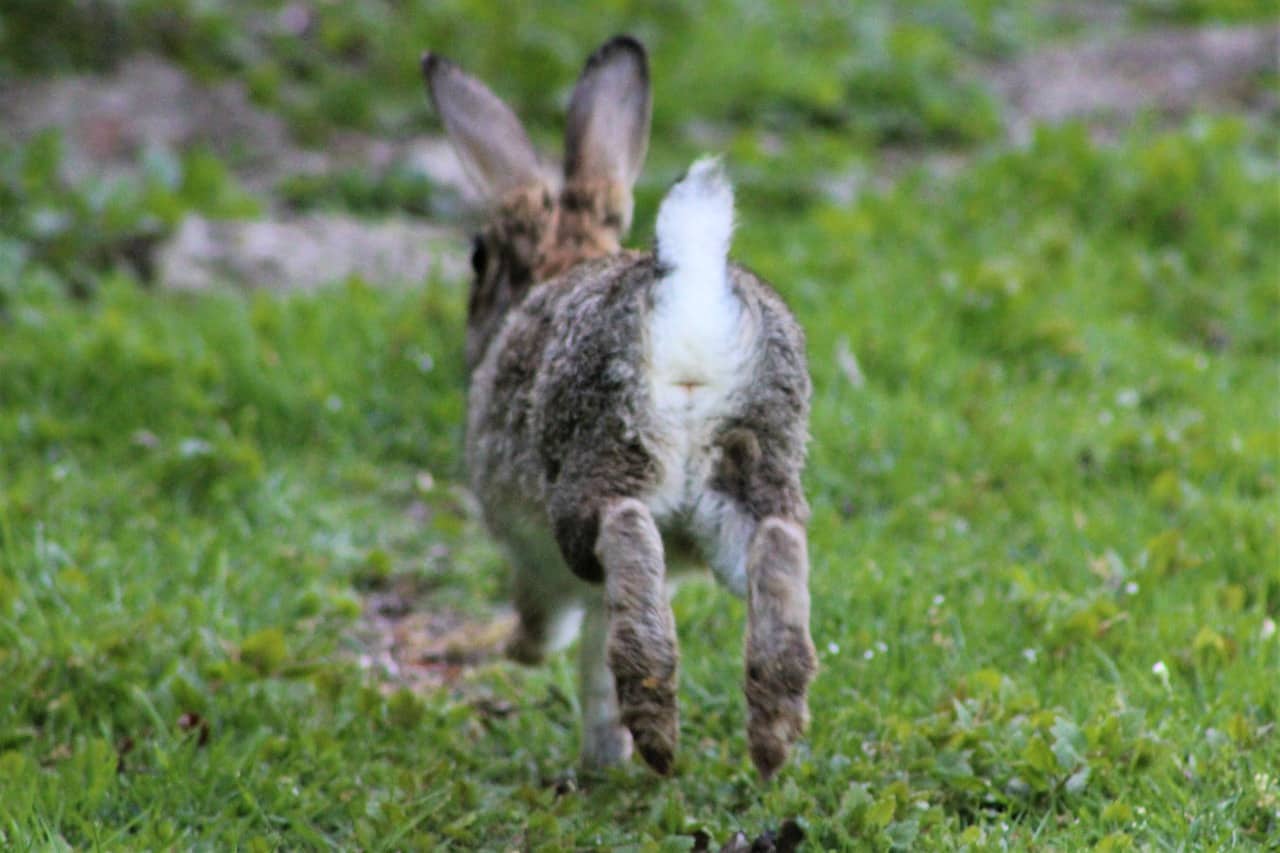
Rabbits protect themselves from predators through a combination of speed, sharp senses, and physical defenses. As prey animals sitting near the bottom of the food chain, rabbits have evolved an impressive survival toolkit over millions of years. Their first line of defense is always to detect danger early and run, reaching speeds up to 30 mph with sudden directional changes that leave predators stumbling. When escape is not possible, rabbits fight back with powerful hind leg kicks, sharp claws, and surprisingly strong bites. Understanding how rabbits protect themselves from predators is especially valuable for breeders and pet owners who want to keep their animals safe.
The fact that rabbits have thrived for millions of years despite being hunted by nearly every carnivore in their habitat is proof of how effective these natural defenses truly are. A rabbit that senses danger can experience such extreme stress that it can actually die from fright alone, which is why their early warning systems are so finely tuned.
What Are the 8 Ways Rabbits Defend Themselves From Predators?
Rabbits rely on eight main defense mechanisms to survive encounters with predators. Some are passive, like detection and avoidance, while others are active, like fighting back when cornered. Here is a breakdown of each defense, how it works, and why it has been so effective for rabbit survival in the wild.
1. Speed and Agility

A rabbit's first instinct when threatened is to run. Their bodies are built for explosive bursts of speed, with powerful hind legs that can propel them at speeds up to 30 mph. This makes them faster than many of their ground-based predators in short sprints.
What makes rabbits especially difficult to catch is not just their raw speed but their agility. A rabbit running at full speed can change direction in a split second using a technique called zigzagging. This sudden directional change throws off predators that rely on straight-line pursuit, like foxes and coyotes. A predator charging at 35 mph has too much momentum to make the same sharp turn, giving the rabbit a critical head start toward safety.
Rabbits also use their environment strategically. They memorize escape routes in their territory, knowing exactly where the nearest burrow entrance, dense brush, or narrow gap is located. When a predator gives chase, the rabbit does not run aimlessly. It heads straight for a pre-planned escape route, often darting into burrows and tunnels too small for the predator to follow.
2. Heightened Sense of Smell
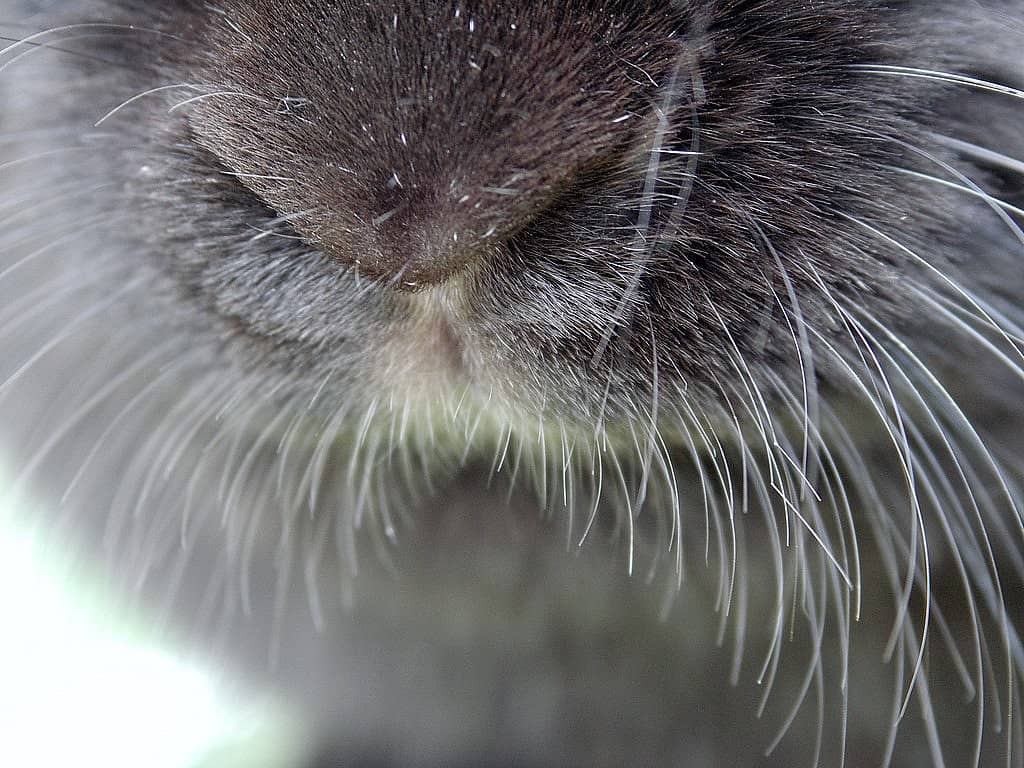
Ever wondered why a rabbit's nose is always twitching? Rabbits have approximately 100 million scent receptors in their noses, making their sense of smell one of the most powerful in the animal kingdom. For comparison, humans have roughly 6 million scent receptors.
This incredible olfactory ability allows rabbits to detect predators long before they come into view. A rabbit can pick up the scent of a fox, coyote, or hawk from a significant distance, giving it time to either freeze in place or bolt for cover. Rabbits also use smell to identify individual predators and assess how recently a threat passed through the area.
Even while sleeping, a rabbit's nose continues to work. The constant twitching motion keeps fresh air flowing over the scent receptors, ensuring the rabbit remains alert to any change in its surroundings. This is one of the reasons rabbits are such light sleepers. Their bodies are designed to wake at the slightest hint of danger.
3. Near-360-Degree Vision
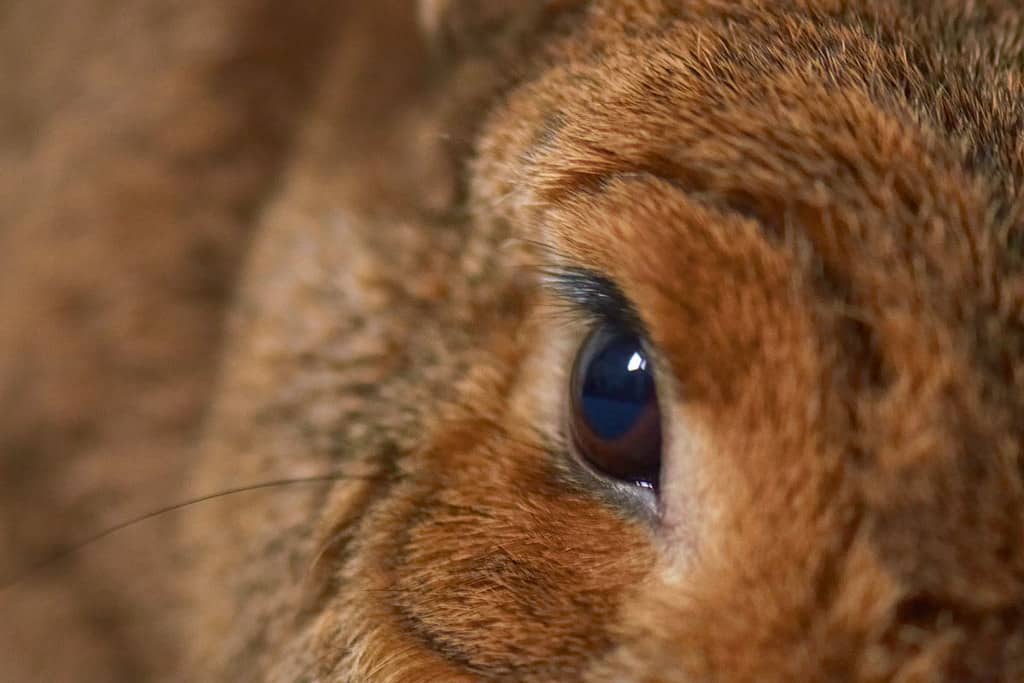
Rabbits have their eyes positioned on the sides of their heads rather than the front. This is a classic prey animal adaptation that gives them an extraordinarily wide field of vision. A rabbit can see nearly 360 degrees around them without turning its head, meaning very few predators can approach undetected.
The trade-off for this panoramic vision is limited depth perception. Predators like cats and wolves have forward-facing eyes that give them binocular vision for judging distances accurately during a chase. Rabbits sacrifice this precision for coverage, which suits their survival strategy perfectly. They do not need to judge how far away a predator is. They just need to know it is there.
Rabbits also have a third eyelid called the nictitating membrane. This transparent layer protects the eye while still allowing the rabbit to see. It means a rabbit can keep watch for predators even while sleeping or in dusty, windy conditions. Some owners notice their rabbit appearing to sleep with eyes slightly open, and this membrane is the reason.
4. Exceptional Hearing

A rabbit's large, upright ears are not just for show. They function as highly sensitive sound receivers that can detect frequencies ranging from 360 hertz to 42,000 hertz. Humans, by comparison, hear up to about 20,000 hertz at best. This means rabbits can pick up high-pitched sounds that are completely inaudible to us.
Each ear can rotate independently, allowing the rabbit to pinpoint sounds from multiple directions at the same time. If one ear catches a rustling sound to the left while the other picks up movement to the right, the rabbit can process both threats simultaneously and decide the safest escape direction.
In the wild, this hearing advantage gives rabbits a crucial early warning system. A snapping twig, the soft wingbeat of an owl, or the faint footfalls of a stalking fox all register in the rabbit's ears well before the predator gets close enough to strike. Combined with their sense of smell and wide vision, rabbits can detect approaching threats through multiple channels at once, making a surprise attack extremely difficult.
5. Sharp Claws for Self-Defense
When running is no longer an option and a predator has a rabbit cornered, the rabbit does not simply give up. Its first physical weapon is its claws. Rabbits have five toes on each front paw and four on each back paw, each equipped with a claw designed for digging through compacted soil.
While wild rabbits often have somewhat worn-down claws from constant digging, those claws are still sharp enough to inflict real damage if they connect with a predator's sensitive areas like the eyes, nose, or inner ears. A desperate rabbit will rake its claws across whatever it can reach, and even a brief scratch to a predator's face can be enough to create an opening for escape.
Domestic rabbits that do not dig as much tend to have sharper, longer claws than their wild counterparts. This is one reason why regular nail maintenance is important for pet rabbits, as overgrown claws can curl and cause discomfort, even though those sharp nails would be useful in a defensive situation.
6. Strong Teeth and Powerful Jaws

Rabbits bite as a last-resort defense, and those bites are surprisingly powerful. Rabbit incisors grow continuously throughout their lives and are kept sharp through constant gnawing on fibrous materials like hay and wood. Their jaw muscles generate enough force to deliver painful bites that can break skin and even draw blood from a predator.
Against smaller predators like weasels, stoats, or small snakes, a well-placed bite to the face or throat can genuinely turn the tide of an encounter. Larger predators like foxes or cats have thicker skin that is harder to penetrate, but even then, a bite combined with kicking and clawing can create enough chaos for the rabbit to break free.
Rabbits are not designed to eat meat, so their teeth are shaped for slicing plant material rather than tearing flesh. Still, those razor-sharp incisors are more than capable of causing serious pain to any animal that gets too close.
7. Powerful Hind Leg Kicks

A rabbit's hind legs are its most powerful physical weapon. These legs are built for explosive jumping and sprinting, with dense muscle fibers that can deliver devastating kicks. When held or pinned by a predator, a rabbit will kick repeatedly with both hind legs, using its sharp rear claws to rake and tear.
The force behind a rabbit's kick is significant. Breeders and pet owners who have handled panicked rabbits know firsthand that a well-aimed kick can leave deep scratches and bruises on human skin. For smaller predators, a direct kick to the face or abdomen can cause enough injury to make them release their grip.
In the wild, rabbits that are caught by birds of prey sometimes manage to free themselves by kicking downward as they are lifted off the ground. The sudden thrashing and the pain from the sharp claws on their hind feet can cause the bird to drop its catch, giving the rabbit a chance to reach cover.
8. Burrowing and Hiding Underground

One of the most effective long-term defense strategies rabbits use is burrowing. Wild European rabbits (Oryctolagus cuniculus) live in complex underground tunnel systems called warrens. These warrens have multiple entrances and exits, allowing rabbits to escape in one direction while a predator tries to enter from another.
A well-established warren can extend several feet underground with interconnecting tunnels, nesting chambers, and emergency escape routes. Pregnant does build separate nesting burrows to protect their young, often covering the entrance with grass and fur to mask the scent from predators.
Cottontail rabbits, which are more common in North America, do not build warrens but still use abandoned burrows, dense brush, hollow logs, and other natural shelters to hide from predators. Their strategy relies more on staying motionless and blending into their surroundings, using their brown fur as effective camouflage against soil and dried vegetation.
Do Rabbits Warn Each Other About Predators?
Yes, and this is where the thumping behavior becomes critical. When a rabbit detects a predator, it will thump its hind feet against the ground to alert other rabbits in the area. This loud, percussive sound travels through the ground and can be heard by rabbits both above and below the surface.
In a warren, a single thump from a sentinel rabbit can send dozens of rabbits scrambling deeper into their burrows within seconds. This communal warning system means that even if one rabbit is caught, the rest of the colony has time to reach safety.
Rabbits also use body language to communicate danger. A rabbit that freezes in an upright position with ears fully erect is signaling that it has detected something suspicious. Other rabbits that see this posture will stop and assess the situation themselves, often triggering a cascade of alertness through the group.
Some rabbit species also flash the white underside of their tail as they flee. This bright flash serves as a visual warning to other nearby rabbits, essentially signaling "danger, run now."
What Are the Most Common Rabbit Predators?
Rabbits face threats from predators in the air, on the ground, and even underground. Here is a breakdown of the most common predators that target rabbits:
| Predator Type | Examples | Hunting Method |
|---|---|---|
| Birds of prey | Hawks, eagles, owls | Aerial dive, silent approach |
| Canines | Foxes, coyotes, wolves | Chase and pursuit |
| Felines | Bobcats, lynx, domestic cats | Stalking and ambush |
| Mustelids | Weasels, ferrets, stoats | Enter burrows, quick strikes |
| Reptiles | Snakes | Ambush, constriction |
| Other | Raccoons, badgers, humans | Opportunistic hunting |
Mustelids like weasels and ferrets are particularly dangerous because they are small enough to follow rabbits directly into their burrows. This is one reason wild rabbit warrens have multiple exits, so the rabbit can escape out the back while the predator enters from the front.
Rabbits play an important role in the ecosystem precisely because they serve as prey for so many species. Their high reproductive rate evolved as a direct counter to the constant predation pressure they face.
How Do Rabbits Avoid Predators at Night?
Rabbits are crepuscular animals, meaning they are most active during dawn and dusk. This timing is not random. These transitional light periods make it harder for both daytime and nighttime predators to hunt effectively. Hawks and eagles struggle in low light, while owls and other nocturnal hunters are not yet at full alertness during the twilight hours.
During the darkest hours of night, most rabbits stay in their burrows or sheltered areas. Their hearing and sense of smell become their primary defenses since their vision is less effective in total darkness. Wild rabbits that do venture out at night tend to stay very close to their burrow entrances, ready to dive underground at the first sign of trouble.
Pet rabbits kept outdoors at night are particularly vulnerable because they lack the natural burrow systems that wild rabbits rely on. If you keep rabbits outside, make sure their hutch or enclosure is predator-proof with secure locks, sturdy wire mesh, and a solid floor to prevent digging predators from getting underneath.
Can Pet Rabbits Still Defend Themselves From Predators?
Domestic rabbits retain all of the same defense instincts as their wild cousins, but they are generally less practiced at using them. A pet rabbit will still thump, freeze, run, bite, and kick when frightened. However, because they have never needed to outrun a fox or fight off a weasel, their reactions may be slower or less effective than those of a wild rabbit.
The biggest difference is that pet rabbits typically lack an escape route. A wild rabbit always knows where its burrow is. A pet rabbit in a cage or enclosed room has nowhere to go, which can lead to extreme panic. This is why it is so important to calm down a scared rabbit quickly. Prolonged terror can cause fatal cardiac arrest in rabbits, even without any physical contact from a predator.
If you keep pet rabbits outdoors, be aware that predators like foxes, hawks, stray cats, and even raccoons can and do target them. Secure housing with reinforced wire, proper fencing, and supervised outdoor exercise time are essential for keeping domestic rabbits safe from harm.
Frequently Asked Questions
Can a rabbit outrun a fox?
In a short sprint, yes. Rabbits can reach speeds of 25 to 30 mph, while most foxes top out around 30 mph. Rabbits rely on quick zigzag direction changes rather than sustained straight-line speed. A zigzagging rabbit can often lose a fox that commits to a direct chase, as long as it has enough of a head start to reach its burrow.
Do rabbits play dead to avoid predators?
Rabbits do not intentionally play dead as a defense strategy. Some rabbits enter a state called tonic immobility when flipped onto their backs or experiencing extreme fear. This is a stress response, not a conscious survival tactic, and it actually leaves the rabbit more vulnerable. Never flip a rabbit on its back to calm it down, as this causes serious physiological stress.
What is a rabbit's strongest defense against predators?
Early detection combined with speed. Their exceptional hearing, near-360-degree vision, and powerful sense of smell work together to detect predators before they get close. When a threat is spotted early, the rabbit simply runs to safety before the predator ever gets a chance to strike.
Can a rabbit kill a predator?
It is extremely rare but not impossible. A rabbit's powerful hind leg kicks can seriously injure small predators like weasels or young snakes. There are documented cases of rabbits injuring or driving off smaller attackers. Against larger predators, a rabbit's goal is to create enough pain and confusion to escape rather than win the fight.
How do baby rabbits protect themselves from predators?
Newborn rabbits (kits) are born blind, deaf, and hairless, making them completely dependent on their mother's nesting strategy for protection. Mother rabbits build hidden nests lined with fur and only visit once or twice a day to nurse, minimizing the scent trail that could lead predators to the nest. As kits grow and develop their senses over 10 to 14 days, they begin to exhibit the same flee-and-hide instincts as adult rabbits.
Cite this article:
BunnySync (February 24, 2026) How Do Rabbits Protect Themselves From Predators?. Retrieved from https://bunnysync.com/blog/how-do-rabbits-protect-themselves-from-predators.
"How Do Rabbits Protect Themselves From Predators?." BunnySync - February 24, 2026, https://bunnysync.com/blog/how-do-rabbits-protect-themselves-from-predators