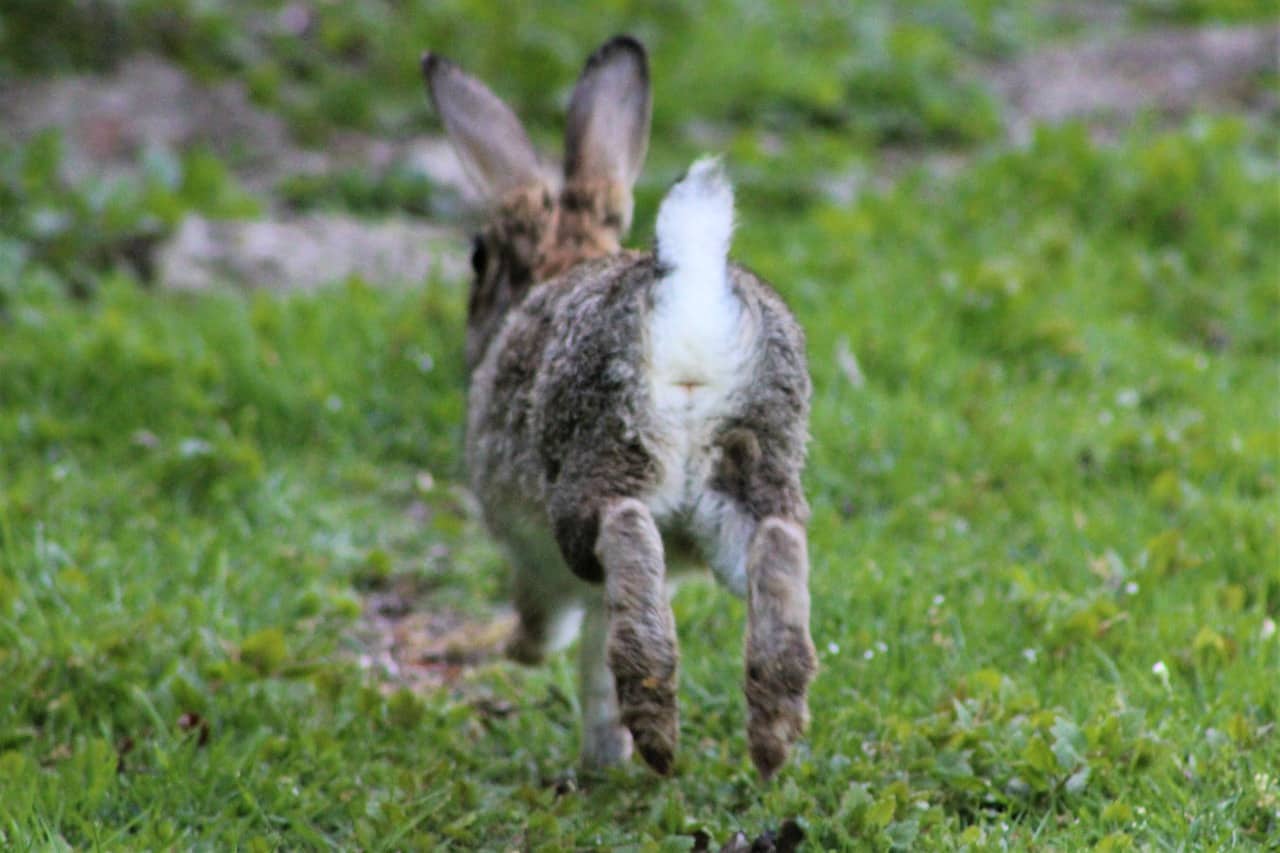
Rabbits thump their feet as a warning signal to alert other rabbits that danger is nearby. When a rabbit sees, hears, or smells something threatening, like a predator, it will slam one or both hind feet against the ground to tell other rabbits to stay hidden. Thumping is one of the most recognizable rabbit behaviors, and understanding why your rabbit does it can help you respond to their needs and keep them feeling safe.
Beyond fear, rabbits also thump when they feel angry, stressed, frustrated, or annoyed. As a breeder, I have seen rabbits thump for all sorts of reasons, from a strange noise outside to being upset about a late feeding. Below, we will cover every common cause of rabbit thumping, what it means at different times of day, and exactly what you should do when your rabbit starts stomping.
What Does Rabbit Thumping Mean?
Thumping is a form of non-vocal communication that rabbits evolved to use in the wild. Wild rabbits live in underground warrens, and when a rabbit above ground spots a predator, it thumps its powerful hind legs against the earth. The vibrations travel through the ground and warn rabbits below that they should stay put. Domestic rabbits have retained this instinct, even though they no longer live in burrows.
The thump itself is loud and sharp. A rabbit lifts one or both hind feet and slams them down hard. Some rabbits thump once and freeze, while others thump repeatedly in quick succession. The intensity and frequency of the thumping often reflects how stressed or frightened the rabbit feels.
Common Reasons Why Rabbits Thump Their Feet
While fear is the primary trigger for thumping, it is not the only one. Here are the most common reasons your rabbit may be stomping.
1. Fear and Perceived Danger
This is the number one reason rabbits thump. If your rabbit hears an unfamiliar sound, spots a shadow, or senses a new animal nearby, their instinct kicks in. Rabbits are prey animals with an extremely sensitive startle response. Even something as simple as a door slamming, a car backfiring, or a new piece of furniture can trigger a fear response.
Rabbits that are genuinely terrified can actually die from fright in extreme cases, so repeated fear-based thumping should not be ignored. Identify and remove the source of fear when possible.
2. Anger and Annoyance
Rabbits have strong personalities, and some are more temperamental than others. A rabbit may thump to express displeasure if you rearrange their cage, introduce a new scent, or interrupt their routine. Think of it as their way of saying "I don't like this, back off."
Common triggers for angry thumping include:
- Being picked up or handled when they do not want to be
- A cage cleaning that moves their belongings around
- Another pet entering their space
- Being returned to their enclosure after free-roam time
3. Stress and Frustration
A stressed or depressed rabbit may thump more frequently than a content one. Common stressors include small enclosures, lack of exercise, loneliness, and sudden changes in environment. If your rabbit thumps regularly without an obvious trigger, evaluate their living conditions.
Rabbits need adequate space to hop, stretch, and explore. A rabbit confined to a cage that is too small will become frustrated over time, and thumping is one way they express that frustration.
4. Pain or Discomfort
While thumping alone does not necessarily indicate pain, a rabbit that thumps without any external trigger may be experiencing physical discomfort. Pain causes stress, and stressed rabbits thump.
Watch for thumping accompanied by these warning signs:
- Teeth grinding (loud, repetitive grinding, not the soft purring kind)
- Hunched posture or reluctance to move
- Loss of appetite or refusal to eat
- Irregular breathing or wheezing
- Hair pulling or excessive grooming
- Lethargy or hiding
If you notice any of these symptoms alongside thumping, bring your rabbit to a veterinarian as soon as possible. Rabbits are stoic animals that hide pain well, so by the time they show obvious signs, the problem may be serious.
5. Territorial Behavior
Unneutered or unspayed rabbits tend to be more territorial and may thump to assert dominance over their space. This is especially common when a new rabbit is introduced to the household or when rabbits are going through the bonding process.
Territorial thumping often comes with other behaviors like chinning (rubbing their chin on objects to mark them), lunging, or circling.
6. Seeking Attention
While rabbits did not evolve to thump for attention, domestic rabbits can learn that thumping gets a response from their owner. If your rabbit thumps and you immediately rush over with a treat or comfort, they may start using thumping as a communication tool to get what they want.
This is not necessarily a bad thing. It shows your rabbit is intelligent and has learned to communicate with you. However, if the attention-seeking thumping becomes excessive, avoid reinforcing it by only responding when you have ruled out fear or pain as the cause.
Why Do Rabbits Thump at Night?
Nighttime thumping is one of the most common complaints from rabbit owners. There are several reasons why your rabbit may thump after dark.
First, rabbits are crepuscular, meaning they are most active at dawn and dusk. During the night, they cycle between rest and activity. A rabbit that is awake and alert at 2 a.m. is more likely to notice sounds that you sleep through, like a cat walking outside, a raccoon rustling in the garbage, or even the hum of your refrigerator cycling on.
Second, rabbits can feel vulnerable in the dark, especially if they are in an unfamiliar environment or are new to your home. While rabbits have excellent low-light vision, sudden changes in light levels or strange shadows can still trigger a fear response.
Third, nighttime thumping can be a sign of frustration. If your rabbit is caged overnight without enough space or enrichment, the thumping may be their way of protesting. Consider providing a larger nighttime enclosure, or allowing supervised free-roaming in a rabbit-proofed room.
How to Reduce Nighttime Thumping
- Place the enclosure in a quiet room away from windows and exterior doors
- Use a white noise machine or leave a radio on low to mask sudden sounds
- Provide a hiding spot like a cardboard box or tunnel where your rabbit can retreat
- Ensure the enclosure is large enough for comfortable movement
- Stick to a consistent routine so your rabbit knows what to expect
- Avoid placing the cage near appliances that cycle on and off
Why Do Rabbits Thump When You Put Them Down?

Most rabbits dislike being picked up. In the wild, the only time a rabbit leaves the ground is when a predator grabs it, so being lifted triggers a deep survival instinct. The downward motion of being put back on the ground can feel like falling, which startles the rabbit and causes an immediate thump.
To minimize thumping when putting your rabbit down:
- Lower yourself to the ground before releasing your rabbit, rather than placing them down from standing height
- Move slowly and smoothly during the entire process
- Support their hind legs at all times so they feel secure
- Place them on a familiar surface rather than an unfamiliar one
- Avoid picking up your rabbit unless absolutely necessary (for vet visits, health checks, or nail trims)
Do Rabbits Thump When They Are Happy?
No, rabbits do not thump when they are happy. Thumping is almost always associated with negative emotions: fear, anger, frustration, or discomfort. A happy rabbit shows joy in other ways.
Signs of a happy rabbit include:
| Behavior | What It Looks Like | What It Means |
|---|---|---|
| Binkying | Jumping and twisting in midair | Pure joy and excitement |
| Zoomies | Running in circles or darting around the room | Excess energy, happiness |
| Flopping | Falling onto their side suddenly | Complete relaxation and trust |
| Soft tooth purring | Gentle, quiet teeth clicking | Contentment (different from loud pain grinding) |
| Nose nudging | Gently pushing you with their nose | Affection or requesting attention |
If you are unsure whether your rabbit is expressing a positive or negative emotion, look at their overall body language. A relaxed body, upright ears moving freely, and a calm demeanor point to happiness. A tense body, flattened ears, and wide eyes point to fear or stress.
Do Rabbits Thump When Excited?
Thumping through excitement is extremely rare. When rabbits are excited, they typically express it through binkying, running, and playful behavior. Some rabbits may give a single light thump before zooming off to play, but this is more of a "get ready, here I go" signal than a fear-based thump.
If your rabbit thumps and then immediately starts running and binkying, there is no cause for concern. But if the thumping is repeated and the rabbit freezes or hides afterward, that points to fear rather than excitement.
Rabbit Thumping vs. Other Foot Behaviors
Not all foot-related behaviors mean the same thing. Here is how to tell them apart:
| Behavior | Description | Meaning |
|---|---|---|
| Thumping | Hard, deliberate slam of hind feet | Fear, anger, warning |
| Kicking | Flicking hind feet backward while hopping away | Displeasure, dismissal ("I'm done with you") |
| Stomping | Repeated light tapping, less forceful than thumping | Mild annoyance or impatience |
| Digging | Scratching at the floor or cage bottom | Nesting instinct, boredom, or wanting to dig on you |
When to Worry About Rabbit Thumping
Occasional thumping is completely normal and not a cause for concern. All rabbits thump from time to time, and some breeds or individual rabbits are more prone to it than others.
You should be concerned if:
- Your rabbit thumps constantly for extended periods without an obvious trigger
- Thumping is accompanied by lethargy, loss of appetite, or changes in droppings
- Your rabbit has stopped eating or drinking alongside frequent thumping
- The thumping started suddenly after an injury, fall, or medical procedure
- Your rabbit shows signs of GI stasis (no droppings, hunched posture, grinding teeth)
In any of these situations, contact your veterinarian promptly. According to the House Rabbit Society, persistent changes in behavior are one of the earliest indicators of illness in rabbits.
How to Calm a Thumping Rabbit
When your rabbit starts thumping, your first step should be identifying the cause. Here is a practical approach:
- Stay calm. Do not rush over or make sudden movements, as this can escalate the fear.
- Check the environment. Look and listen for anything unusual: new sounds, smells, animals outside, or objects that have moved.
- Remove the trigger. If you can identify what is causing the thumping, remove it or move your rabbit away from it.
- Speak softly. Use a calm, low voice to reassure your rabbit. Avoid high-pitched or loud tones.
- Offer a safe space. Make sure your rabbit has a hiding spot to retreat to. A covered area or tunnel gives them a sense of security.
- Do not force interaction. Let your scared rabbit come to you on their own terms. Forcing contact can make the fear worse.
If the thumping is due to anger or annoyance (for example, after a cage cleaning), give your rabbit time and space. They will usually settle down within 15 to 30 minutes once they have re-explored and re-scented their environment.
Frequently Asked Questions
Is rabbit thumping a sign of aggression?
Rabbit thumping can sometimes accompany aggressive behavior, but thumping itself is a warning, not an attack. It signals that the rabbit is upset and wants whatever is bothering them to stop. True aggression involves lunging, biting, or charging, often alongside thumping.
Do baby rabbits thump their feet?
Baby rabbits (kits) can start thumping once they are old enough to have developed their hind leg strength, usually around 3 to 4 weeks of age. However, young rabbits thump less frequently than adults because they are still learning to interpret environmental cues.
Can I train my rabbit to stop thumping?
You cannot fully train a rabbit to stop thumping because it is an instinctive behavior. However, you can reduce thumping by minimizing stressors, providing a secure environment, and avoiding triggers. If thumping is attention-seeking, you can reduce it by not reinforcing it with immediate rewards.
Why does my rabbit thump and then run away?
This is a classic fear response. The rabbit thumps to warn others of perceived danger, then flees to safety. In the wild, this sequence helps the colony survive. In your home, it means your rabbit detected something that frightened them and chose the flight response.
Do all rabbit breeds thump equally?
No, thumping frequency varies by breed and individual personality. Larger breeds like Flemish Giants tend to produce louder thumps, while smaller breeds like Netherland Dwarfs may thump more frequently due to their naturally more nervous temperament. Every rabbit is different, and some are simply more vocal or reactive than others.
Cite this article:
Cite this article:
BunnySync (March 8, 2026) Why Do Rabbits Thump Their Feet? Causes and What to Do. Retrieved from https://bunnysync.com/blog/rabbits-thumping.
"Why Do Rabbits Thump Their Feet? Causes and What to Do." BunnySync - March 8, 2026, https://bunnysync.com/blog/rabbits-thumping