Yes, rabbits can eat asparagus safely, but only in small amounts as an occasional treat. As breeders who have raised dozens of litters over the years, we can tell you that asparagus is not a daily staple and should never replace the fiber-rich hay that makes up the bulk of a rabbit's diet. The real question when it comes to can rabbits eat asparagus is not whether they can, but how much is safe and how often you should offer it. In this guide, we cover portion sizes by age, nutritional benefits, risks of overfeeding, and better vegetable alternatives based on our first-hand experience.
Can Rabbits Safely Eat Asparagus?
Asparagus is non-toxic to rabbits and considered safe by most rabbit-savvy veterinarians. It falls into the category of safe vegetables for rabbits that can be offered alongside a hay-based diet. However, "safe" does not mean "ideal." Asparagus is roughly 93% water and relatively low in the fiber rabbits need for healthy digestion.
In our rabbitry, we treat asparagus the same way we treat any high-water vegetable: it is a supplemental snack, not a dietary foundation. Some of our rabbits enjoy it, while others ignore it entirely. Taste preferences vary between individual rabbits, and that is completely normal.
The key takeaway is straightforward. Asparagus is safe for healthy adult rabbits when fed in moderation, typically one to two times per week in small portions. If your rabbit has never had asparagus before, introduce it gradually and monitor for any digestive changes over 24 to 48 hours.
What Nutritional Benefits Does Asparagus Offer Rabbits?
Asparagus does provide some genuine nutritional value for rabbits. It is not the most nutrient-dense vegetable you can offer, but it contributes vitamins and minerals that support overall health when given as part of a varied diet.
Here is a breakdown of the key nutrients found in 100 grams of raw asparagus:
| Nutrient | Amount per 100g | Benefit for Rabbits |
|---|---|---|
| Water | 93.2g | Hydration support |
| Fiber | 2.1g | Supports gut motility |
| Vitamin A | 756 IU | Eye and skin health |
| Vitamin C | 5.6mg | Antioxidant (rabbits produce their own, but still beneficial) |
| Vitamin K | 41.6mcg | Blood clotting and bone health |
| Folate | 52mcg | Cell growth and reproduction |
| Potassium | 202mg | Muscle and nerve function |
| Phosphorus | 52mg | Bone structure |
| Calcium | 24mg | Bone and dental health (moderate level, which is good) |
| Calories | 20 kcal | Low calorie, reducing obesity risk |
Fructo-Oligosaccharides: A Unique Prebiotic Benefit
One of the most interesting nutritional aspects of asparagus for rabbits is its fructo-oligosaccharide (FOS) content. According to Varga and Harcourt-Brown's Textbook of Rabbit Medicine, plants like asparagus contain fructo-oligosaccharides that function as prebiotics. These compounds encourage the growth of beneficial bacteria in the rabbit's cecum, which is critical for proper fermentation and nutrient absorption.
Research cited in the same text found that fructo-oligosaccharides can reduce morbidity in rabbits exposed to E. coli. They also improve the absorption of minerals like magnesium, calcium, and iron. This prebiotic effect is significant enough that many commercial rabbit pellet manufacturers now include FOS in their formulations.
That said, the FOS content in a small piece of asparagus is modest. You should not overfeed asparagus just to get more prebiotics into your rabbit's diet. The risks of overfeeding far outweigh the prebiotic benefit.
How Much Asparagus Should You Feed Your Rabbit?
Portion size depends on your rabbit's age, weight, and overall health. As a general rule, vegetables (all types combined) should make up about 10% of your rabbit's daily food intake, with how much hay your rabbit needs making up the other 80 to 85%. Asparagus should only be a small fraction of that 10% vegetable allowance.
Adult Rabbits (Over 7 Months Old)
Healthy adult rabbits can have a 2-inch piece of asparagus stalk (roughly 15 to 20 grams) once or twice per week. This is enough for your rabbit to enjoy the taste and get a small nutritional boost without disrupting digestion.
We recommend mixing asparagus into a daily salad of 3 to 5 different greens rather than offering it alone. Pairing it with fiber-rich greens like cilantro, romaine lettuce, or parsley helps offset the high water content. For a 6-pound adult rabbit, the total daily vegetable serving should be about 1 to 2 cups of mixed greens.
Young Rabbits (Under 12 Weeks Old)
Do not feed asparagus to rabbits under 12 weeks of age. Young kits need to focus on mother's milk (until weaning), unlimited alfalfa hay, and age-appropriate pellets. Their digestive systems are still developing, and introducing watery vegetables too early can cause serious diarrhea that may be fatal in young rabbits.
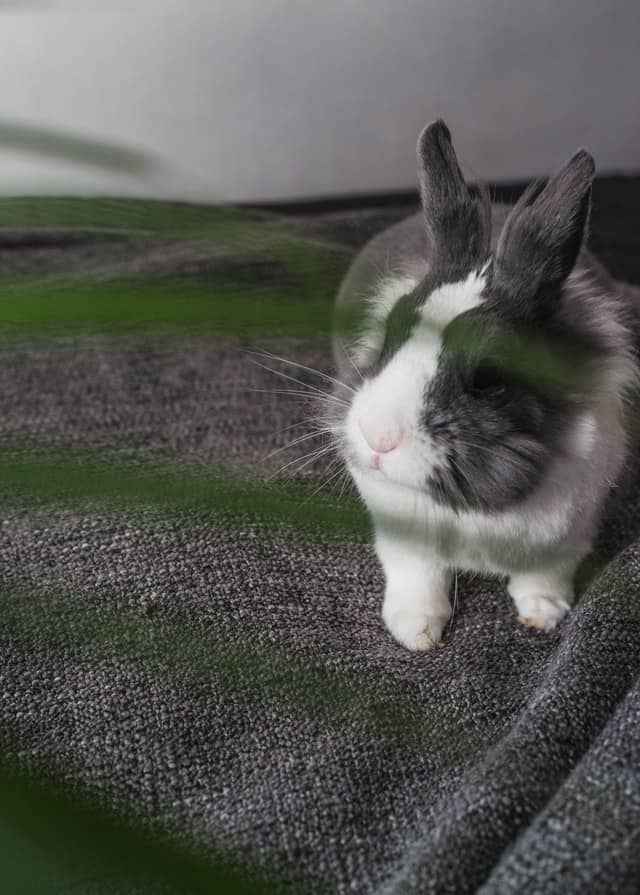
At 12 weeks, you can begin introducing one new vegetable at a time in very small quantities, less than half an ounce (about 15 grams). Wait 48 hours between new foods so you can identify which vegetable caused a problem if digestive upset occurs. Asparagus does not need to be the first vegetable you introduce. Safer starter options include cilantro or romaine lettuce, which are lower in water content.
Pregnant and Lactating Rabbits
Pregnant and lactating does can technically eat asparagus, but it is not the best use of their dietary allowance. During pregnancy and nursing, rabbits need calorie-dense, nutrient-rich foods to support kit development and milk production. Unlimited alfalfa hay and increased pellets in a rabbit's diet are far more important during this stage.
If you do offer asparagus to a pregnant doe, keep it to a very small piece no more than once a week. In our breeding program, we typically skip asparagus entirely during gestation and lactation, focusing instead on alfalfa and high-quality pellets.
Here is a feeding reference chart by age, adapted from the Lafeber Basic Rabbit Care guide:
| Age | Hay | Pellets | Vegetables | Fruits |
|---|---|---|---|---|
| 7 weeks to 7 months | Unlimited alfalfa | Unlimited | None until 12 weeks | None |
| 12 weeks | Unlimited alfalfa | Unlimited | Introduce one at a time, less than 1/2 oz (15g) | None |
| 7 months to 1 year | Transition to grass hay, decrease alfalfa | 1/2 cup per 6 lbs (2.7 kg) body weight | Increase gradually | No more than 1-2 oz (30-60g) per 6 lbs BW |
| Adult (1-5 years) | Unlimited grass hay, oat hay | 1/4 to 1/2 cup per 6 lbs BW | 1-2 cups per 6 lbs BW | No more than 2 tbsp per 6 lbs BW |
| Senior (6+ years) | May reintroduce alfalfa for frail rabbits | Adjust based on weight | Continue adult portions | Continue adult portions |
What Parts of Asparagus Can Rabbits Eat?
Rabbits can eat most parts of the asparagus plant, but some parts are better than others. Here is what you need to know about each part.
Stalks and Stems
The stalk is the most commonly fed part and is perfectly safe for rabbits. The lower portion of the stalk tends to be tougher and more fibrous, which is actually better for rabbits since it provides more chewing resistance and slightly more fiber than the tender upper portion. Cut asparagus into manageable 1 to 2 inch pieces to prevent choking.
We always recommend choosing thinner stalks for rabbits rather than thick, woody ones. Thinner stalks are easier for rabbits to chew and digest. If the bottom of the stalk feels woody or stringy when you snap it, trim that portion off before offering it to your rabbit.
Tips
Asparagus tips (the tender top portion with the small, scale-like leaves) are safe and often the part rabbits prefer. The tips are softer and have a slightly different flavor profile than the stalks. In our experience, rabbits that are picky about asparagus stalks will sometimes accept the tips willingly.
Leaves and Fern
The feathery fern-like foliage that grows on mature asparagus plants is generally considered safe for rabbits, but we recommend sticking to the stalks and tips you would buy at a grocery store. The fern foliage is not commonly available commercially and does not offer significant nutritional advantages over the spears themselves.
Raw vs. Cooked: Which Is Better?
Always feed asparagus raw. Raw vegetables are the natural food form for rabbits, and cooking changes the texture and nutrient profile in ways that are not beneficial. Cooked asparagus becomes mushy, loses some of its vitamin content, and can be harder for a rabbit's digestive system to process properly.
Additionally, cooked asparagus often has added salt, butter, oil, or seasonings, all of which are harmful to rabbits. Even plain steamed asparagus is less ideal than raw because the softer texture means less chewing, which rabbits need for dental wear. Stick to fresh, raw asparagus that has been thoroughly washed.
What Are the Risks of Overfeeding Asparagus to Rabbits?
While asparagus is safe in small amounts, overfeeding can lead to several digestive problems. The high water content and relatively low fiber content are the main culprits. Here are the specific risks to watch for.
Uneaten Cecotrophs
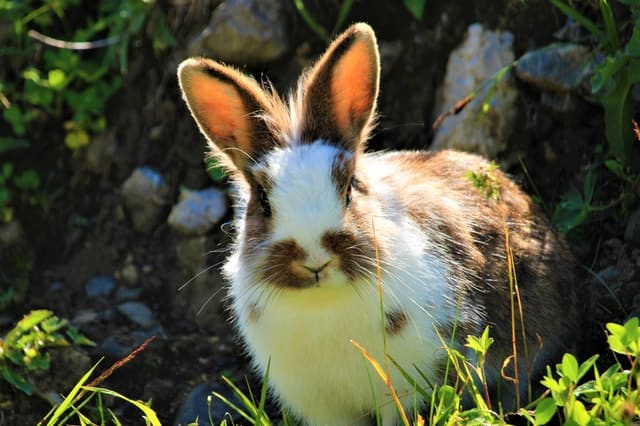
Cecotrophs are the soft, nutrient-rich droppings that rabbits produce and re-ingest as part of their normal digestive process. When a rabbit's diet contains too much water and not enough fiber, cecotrophs become mushy and sticky. The rabbit cannot pick them up cleanly, so they go uneaten and accumulate around the rabbit's hindquarters.
Uneaten cecotrophs are one of the most common signs that a rabbit's diet is off balance. If you notice mushy cecotrophs after feeding asparagus, reduce the amount or stop offering it entirely and ensure your rabbit is eating plenty of hay.
Gastrointestinal Stasis
Gastrointestinal (GI) stasis is a potentially fatal condition where the rabbit's digestive system slows down or stops completely. A diet too heavy in watery vegetables and too light in hay disrupts the gut flora balance that rabbits depend on for healthy digestion.
GI stasis is one of the leading causes of death in pet rabbits. Signs include loss of appetite, reduced or absent droppings, a bloated abdomen, and lethargy. If you suspect GI stasis, this is a veterinary emergency. Do not wait to see if it resolves on its own.
Diarrhea
True diarrhea (watery stool) in rabbits is a serious medical condition that requires immediate veterinary attention. Overfeeding high-water vegetables like asparagus can contribute to loose stools, especially in rabbits that are not eating enough hay. In young rabbits, diarrhea can be fatal within hours due to rapid dehydration.
There is an important distinction between soft cecotrophs and true diarrhea. Soft cecotrophs are annoying but not immediately dangerous. True diarrhea, where all droppings are liquid, is an emergency.
Strong-Smelling Urine
One side effect that surprises many rabbit owners is that asparagus can cause strong-smelling urine, just as it does in humans. This is caused by asparagusic acid, which breaks down into sulfur-containing compounds during digestion. The smell is harmless but can be unpleasant, especially in indoor rabbits.
If the smell bothers you or if you keep rabbits indoors, simply limit asparagus to once a week or less. The odor typically clears within a day after the rabbit stops eating asparagus.
When Should You Avoid Feeding Asparagus to Your Rabbit?
There are several situations where you should skip asparagus entirely, regardless of how much your rabbit enjoys it:
- Rabbits under 12 weeks old: Their digestive systems are not mature enough for vegetables.
- Rabbits with active digestive issues: If your rabbit has soft stools, diarrhea, or signs of GI stasis, feed only hay and water until the issue resolves.
- Rabbits recovering from illness or surgery: Stick to hay and vet-recommended foods during recovery.
- Rabbits on antibiotics: Antibiotics can disrupt gut flora, and adding watery vegetables increases the risk of digestive upset.
- Overweight rabbits: While asparagus is low calorie, overweight rabbits should focus on unlimited hay and have their vegetable portions carefully controlled.
- Rabbits with kidney issues: Asparagus contains oxalates and certain minerals that may complicate kidney conditions. Consult your veterinarian first.
As a rule in our rabbitry, if a rabbit's droppings look abnormal for any reason, all vegetables come out of the diet immediately and we go back to hay only until things normalize.
How to Safely Introduce Asparagus to Your Rabbit
If your rabbit has never eaten asparagus before, follow these steps to introduce it safely:
- Confirm your rabbit is old enough. Only offer asparagus to rabbits 12 weeks or older that are already eating other vegetables without problems.
- Choose fresh, organic asparagus when possible. If organic is not available, wash conventional asparagus thoroughly under running water to remove pesticide residue.
- Cut a small piece. Start with a 1-inch piece of stalk, roughly 5 to 10 grams. This is a test portion, not a full serving.
- Offer it alongside hay. Never give asparagus on an empty stomach or as the only food option. Your rabbit should always have unlimited hay available.
- Watch and wait 24 to 48 hours. Monitor your rabbit's droppings closely. Look for any changes in size, shape, consistency, or frequency.
- Increase gradually if tolerated. If droppings remain normal, you can increase to a 2-inch piece in the next offering, up to twice per week.
- Introduce only one new food at a time. Do not start asparagus on the same day you try another new vegetable. You need to isolate the variable to identify which food causes a problem if one occurs.
If your rabbit shows any digestive upset after eating asparagus, remove it from the diet and do not offer it again for at least two weeks. Some rabbits simply do not tolerate asparagus well, and there are plenty of other vegetables to choose from.
Better Vegetable Alternatives to Asparagus
While asparagus is safe, it is far from the best vegetable option for rabbits. Several alternatives offer higher fiber, lower water content, or a better overall nutritional profile. Here is how common rabbit-safe vegetables compare:
| Vegetable | Water Content | Fiber (per 100g) | Feeding Frequency | Notes |
|---|---|---|---|---|
| Asparagus | 93% | 2.1g | 1-2x per week | Moderate choice, high water |
| Bell peppers | 92% | 1.7g | Daily (small amounts) | High in Vitamin C, most rabbits love them |
| Broccoli (leaves and florets) | 89% | 2.6g | 2-3x per week | Higher fiber, but can cause gas in some rabbits |
| Celery | 95% | 1.6g | 2-3x per week | Cut into small pieces to avoid string issues |
| Kale | 84% | 3.6g | 2-3x per week | Nutrient-dense, higher in calcium and fiber |
| Romaine Lettuce | 95% | 1.2g | Daily | Safe daily staple, easy on digestion |
| Cilantro | 92% | 2.8g | Daily | Excellent daily green, most rabbits enjoy it |
| Spinach | 91% | 2.2g | 1-2x per week | High in oxalates, rotate with other greens |
The best approach is to rotate 3 to 5 different vegetables daily, providing variety and a broad nutrient profile. Think of asparagus as one option in a rotation, not a regular feature. Leafy greens like cilantro, parsley, and romaine lettuce make the best daily staples because they are well tolerated by most rabbits and easy on the digestive system.
Frequently Asked Questions
Can rabbits eat asparagus stems?
Yes, asparagus stems are safe for rabbits and are actually the most commonly fed part. Cut them into 1 to 2 inch pieces for easier eating. The lower, firmer portion of the stem provides more fiber and chewing resistance than the tender upper portion, making it slightly more beneficial for dental wear and digestion.
Can rabbits eat asparagus every day?
No, feeding asparagus daily is not recommended. Asparagus is approximately 93% water and relatively low in fiber, so daily feeding can lead to soft stools and uneaten cecotrophs. Limit asparagus to one or two small servings per week as part of a varied vegetable rotation alongside unlimited hay.
Do wild rabbits eat asparagus?
Wild rabbits will eat asparagus if they encounter it growing in gardens or along fences. Asparagus plants are not toxic to wild rabbits, and gardeners in areas with rabbit populations often need to protect their asparagus beds with fencing. However, wild rabbits primarily eat grasses, weeds, and leafy plants rather than seeking out asparagus specifically.
Is cooked asparagus safe for rabbits?
You should always feed asparagus raw, never cooked. Cooking breaks down the fiber structure, removes beneficial nutrients, and changes the texture to something unnatural for a rabbit's digestive system. Cooked asparagus may also contain salt, butter, or seasonings that are harmful to rabbits. Raw is always the correct choice.
Can baby rabbits eat asparagus?
Baby rabbits under 12 weeks old should not eat asparagus or any other vegetable. Their digestive systems are still developing and rely on mother's milk and alfalfa hay. After 12 weeks, you can begin introducing vegetables one at a time in very small amounts, but asparagus does not need to be among the first vegetables you try.
Cite this article:
BunnySync (February 25, 2026) Can Rabbits Eat Asparagus? Safe Feeding Guide for 2026. Retrieved from https://bunnysync.com/blog/can-rabbits-eat-asparagus.
"Can Rabbits Eat Asparagus? Safe Feeding Guide for 2026." BunnySync - February 25, 2026, https://bunnysync.com/blog/can-rabbits-eat-asparagus
Sources
- Varga, Molly, and Frances Harcourt-Brown. Textbook of Rabbit Medicine: Revised and Edited. Elsevier, 2014.
- Blas, Carlos de., and Julian Wiseman. The Nutrition of the Rabbit. CAB International, 1998.
- Buseth, Marit Emilie., and Richard A. Saunders. Rabbit Behaviour, Health, and Care. CABI, 2014.
- Cheeke, Peter R. Rabbit Feeding and Nutrition. Academic Press, 1987.
- Lebas, F. The Rabbit: Husbandry, Health, and Production. Food and Agriculture Organization of the United Nations, 1997.
- Meredith, Anna, et al. BSAVA Manual of Rabbit Medicine. British Small Animal Veterinary Association, 2014.
- Basic Rabbit Care - Lafeber Veterinary
- Gastrointestinal Stasis in Rabbits - VCA Hospitals