The best vegetables to feed your rabbit are dark, leafy greens like romaine lettuce, bok choy, cilantro, parsley, and carrot tops. These should make up about 10 to 15 percent of your rabbit's daily diet, with unlimited hay accounting for the remaining 80 percent. As breeders, we have found that rotating between 3 to 6 different vegetables each week keeps our rabbits healthy and prevents digestive problems. Not all vegetables are safe, though, and some popular options like iceberg lettuce and potatoes should never go near your rabbit's food bowl.
Below, we break down every vegetable category so you know exactly what to feed, what to limit, and what to avoid completely.
What Are the Best Vegetables for Rabbits?
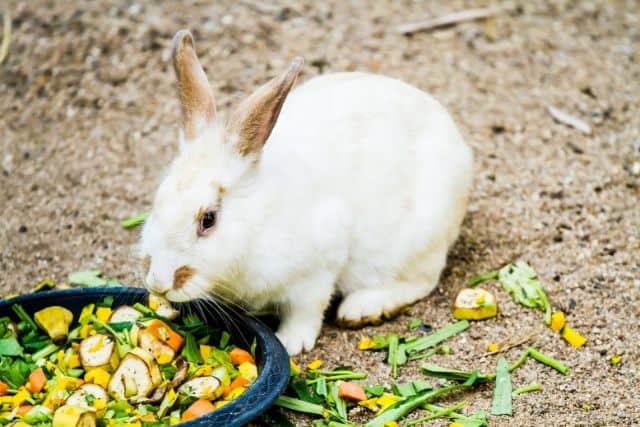
The best vegetables for rabbits are the ones that closely mimic what wild rabbits graze on: low-calorie, high-fiber leafy greens. According to the House Rabbit Society, the ideal rabbit diet should replicate a wild rabbit's intake as closely as possible. That means prioritizing greens over starchy root vegetables.
Here is a list of the safest and most nutritious vegetables you can feed daily:
Leafy Greens (Feed Daily)
Leafy greens should be the foundation of your rabbit's vegetable intake. Aim for 1 packed cup of greens per 2 pounds of body weight per day. Rotate between at least 3 different types each week to ensure a balanced nutrient profile.
- Romaine lettuce: High in fiber, low in oxalates. One of the best daily greens.
- Bok choy: Excellent source of vitamins A and C. Most rabbits love the crunchy stems.
- Cilantro: A favorite among rabbits. Rich in antioxidants and safe for daily feeding.
- Parsley: Nutritious and aromatic. Feed in moderation due to higher calcium content.
- Basil: Safe and beneficial. Many breeders use it to encourage picky eaters.
- Carrot tops: The leafy green tops are actually healthier for rabbits than the carrot root itself.
- Endive and escarole: Low in oxalates, high in fiber. Great rotation greens.
- Wheatgrass: Easy to grow at home and packed with nutrients.
- Watercress: Nutrient-dense with a peppery flavor most rabbits enjoy.
- Dandelion greens: A natural foraging staple. Only use pesticide-free sources.
- Mint: Refreshing and safe. Peppermint and spearmint varieties are both fine.
- Fennel: Both the fronds and the bulb are safe. The fronds are the better choice for daily feeding.
- Radicchio: A bitter green that provides variety and stimulates appetite.
Herbs That Double as Vegetables
Fresh herbs are some of the most nutrient-dense greens you can offer. They also tend to be lower in water content, which means less risk of loose stools compared to watery vegetables like cucumber.
- Oregano: Contains natural antibacterial properties.
- Dill: Gentle on digestion and widely enjoyed by rabbits.
- Rosemary: Safe in small amounts, though some rabbits dislike the strong scent.
- Thyme: Another aromatic herb that is safe for regular rotation.
- Sage: Offer sparingly due to its strong oils, but it is not harmful.
How Much Vegetables Should a Rabbit Eat Per Day?
While vegetables are an important part of a rabbit's diet, they should never replace hay. Hay provides the long-strand fiber that keeps a rabbit's digestive system moving and wears down their continuously growing teeth. Vegetables are a supplement, not a staple.
The general guideline from veterinary nutritionists is 1 packed cup of mixed vegetables per 2 pounds of body weight per day. Here is a more detailed breakdown by breed size:
| Breed Size | Body Weight | Vegetables Per Day | Example Breeds |
|---|---|---|---|
| Small | 1 to 3.5 lbs | 0.5 to 1.5 cups (60 to 130g) | Netherland Dwarf, Holland Lop, Mini Rex |
| Medium | 6 to 10 lbs | 3 to 5 cups (380 to 640g) | Dutch, Rex, English Angora |
| Large | 9 to 12 lbs | 4.5 to 6 cups (380 to 760g) | New Zealand, Californian, Flemish Giant |
Source: Patry, Karen, et al. The Rabbit-Raising Problem Solver. Storey Publishing, 2014.
We recommend splitting this daily allowance across two feeding sessions, morning and evening, to keep the gut active throughout the day.
The 80/10/5/5 Diet Rule
A balanced rabbit diet breaks down like this:
- 80% hay: Timothy, orchard grass, or meadow hay (unlimited supply)
- 10% fresh vegetables: Primarily leafy greens, rotated daily
- 5% quality pellets: Plain timothy-based pellets without added treats
- 5% treats: Small amounts of fruit or approved herbs
This ratio ensures your rabbit gets adequate fiber for gut motility while still benefiting from the vitamins and minerals in fresh produce.
How to Introduce New Vegetables to Your Rabbit
Introducing vegetables too quickly is one of the most common mistakes new rabbit owners make. A sudden change in diet can disrupt the delicate bacterial balance in a rabbit's cecum, leading to gas, diarrhea, or soft cecotropes stuck to their fur.
Follow this step-by-step process when introducing any new vegetable:
- Start with one new vegetable at a time. Offer a small piece (about the size of your thumb) alongside vegetables your rabbit already tolerates.
- Wait 24 to 48 hours. Monitor their droppings. Normal droppings should be round, firm, and uniform in size.
- Watch for warning signs. Soft stools, reduced appetite, or a bloated belly mean that particular vegetable may not agree with your rabbit.
- Gradually increase the amount. If everything looks normal after 3 days, slowly increase to the regular portion size over the next week.
- Add the next vegetable. Only introduce one new item at a time so you can pinpoint the cause if problems arise.
This process is especially important for young rabbits. Kits under 12 weeks should not eat vegetables at all. Between 12 weeks and 6 months, introduce greens very slowly, one type per week.
What Vegetables Should Rabbits Only Eat Sparingly?
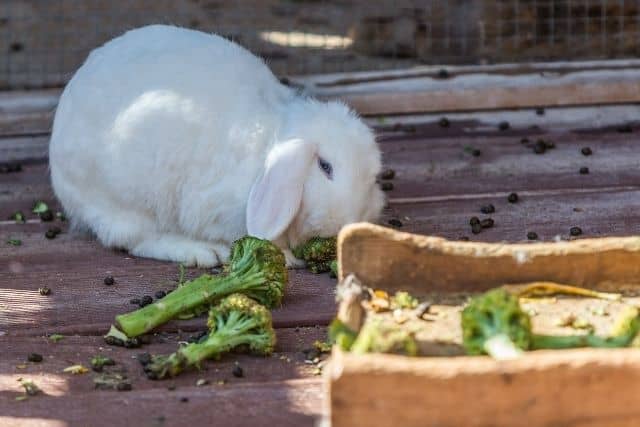
Some vegetables are safe for rabbits but should only be offered 1 to 2 times per week in small amounts. These tend to be higher in sugar, starch, oxalic acid, or calcium, all of which can cause problems when consumed in excess.
According to the House Rabbit Society, foods high in starch and sugar create changes in the pH of the cecum, which can throw off the entire digestive system.
High-Oxalate Vegetables (Rotate Weekly)
Oxalic acid binds with calcium and can contribute to bladder sludge or kidney stones if fed in large amounts over time. These greens are still nutritious, but you should rotate them rather than feeding them every day:
- Spinach: Very high in oxalates. Limit to 1 to 2 times per week.
- Beet greens: Nutritious but also high in oxalates. Same rule as spinach.
- Swiss chard: Another high-oxalate green. Use only as an occasional rotation.
- Mustard greens: Contain goitrogens in addition to oxalates. Feed sparingly.
Higher-Sugar and Starchy Vegetables (1 to 2 Times Per Week)
- Carrots: The root is high in sugar (about 5g per medium carrot). Treat carrots as an occasional snack, not a daily vegetable. The green tops, however, are excellent for daily feeding.
- Broccoli: Safe in small amounts, but known to cause gas and bloating in some rabbits. Introduce very slowly and watch for discomfort.
- Kale: Nutritious but contains both oxalates and goitrogens. Best given 1 to 2 times per week.
- Cabbage: Can cause gas and bloating. Some rabbits tolerate it fine, but start with tiny amounts.
- Bell peppers: The flesh is safe and low in sugar, but only offer 1 to 2 thin slices at a time. Remove all seeds first.
- Cucumbers: Very high water content with minimal nutritional value. Fine as an occasional hydrating treat in hot weather, but not a daily vegetable.
- Zucchini: Low in calories but also low in fiber. Okay occasionally, not daily.
- Asparagus: Safe in small amounts. Higher water content makes it better as an occasional choice.
- Green beans: Low in sugar but can cause gas. Introduce carefully and feed sparingly.
- Clover: Safe for most rabbits, but high in protein and calcium. Limit for adult rabbits.
What Vegetables Are Toxic or Dangerous for Rabbits?
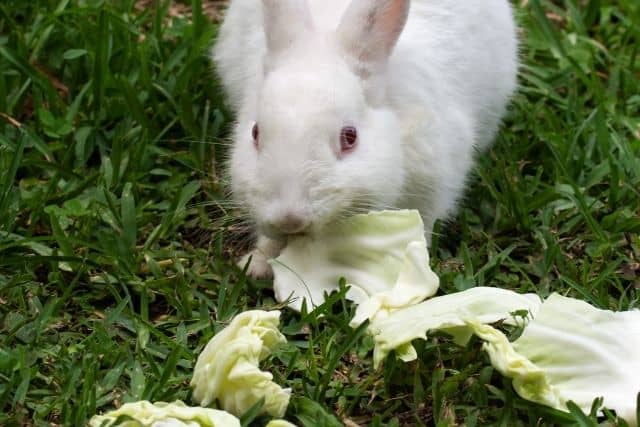
Some vegetables contain compounds that are outright toxic to rabbits or cause severe digestive distress even in small amounts. These should never be part of your rabbit's diet under any circumstances.
| Vegetable | Why It Is Dangerous | Severity |
|---|---|---|
| Potatoes | High in starch, contain solanine (especially green parts) | Toxic |
| Rhubarb | Contains high levels of oxalic acid that can cause kidney failure | Highly toxic |
| Onions | Contain thiosulfate, which destroys red blood cells | Toxic |
| Garlic | Same toxicity mechanism as onions, even more concentrated | Toxic |
| Leeks and chives | Part of the allium family, toxic to rabbits | Toxic |
| Iceberg lettuce | Contains lactucarium, which is sedative and harmful. Almost zero nutritional value. | Harmful |
| Corn | Indigestible hulls can cause fatal GI blockages | Dangerous |
| Peas and beans (dried) | High in starch and sugars, cause severe gas and GI stasis | Dangerous |
| Raw kidney beans | Contain lectins that are toxic to rabbits | Toxic |
| Tomato leaves and stems | Contain tomatine and solanine (nightshade family). Ripe tomato flesh is safe in tiny amounts. | Toxic (plant parts) |
If your rabbit accidentally eats any of these vegetables, monitor them closely for signs of distress: lethargy, refusal to eat, hunched posture, or not pooping for more than 12 hours. Contact your veterinarian immediately if symptoms appear.
Sample Weekly Vegetable Rotation Schedule
Planning a weekly rotation prevents nutrient imbalances and keeps your rabbit interested in their food. Here is a sample 7-day schedule for a medium-sized rabbit (about 6 to 8 pounds):
| Day | Morning (1.5 cups) | Evening (1.5 cups) |
|---|---|---|
| Monday | Romaine lettuce, cilantro | Bok choy, dill |
| Tuesday | Endive, parsley | Watercress, basil |
| Wednesday | Dandelion greens, mint | Romaine lettuce, fennel fronds |
| Thursday | Bok choy, cilantro | Escarole, carrot tops |
| Friday | Romaine lettuce, basil | Radicchio, dill |
| Saturday | Endive, parsley, small piece of carrot | Watercress, cilantro |
| Sunday | Dandelion greens, fennel fronds | Bok choy, mint, small broccoli floret |
Notice how the "limit" vegetables (carrot root and broccoli) only appear once each, while daily-safe greens like romaine, cilantro, and bok choy rotate throughout the week.
What About Organic vs. Conventional Vegetables?
Rabbits are more sensitive to pesticide residues than humans due to their smaller body size and faster metabolism. If you can source organic produce, that is the better option, especially for leafy greens where the entire surface is consumed.
If organic is not available or not in your budget, follow these steps:
- Wash all vegetables thoroughly under running water for at least 30 seconds.
- Soak leafy greens in a bowl of clean water for 5 minutes, then rinse again.
- Remove outer leaves from lettuce and cabbage, as they carry the most residue.
- Avoid the "Dirty Dozen" in conventional form when possible. Spinach, kale, and celery consistently rank high for pesticide contamination.
Foraging wild greens like dandelions and clover is a great free alternative. Just make sure they come from areas that have not been treated with herbicides, pesticides, or animal waste.
Signs Your Rabbit Is Eating Too Many or Too Few Vegetables
Too Many Vegetables
- Soft, mushy, or clumpy droppings instead of firm, round pellets
- Uneaten cecotropes (the soft, grape-like clusters rabbits normally re-ingest)
- Bloating or a visibly distended belly
- Decreased hay consumption
- Weight gain from starchy or sugary vegetables
Too Few Vegetables
- Dull, rough coat lacking shine
- Reduced energy and activity levels
- Signs of dehydration (skin tenting, dry nose, concentrated urine)
- Potential vitamin A or C deficiency over time
If you notice any of these signs, adjust the vegetable portion gradually. Never make sudden increases or decreases, as the gut bacteria need time to adapt.
Frequently Asked Questions
Can baby rabbits eat vegetables?
No, rabbits under 12 weeks old should not eat vegetables. Their digestive systems are still developing and cannot handle fresh produce. After 12 weeks, introduce one vegetable at a time in very small amounts, waiting 5 to 7 days between new introductions.
What is the safest everyday vegetable for rabbits?
Romaine lettuce is widely considered the safest daily vegetable for rabbits. It is low in oxalates, low in calcium, high in fiber, and well-tolerated by virtually all breeds. Bok choy and cilantro are also excellent daily choices.
Can rabbits eat frozen or canned vegetables?
Rabbits should only eat fresh, raw vegetables. Frozen vegetables lose their texture and can cause digestive upset when thawed. Canned vegetables contain added sodium, preservatives, and sometimes sugar, all of which are harmful to rabbits.
How do I know if a vegetable is making my rabbit sick?
Watch for changes in droppings within 24 to 48 hours of introducing a new vegetable. Soft stool, diarrhea, reduced appetite, or a bloated belly are all signs of intolerance. Stop feeding that vegetable immediately and return to greens your rabbit has tolerated before.
Why does my rabbit refuse to eat certain vegetables?
Rabbits have individual taste preferences, just like humans. Some rabbits dislike bitter greens like radicchio, while others love them. Try offering new vegetables alongside favorites, and do not force any single item. A rabbit that refuses a particular green may accept it later when offered differently.
Cite this article:
Cite this article:
BunnySync (February 23, 2026) What Vegetables Can Rabbits Eat? Complete Safe Feeding List. Retrieved from https://bunnysync.com/blog/what-vegetables-can-i-feed-my-rabbit.
"What Vegetables Can Rabbits Eat? Complete Safe Feeding List." BunnySync - February 23, 2026, https://bunnysync.com/blog/what-vegetables-can-i-feed-my-rabbit
Sources and further reading
- Suggested Vegetables and Fruits for a Rabbit Diet. House Rabbit Society, https://rabbit.org/suggested-vegetables-and-fruits-for-a-rabbit-diet/.
- Feeding Your Rabbits. PDSA, https://www.pdsa.org.uk/pet-help-and-advice/looking-after-your-pet/rabbits/feeding-your-rabbits.
- Rabbit Problems. VCA Animal Hospitals, https://vcahospitals.com/know-your-pet/rabbits-problems.
- Patry, Karen, et al. The Rabbit-Raising Problem Solver. Storey Publishing, 2014.
- Understanding the Basics of Rabbit Care. Utah State University Extension, digitalcommons.usu.edu.