A rabbit cage should be at least four times the size of your rabbit when fully stretched out. For most medium-sized breeds, this means a minimum of 24" x 36" of floor space, though bigger is always better. If your rabbit spends significant time in its cage, aim for the largest enclosure your space allows. The minimum cage size depends on your rabbit's breed and adult weight, and getting this right is one of the most important decisions you will make as a rabbit owner.
Below you will find a complete guide to rabbit cage sizing, including recommendations by breed size, tips for multi-rabbit households, and advice on cage types, setup, and placement.
Minimum Rabbit Cage Sizes by Breed Size
The general rule in rabbit husbandry is simple: the cage should allow your rabbit to take at least three full hops in any direction and stand upright on its hind legs without its ears touching the ceiling. Here is a detailed breakdown based on breed size.
| Breed Size | Adult Weight | Minimum Floor Space | Minimum Height | Example Breeds |
|---|---|---|---|---|
| Dwarf | Under 3 lbs | 18" x 24" (3 sq ft) | 14" | Netherland Dwarf, Polish, Britannia Petite |
| Small | 3 to 5 lbs | 24" x 24" (4 sq ft) | 16" | Holland Lop, Mini Rex, Dutch |
| Medium | 6 to 10 lbs | 24" x 36" (6 sq ft) | 18" | New Zealand, Rex, English Angora |
| Large | 10 to 14 lbs | 30" x 36" (7.5 sq ft) | 24" | Californian, Satin, Silver Fox |
| Giant | Over 14 lbs | 36" x 48" (12 sq ft) | 24"+ | Flemish Giant, Continental Giant, Checkered Giant |
These are absolute minimums. Many experienced breeders and the House Rabbit Society recommend even larger enclosures, especially for rabbits that do not get daily exercise time outside their cage.
Why Cage Height Matters
One dimension that new rabbit owners often overlook is height. Your rabbit should be able to stand fully upright on its hind legs without its ears touching the top of the cage. This is important for stretching, which keeps the spine healthy and reduces the risk of spinal issues over time. For most medium breeds, a cage height of at least 18 inches is necessary. For large and giant breeds, you will need 24 inches or more.
Floor Space vs. Multi-Level Space
Floor space is more important than total multi-level space. Rabbits need room to hop and run in a straight line, and that only happens on a single level. Adding a second level is a nice bonus for enrichment, but it should never replace adequate ground floor area. Think of it this way: the base of the cage determines whether your rabbit can exercise properly, while upper levels provide extra space for resting and exploring.
How Big Should a Cage Be for Two Rabbits?
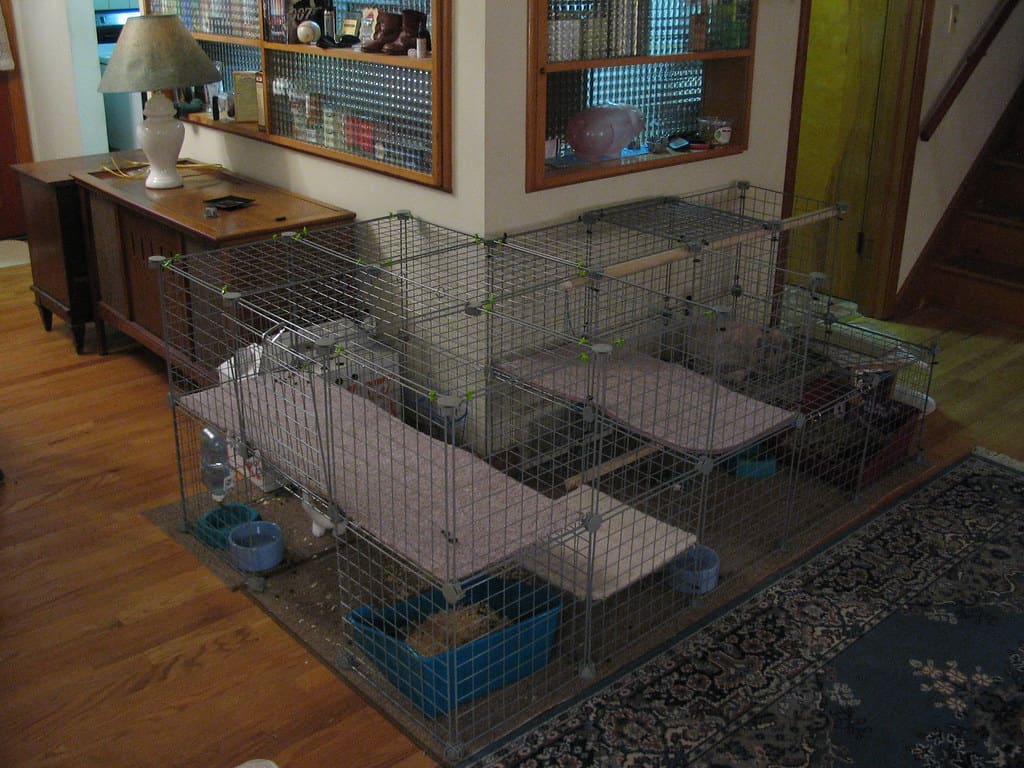
If you keep two rabbits together, you need at least 1.5 times the recommended single-rabbit cage size. For two medium-sized rabbits (6 to 10 lbs each), that means a minimum of 36" x 36" of floor space, though a 30" x 48" enclosure gives them a better layout for running.
Bonded pairs typically do well sharing space because they snuggle together and groom each other. However, even bonded rabbits need enough room to move apart when they want some alone time. If the cage is too small, you may notice mounting, chasing, or fur pulling, all of which signal that the space is too tight.
For commercial or meat rabbit operations, breeders commonly use stacking wire cages to save space. Each rabbit typically gets its own 30" x 36" cage in these setups. But for pet rabbits living indoors, a single larger enclosure is always the better option for welfare.
Is It Okay for Rabbits to Be in Small Cages?
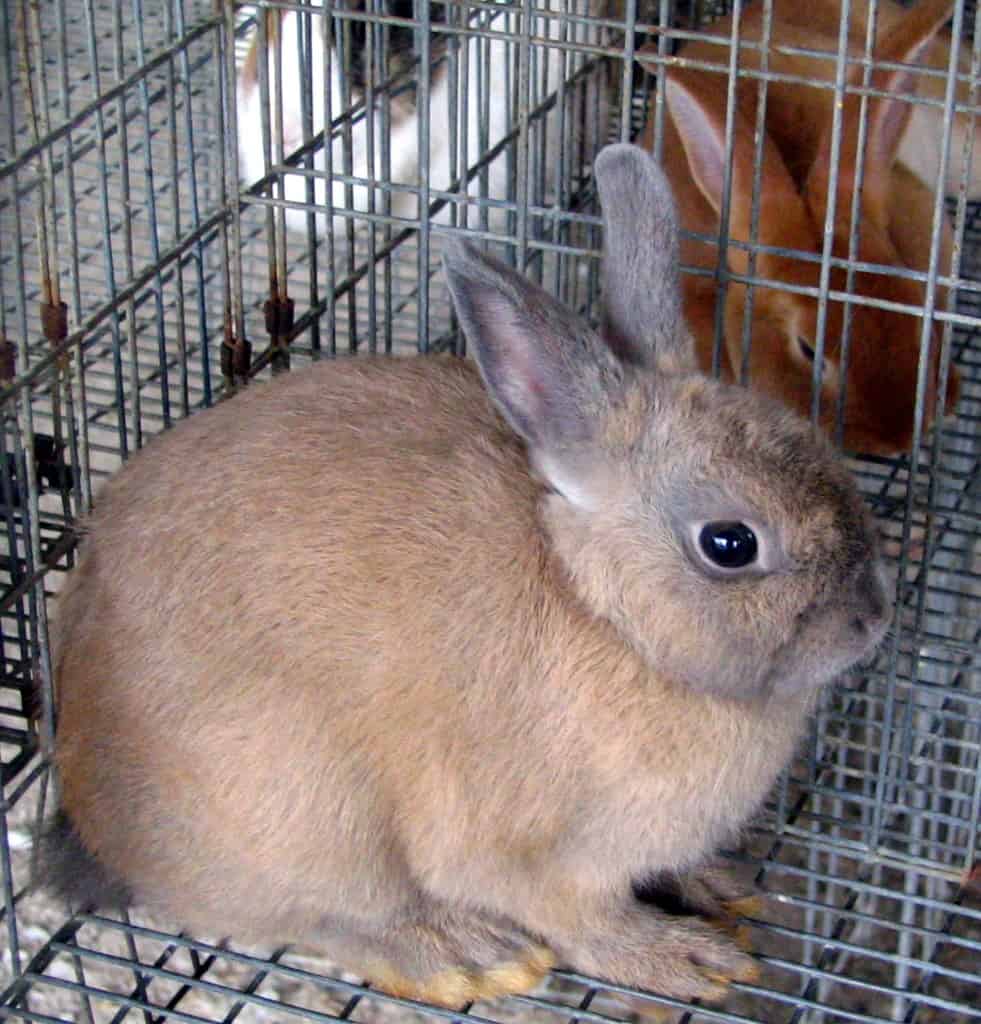
No, keeping rabbits in small cages is not acceptable for their physical or mental health. Rabbits are naturally active animals that need space to hop, stretch, and explore. When confined to a cage that is too small, they develop a range of problems.
Physical Health Risks
Rabbits kept in cramped enclosures are at higher risk for obesity because they simply cannot move enough to burn calories. Over time, a sedentary rabbit can also develop muscle atrophy, weakened bones, and joint stiffness. Young rabbits that grow up in small cages may develop skeletal deformities because their bones form while their movement is restricted.
Rabbits can develop serious health problems from lack of exercise, including GI stasis, which can be fatal if untreated. If your rabbit seems lethargic or has stopped eating, insufficient movement due to a small cage may be a contributing factor.
Behavioral Problems
A rabbit in a too-small cage often becomes aggressive, territorial, or withdrawn. Common signs of stress in rabbits include excessive bar chewing, circling, thumping, and refusing to be handled. Some rabbits stop grooming themselves entirely, which leads to matted fur and skin infections.
If you currently have a small cage, the best immediate step is to give your rabbit several hours of supervised free-roaming time each day while you save up for a larger enclosure.
Do Rabbits Like Multi-Level Cages?
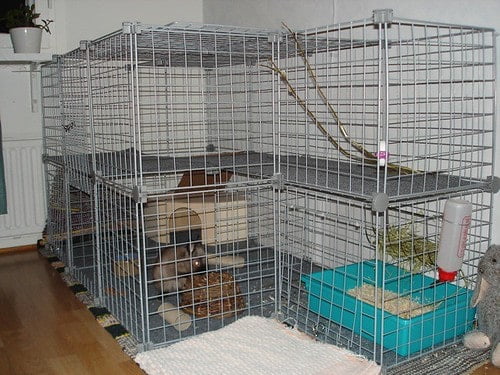
Yes, most rabbits enjoy multi-level cages because they provide extra space for exploring and different vantage points to observe their surroundings. In the wild, rabbits use elevated ground to watch for predators, so having a raised platform satisfies that natural instinct.
When choosing a multi-level cage, pay attention to the ramp design. Ramps should be wide enough for your rabbit to walk up comfortably (at least 6 inches wide) and have a textured surface or carpet covering so your rabbit does not slip. Wire ramps without any covering can injure a rabbit's feet over time.
The height between levels should not exceed about 10 to 12 inches for small and medium breeds. If your rabbit falls from the second level, you want to minimize the risk of injury. Most store-bought multi-level cages are designed with safe level spacing, but if you build a custom setup, keep this measurement in mind.
One practical tip: place the food and water on the ground level and use the upper level as a resting or hay area. Rabbits naturally prefer to eat at ground level, and this setup encourages them to move between levels throughout the day.
Are Rabbits Happy Living in Cages?

Rabbits are not happy if they are confined to a cage 24 hours a day, regardless of its size. In the wild, rabbits spend most of their waking hours grazing, exploring territory, and socializing. A cage alone cannot replicate that level of stimulation.
That said, a properly sized cage combined with daily exercise time can work very well. Most veterinary experts recommend a minimum of 3 to 4 hours of supervised free-roaming time outside the cage each day. During this time, your rabbit can stretch its legs, binky (that joyful jumping and twisting motion), and explore its environment.
How to Tell If Your Rabbit Is Content
A happy, well-housed rabbit will display relaxed body language: lying flat with legs stretched out (sometimes called a "bunny flop"), gently grinding its teeth (a sign of contentment, not pain), and coming to greet you when you approach the cage. If your rabbit is constantly trying to chew the bars, digging at the cage floor, or sitting hunched in a corner, those are clear signals that something needs to change, whether that is cage size, enrichment, or exercise time.
Cages with wire flooring deserve special attention. Unlike cats and dogs, rabbits have fur-covered feet with no protective pads. Standing on wire mesh for extended periods can cause sore hocks, a painful condition where the skin on the bottom of the feet becomes raw and infected. Always provide a solid resting area, such as a wooden board or a fleece mat, inside any wire-bottomed cage.
Do Indoor Rabbits Need a Cage?
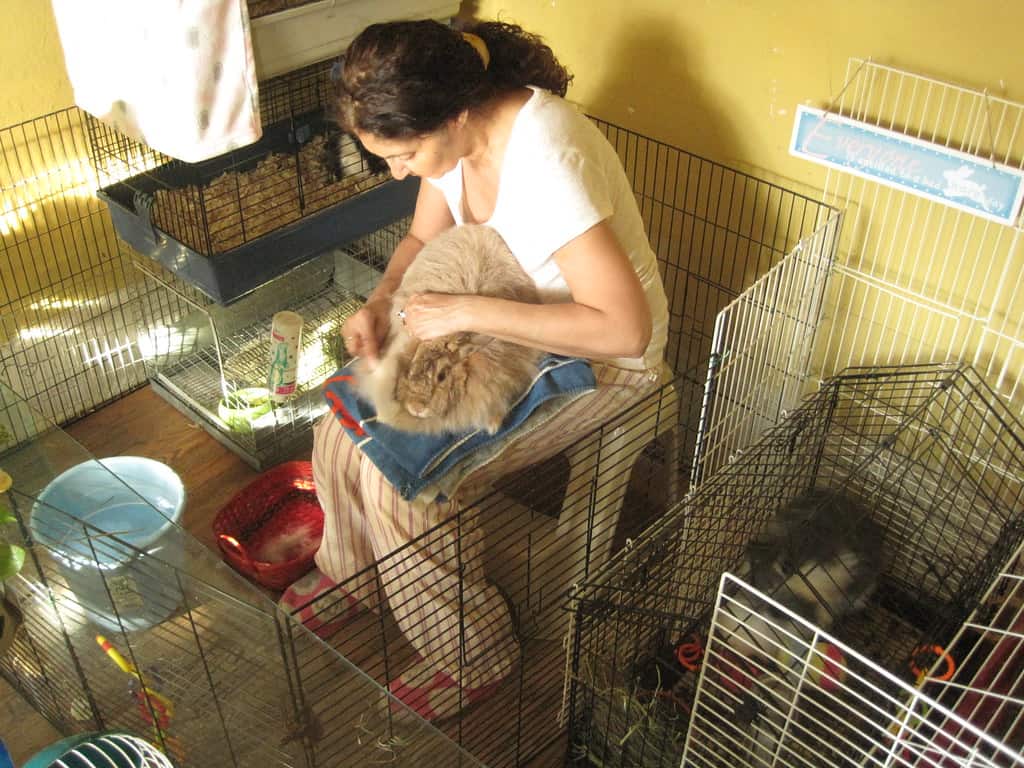
Yes, even free-roaming indoor rabbits benefit from having a cage or enclosure as their home base. Think of it as your rabbit's bedroom. It is the safe, familiar space where they eat, sleep, use their litter box, and retreat when they feel overwhelmed.
A cage is also essential for safety when you are not home. Unsupervised rabbits will chew electrical cords, baseboards, carpet, and furniture. This is dangerous for the rabbit (electrical shock, intestinal blockages from ingesting fibers) and expensive for you. Having a secure cage means you can leave the house without worrying.
Some owners opt for exercise pens (x-pens) instead of traditional cages. These are collapsible metal panels that form a large open-top enclosure. X-pens give rabbits much more floor space than a standard cage and are easy to reconfigure. A 4-foot by 4-foot x-pen provides 16 square feet of space, which is excellent for most breeds.
Whether you choose a cage, x-pen, or dedicated rabbit-proofed room, the key is ensuring your rabbit has enough space to move freely when confined and enough supervised time outside the enclosure each day.
What Type of Cage Is Best for a Rabbit?
Not all cages are created equal. The best cage for your rabbit depends on whether it will live indoors or outdoors, how much time it will spend confined, and your rabbit's size and personality.
Wire Cages
Wire cages with a solid plastic base are the most popular choice for indoor rabbits. They offer excellent ventilation, are easy to clean, and let your rabbit see its surroundings. Look for cages with a removable bottom tray for quick cleaning. If the cage has a wire floor, cover it with a solid mat or board to protect your rabbit's feet.
If your rabbit tends to chew on the cage bars, that is usually a sign it needs more space or more enrichment, not a different cage material. Address the root cause before switching cage types.
Wooden Hutches
Wooden hutches work well for outdoor rabbits and provide natural insulation against temperature changes. The downside is that wood absorbs urine and is harder to sanitize. If you use a wooden hutch, line the floor with a waterproof material and clean it regularly to keep the cage from smelling. For a full setup checklist, see our guide on what a rabbit needs in its hutch.
Exercise Pens
Exercise pens, or x-pens, are an increasingly popular alternative to traditional cages. They offer more floor space per dollar than most cages and can be set up in any shape to fit your room. The main drawback is that they are open on top, so they will not work if you have cats or dogs that might jump in. You can add a mesh top if needed.
Cage Material Comparison
| Feature | Wire Cage | Wooden Hutch | Exercise Pen |
|---|---|---|---|
| Best For | Indoor use | Outdoor use | Indoor use |
| Ventilation | Excellent | Moderate | Excellent |
| Ease of Cleaning | Easy | Moderate | Easy |
| Floor Space | Limited | Varies | Large |
| Cost Range | $40 to $100 | $80 to $300 | $30 to $80 |
| Durability | High | Moderate | High |
What Should You Put Inside a Rabbit's Cage?
Even the perfect-sized cage needs the right setup to keep your rabbit comfortable and healthy. Here is what every rabbit cage should include:
- Hay rack or hay feeder: Unlimited timothy hay should be available at all times. Hay makes up about 80% of a rabbit's diet and keeps their teeth and digestive system healthy.
- Water bottle or bowl: A heavy ceramic bowl is harder to tip over. Water bottles work well in wire cages. Change the water daily.
- Litter box: Rabbits naturally pick one corner for their bathroom. Place the litter box there and fill it with rabbit-safe litter such as paper-based pellets or hay.
- Hiding spot: A wooden house, cardboard box, or tunnel gives your rabbit a place to retreat when feeling anxious or wanting privacy.
- Solid resting mat: If the cage has a wire floor, provide at least one solid surface for resting to prevent sore hocks.
- Toys and enrichment: Chew toys (apple wood sticks, willow balls), digging boxes, and toilet paper rolls stuffed with hay keep your rabbit mentally stimulated.
- Food bowl: A heavy ceramic bowl for daily pellet portions. Place it away from the litter box to encourage movement.
Avoid cedar or pine shavings as bedding, because the aromatic oils can damage your rabbit's respiratory system and liver. Paper-based bedding or fleece liners are the safest options.
Common Cage Sizing Mistakes to Avoid
After years of working with rabbit owners, here are the most frequent cage-sizing mistakes we see:
- Buying a "starter" cage: Many pet stores sell small cages marketed for rabbits that are only suitable for hamsters or guinea pigs. Always buy for your rabbit's adult size, not its current size as a kit.
- Ignoring height: A cage can have plenty of floor space but still be too short. If your rabbit cannot stand on its hind legs comfortably, the cage is too low.
- Counting vertical space as floor space: A tall, narrow multi-level cage is not a substitute for adequate ground floor area. Rabbits need room to run, and they can only do that on a single level.
- Not accounting for accessories: A litter box, food bowl, water bottle, hay rack, and hiding house all take up space. Once you add everything, the usable area shrinks significantly. Factor this in when choosing your cage size.
- Assuming the cage is enough: Even the largest cage cannot replace daily exercise time. Plan for at least 3 to 4 hours of free-roaming time every day, ideally during dawn and dusk when rabbits are most active.
Frequently Asked Questions
Can I use a dog crate as a rabbit cage?
Yes, large dog crates can work well for rabbits, especially wire crates with removable trays. A 36-inch or 42-inch dog crate provides excellent floor space for medium to large rabbit breeds. Just make sure the bar spacing is narrow enough that your rabbit cannot squeeze through or get its head stuck.
How often should I clean my rabbit's cage?
Spot clean the litter box daily and do a full cage cleaning once a week. Remove soiled bedding, wipe down surfaces with a rabbit-safe cleaner (diluted white vinegar works well), and replace all bedding. A clean cage reduces the risk of respiratory infections and keeps odors under control.
Should I cover my rabbit's cage at night?
Covering part of the cage with a light blanket can help your rabbit feel secure and reduce nighttime disturbances from lights or movement. Never cover the entire cage, as this restricts airflow. Read more about whether you should cover your rabbit's cage at night for detailed guidance.
Is a cage or a hutch better for rabbits?
For indoor rabbits, a wire cage with a solid base is usually better because of easy cleaning and good ventilation. For outdoor rabbits, a wooden hutch provides better weather protection. The best option in either situation is the one that gives your rabbit the most floor space within your budget.
Can a rabbit cage be too big?
No, a rabbit cage cannot be too big. More space is always better for your rabbit's physical and mental health. The only potential concern with very large enclosures is litter training, as rabbits may pick multiple bathroom spots. Placing an extra litter box in the enclosure usually solves this quickly.
Cite this article:
Cite this article:
BunnySync (February 23, 2026) What Size Should a Rabbit Cage Be? Complete Sizing Guide. Retrieved from https://bunnysync.com/blog/what-size-should-a-rabbit-cage-be.
"What Size Should a Rabbit Cage Be? Complete Sizing Guide." BunnySync - February 23, 2026, https://bunnysync.com/blog/what-size-should-a-rabbit-cage-be
Sources and further reading
- Buseth, Marit Emilie., and Richard A. Saunders. Rabbit Behaviour, Health, and Care. CABI, 2014.
- Lebas, F. The Rabbit: Husbandry, Health, and Production. Food and Agriculture Organization of the United Nations, 1997.
- Patry, Karen, et al. The Rabbit-Raising Problem Solver: Your Questions Answered about Housing, Feeding, Behavior, Health Care, Breeding, and Kindling. Storey Publishing, 2014.
- House Rabbit Society. Housing Your Rabbit. rabbit.org/faq-housing.