A rabbit needs six essential items in its hutch: a water source (bowl or bottle), a feeding bowl, appropriate bedding, a litter box, a hiding spot, and enrichment toys. These items keep your rabbit hydrated, well-fed, comfortable, clean, secure, and mentally stimulated. Without the right hutch setup, rabbits can develop stress, depression, and serious health problems over time.
As breeders, we have set up hundreds of rabbit hutches over the years, and the difference between a properly equipped hutch and a bare one is dramatic. Rabbits housed in well-furnished hutches are calmer, healthier, and far more social with their owners. The size of your rabbit's cage matters, but what you put inside it matters just as much.
Below is a detailed breakdown of every item your rabbit needs in its hutch, why each one matters, and how to choose the best option for your setup.
What Essential Items Does a Rabbit Need in Its Hutch?
Before diving into the details, here is a quick overview of everything your rabbit's hutch should contain:
| Item | Purpose | Priority |
|---|---|---|
| Water bowl or bottle | Hydration | Essential |
| Feeding bowl | Pellets and vegetables | Essential |
| Hay rack or dispenser | Unlimited hay access | Essential |
| Bedding | Foot protection and comfort | Essential |
| Litter box | Hygiene and easy cleaning | Essential |
| Hiding spot | Security and sleep | Essential |
| Chew toys | Mental stimulation and dental health | Essential |
| Tunnel or platform | Exercise and enrichment | Recommended |
Your rabbit should still have enough room to hop around, stretch out fully, and stand on its hind legs after all these items are placed. If the hutch feels cramped, you need a bigger enclosure rather than fewer supplies.
How Do You Choose the Right Water Source for Your Rabbit?
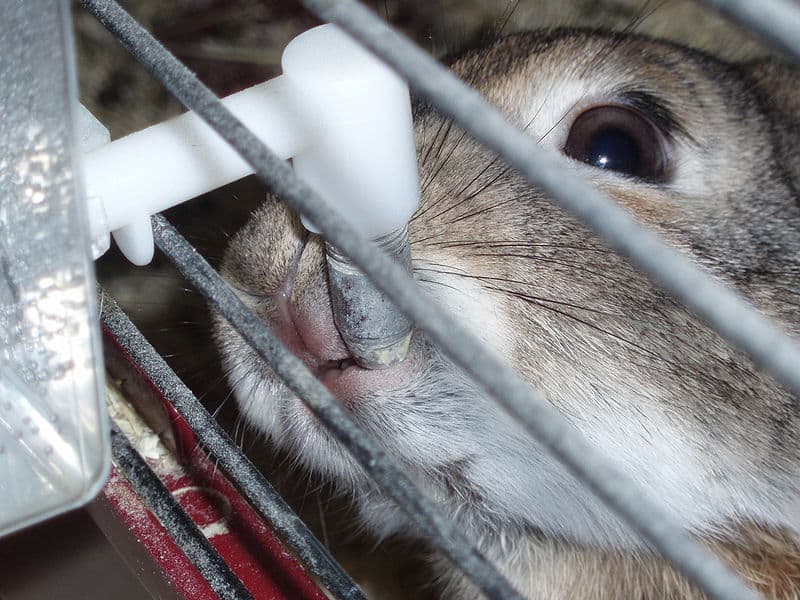
Fresh, clean water is the single most important thing in your rabbit's hutch. Rabbits need unlimited access to water at all times, and even a few hours without it can lead to dehydration, especially during warm weather.
Rabbits are picky about their water. If it smells dirty or has debris floating in it, many rabbits will simply refuse to drink. This is why you should change your rabbit's water daily and scrub the container regularly to prevent bacterial buildup.
Water Bowl vs. Water Bottle: Which Is Better?
Both options work, but they have distinct pros and cons:
| Feature | Water Bowl | Water Bottle |
|---|---|---|
| Natural drinking position | Yes, more comfortable | No, requires tilting head up |
| Water stays clean | No, can collect debris | Yes, enclosed system |
| Risk of tipping | High unless weighted | None if properly mounted |
| Flow rate | Unlimited | Restricted by nozzle |
| Easy to monitor intake | Harder to track | Easier with markings |
Research published in the Veterinary Nursing Journal found that rabbits prefer drinking from bowls over bottles. Bowls allow a more natural drinking posture and typically encourage higher water intake. However, bowls get dirty quickly, and some rabbits will flip them over during play.
If you use a bowl, choose a heavy ceramic one that your rabbit cannot tip. If you use a bottle, check the nozzle daily to confirm it is not clogged or leaking. Many experienced breeders provide both a bowl and a bottle as a backup system, ensuring their rabbit always has access to water even if one source fails.
What Kind of Feeding Setup Do Rabbits Need?
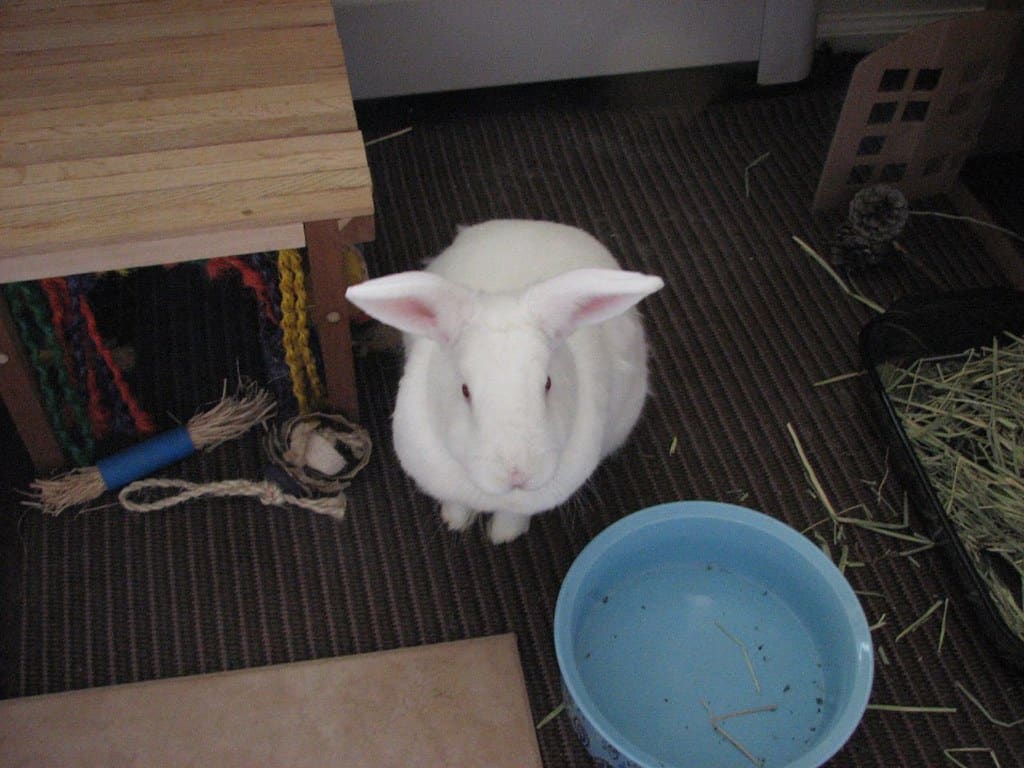
Your rabbit's hutch needs two feeding components: a bowl for pellets and vegetables, and a hay rack or dispenser for unlimited hay access.
Pellet and Vegetable Bowl
A sturdy, tip-resistant bowl is the best choice for serving pellets and fresh vegetables. Rabbits love to push, dig at, and flip their bowls, scattering food across the hutch floor. Attaching the bowl to the cage wall with a clip or using a heavy ceramic bowl eliminates this problem.
Avoid plastic bowls entirely. Rabbits will gnaw on plastic edges, and ingesting plastic pieces can cause digestive issues. Stainless steel or ceramic bowls are the safest and most durable options.
Hay Rack or Dispenser
Hay should make up roughly 80% of your rabbit's diet, so providing unlimited hay is non-negotiable. A wall-mounted hay rack keeps hay clean, dry, and off the floor where it would otherwise mix with bedding and waste.
Place the hay rack near the litter box. Rabbits naturally like to munch on hay while using the litter box, and positioning these items together encourages good litter habits. If you do not have a hay rack, you can pile hay directly in one corner of the hutch, but you will need to replace it more frequently since it will get soiled faster.
Timothy hay is the gold standard for adult rabbits. For rabbits under six months old, alfalfa hay provides the extra protein and calcium that growing kits need.
What Is the Best Bedding for a Rabbit Hutch?
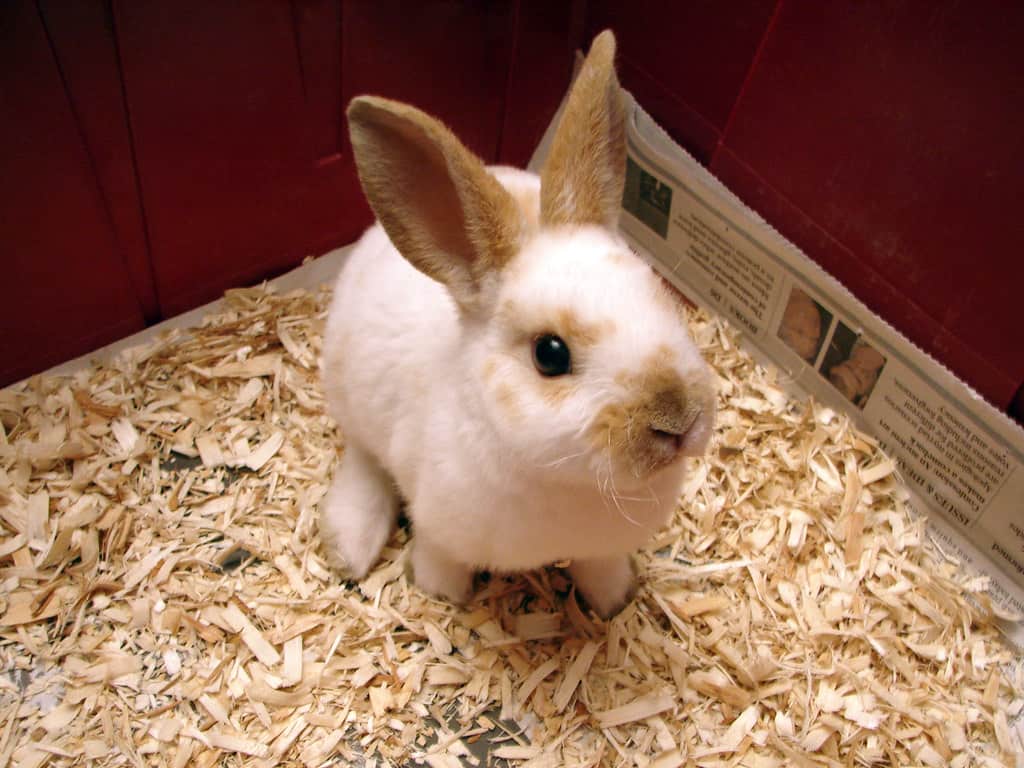
Bedding protects your rabbit's feet from hard or wire flooring. Without proper bedding, rabbits can develop sore hocks: painful open sores on the bottom of their feet. Unlike dogs and cats, rabbits do not have tough paw pads, making soft bedding a genuine health requirement rather than a luxury.
Here are the best bedding options for rabbit hutches, compared side by side:
| Bedding Type | Absorbency | Dust Level | Safe to Chew | Cost |
|---|---|---|---|---|
| Hay (timothy or orchard grass) | Low | Low | Yes | Medium |
| Paper-based cellulose | High | Very low | Yes | Medium |
| Kiln-dried wood pellets | Very high | Low | No | Low |
| Aspen shavings | Medium | Low | Yes | Low |
| Fleece liners | Moderate (requires washing) | None | No (chewing risk) | Higher upfront |
Avoid cedar and untreated pine shavings. These contain phenols, aromatic oils that can irritate a rabbit's respiratory system and damage its liver over time. Kiln-dried pine is considered safer because the drying process removes most phenols, but many breeders prefer to avoid pine entirely and use aspen or paper-based alternatives instead.
Also avoid clay-based cat litter as bedding material. If a rabbit ingests clay litter, it can cause a life-threatening intestinal blockage.
Aim for a bedding layer of 1 to 2 inches throughout the hutch floor. Spot-clean soiled areas daily and do a full bedding replacement at least once per week to prevent ammonia buildup.
Why Does Your Rabbit Need a Litter Box in Its Hutch?
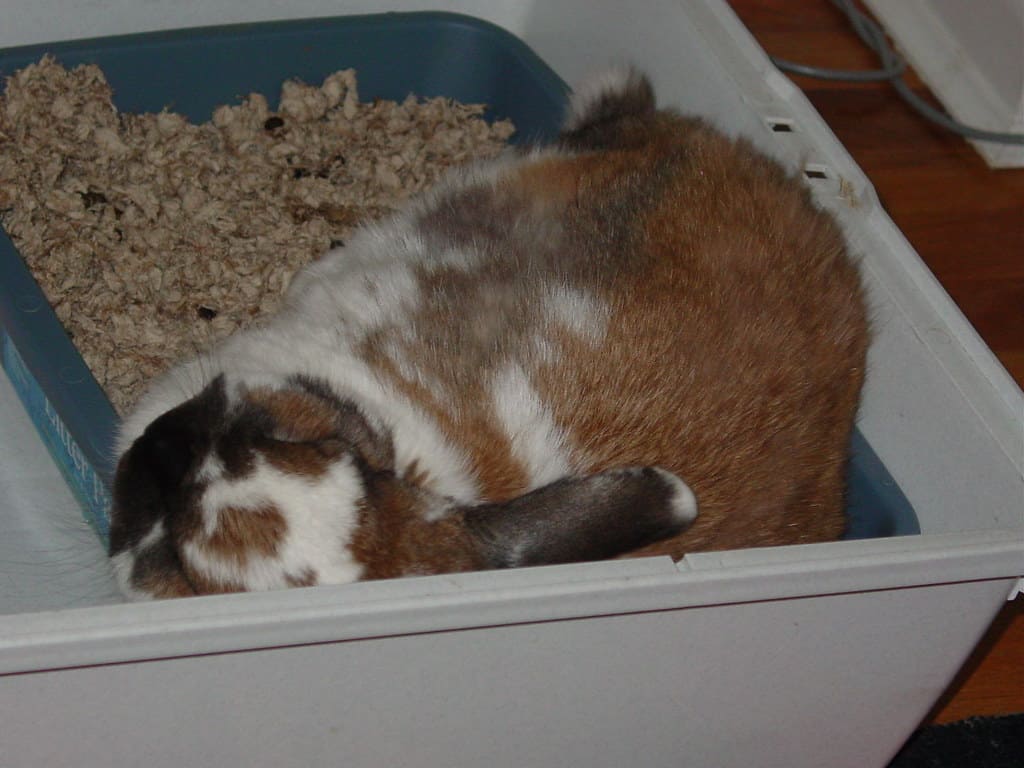
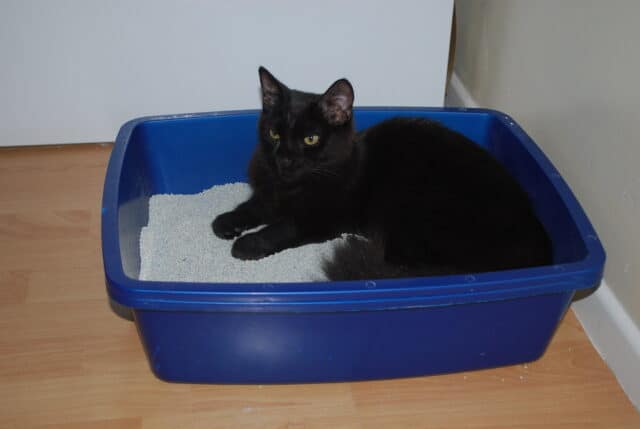
A litter box is one of the most important accessories in any rabbit hutch. Rabbits are naturally clean animals and tend to pick one corner for their bathroom area. Placing a litter box in that corner works with their instincts and keeps the rest of the hutch much cleaner.
The key benefits of using a litter box include:
- Easier daily cleanup since you scoop the box instead of scrubbing the entire hutch
- Reduced odor because waste is concentrated in one absorbent area
- Less bedding waste since you only replace litter box contents frequently
- Better hygiene for your rabbit's feet and fur
Use a paper-based or wood-based litter inside the box. Never use clay cat litter, clumping litter, or scented litter products. These can cause respiratory irritation and intestinal blockage if your rabbit nibbles on them.
For the proper litter box size, choose one large enough for your rabbit to sit in comfortably with some room to spare. Corner litter pans work well in smaller hutches, while rectangular pans suit larger enclosures. Clean the litter box every 1 to 2 days, or more frequently if you notice a strong ammonia smell. Our detailed guide on how often to change rabbit litter covers the ideal cleaning schedule based on your setup.
What Toys and Enrichment Should You Put in a Rabbit Hutch?
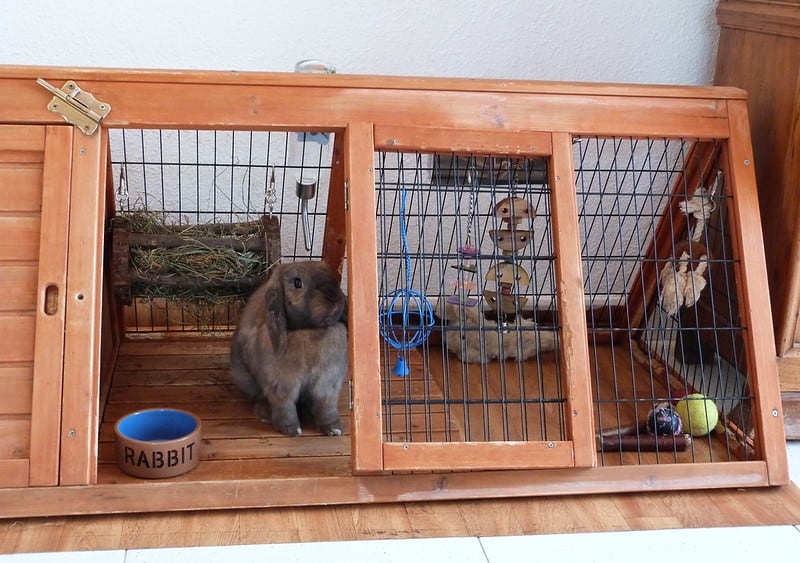
Rabbits are intelligent, curious animals that need mental stimulation every single day. In the wild, rabbits spend their time foraging, exploring, and socializing. A hutch with nothing to interact with leads to boredom, which causes destructive behavior, aggression, and even depression.
The best toys for rabbits are ones they can chew. Chewing serves a dual purpose: it keeps your rabbit entertained and files down their teeth, which grow continuously throughout their lives. Rabbits with overgrown teeth can develop painful dental problems that affect their ability to eat normally.
Here are the best toy options for a rabbit hutch:
- Willow balls and willow sticks: Natural, safe to chew, and most rabbits love tossing them around
- Wooden dumbbells: Lightweight enough to pick up and throw, and safe for chewing
- Twig tunnels: Provide both a hiding spot and a chew toy in one
- Cardboard tubes: Toilet paper rolls and paper towel tubes are free and endlessly entertaining
- Hay-stuffed treat balls: Encourage natural foraging behavior and slow down eating
- Digging boxes: A small box filled with shredded paper lets your rabbit satisfy its natural urge to dig
Rotate toys every week or two. Rabbits lose interest in the same toys over time, and swapping them out keeps the hutch environment fresh and engaging. You do not need to buy expensive toys. Simple household items like cardboard boxes with holes cut in them, untreated wicker baskets, and crumpled paper balls work just as well as store-bought alternatives.
Does Your Rabbit Need a Hiding Spot in Its Hutch?
Yes, absolutely. A hiding spot is not optional. Rabbits are prey animals, and their survival instincts drive them to seek enclosed, dark spaces where they feel protected. Without a hiding spot, rabbits can become chronically stressed, which weakens their immune system and can shorten their lifespan.
A hiding spot also doubles as your rabbit's sleeping area. Rabbits prefer to sleep in enclosed, dark spaces that mimic the burrows their wild ancestors used. A simple cardboard box with an entrance hole cut into one side works perfectly. Other good options include:
- Wooden hideout houses designed for rabbits
- Woven grass huts or seagrass tunnels
- Ceramic or plastic igloo-style shelters
- A covered section of the hutch partitioned off with a solid divider
Make sure the hiding spot is large enough for your rabbit to turn around inside comfortably. For multi-rabbit hutches, provide at least one hiding spot per rabbit so they do not have to compete for shelter. This prevents territorial stress and reduces the chance of fighting.
Where Should You Place Your Rabbit's Hutch?
Where you position the hutch is just as important as what goes inside it. Rabbits are sensitive to temperature extremes and do best in environments between 60 and 70 degrees Fahrenheit (15 to 21 degrees Celsius). You can read more about the ideal temperature for rabbits to make sure your setup is safe year-round.
Follow these placement guidelines for the best results:
- Indoors: Keep the hutch away from direct sunlight, radiators, heating vents, and drafty windows
- Outdoors: Place the hutch in a sheltered area protected from rain, wind, and direct afternoon sun. Provide extra insulation during winter months
- Elevation: Raise outdoor hutches off the ground to protect against dampness, flooding, and predators
- Quiet area: Avoid high-traffic zones, loud appliances, and areas near TVs or speakers. Sudden loud noises stress rabbits significantly
Rabbits are crepuscular, meaning they are most active at dawn and dusk. Placing the hutch in an area with natural light cycles helps maintain their internal clock and promotes healthy sleep patterns. Avoid placing the hutch in a room that stays brightly lit 24 hours a day.
How Do You Keep a Rabbit Hutch Clean?
A clean hutch is a healthy hutch. Waste buildup produces ammonia, which irritates your rabbit's eyes and respiratory system. For outdoor hutches, poor hygiene also increases the risk of fly strike, a potentially fatal condition where flies lay eggs in soiled fur.
Follow this cleaning schedule to keep your hutch in top condition:
| Task | Frequency |
|---|---|
| Spot-clean litter box | Daily |
| Remove uneaten fresh food | Daily |
| Refill water and hay | Daily |
| Replace litter box contents | Every 1 to 2 days |
| Wipe down surfaces | Weekly |
| Full bedding replacement | Weekly |
| Deep clean with vinegar solution | Monthly |
For deep cleaning, use a 50/50 white vinegar and water solution. Avoid bleach and commercial cleaning products with strong fragrances, as residual chemicals can be toxic to rabbits. For stubborn urine stains and odors, soak the affected area in vinegar for 15 to 20 minutes before scrubbing. Rinse thoroughly and allow the hutch to dry completely before returning your rabbit.
Frequently Asked Questions
Can I use a wire-bottom hutch for my rabbit?
Wire-bottom hutches are not recommended as the sole flooring. Wire causes sore hocks, which are painful ulcers on the bottom of a rabbit's feet. If your hutch has a wire floor, cover it completely with a solid resting mat, thick bedding, or a piece of untreated plywood to protect your rabbit's feet.
How big should a rabbit hutch be?
A rabbit hutch should be at least four times the size of your rabbit when fully stretched out. Your rabbit should be able to take three full hops in any direction and stand upright on its hind legs without its ears touching the ceiling. Larger breeds need proportionally bigger enclosures.
Do rabbits need time outside of their hutch?
Yes. Even the best-equipped hutch is not a substitute for free-roaming time. Rabbits should get at least 3 to 4 hours of supervised exercise outside their hutch every day. This allows them to run, binky, and explore, all of which are essential for physical and mental health.
Should I cover my rabbit's hutch at night?
Covering part of the hutch at night can help your rabbit feel more secure, especially for outdoor hutches. Use a breathable cover that blocks drafts and light without restricting airflow. Avoid fully sealing the hutch, as this traps moisture and ammonia fumes inside.
What should I never put in a rabbit hutch?
Never place cedar or untreated pine shavings, clay cat litter, scented candles or air fresheners, small plastic items that can be swallowed, or exercise wheels inside a rabbit hutch. Exercise wheels are particularly dangerous because they can injure a rabbit's spine, which is not designed for wheel-running like hamsters or guinea pigs.
Cite this article:
Cite this article:
BunnySync (February 27, 2026) What Does a Rabbit Need in Its Hutch? Essential Checklist for 2026. Retrieved from https://bunnysync.com/blog/what-does-a-rabbit-need-in-its-hutch.
"What Does a Rabbit Need in Its Hutch? Essential Checklist for 2026." BunnySync - February 27, 2026, https://bunnysync.com/blog/what-does-a-rabbit-need-in-its-hutch
Sources and further reading
- Buseth, Marit Emilie., and Richard A. Saunders. Rabbit Behaviour, Health, and Care. CABI, 2014.
- Lebas, F. The Rabbit: Husbandry, Health, and Production. Food and Agriculture Organization of the United Nations, 1997.
- Patry, Karen, et al. The Rabbit-Raising Problem Solver: Your Questions Answered about Housing, Feeding, Behavior, Health Care, Breeding, and Kindling. Storey Publishing, 2014.
- The nutritional needs of rabbits - Veterinary Nursing Journal
- Creating the ideal home for your rabbits - PDSA