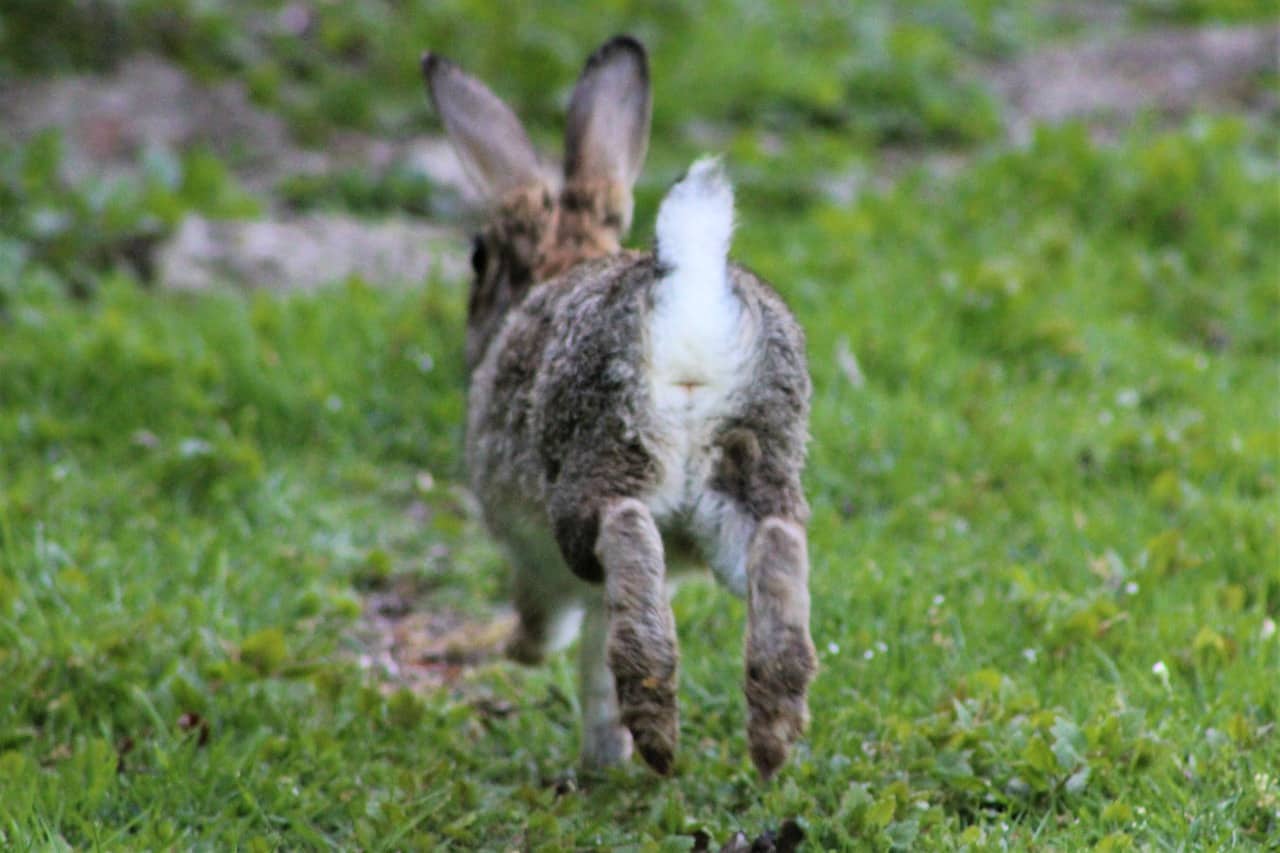
Rabbits run in circles in their cage for several reasons, including excitement (binkies), boredom, pent-up energy, sexual maturity, territorial behavior, attention-seeking, and in rare cases, a medical condition called head tilt. Most of the time, this circling behavior is completely normal and nothing to worry about. Understanding why your rabbit is doing it helps you respond the right way and keep your bunny healthy and content.

As breeders who have kept rabbits for years, we see this behavior daily. Some owners panic when their rabbit starts zooming around the cage, but in most cases it is a positive sign. Below, we break down every reason your rabbit might be running in circles, what to look for, and exactly what you should do about it.
What Are Rabbit Binkies and Why Do They Cause Circling?
The most common reason rabbits run in circles inside their cage is a behavior called "binkies." A binky is when a rabbit suddenly leaps into the air, twists its body, and then dashes around in circles or zigzag patterns. It is one of the most recognizable signs of a happy rabbit.
Binkies happen when your rabbit feels safe, comfortable, and full of joy. You will often see this behavior right after you open the cage door, when you bring out treats, or during their most active hours at dawn and dusk. Baby rabbits and young adults tend to binky more frequently than older rabbits, simply because they have more energy to burn.
How to Recognize a True Binky
A binky looks different from anxious circling. During a binky, your rabbit will:
- Jump and twist mid-air, sometimes doing a full 180-degree turn
- Run in bursts with sudden direction changes
- Have relaxed ears and a loose, floppy body posture
- Often flick their feet out to the side while jumping
- Stop and resume normal behavior within a few minutes
If your rabbit is binkying, you do not need to do anything except enjoy watching it. This is your rabbit's way of telling you that life is good. Some rabbit owners call it "the zoomies," and it is one of the most rewarding behaviors to witness as an owner.
Is Your Rabbit Running in Circles Because of Excitement?
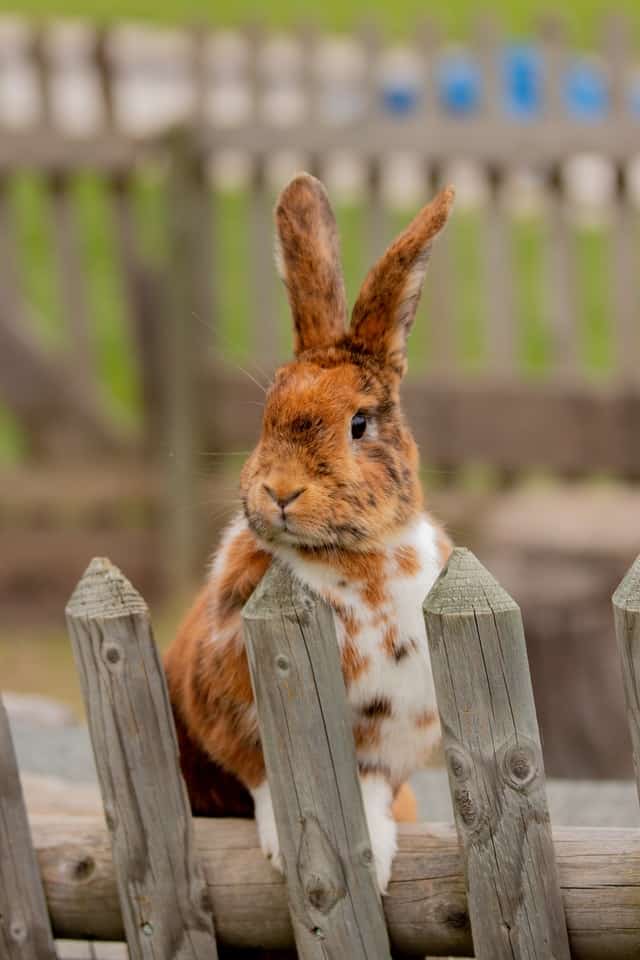
Excitement is closely related to binkying, but it is a slightly different trigger. Rabbits are creatures of routine, and they quickly learn to associate certain cues with positive events. When your rabbit hears the rustle of a treat bag, sees you approaching at feeding time, or knows playtime is about to start, they may run in circles as a way to express their anticipation.
This type of circling is often directed toward you. Your rabbit might run circles around your feet when you enter the room, or circle the cage door as you reach for the latch. It is a form of communication. Your rabbit is saying, "I know something good is about to happen, and I can't wait."
Signs of Excitement Circling
- Circling happens consistently at the same times each day (feeding, playtime)
- Your rabbit focuses on you or the cage door while circling
- Nose twitching speeds up noticeably
- Your rabbit may also make soft honking or buzzing sounds
- The behavior stops once the expected event begins
This is perfectly healthy behavior. If anything, it shows that your rabbit has a strong bond with you and feels comfortable expressing excitement in your presence. According to the House Rabbit Society, circling combined with soft honking is one of the clearest signs that a rabbit feels bonded to its owner.
Could Boredom Be Causing Your Rabbit to Circle?
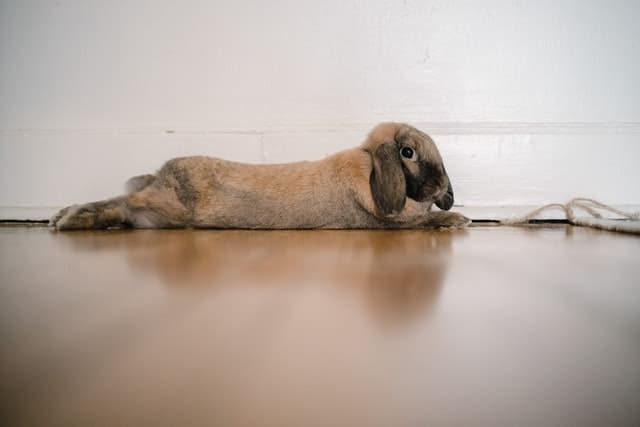
Not all circling is positive. If your rabbit spends most of the day in a small cage with little stimulation, circling can be a sign of boredom and frustration. Rabbits are intelligent, curious animals that need mental enrichment and physical activity. When they do not get enough of either, they resort to repetitive behaviors like running in circles, chewing cage bars, or digging at corners.
Boredom-related circling looks different from happy binkies. A bored rabbit circles methodically, often in the same direction and at the same pace, without the joyful leaps and twists. The behavior may go on for extended periods rather than short bursts. Over time, chronic boredom can lead to depression in rabbits, which brings a whole new set of health and behavioral concerns.
How to Tell If Boredom Is the Problem
| Happy Circling (Binkies) | Boredom Circling |
|---|---|
| Short bursts (1-3 minutes) | Prolonged, repetitive pacing |
| Includes jumps and twists | Flat, ground-level circling only |
| Relaxed body language | Tense posture, ears pinned back |
| Happens during active hours | Happens at all hours |
| Stops naturally | Continues until interrupted |
Solutions for a Bored Rabbit
If boredom is the cause, the fix is straightforward. Make sure your rabbit has:
- Enough space. The minimum recommended cage size is 4 times the length of your rabbit when fully stretched out. Check our guide on what size a rabbit cage should be for detailed measurements.
- Enrichment toys. Provide tunnels, cardboard boxes with holes cut in them, wooden chew toys, and foraging mats. Rotate toys weekly to keep things fresh.
- Daily free-roam time. Give your rabbit at least 3 to 4 hours outside the cage every day. This is non-negotiable for their mental and physical health.
- A companion. Rabbits are social animals and do best in bonded pairs. If you only have one rabbit, consider whether getting a second rabbit might be the right move.
- Interaction with you. Sit on the floor near your rabbit, offer treats by hand, and let them approach you on their terms. Even 15 to 20 minutes of direct interaction each day makes a noticeable difference.
Does Your Rabbit Need More Exercise?

Closely related to boredom, a lack of exercise can cause frantic circling behavior. Wild rabbits cover several miles each day while foraging and exploring. Domestic rabbits retain that same instinct and energy level. When a pet rabbit is confined to a cage for most of the day, all of that energy has nowhere to go, so it comes out as repetitive circling.
This is especially common in younger rabbits under 2 years old and in breeds known for high energy levels, like Mini Rex, Holland Lops, and Netherland Dwarfs. Lack of exercise can have serious health consequences for rabbits, including obesity, muscle atrophy, and GI stasis.
How Much Exercise Does a Rabbit Need?
Most veterinarians and rabbit welfare organizations recommend a minimum of 3 hours of free-roam exercise per day, though more is always better. Here is a general guideline by age:
| Age | Minimum Daily Exercise | Ideal Daily Exercise |
|---|---|---|
| Under 6 months | 3 hours | 4-5 hours |
| 6 months to 3 years | 3 hours | 4-6 hours |
| 3 to 6 years | 2-3 hours | 3-4 hours |
| Over 6 years (senior) | 1-2 hours | 2-3 hours |
If you cannot provide enough free-roam time, consider setting up an exercise pen (x-pen) attached to your rabbit's cage. This gives them a larger area to move around in even when you are not directly supervising. A pen measuring at least 8 square feet connected to the cage can significantly reduce exercise-related circling.
Is Your Rabbit Circling Because of Sexual Maturity?

If your rabbit is unspayed or unneutered and between 3 and 6 months old, circling is very likely a mating behavior. Rabbits reach sexual maturity as early as 3 months for small breeds and up to 6 months for larger breeds. Once hormones kick in, circling becomes a courtship display.
Hormonal circling has very distinct characteristics. Your rabbit will circle around a specific target, usually another rabbit, your feet, or even a stuffed animal. This circling is often accompanied by honking, grunting, spraying urine, and sometimes mounting attempts. Male rabbits tend to do this more aggressively than females, but both sexes display the behavior.
Other Signs of Hormonal Behavior
- Urine spraying on walls, furniture, or even you
- Increased aggression or nipping
- Chin rubbing on everything (marking territory)
- Mounting objects, toys, or other rabbits
- Restlessness and inability to settle down
- Grunting or honking while circling
Should You Spay or Neuter Your Rabbit?
Spaying or neutering is the most effective solution for hormonal circling. Beyond reducing unwanted behaviors, the procedure has significant health benefits. According to the House Rabbit Society, unspayed female rabbits have up to an 80% chance of developing uterine cancer by age 4. Neutering male rabbits reduces aggression, spraying, and territorial behavior within 4 to 8 weeks after the procedure.
Most veterinarians recommend spaying or neutering rabbits between 4 and 6 months of age. The procedure is routine and safe when performed by a rabbit-experienced vet. Recovery typically takes 7 to 10 days, and most rabbits show noticeable behavioral improvements within the first month.
Could Your Rabbit Be Circling for Attention?
Rabbits are smarter than many people give them credit for. They learn quickly that certain behaviors get a reaction from their owners. If your rabbit has discovered that running in circles causes you to come over, open the cage, or offer treats, they will repeat the behavior intentionally.
This is not manipulative in the way humans think of it. It is simply associative learning. Your rabbit has connected circling with a positive outcome, so they keep doing it. This type of circling tends to happen specifically when you are in the room and visible to your rabbit.
How to Manage Attention-Seeking Circling
If you suspect your rabbit is circling for attention, here is what to do:
- Do not reward the behavior directly. Wait for your rabbit to calm down before opening the cage or offering treats.
- Establish a consistent routine. When your rabbit knows exactly when playtime, feeding, and interaction happen, they feel less need to "remind" you.
- Reward calm behavior. When your rabbit is sitting quietly and approaches the cage door calmly, open it. This teaches them that calm behavior gets results, not frantic circling.
That said, if your rabbit is circling because they genuinely need more time outside the cage, the solution is not to ignore them. It is to give them more free-roam time so the underlying need is met.
Can Circling Indicate a Medical Problem?
In rare cases, persistent circling in one direction can be a sign of a medical issue called head tilt, also known as torticollis or wry neck. Head tilt is caused by an inner ear infection, a parasite called Encephalitozoon cuniculi (E. cuniculi), or in rare cases, a brain lesion or stroke.
Warning Signs That Circling Is Medical
Medical circling looks very different from behavioral circling. Watch for these red flags:
- Your rabbit circles in only one direction and seems unable to go the other way
- Their head tilts to one side, even when resting
- Loss of balance or falling over while circling
- Rolling uncontrollably (in severe cases)
- Loss of appetite or refusal to eat
- Rapid, involuntary eye movement (nystagmus)
- The behavior appears suddenly with no prior history
If you notice any combination of these symptoms, take your rabbit to a rabbit-savvy veterinarian immediately. Head tilt is treatable when caught early, but delays can lead to permanent damage. Treatment typically involves antibiotics for bacterial infections, anti-parasitic medication for E. cuniculi, and anti-inflammatory drugs to reduce swelling.
Head Tilt vs. Normal Circling
| Normal Behavioral Circling | Head Tilt (Medical Circling) |
|---|---|
| Circles in both directions | Only circles in one direction |
| Head stays level and upright | Head tilts noticeably to one side |
| Full body control, no stumbling | Loss of balance, may fall over |
| Eating and drinking normally | Reduced appetite, may refuse food |
| Comes and goes in short episodes | Persistent and worsening over hours/days |
How to Stop Your Rabbit from Running in Circles Excessively
If the circling has become constant and you want to reduce it, here is a step-by-step approach:
- Rule out medical issues first. If the circling is new, one-directional, or accompanied by any of the warning signs listed above, see a vet before trying behavioral solutions.
- Upgrade the cage size. A cage that is too small is the most common cause of repetitive circling. Your rabbit's enclosure should be at least 4 times their body length and tall enough for them to stand on their hind legs without touching the top.
- Increase exercise time. Aim for a minimum of 3 to 4 hours of supervised free-roam time daily.
- Add enrichment. Tunnels, platforms, digging boxes filled with shredded paper, and puzzle feeders all give your rabbit mental stimulation that reduces repetitive behavior.
- Consider spaying or neutering. If your rabbit is intact, hormonal circling will not stop until the hormones are addressed.
- Get a companion. A bonded partner can dramatically reduce boredom and attention-seeking behaviors. Just make sure both rabbits are spayed or neutered before introductions.
- Stick to a routine. Feed, play, and let your rabbit out at the same times each day. Predictability reduces anxiety and attention-seeking circling.
When Should You Worry About Your Rabbit Running in Circles?
Most of the time, a rabbit running in circles in its cage is completely harmless. Happy binkies, excitement, and even mild boredom-related circling are all normal parts of rabbit behavior. You should only be concerned when:
- The circling is constant and does not stop when you open the cage
- Your rabbit circles in only one direction
- There are additional symptoms like head tilt, loss of balance, or appetite changes
- The behavior started suddenly in a rabbit that never circled before
- Your rabbit seems stressed rather than happy while circling
In these situations, a veterinary checkup is the right first step. For everything else, enjoy the zoomies. A circling rabbit is usually a rabbit that feels safe enough to express itself freely.
Frequently Asked Questions
Why does my rabbit run in circles around my feet?
Your rabbit is expressing affection and excitement when they circle your feet. This is a courtship and bonding behavior that means your rabbit considers you part of their social group. It is very common in unspayed or unneutered rabbits, but even fixed rabbits do it as a sign of happiness and attachment.
Is it normal for rabbits to do zoomies in their cage?
Yes, zoomies (also called binkies) are completely normal and healthy. They happen when your rabbit feels happy, safe, and energetic. Short bursts of running, jumping, and twisting inside the cage are signs of a content rabbit. If the zoomies last only a few minutes and your rabbit returns to normal behavior afterward, there is nothing to worry about.
Should I let my rabbit out when it runs in circles?
If your rabbit is circling because it wants exercise or playtime, letting it out is the right call. However, try to wait for a brief calm moment before opening the cage door. This prevents your rabbit from learning that frantic circling is the fastest way to get what they want. A consistent daily schedule for free-roam time works best.
Can head tilt in rabbits be cured?
Head tilt can often be treated successfully when caught early. Treatment depends on the cause and may include antibiotics, anti-parasitic drugs, or anti-inflammatory medications. Some rabbits recover fully, while others retain a permanent slight tilt but adapt well and live normal lives. Early veterinary intervention is the key to the best outcome.
At what age do rabbits start circling from hormones?
Rabbits can start showing hormonal circling behavior as early as 3 months old in small breeds like Netherland Dwarfs and Polish rabbits. Larger breeds typically begin between 4 and 6 months. The behavior increases in intensity until the rabbit is spayed or neutered, which most vets recommend doing between 4 and 6 months of age.
Cite this article:
Cite this article:
BunnySync (February 28, 2026) Why Do Rabbits Run in Circles in Their Cage? 7 Reasons Explained. Retrieved from https://bunnysync.com/blog/rabbit-running-around-in-circles-in-cage.
"Why Do Rabbits Run in Circles in Their Cage? 7 Reasons Explained." BunnySync - February 28, 2026, https://bunnysync.com/blog/rabbit-running-around-in-circles-in-cage