No, rabbits should not eat goat food. Goat feed is grain-based, high in carbohydrates, and low in fiber, which is the opposite of what a rabbit's digestive system needs. Feeding goat food to rabbits regularly can cause gastrointestinal stasis, obesity, and other serious health problems. If your rabbit accidentally nibbled some goat feed, a small amount is unlikely to cause harm, but it should never become a regular part of their diet.
If you keep both rabbits and goats on your property, you have likely wondered whether they can share the same feed. After all, both are herbivores, both eat pellets, and buying one type of feed would certainly simplify chore time. Unfortunately, rabbits and goats have very different nutritional requirements, and goat feed simply does not meet a rabbit's needs.
In this guide, we break down the exact nutritional differences between goat food and rabbit food, explain every health risk involved, and show you what to feed your rabbit instead for optimal health.
What Is Goat Food Made Of?
Before we compare goat food to rabbit food, it helps to understand what goes into a typical goat feed. Most commercial goat feeds are formulated for ruminant animals, meaning they are designed for a multi-chambered stomach that processes food very differently from a rabbit's hindgut fermentation system.
Common Ingredients in Goat Feed
A standard goat feed typically contains the following ingredients:
- Whole or processed grains such as corn, oats, barley, and wheat
- Soybean meal for protein content
- Molasses as a binder and for palatability
- Mineral supplements including high levels of calcium and phosphorus
- Added copper in some formulations (toxic to some animals)
- Roughage or forage at lower percentages than rabbit feed requires
The grain content in goat feed is the biggest concern for rabbits. Grains are high in starch and carbohydrates, which a rabbit's digestive system is not designed to process efficiently. Rabbits rely on long-strand fiber to keep their gut motility running smoothly, and grains can disrupt this entire process.
Typical Nutritional Profile of Goat Feed
Most commercial goat feeds contain approximately:
| Nutrient | Goat Feed | Rabbit Feed (Ideal) |
|---|---|---|
| Crude Fiber | 9-12% | 18-22% |
| Crude Protein | 16-18% | 14-18% |
| Fat | 2.5-3.5% | Less than 3% |
| Calcium | 1.0-1.5% | Less than 1% |
| Starch/Carbs | High (grain-based) | Low |
As this comparison shows, goat feed falls dramatically short on fiber (roughly half of what rabbits need) while containing excessive calcium and far too many starch-heavy grains. These differences are not minor. They represent a fundamental mismatch between what goats need and what rabbits require.
Why Is Goat Food Dangerous for Rabbits?
The nutritional mismatch between goat feed and rabbit dietary requirements creates several serious health risks. Some of these can develop quickly, while others build up over time with repeated exposure.
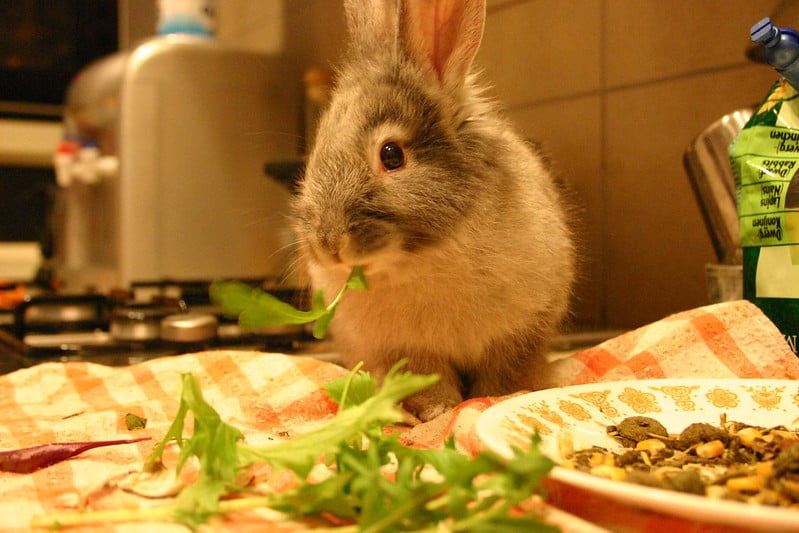
Gastrointestinal Stasis (GI Stasis)
The most dangerous risk of feeding goat food to rabbits is gastrointestinal stasis, a condition where the gut slows down or stops moving entirely. Rabbits depend on a constant flow of high-fiber material through their digestive tract. When they eat grain-heavy foods like goat feed, the low fiber content fails to stimulate normal gut motility.
GI stasis occurs when the beneficial bacteria in your rabbit's cecum (the large fermentation chamber in their hindgut) become imbalanced. The excess starch from goat feed encourages harmful bacteria to overgrow, producing painful gas and toxins. Without treatment, GI stasis can lead to organ failure and death within 24 to 48 hours.
Watch for these warning signs of GI stasis:
- Reduced or absent appetite
- Small, hard, or no fecal droppings
- Hunched posture and reluctance to move
- Grinding teeth (bruxism), which indicates pain
- A bloated or tight-feeling abdomen
- Lethargy and depression
If your rabbit shows any of these symptoms after eating goat food, contact a rabbit-savvy veterinarian immediately. GI stasis is a medical emergency. Early intervention with fluid therapy, gut motility drugs, and pain management can save your rabbit's life.
Obesity and Weight Gain
Goat feed is calorie-dense due to its high grain and starch content. Rabbits that eat goat food regularly, especially adult and senior rabbits with slower metabolisms, can gain weight rapidly. Obesity in rabbits is more than a cosmetic issue. It creates a cascade of health problems.
Obese rabbits often develop a condition called "poopy bottom," where they cannot physically reach their cecotropes (the soft, nutrient-rich droppings they need to re-ingest). When a rabbit misses its cecotropes, it loses essential B vitamins, volatile fatty acids, and beneficial gut bacteria. Over time, this nutritional gap compounds the problem further.
Additional risks of obesity in rabbits include:
- Hepatic lipidosis (fatty liver disease), which can be fatal
- Increased strain on joints and the spine, especially in larger breeds
- Difficulty grooming, leading to skin infections and fly strike
- Reduced life expectancy
Excess Calcium and Urinary Problems
Goat feed typically contains 1.0 to 1.5% calcium, while rabbits need less than 1%. Unlike most mammals, rabbits absorb all dietary calcium through their intestines and excrete the excess through their kidneys. This means that high-calcium diets directly increase the calcium load on a rabbit's urinary system.
Over time, excess calcium can cause:
- Bladder sludge: A thick, paste-like buildup of calcium carbonate in the bladder that causes painful urination
- Kidney stones: Hard calcium deposits that can block the urinary tract
- Chalky or gritty urine: An early warning sign that calcium levels are too high
If you notice your rabbit's urine becoming consistently thick, white, or gritty, or if your rabbit strains when urinating, reduce calcium intake immediately and consult your veterinarian. You can learn more about proper hay feeding to ensure your rabbit gets the right balance of nutrients.
Diarrhea and Digestive Upset
Sudden dietary changes are one of the most common causes of diarrhea in rabbits. Introducing goat food, with its unfamiliar grain-based composition, can shock the delicate bacterial ecosystem in a rabbit's gut. True diarrhea in rabbits (watery, unformed stool) is a veterinary emergency, particularly in young rabbits, where it can cause fatal dehydration within hours.
Even milder digestive upset from goat food can cause soft cecotropes, decreased appetite, and discomfort. A rabbit's gut bacteria need consistency. Swapping their food for goat feed, even temporarily, disrupts the microbial balance they depend on.
Dental Health Concerns
Rabbits' teeth grow continuously throughout their lives at a rate of approximately 2 to 3 millimeters per week. They rely on the abrasive action of chewing long-strand hay and fibrous foods to wear their teeth down evenly. Goat feed pellets do not provide this grinding action.
A rabbit fed primarily on goat feed (or any pelleted food without adequate hay) risks developing malocclusion, where the teeth grow unevenly and form sharp spurs that cut into the cheeks and tongue. Overgrown teeth can be fatal if left untreated, as the rabbit eventually stops eating due to pain.
What Should Rabbits Eat Instead of Goat Food?
A healthy rabbit diet is built on four components, and none of them involve goat feed. Here is the proper breakdown of what your rabbit should be eating every day.
1. Unlimited Timothy Hay (80-85% of Diet)
Hay is the foundation of a rabbit's diet. Timothy hay, orchard grass, and meadow hay all provide the long-strand fiber rabbits need for proper gut motility and dental wear. An adult rabbit should have unlimited access to fresh hay at all times, consuming a body-sized portion daily.
For young rabbits under 7 months old, alfalfa hay is acceptable because its higher protein and calcium content supports growth. After 7 months, transition to timothy or grass hay to avoid excess calcium.
2. Quality Rabbit Pellets (5% of Diet)
Rabbit-specific pellets are formulated with the correct fiber-to-protein ratio. Look for pellets that contain at least 18% crude fiber, 14 to 16% protein for adults, and no added seeds, corn, or colored pieces. Feed approximately 1/4 cup of pellets per 5 pounds of body weight daily for adult rabbits.
This is where the comparison with goat feed becomes most clear. Quality rabbit pellets are designed specifically for hindgut fermenters, while goat feed is designed for ruminants. The formulations are fundamentally different.
3. Fresh Vegetables (10% of Diet)
Offer a variety of fresh leafy greens daily. Good options include romaine lettuce, cilantro, parsley, and herbs. Aim for about 1 cup of packed greens per 2 pounds of body weight. Rotate varieties to provide a range of nutrients and prevent oxalate buildup from any single green.
4. Fresh Water (Always Available)
Clean, fresh water should be available 24 hours a day. Rabbits drink a surprising amount of water relative to their body size, roughly 50 to 150 milliliters per kilogram of body weight per day. A heavy ceramic bowl or a bottle with a sipper tube both work well.
What If My Rabbit Accidentally Ate Goat Food?
If your rabbit got into the goat feed bag or nibbled some pellets that fell on the ground, do not panic. A small, one-time exposure to goat food is unlikely to cause serious harm. Here is what to do:
- Remove the goat food immediately so your rabbit cannot eat more
- Offer plenty of fresh hay to encourage normal gut motility
- Monitor their droppings for the next 12 to 24 hours, looking for changes in size, shape, or frequency
- Watch their appetite and make sure they continue eating hay and drinking water
- Check for signs of discomfort such as hunching, tooth grinding, or lethargy
If your rabbit shows any signs of GI distress after eating goat food, contact your veterinarian right away. Most rabbits that eat a small amount accidentally will be perfectly fine, but it is always better to be cautious.
How to Keep Rabbits Away from Goat Feed
If you raise both rabbits and goats, managing feed access is essential. Free-ranging rabbits on a farm can easily find their way to goat feeders, especially since rabbits are naturally curious foragers.
Here are practical strategies to prevent cross-feeding:
- Store all feed in sealed containers with lids that rabbits cannot open or chew through
- Feed goats in enclosed areas that rabbits cannot access
- Use elevated feeders for goats that are out of a rabbit's reach
- Clean up spilled feed promptly after goat feeding time
- Separate housing areas so rabbits do not have unsupervised access to goat pens
Many breeders who keep multiple species find that dedicated feeding stations in separate areas work best. This prevents not only rabbits eating goat food but also goats eating rabbit pellets, which presents its own set of problems.
Can Rabbits Eat Any Other Animal Feed?
Goat food is not the only cross-species feed that rabbit owners wonder about. If you keep multiple animals, you may be curious about other feeds as well. The short answer is that rabbits should only eat food specifically formulated for rabbits.
Here is how goat food compares to other animal feeds when it comes to rabbit safety:
| Animal Feed | Safe for Rabbits? | Main Risk |
|---|---|---|
| Goat food | No | High grain/starch, low fiber, excess calcium |
| Hamster food | No | Seeds, nuts, corn, and high fat content |
| Dog food | No | Animal protein, high fat, completely wrong formulation |
| Chicken feed | No | Animal protein, medicated additives, wrong nutrients |
| Guinea pig food | Cautiously | Similar but includes added vitamin C rabbits do not need |
The safest approach is always to feed each animal species its own specifically formulated diet. The cost difference between goat feed and rabbit pellets is minimal, and the health risks of cross-feeding far outweigh any convenience savings.
Frequently Asked Questions
Can rabbits eat goat hay?
Yes, rabbits can eat the same types of hay fed to goats, as long as it is timothy hay, orchard grass, or meadow hay. The hay itself is the same product. Just avoid alfalfa hay for adult rabbits, as it is too high in calcium and protein for rabbits over 7 months old.
Will a small amount of goat feed kill my rabbit?
A small, one-time nibble of goat feed is very unlikely to kill a healthy rabbit. The real danger comes from repeated or large-quantity feeding. Monitor your rabbit for 24 hours after accidental ingestion and contact a vet if you notice any signs of digestive distress.
Can baby rabbits eat goat feed?
No, and baby rabbits are at even greater risk than adults. Young rabbits have extremely sensitive digestive systems that are still developing their gut flora. The grain content and low fiber in goat feed could trigger fatal enteritis in kits. Stick to alfalfa hay and age-appropriate rabbit pellets for young rabbits.
Is goat feed or rabbit pellets cheaper?
Goat feed is often slightly cheaper per pound than rabbit pellets, which is why some multi-species farms consider sharing feed. However, a single veterinary visit for GI stasis can cost hundreds of dollars, far exceeding any savings from buying one type of feed. Always invest in species-appropriate nutrition.
Can rabbits and goats share a pasture safely?
Rabbits and goats can share pasture space for grazing on grass and weeds, as both eat similar forage plants. The concern is only with manufactured pelleted feeds. If you let both species graze together, just make sure each animal's pelleted feed is served separately in species-specific feeding areas.
Cite this article:
Cite this article:
BunnySync (March 11, 2026) Can Rabbits Eat Goat Food? Why This Feed Is Risky for Bunnies. Retrieved from https://bunnysync.com/blog/can-rabbits-eat-goat-food.
"Can Rabbits Eat Goat Food? Why This Feed Is Risky for Bunnies." BunnySync - March 11, 2026, https://bunnysync.com/blog/can-rabbits-eat-goat-food