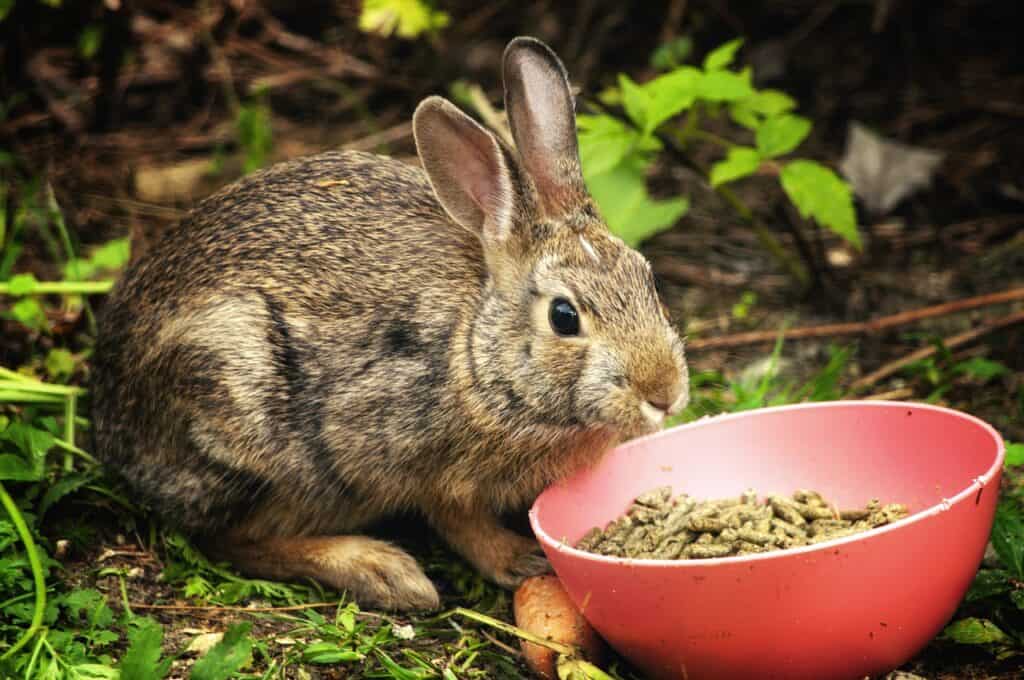
Rabbits do not strictly need pellets to survive, but pellets are the easiest and most reliable way to ensure your rabbit gets complete nutrition. A rabbit fed unlimited high-quality hay, a rotating variety of fresh leafy greens, and clean water can live without pellets. However, getting the nutrient balance right without pellets is difficult, and most rabbit owners and breeders rely on pellets to fill nutritional gaps that hay and vegetables alone cannot cover.
Pellets deliver concentrated vitamins and minerals, particularly vitamin D, calcium, and trace elements that timothy hay and leafy greens may lack in sufficient quantities. For the average pet owner, pellets are an inexpensive safety net that takes the guesswork out of rabbit nutrition.
Why Do Breeders and Vets Recommend Pellets?
Pellets were originally developed for commercial rabbit operations where consistent growth rates and predictable nutrition mattered. Over time, veterinarians recognized that pellets also benefit pet rabbits by providing a standardized nutrient profile that is hard to replicate with whole foods alone.
Dr. Mark Burgess of Southwest Veterinary Hospital has noted that it is difficult for average rabbit owners to feed their pets the right combination of vegetables, hay, and herbs to ensure long-term health. Pellets solve this problem by packing essential nutrients into a small, measured portion.
Here is what quality rabbit pellets typically provide:
- Fiber (18-25%): Supports healthy gut motility and cecotrope production
- Protein (12-14%): Maintains muscle mass and coat quality
- Fat (1-3%): Provides energy without excess weight gain
- Calcium (0.5-1.0%): Supports bone density and dental health
- Vitamin D: Prevents rickets and metabolite calcium deficiency
- Vitamin A: Supports immune function and vision
Without pellets, you would need to source these nutrients individually through a carefully planned rotation of fresh foods. Most pet owners simply do not have the time or knowledge to do this consistently every single day.
What Happens If Rabbits Do Not Eat Pellets?
Rabbits that go without pellets will not immediately become sick. In fact, many rabbits can do well for weeks or even months on a pellet-free diet if they have access to unlimited hay and a good variety of greens. The problems tend to appear slowly over time.
Nutritional Deficiencies
The most common issue with pellet-free diets is vitamin D deficiency. Rabbits that live indoors get very little direct sunlight, which is the primary natural source of vitamin D. Without pellets to supplement this, they can develop a condition called rickets, where bones become soft and brittle.
A 1996 study by Harcourt-Brown published in the Veterinary Record documented calcium deficiency and dental disease in pet rabbits fed inadequate diets. The research found that rabbits without proper calcium and vitamin D supplementation developed progressive dental disease, weakened bones, and metabolic disorders.
Dental Problems
Rabbit teeth grow continuously throughout their lives. While hay is the primary tool for wearing down teeth, the minerals in pellets (particularly calcium) play a role in maintaining strong tooth structure. Rabbits on pellet-free diets occasionally develop weaker teeth that are more prone to uneven wear and malocclusion.
Weight Fluctuations
Without the consistent caloric density that pellets provide, some rabbits may lose weight gradually. This is especially true for active rabbits, pregnant does, or growing kits that have higher energy demands. On the flip side, owners who overcompensate with vegetables may accidentally cause weight gain or digestive upset.
How Long Can a Rabbit Survive Without Pellets?
A rabbit with access to unlimited high-quality hay and a daily rotation of fresh greens can live its entire life without pellets. The question is not really about survival; it is about optimal health.
Wild rabbits never eat pellets, and they survive just fine by consuming a huge variety of grasses, herbs, bark, roots, and wild plants throughout the year. They naturally encounter dozens of different plant species, each contributing different nutrients to their overall diet.
The challenge for pet rabbits is that their diet is far less varied. Most pet rabbits eat one or two types of hay and a handful of the same vegetables every week. This limited variety is exactly where pellets fill the gap.
If you are concerned about your rabbit going without food entirely, read our guide on how long a rabbit can go without food to understand the warning signs and emergency steps.
How Much Pellets Do Rabbits Actually Need?
Pellets should make up only about 5-10% of your rabbit's total daily food intake. The bulk of their diet (80-85%) should always be hay, with fresh greens making up the remaining 10-15%.
The exact amount of pellets depends on your rabbit's age, weight, and activity level. Here is a breakdown:
| Age Group | Pellet Amount | Notes |
|---|---|---|
| Baby (0-7 weeks) | Unlimited (with mother's milk) | Kits begin nibbling pellets around 3-4 weeks |
| Junior (7 weeks - 7 months) | Unlimited | Supports rapid growth phase |
| Young Adult (7 months - 1 year) | 1/2 cup per 6 lbs body weight | Gradually reduce from unlimited |
| Adult (1-5 years) | 1/4 to 1/2 cup per 6 lbs body weight | Adjust based on activity and weight |
| Senior (5+ years) | 1/4 to 1/2 cup per 6 lbs body weight | Monitor weight closely; increase if losing weight |
For a detailed guide with breed-specific recommendations, check out our complete article on how much pellets a rabbit should eat.
What to Feed Your Rabbit Instead of Pellets
If you decide to go pellet-free, you need to be extremely intentional about what you feed your rabbit. Simply giving them hay and a few leaves of romaine lettuce will not cut it. You need variety, consistency, and a solid understanding of rabbit nutritional requirements.
Unlimited High-Quality Hay
Hay must remain the foundation of any rabbit diet, with or without pellets. Timothy hay is the gold standard for adult rabbits, while alfalfa hay is better suited for growing kits due to its higher calcium and protein content. Learn more about proper hay portions in our guide on how much hay a rabbit should eat.
For a pellet-free diet, consider rotating between different types of grass hay:
- Timothy hay: The staple for adult rabbits, high in fiber
- Orchard grass: Slightly softer texture, good for picky eaters
- Oat hay: Higher in protein, good occasional variety
- Meadow hay: Contains a mix of grasses and some herbs
- Botanical hay: Timothy mixed with dried herbs and flowers
Daily Fresh Greens (Rotating Variety)
Without pellets, your rabbit needs a wider variety of fresh greens to cover nutrient gaps. Aim for at least 3-4 different greens each day, rotating weekly. Good options include:
- Dark leafy greens: Romaine lettuce, green leaf lettuce, red leaf lettuce
- Herbs: Parsley, cilantro, basil, dill, mint
- Cruciferous greens (in moderation): Kale, broccoli leaves, cabbage leaves
- Other greens: Dandelion greens, beet greens, carrot tops, bok choy
For a complete list of safe options, see our guide on what vegetables rabbits can eat.
Herbs for Nutritional Supplementation
Herbs are particularly important in pellet-free diets because many of them contain concentrated vitamins and minerals. Fresh parsley, for example, is an excellent source of vitamin C and calcium. Cilantro provides vitamin K, and dandelion greens are rich in vitamin A.
Dried herbs can also be sprinkled over hay to encourage foraging behavior and add nutritional variety. Many rabbit supply stores sell herb mixes designed specifically for this purpose.
How to Choose the Right Rabbit Pellets
Not all pellets are created equal. Cheap pellets from grocery stores or big-box pet shops are often loaded with corn, seeds, colorful bits, and added sugars. These are terrible for rabbits and can cause obesity, dental problems, and GI stasis.
Here is what to look for when choosing pellets:
What Good Pellets Should Contain
| Nutrient | Ideal Range | Why It Matters |
|---|---|---|
| Crude Fiber | 18-25% | Supports gut health and prevents GI stasis |
| Crude Protein | 12-14% | Maintains muscle and coat; higher for growing kits |
| Fat | 1-3% | Low fat prevents obesity |
| Calcium | 0.5-1.0% | Bone and dental health |
Red Flags to Avoid
- Muesli-style mixes: Rabbits will pick out the sugary bits and leave the nutritious parts, leading to an imbalanced diet
- Corn or seeds listed in ingredients: High in starch and low in fiber
- Added colors or flavors: Unnecessary and potentially harmful
- Low fiber content (below 16%): Not enough roughage to support gut health
Trusted brands include Oxbow Essentials, Science Selective, and Sherwood Forest. These are timothy-based, uniform pellets with no added junk.
How Much Do Pellets Cost?
One of the best arguments for keeping pellets in your rabbit's diet is the cost. Quality pellets are surprisingly affordable, especially compared to the veterinary bills that can result from nutritional deficiencies.
As of 2026, the average price for a good-quality rabbit pellet is about $2.50-$3.50 per pound on Amazon or at pet supply stores. Here is a cost breakdown by rabbit size:
| Rabbit Size | Daily Pellet Amount | Monthly Cost (Approx.) |
|---|---|---|
| Small breeds (2-4 lbs) | 1/8 to 1/4 cup | $2 - $8 |
| Medium breeds (5-8 lbs) | 1/4 to 1/2 cup | $8 - $18 |
| Large breeds (9-12 lbs) | 1/2 to 3/4 cup | $15 - $28 |
| Giant breeds (12+ lbs) | 3/4 to 1 cup | $22 - $40 |
For a full breakdown of rabbit feeding expenses, read our article on how much rabbit food costs per month.
Special Cases: When Pellets Are Essential
While healthy adult rabbits can theoretically do without pellets, there are situations where pellets become especially important or even necessary.
Growing Kits
Baby rabbits from weaning (around 4 weeks) through 7 months of age need unlimited access to pellets. Their rapid growth demands concentrated calories, protein, and calcium that hay alone cannot provide. Restricting pellets during this stage can lead to stunted growth and developmental problems.
Pregnant and Nursing Does
Pregnant does and those nursing a litter have significantly higher caloric and calcium needs. Pellets help meet these demands without requiring enormous volumes of fresh food. Most breeders offer free-choice pellets to does from mid-pregnancy through weaning.
Recovering or Underweight Rabbits
Rabbits recovering from illness, surgery, or those that are underweight benefit from the caloric density of pellets. If your rabbit is not eating pellets but still eating hay, that could signal a health issue that needs attention.
Senior Rabbits Losing Weight
Older rabbits sometimes have difficulty maintaining weight, especially if their teeth are worn or they have reduced appetite. Slightly increasing pellet portions (with veterinary guidance) can help prevent dangerous weight loss in senior rabbits.
Common Mistakes When Going Pellet-Free
If you decide to eliminate pellets from your rabbit's diet, avoid these common pitfalls:
- Not enough hay variety: Feeding only timothy hay without any other grass hays limits the nutrient spectrum your rabbit receives
- Too few green varieties: Sticking to one or two types of lettuce is not enough. You need 3-5 different greens daily
- Overfeeding fruit as compensation: Fruit is a treat, not a nutritional supplement. Keep it to 1-2 tablespoons per 2 lbs of body weight per day
- Skipping regular weight checks: Weigh your rabbit weekly to catch any gradual weight loss early
- Ignoring dental health: Schedule veterinary dental checks at least once a year, more often for pellet-free rabbits
- Abrupt transition: Never remove pellets overnight. Gradually reduce the amount over 2-3 weeks to let your rabbit's gut microbiome adjust
How to Transition Away from Pellets Safely
If you want to reduce or eliminate pellets, follow this gradual schedule to avoid digestive upset:
- Week 1-2: Reduce pellet portion by 25%. Increase hay availability and add one new green variety
- Week 3-4: Reduce pellets by another 25% (now at 50% of original amount). Add a second new green variety and introduce an herb
- Week 5-6: Reduce to 25% of original pellet amount. Monitor droppings closely for changes in size, shape, or consistency
- Week 7-8: If droppings remain healthy and weight is stable, you can eliminate pellets entirely. Continue monitoring weekly
During this transition, watch for these warning signs that your rabbit is not adjusting well:
- Droppings becoming smaller, darker, or irregular
- Decreased appetite or lethargy
- Weight loss of more than 5% of body weight
- Cecotropes being left uneaten (sticky, grape-like droppings)
- Dull coat or excessive shedding
If you notice any of these signs, reintroduce pellets immediately and consult your rabbit-savvy veterinarian.
Frequently Asked Questions
Can rabbits live without pellets entirely?
Yes, rabbits can live without pellets if they receive unlimited high-quality hay and a daily variety of 3-5 different fresh greens and herbs. However, maintaining proper nutrition without pellets requires careful planning and regular veterinary monitoring to catch any deficiencies early.
What is the best pellet brand for rabbits?
Oxbow Essentials Adult Rabbit Food is widely recommended by veterinarians and breeders. It is timothy-based, has 25% fiber and no added sugars or artificial ingredients. Science Selective and Sherwood Forest are also excellent choices for adult rabbits.
Do baby rabbits need pellets?
Yes, baby rabbits from weaning through 7 months of age should have unlimited access to pellets. Growing kits need the concentrated protein, calcium, and calories that pellets provide to support rapid bone and muscle development during this critical growth phase.
Can too many pellets harm my rabbit?
Overfeeding pellets is a common problem that leads to obesity, reduced hay consumption, and digestive issues. Adult rabbits should receive no more than 1/4 to 1/2 cup of pellets per 6 pounds of body weight daily. Always prioritize unlimited hay as the main food source.
Why is my rabbit refusing to eat pellets?
Rabbits may refuse pellets due to dental pain, a change in pellet brand, spoiled or stale pellets, or illness. If your rabbit is eating hay but ignoring pellets consistently, schedule a veterinary checkup to rule out dental or digestive issues.
Cite this article:
Cite this article:
BunnySync (March 3, 2026) Do Rabbits Need Pellets? Complete Nutrition Guide for 2026. Retrieved from https://bunnysync.com/blog/do-rabbits-need-pellets.
"Do Rabbits Need Pellets? Complete Nutrition Guide for 2026." BunnySync - March 3, 2026, https://bunnysync.com/blog/do-rabbits-need-pellets