How often should you change your rabbit's water? At minimum, replace it once every 24 hours. Ideally, change it twice a day, once in the morning and once in the evening. As breeders, we have learned that rabbits are surprisingly picky about water quality. They will refuse to drink water that smells off, has floating debris, or has gone stale. Stale water also becomes a breeding ground for harmful bacteria, which puts your rabbit at risk of digestive and urinary problems.
In our rabbitry, we follow a strict twice-daily water schedule for every cage. This simple habit has virtually eliminated dehydration scares and kept our herd healthier overall. Below, we cover everything you need to know about rabbit water management, from daily intake amounts to cleaning routines and troubleshooting tips.
Why Do Rabbits Need Fresh Water Every Day?
Water is the single most important nutrient in your rabbit's diet. A rabbit can survive longer without food than without water. Within just 24 hours of water deprivation, rabbits can die without adequate water, especially in warm conditions.
Stagnant water degrades faster than most owners realize. Bacterial colonies can double every 20 minutes in warm, still water. By the 12-hour mark, a water bowl sitting in a 75°F (24°C) environment can harbor thousands of bacteria per milliliter. This includes organisms like E. coli and Pseudomonas, both of which cause gastrointestinal distress in rabbits.
Algae is another concern, particularly with water bowls placed near windows or in outdoor hutches. Even indirect sunlight promotes algae growth, turning bowl walls green and making the water taste bitter. Rabbits will avoid algae-contaminated water and risk dehydration rather than drink it.
Hay particles, fur, bedding, and droppings also find their way into open water sources throughout the day. We have seen bowls that looked perfectly clean in the morning become visibly dirty by afternoon, especially in cages with young, active rabbits that kick bedding around.
How Much Water Does a Rabbit Drink Per Day?
A healthy rabbit drinks approximately 50 to 150 milliliters of water per kilogram of body weight daily. That is a wide range because intake varies based on diet, temperature, activity level, and reproductive status. Rabbits eating mostly fresh greens will drink less than rabbits on a pellet-heavy diet, since greens contain 80 to 90 percent water.
Here is a general guide based on rabbit size:
| Rabbit Size | Typical Weight | Daily Water Intake | Example Breeds |
|---|---|---|---|
| Dwarf | 0.9 to 1.8 kg (2 to 4 lbs) | 90 to 180 ml | Netherland Dwarf, Holland Lop |
| Medium | 2.7 to 4.5 kg (6 to 10 lbs) | 200 to 450 ml | Rex, Mini Lop, Dutch |
| Large | 4.5 to 6.8 kg (10 to 15 lbs) | 350 to 700 ml | New Zealand, Californian |
| Giant | 6.8 to 11+ kg (15 to 25+ lbs) | 500 to 1,500 ml | Flemish Giant, Continental Giant |
Pregnant and nursing does drink significantly more. A lactating doe can consume two to three times her normal water intake because milk production demands large volumes of fluid. We have seen Flemish Giant does drink over 2 liters per day while nursing a large litter.
Temperature also plays a major role. When ambient temperatures exceed the ideal temperature range for rabbits (60 to 70°F or 15 to 21°C), water consumption can increase by 50 percent or more. Monitoring water levels closely during summer is essential.
When Should You Change Your Rabbit's Water More Often?
While twice daily is a solid baseline, certain situations call for more frequent water changes. Here are the scenarios where we increase our water change frequency:
Hot Weather
When temperatures rise above 80°F (27°C), we check water sources at least three times per day. Heat accelerates bacterial growth and increases evaporation. Rabbits also drink more during heat, so bottles and bowls empty faster. Adding a frozen water bottle to the cage helps, but it does not replace fresh drinking water.
Multiple Rabbits Sharing a Water Source
Colony setups or bonded pairs go through water faster and introduce more contaminants. Two rabbits sharing a bowl will dirty it roughly twice as fast as a single rabbit. If you house rabbits in groups, consider providing multiple water points and changing them all at least twice daily.
Outdoor Hutches
Outdoor water sources face dust, insects, pollen, bird droppings, and temperature extremes that indoor setups avoid. In our outdoor rabbitry, we change water every 8 to 10 hours during summer. In winter, we check frequently to ensure water has not frozen. A frozen bottle is useless to a thirsty rabbit.
Pregnant and Nursing Does
As mentioned, lactating does have enormous water demands. We provide 32-ounce bottles for nursing does and check them morning, midday, and evening. Running out of water even briefly can cause a doe to reduce milk production or, in extreme cases, cannibalize her kits.
After Medication
If you have added medication, electrolytes, or vitamins to the water, change it more frequently. Medicated water spoils faster than plain water, and rabbits may refuse it once it starts tasting off. We always provide a secondary plain water source alongside medicated water so the rabbit can choose.
Water Bowl vs. Water Bottle: Which Stays Cleaner?
Both water bowls and water bottles have advantages and drawbacks. The right choice depends on your setup, the number of rabbits, and how much time you can dedicate to maintenance. Here is a direct comparison:
| Factor | Water Bowl | Water Bottle |
|---|---|---|
| Contamination risk | High (open to debris, hay, droppings) | Low (enclosed system) |
| Cleaning frequency | Daily scrub recommended | Every 2 to 3 days (nozzle weekly) |
| Natural drinking position | Yes (head down, more natural) | No (head tilted up) |
| Spill risk | High (easily tipped) | Low (mounted to cage) |
| Flow rate | Unlimited | Limited by nozzle size |
| Winter freezing | Freezes quickly (shallow surface area) | Freezes slower (insulated by bottle) |
| Best for | Indoor rabbits, elderly or disabled rabbits | Outdoor hutches, multi-rabbit setups |
In our breeding program, we use water bottles for standard cages and heavy ceramic bowls for elderly rabbits or those recovering from illness. Ceramic bowls are harder to tip than plastic ones, and their weight keeps active rabbits from flipping them.
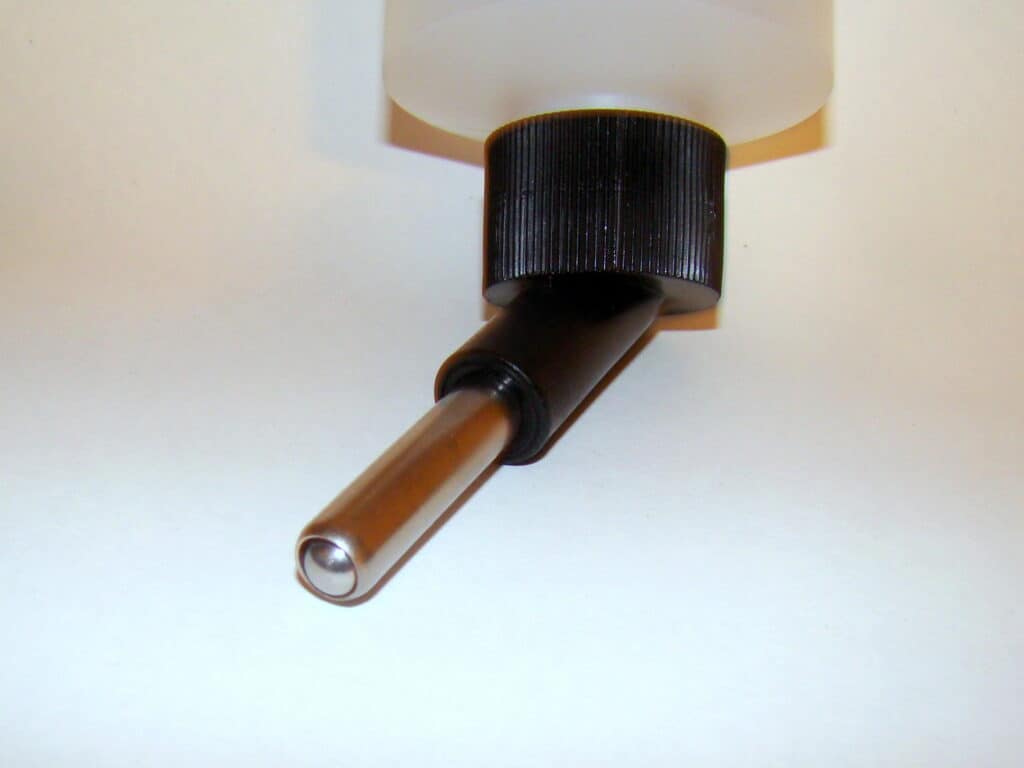
Standalone nipple drinkers, like the one shown above, are a popular middle ground. They connect to larger reservoirs, stay cleaner than bowls, and deliver water on demand. We have found that most rabbits learn to use nipple drinkers within a day or two if you dab a bit of banana on the nozzle tip during training.
Cleaning Tips for Each Type
For bowls, scrub daily with hot water and a dedicated brush. Avoid soap residue, as rabbits are sensitive to chemical tastes. Once a week, soak the bowl in a diluted white vinegar solution (1 part vinegar to 10 parts water) for 15 minutes to remove mineral buildup and biofilm.
For bottles, rinse and refill daily. Use a bottle brush to scrub the interior every 2 to 3 days. Clean the nozzle and ball bearing weekly by soaking in vinegar solution and using a pipe cleaner to clear any blockages. A clogged nozzle that drips slowly can leave a rabbit functionally without water.
How to Extend the Time Between Water Refills
Sometimes you need your water setup to last longer, whether you are going away for a day or simply managing a large rabbitry where efficiency matters. Here are proven strategies:
- Use larger bottles. Upgrade from 16-ounce to 32-ounce bottles, or use 1-liter bottles for giant breeds. A 32-ounce bottle will last a medium-sized rabbit about two full days under normal conditions.
- Install standalone nipple drinkers. These attach to standard soda bottles, gallon jugs, or even 5-gallon buckets. We use 2-liter soda bottles with nipple adapters for our grow-out cages, which last 3 to 4 days per rabbit.
- Position water sources away from hay feeders. Hay is the number one contaminant in water bowls. Placing the water source on the opposite side of the cage from the hay rack dramatically reduces debris.
- Provide multiple water sources. Two smaller bottles are better than one large one. If one clogs or runs dry, the rabbit still has a backup. This is especially important if you are away from home.
- Use insulated covers in extreme weather. In winter, neoprene bottle covers slow freezing by several hours. In summer, placing bottles in shaded areas prevents rapid warming and bacterial growth.
What Happens If You Don't Change Your Rabbit's Water?
Neglecting water changes is one of the most common and dangerous husbandry mistakes. The consequences range from mild discomfort to life-threatening emergencies.
Dehydration
Rabbits that refuse to drink stale or contaminated water will dehydrate within hours, especially in warm environments. Signs of dehydration in rabbits include sunken eyes, loss of skin elasticity, thick and dark urine, and lethargy. Severe dehydration can cause organ failure within 24 to 48 hours.
GI Stasis
Without adequate water, the digestive tract slows down and can stop entirely. This condition, known as gastrointestinal stasis, is one of the leading causes of death in domestic rabbits. The gut contents become dry and compacted, and the rabbit stops eating. According to the House Rabbit Society, GI stasis requires immediate veterinary intervention.
Bacterial Infections
Stagnant water harboring bacteria like Pasteurella, E. coli, or Clostridium can cause infections ranging from mild diarrhea to fatal enteritis. Young kits and elderly rabbits are especially vulnerable because their immune systems are weaker.
Urinary Stones
Rabbits metabolize calcium differently than most mammals. They absorb all dietary calcium and excrete the excess through urine. Without sufficient water to flush this calcium, it crystallizes and forms bladder sludge or stones. This is painful, can block the urinary tract, and often requires surgery to resolve.
Moist Dermatitis
Ironically, dirty water can also cause skin problems. Rabbits with dewlaps (the fold of skin under the chin) are prone to moist dermatitis when they repeatedly dip their dewlap into a dirty water bowl. The bacteria in the contaminated water infects the damp skin, causing sores and hair loss. This is particularly common in breeds like Flemish Giants and English Lops.
How to Tell If Your Rabbit Is Drinking Enough
Monitoring water intake is just as important as providing fresh water. Here are the methods we use in our rabbitry:
- Track water levels. Mark the water line on bottles with a marker each morning. By evening, you should see a noticeable decrease. If the level has not changed, investigate immediately.
- Check urine color and output. Normal rabbit urine ranges from pale yellow to deep amber or even reddish-orange (which is usually harmless plant pigment, not blood). Very dark, thick, or gritty urine suggests insufficient water intake.
- Perform the skin tent test. Gently pinch the skin at the back of your rabbit's neck and release. In a well-hydrated rabbit, the skin snaps back instantly. If it stays tented for more than 1 to 2 seconds, the rabbit is dehydrated.
- Monitor droppings. Healthy rabbit droppings are round, uniform, and slightly moist. Small, dry, crumbly droppings indicate dehydration. If you also notice a drop in droppings volume, the rabbit may not be eating or drinking enough.
- Watch for behavioral changes. A rabbit that sits hunched in a corner, grinds its teeth, or refuses food may be dealing with dehydration or the GI problems it causes.
If you suspect your rabbit is drinking excessive amounts of water, that can also signal a health issue. Conditions like kidney disease, diabetes, or dental problems can cause polydipsia (excessive thirst). A sudden, sustained increase in water intake warrants a vet visit.
Can You Use Tap Water for Rabbits?
Yes, tap water is perfectly safe for rabbits in most areas. If your local water is safe for you to drink, it is safe for your rabbits. We have raised hundreds of rabbits on tap water without any issues.
Some owners worry about chlorine in municipal water. While rabbits can taste chlorine more acutely than humans, the levels in treated tap water are not harmful. If your rabbit seems reluctant to drink tap water, try letting it sit in an open container for 30 minutes before serving. The chlorine will dissipate on its own.
Filtered water is a fine option if you prefer it, but it is not necessary. Avoid distilled water, however, as it lacks the minerals that rabbits need. Also avoid softened water, which can be high in sodium.
Well water is generally safe, but if you have not had your well tested recently, get a water quality report. High levels of nitrates, heavy metals, or bacteria in well water can affect rabbits just as they affect humans.
How to Encourage a Rabbit That Refuses to Drink
A rabbit that stops drinking is a rabbit in danger. Here are techniques we have used successfully to encourage reluctant drinkers:
- Switch the water container type. Some rabbits prefer bowls over bottles, or vice versa. Try offering both and see which one your rabbit gravitates toward. We have had rabbits that refused a bottle for weeks suddenly start drinking when offered a bowl.
- Add fresh herbs. Float a sprig of mint, basil, or cilantro in the water bowl. The scent and flavor can entice a picky rabbit. Remove the herbs after a few hours to prevent them from decomposing in the water.
- Adjust water temperature. In hot weather, slightly cool water (not ice cold) can be more appealing. In winter, room-temperature or slightly warm water may encourage drinking. Avoid extremes in either direction.
- Offer wet greens. If your rabbit will not drink from any container, soak leafy greens in water before feeding. Rabbits eating unlimited hay every day alongside wet greens will get some hydration through their food.
- Check the nozzle. A bottle nozzle that is clogged, dripping too slowly, or making an unusual sound can deter rabbits. Test the flow by tapping the ball bearing yourself. Replace nozzles that are corroded or stuck.
- Use a syringe for emergencies. If your rabbit has not drunk anything in several hours and shows signs of dehydration, use a needleless syringe to offer water directly. Gently insert the syringe tip into the side of the mouth and give 1 to 2 ml at a time. Do not squirt water directly down the throat, as this risks aspiration.
If none of these methods work within 12 hours, contact a rabbit-savvy veterinarian immediately. Prolonged refusal to drink often indicates pain, dental problems, or an underlying illness that requires professional diagnosis.
Frequently Asked Questions
Can I add apple cider vinegar to my rabbit's water?
Some breeders add a small amount of apple cider vinegar (about 1 tablespoon per gallon) to water for its purported health benefits, including improved fur quality and parasite resistance. While it is generally safe in small doses, there is limited scientific evidence supporting these claims. Always provide a secondary plain water source so your rabbit has a choice.
How long can a rabbit go without fresh water?
A healthy rabbit should never go more than 24 hours without fresh water. In hot weather, the safe window shrinks dramatically to just a few hours. Dehydration can trigger GI stasis, organ stress, and death surprisingly quickly. Always arrange for someone to check water if you will be away, even for a single day.
Should I give my rabbit cold water in summer?
Slightly cool water is fine and can encourage drinking during heat. However, avoid ice-cold water, as a sudden temperature shock can cause digestive upset. Adding one or two ice cubes to a bowl is acceptable because they melt gradually, keeping the water pleasantly cool without dropping the temperature too drastically.
Is it safe to use a water bowl for baby rabbits?
Water bowls can be risky for very young kits (under 3 weeks) because they can fall in and become chilled or even drown. Once kits begin leaving the nest box around 3 weeks of age, a shallow, heavy bowl works well. Before that age, kits get all their hydration from their mother's milk.
How do I keep my rabbit's water from freezing in winter?
In freezing temperatures, check water at least three times daily and replace frozen bottles with fresh ones. Heated water bottle covers and insulated nozzle guards are available from farm supply stores. Some breeders use heated water crocks designed for small livestock, which keep water above freezing. Rotate two bottles so one is always thawing indoors while the other is in use.
Cite this article:
BunnySync (February 24, 2026) How Often Should You Change Your Rabbit's Water?. Retrieved from https://bunnysync.com/blog/how-often-should-you-change-your-rabbits-water.
"How Often Should You Change Your Rabbit's Water?." BunnySync - February 24, 2026, https://bunnysync.com/blog/how-often-should-you-change-your-rabbits-water
Sources and further reading
- Buseth, Marit Emilie., and Richard A. Saunders. Rabbit Behaviour, Health, and Care. CABI, 2014.
- Lebas, F. The Rabbit: Husbandry, Health, and Production. Food and Agriculture Organization of the United Nations, 1997.
- Patry, Karen, et al. The Rabbit-Raising Problem Solver: Your Questions Answered about Housing, Feeding, Behavior, Health Care, Breeding, and Kindling. Storey Publishing, 2014.
- House Rabbit Society: Gastrointestinal Stasis, The Silent Killer
- Merck Veterinary Manual: Disorders and Diseases of Rabbits
Image credit - "File:Metal valve nipple.JPG" by Pogrebnoj-Alexandroff is licensed under CC BY 3.0