Yes, rabbits can die without water in as little as 24 hours. Dehydration leads to organ failure, gut stasis, heatstroke, and urinary stones, all of which can be fatal. A rabbit should always have access to fresh, clean water. If your rabbit has gone more than 12 hours without drinking, treat it as an emergency and contact your veterinarian immediately.
Water is not optional for rabbits. It is one of the most critical elements of their daily care. As breeders, we have seen firsthand how quickly a rabbit's health deteriorates when water runs out, especially during hot weather. Below, we cover exactly how dehydration kills rabbits, the warning signs to watch for, how much water your rabbit actually needs, and how to tell if your rabbit is already dehydrated.
How Can Rabbits Die Without Water?
Rabbits depend on a constant supply of water to maintain core body functions. When water is removed, multiple systems begin to fail simultaneously. Here are the four most dangerous conditions that develop when a rabbit goes without water.
Dehydration and Organ Failure
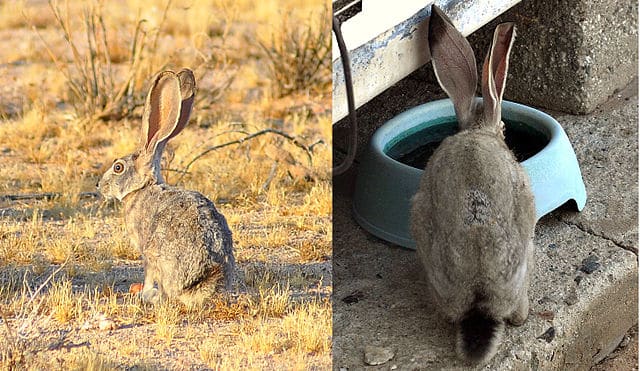
Dehydration is the most immediate threat. Rabbits need to drink 50 to 100 mL of water per kilogram of body weight every 24 hours. Without this intake, their blood volume drops, circulation slows, and organs begin to shut down.
A rabbit's kidneys are particularly vulnerable. They rely on adequate water flow to filter waste products from the blood. When water intake stops, toxins accumulate rapidly, and kidney damage can become irreversible within a day.
The speed of dehydration depends heavily on diet. Rabbits eating large amounts of fresh vegetables may hold on slightly longer because leafy greens contain 80 to 95 percent water. Rabbits on a dry diet of hay and pellets dehydrate much faster because these foods actually absorb moisture from the digestive tract.
Gastrointestinal Stasis (Gut Shutdown)
A rabbit's digestive system requires constant moisture to function. The gut processes food through a cycle of fermentation and cecotrophy that depends on water at every stage. Without enough hydration, the gut slows down and eventually stops moving entirely.
This condition is called gastrointestinal (GI) stasis, and it is one of the leading causes of death in pet rabbits. When the gut stops, food sits and ferments, producing painful gas. Bacteria overgrow, toxins leak into the bloodstream, and the rabbit's condition deteriorates fast.
GI stasis from dehydration can become life-threatening within 12 to 24 hours. If your rabbit stops pooping, that is a clear sign that the gut has slowed or stopped, and you need to act quickly.
Heatstroke
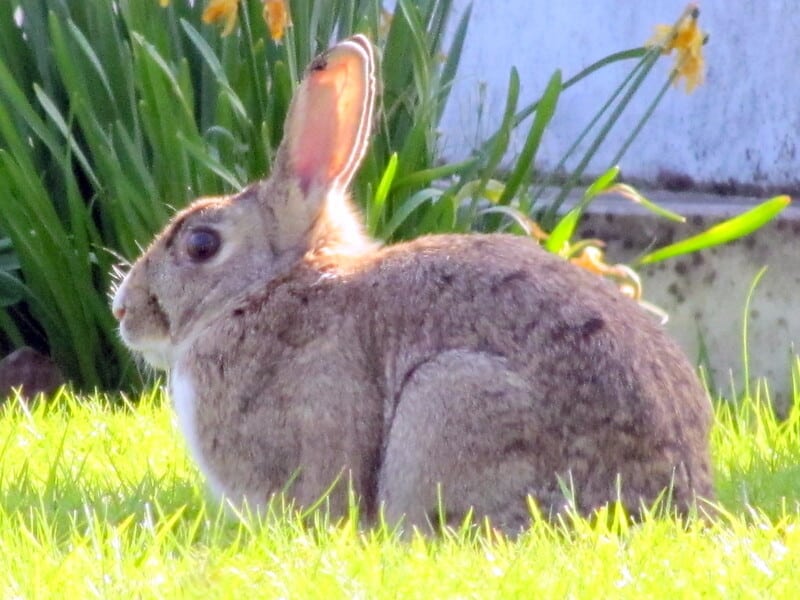
Rabbits are extremely heat-sensitive animals. They cannot sweat (except for a few glands on their lips) and they do not pant effectively like dogs. Their primary cooling mechanism is blood flow through their large ears, and this system requires adequate hydration to work.
When a dehydrated rabbit is exposed to temperatures above 80°F (27°C), heatstroke can develop rapidly. The ideal temperature range for rabbits is between 60°F and 70°F (15°C to 21°C). Without water on a warm day, a rabbit can die from heatstroke in just a few hours.
Signs of heatstroke include rapid breathing, drooling, reddened ears, lethargy, and collapse. By the time a rabbit is lying on its side and unresponsive, the condition may already be fatal.
Urinary Stones and Kidney Failure
Rabbits have a unique calcium metabolism. Unlike most mammals, they absorb all the calcium from their food and excrete the excess through their urine. This is why healthy rabbit urine often looks chalky or white.
This system only works when the rabbit drinks enough water to flush that calcium out. Without adequate water, calcium concentrates in the urinary tract and forms bladder stones or kidney stones. These stones cause excruciating pain, can block the urinary tract completely, and lead to kidney failure and death if not treated surgically.
How Long Can a Rabbit Survive Without Water?
Most rabbits will not survive longer than 24 hours without water. Under hot conditions or if the rabbit is already ill, death can occur even sooner.
Here is a general timeline of what happens when a rabbit loses access to water:
| Time Without Water | What Happens |
|---|---|
| 0 to 6 hours | Rabbit may not show obvious signs. Gut motility begins to slow. Urine output decreases. |
| 6 to 12 hours | Early dehydration sets in. Droppings become smaller and drier. Rabbit may appear quieter than usual. |
| 12 to 18 hours | Moderate dehydration. Skin loses elasticity. Appetite drops. Risk of GI stasis increases significantly. |
| 18 to 24 hours | Severe dehydration. Lethargy, sunken eyes, cold ears. Organ damage may be occurring. Emergency veterinary care needed. |
| Beyond 24 hours | Critical condition. High risk of organ failure, seizures, and death. Many rabbits do not survive past this point. |
These timeframes can shorten dramatically in hot weather. A rabbit without water in 90°F (32°C) heat may have only 6 to 12 hours before reaching a critical state.
Diet also plays a role. Rabbits fed primarily dry hay and pellets will dehydrate faster than rabbits who eat a generous portion of fresh leafy greens daily. However, vegetables alone cannot substitute for drinking water. They supplement hydration but do not replace it.
How Much Water Does a Rabbit Need Per Day?
Rabbits need between 50 and 100 mL of water per kilogram of body weight every day. This range accounts for variation in diet, activity level, ambient temperature, and reproductive status. A study published in the Journal of Veterinary Medicine confirmed this daily water requirement for healthy adult rabbits.
Here is a breakdown by breed size:
| Breed Size | Typical Weight | Daily Water Requirement |
|---|---|---|
| Small breeds (Netherland Dwarf, Mini Rex) | 1 to 3.5 lbs (0.5 to 1.6 kg) | 25 to 160 mL |
| Medium breeds (Holland Lop, Dutch) | 6 to 10 lbs (2.7 to 4.5 kg) | 135 to 450 mL |
| Large breeds (New Zealand, Californian) | 9 to 12 lbs (4 to 5.4 kg) | 200 to 540 mL |
| Giant breeds (Flemish Giant, Continental Giant) | 12 to 20+ lbs (5.4 to 9+ kg) | 270 to 900+ mL |
Pregnant and nursing does drink significantly more water. A lactating doe can consume two to three times her normal water intake. If her water runs out, milk production drops immediately and the kits can starve.
Rabbits also tend to drink more in summer and less in winter, more on dry-food diets and less when eating fresh greens. Always provide more water than you think your rabbit needs.
How to Tell If Your Rabbit Is Dehydrated
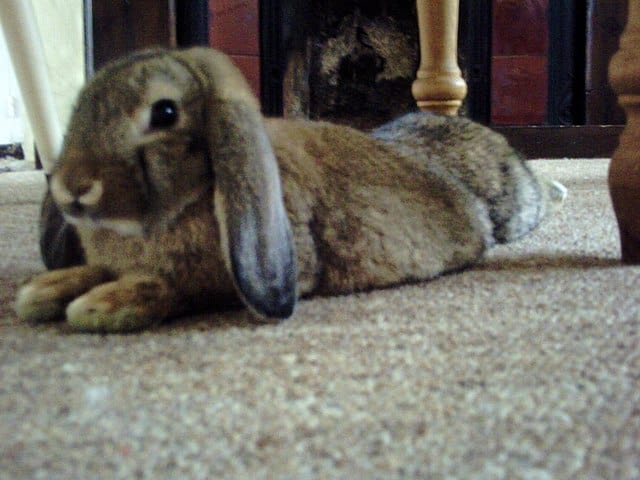
Catching dehydration early can save your rabbit's life. Here are the key symptoms to watch for, listed from earliest to most severe:
- Dark, strong-smelling urine: Concentrated urine with a heavy ammonia smell is often the first sign. Normal rabbit urine ranges from pale yellow to orange, but dehydrated urine is dark brown and pungent.
- Smaller, drier droppings: Healthy rabbit droppings are round, uniform, and slightly moist. Dehydrated droppings shrink, harden, and may come out fewer in number.
- Skin tenting: Gently pinch the skin at the back of your rabbit's neck and release. In a well-hydrated rabbit, the skin snaps back instantly. If it stays tented for 2 or more seconds, your rabbit is dehydrated.
- Loss of appetite: A dehydrated rabbit often refuses food. Since GI stasis is already a risk at this point, refusing food should always prompt immediate attention.
- Lethargy and weakness: A normally active rabbit that sits hunched in a corner, does not respond to its name, or refuses to move is likely in moderate to severe dehydration.
- Sunken eyes and cold ears: These are late-stage signs indicating severe dehydration. Cold ears mean blood is being redirected away from the extremities to protect vital organs.
- Fever or abnormally low body temperature: You can check this with a rectal thermometer (normal range is 101°F to 103°F or 38.3°C to 39.4°C), but it is best to let a veterinarian handle this.
If you notice even one or two of these signs, offer fresh water immediately and monitor your rabbit closely. If your rabbit refuses to drink or shows multiple symptoms, get to a vet without delay.
What Causes Dehydration in Rabbits?
The obvious cause is not having water available, but dehydration also develops for several less obvious reasons.
Empty or Contaminated Water Supply
This is the most common scenario. A water bottle malfunctions, a bowl tips over, or an owner forgets to refill it before leaving for the weekend. Rabbits can also refuse to drink water that has become stale or contaminated with debris, food, or droppings. Change your rabbit's water daily and always check that bottles are dispensing properly.
Diarrhea and Illness
Rabbits with diarrhea lose water rapidly through their droppings. This creates a dangerous cycle: the rabbit loses fluids faster than it can drink, lethargy sets in, and the rabbit becomes too weak to reach its water source. Diarrhea in rabbits is always a veterinary emergency.
Hot Weather and Poor Ventilation
Rabbits housed outdoors or in rooms without air conditioning are at higher risk during summer. High ambient temperatures increase water loss through respiration and ear circulation. A rabbit in direct sunlight with no shade or water access can overheat and dehydrate in just a few hours.
Post-Surgery and Dental Issues
Rabbits recovering from surgery may be too groggy or painful to drink on their own. Rabbits with overgrown teeth or dental abscesses may physically be unable to drink from a bottle or bowl. In both cases, the owner may not realize the rabbit is not drinking until dehydration has already set in.
Stress and Environmental Changes
A new home, a cage mate being removed, or a sudden loud noise can cause a rabbit to stop eating and drinking temporarily. While most rabbits resume within a few hours, some sensitive individuals need close monitoring to ensure they start drinking again.
How to Prevent Dehydration in Rabbits
Preventing dehydration is straightforward, but it requires consistency. Here is what works in practice.
Always Provide Multiple Water Sources
Use both a water bottle and a heavy ceramic bowl. If one fails, the other serves as a backup. We recommend this approach in our own rabbitry because water bottles can clog, and bowls can tip. Having both ensures your rabbit always has access.
Check Water Levels Twice Daily
Make it a habit to check water in the morning and again in the evening. Refill and clean as needed. In summer, check three times daily. Warm water breeds bacteria quickly, and rabbits may refuse to drink water that tastes or smells off.
Keep Water Cool in Summer
Drop a few ice cubes into your rabbit's water bowl during heat waves. You can also freeze a water bottle and place it in the cage so your rabbit can lie against it for cooling. Never rely on ice alone for hydration, though. Fresh liquid water must always be available.
Feed Water-Rich Vegetables Daily
Leafy greens like romaine lettuce, cilantro, and cucumber are 90 to 96 percent water. Including a daily serving of fresh vegetables supplements your rabbit's water intake and supports gut health. This is not a replacement for drinking water, but it provides a valuable hydration buffer.
Monitor Water Intake When You Travel
If you are leaving your rabbit with a pet sitter or going away for even one night, make absolutely clear that water must be checked and refilled. A rabbit that runs out of water while you are away may not survive until you return. Learn more about how long a rabbit can safely be left alone.
What to Do If Your Rabbit Is Already Dehydrated
If you suspect your rabbit is dehydrated, take these steps immediately:
- Offer fresh water right away. Place a shallow bowl of clean, room-temperature water directly in front of your rabbit. Some dehydrated rabbits will drink eagerly if water is made easy to access.
- Try syringe feeding water. If your rabbit refuses to drink on its own, use a small syringe (without the needle) to gently drip water into the side of its mouth. Give 1 to 2 mL at a time and allow your rabbit to swallow between doses. Do not force water, as aspiration into the lungs is dangerous.
- Offer water-rich foods. A leaf of romaine lettuce dipped in water, or a slice of cucumber, can encourage a reluctant rabbit to take in some fluid.
- Contact your veterinarian. If your rabbit is lethargic, has not eaten or pooped in more than 12 hours, or fails the skin tenting test, this is an emergency. Your vet may need to administer subcutaneous or intravenous fluids to rehydrate your rabbit safely.
- Keep your rabbit cool. Move the rabbit to the coolest room in your home. If it is summer, a fan blowing near (not directly at) the rabbit can help, along with a frozen water bottle wrapped in a towel placed in the enclosure.
Do not wait to see if your rabbit "gets better on its own." Rabbits hide illness as a survival instinct. By the time a rabbit looks visibly sick, the situation is often already serious.
When to See a Veterinarian
Bring your rabbit to an emergency vet if any of the following are true:
- Your rabbit has not eaten or had water for more than 12 hours.
- There are no droppings in the litter box for 12 or more hours.
- Your rabbit is limp, unresponsive, or breathing rapidly.
- The skin tenting test shows the skin staying up for more than 3 seconds.
- Your rabbit has diarrhea along with signs of dehydration.
- Ears are cold to the touch and eyes appear sunken.
Veterinary treatment for severe dehydration typically involves subcutaneous fluid therapy (fluid injected under the skin) or IV fluids. Your vet may also administer gut motility drugs if GI stasis has set in, and pain medication to help the rabbit start eating again.
Frequently Asked Questions
Can a rabbit survive 48 hours without water?
Most rabbits cannot survive 48 hours without water. Severe dehydration, organ damage, and GI stasis typically develop within 24 hours. In hot conditions, death can occur in as few as 12 hours without water access.
Do rabbits get enough water from vegetables alone?
No. While vegetables provide supplemental hydration, they do not provide enough water to sustain a rabbit long-term. A rabbit eating only vegetables would still need access to drinking water to meet its daily requirement of 50 to 100 mL per kilogram of body weight.
Is a water bottle or bowl better for rabbits?
Both work, and using both together is ideal. Bowls allow rabbits to drink more naturally and quickly. Bottles stay cleaner and cannot be tipped over. Having both ensures your rabbit always has access, even if one source fails.
Why is my rabbit not drinking water?
Common reasons include stale or dirty water, a malfunctioning bottle nozzle, dental pain, illness, stress, or the rabbit getting moisture from fresh vegetables. If your rabbit has stopped drinking for more than a few hours, check the water source first. If the water is fresh and accessible, consult your vet.
Can baby rabbits die without water faster than adults?
Yes. Kits and young rabbits have smaller body reserves and dehydrate faster than adults. Baby rabbits under 8 weeks rely on their mother's milk for hydration. Weaned juveniles should always have water available and should be monitored closely, especially during their first few days away from the doe.
Cite this article:
Cite this article:
BunnySync (March 5, 2026) Can Rabbits Die Without Water? What Every Owner Must Know. Retrieved from https://bunnysync.com/blog/can-rabbits-die-without-water.
"Can Rabbits Die Without Water? What Every Owner Must Know." BunnySync - March 5, 2026, https://bunnysync.com/blog/can-rabbits-die-without-water