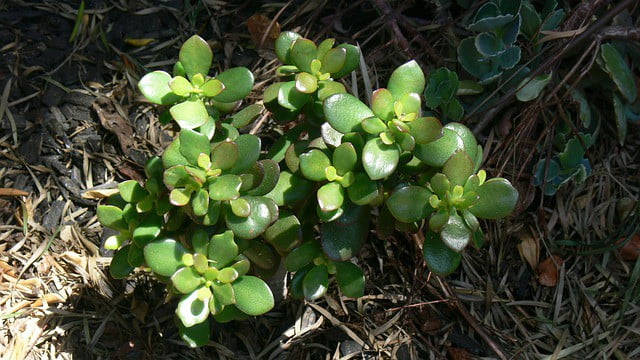
No, rabbits should not eat jade plants. Jade plants (Crassula ovata), also known as money plants or money trees, contain compounds that are toxic to rabbits and other small animals. If your rabbit has nibbled on a jade plant leaf, monitor them closely for signs of digestive upset, lethargy, or incoordination, and contact your veterinarian if symptoms develop.
As breeders, we have seen rabbits go after houseplants out of curiosity or boredom. Jade plants are especially risky because they sit at rabbit height on windowsills and coffee tables, and some rabbits find the thick, succulent leaves appealing to chew on. Below, we cover exactly what makes jade plants harmful, the symptoms to watch for, and which plants your rabbit can safely enjoy instead.
Are Jade Plants Toxic to Rabbits?
Yes, jade plants are considered toxic to rabbits. The ASPCA lists jade plants as toxic to cats, dogs, and horses, and veterinary guidance extends this caution to rabbits and other small herbivores. The exact toxic compounds in jade plants have not been fully identified by researchers, but the plant consistently produces adverse reactions in animals that ingest it.
Rabbits have a more sensitive digestive system than many other pets. Their gastrointestinal tract is designed to process high-fiber foods like timothy hay, leafy greens, and select herbs. Succulent plants like jade do not fit into this dietary profile at all. The waxy, moisture-rich leaves contain very little fiber and may irritate or damage the delicate lining of a rabbit's stomach and cecum.
Why Some Sources Say Jade Plants Are Safe
You may come across older articles or forum posts claiming jade plants are safe for rabbits in small amounts. This confusion likely comes from the fact that some rabbit owners have reported their rabbits nibbling a leaf without showing immediate, obvious symptoms. However, the absence of visible symptoms does not mean no harm is being done. Sub-clinical irritation to the gut lining, mild liver stress, or slow-building toxicity can occur without dramatic outward signs.
When it comes to your rabbit's health, it is always better to err on the side of caution. There are plenty of genuinely safe plants and herbs your rabbit can enjoy, so there is no reason to risk feeding jade.
What Happens If a Rabbit Eats a Jade Plant?
The severity of symptoms depends on how much jade plant material your rabbit consumed and their size. A single nibble off a leaf may produce mild or no visible symptoms, while eating several leaves or an extended period of access could cause serious problems.
Common Symptoms of Jade Plant Ingestion
| Symptom | Severity | Typical Onset |
|---|---|---|
| Loss of appetite | Mild to moderate | 2 to 6 hours |
| Lethargy or depression | Moderate | 2 to 12 hours |
| Soft stool or diarrhea | Moderate | 4 to 12 hours |
| GI stasis (gut slowdown) | Serious | 6 to 24 hours |
| Incoordination or stumbling | Serious | 6 to 24 hours |
| Vomiting attempts (rabbits cannot truly vomit) | Serious | Variable |
The most dangerous outcome is GI stasis, a condition where the rabbit's gut slows down or stops moving entirely. GI stasis can become life-threatening within 24 to 48 hours if left untreated. Signs include a rabbit that stops eating, stops producing droppings, and sits hunched in a corner. If you notice these signs after your rabbit has had access to a jade plant, seek veterinary care immediately.
What to Do If Your Rabbit Eats a Jade Plant
- Remove access immediately. Take the plant away and check how much has been eaten. Look for bite marks on leaves and stems.
- Offer plenty of hay. Providing unlimited timothy hay helps keep the gut moving and can dilute any irritating compounds.
- Monitor closely for 24 hours. Watch for changes in appetite, droppings, energy level, and coordination.
- Check droppings. Normal rabbit droppings are round, dry, and uniform. Soft, misshapen, or absent droppings indicate a problem.
- Contact your vet if symptoms appear. Do not wait to see if things improve on their own. Rabbit health can deteriorate quickly.
Why Do Rabbits Try to Eat Jade Plants?
Rabbits are natural foragers. In the wild, they sample a wide variety of plants, grasses, and herbs. Domesticated rabbits retain this instinct, and when they encounter a new plant within reach, their first response is usually to taste it. Jade plants are particularly tempting for a few reasons.
First, the thick, fleshy leaves have a satisfying texture for chewing. Rabbits enjoy gnawing on things with some resistance, which is why they also chew on cage bars and wooden items. Second, jade plants are often placed at ground level or on low surfaces, making them easily accessible. Third, a rabbit that is bored or not getting enough fiber and enrichment in their diet may be more inclined to seek out and chew on houseplants.
The fact that a rabbit willingly eats something does not make it safe. Rabbits will readily eat chocolate, bread, and other harmful foods if given the chance. Their instincts are not a reliable guide for what is nutritionally appropriate or non-toxic in a domestic setting.
How to Keep Your Rabbit Safe Around Jade Plants
If you want to keep both rabbits and jade plants in your home, the key is complete separation. Rabbits are creative and persistent when it comes to reaching things they want, so half measures rarely work.
Practical Tips for Plant Safety
- Elevate all jade plants. Place them on high shelves, wall-mounted plant holders, or hanging baskets that are well out of your rabbit's reach. Remember that rabbits can stretch upward and some can jump onto low furniture.
- Use a dedicated plant room. Keep jade plants and other toxic houseplants in a room your rabbit never has access to. This is the most reliable method.
- Block access with barriers. If your rabbit free-roams, use pet gates or exercise pen panels to block off areas where jade plants are kept.
- Check for fallen leaves. Jade plants occasionally drop leaves, especially when overwatered or moved. Sweep the area around your jade plants regularly so your rabbit cannot find dropped leaves on the floor.
- Supervise free-roam time. When your rabbit is out of their enclosure, keep an eye on where they go and what they nibble on.
What Plants Are Safe for Rabbits to Eat?
Instead of risking your rabbit's health with jade plants, offer them plants and herbs that are genuinely safe and nutritious. Many of these can even be grown indoors for a fresh supply.
Safe Herbs
| Herb | Benefits | Feeding Notes |
|---|---|---|
| Basil | Rich in vitamin K, anti-inflammatory properties | A few leaves daily is fine |
| Cilantro | Good source of vitamins A and C | Can be offered daily in moderate amounts |
| Parsley | High in vitamin C, supports immune health | Feed in moderation due to high calcium |
| Mint | Aids digestion, aromatic enrichment | A few sprigs several times per week |
| Oregano | Natural antimicrobial properties | Small amounts as part of a herb rotation |
Safe Forage Plants
If you want to give your rabbit access to live plants they can safely nibble on, consider these options:
- Dandelion greens are a natural favorite. Both the leaves and flowers are safe and rich in fiber, calcium, and vitamins A and C.
- Clover is commonly found in gardens and is safe for rabbits in moderate amounts. Avoid feeding large quantities as it can cause gas.
- Wheatgrass can be grown in trays indoors and provides a safe, fiber-rich snack your rabbit will enjoy pulling and chewing.
- Cat grass (oat grass) is another easy-to-grow indoor option that is completely safe for rabbits.
Safe Vegetables
For a full breakdown of which vegetables your rabbit can eat daily, check out our guide on safe vegetables for rabbits. As a quick reference, romaine lettuce, bell peppers, bok choy, and fennel are all excellent daily options.
Other Common Houseplants That Are Toxic to Rabbits
Jade plants are far from the only houseplant that poses a danger to rabbits. If you share your home with a free-roaming bunny, you should audit every plant in your space. Here are some of the most common toxic houseplants:
| Plant | Toxic Parts | Primary Risk |
|---|---|---|
| Jade Plant (Crassula ovata) | All parts | GI upset, lethargy, incoordination |
| Aloe Vera | Gel and latex | Diarrhea, tremors |
| Pothos (Devil's Ivy) | All parts | Oral irritation, swelling, difficulty swallowing |
| Philodendron | All parts | Oral irritation, GI distress |
| Dieffenbachia (Dumb Cane) | All parts | Severe oral irritation, swelling |
| Lily (various species) | All parts | Kidney damage, potentially fatal |
| Azalea/Rhododendron | All parts | Cardiovascular problems, potentially fatal |
| Foxglove | All parts | Heart failure, potentially fatal |
When in doubt about any plant, the safest approach is to assume it is not safe and keep it well out of reach. The ASPCA's toxic plant database is a reliable resource for checking specific species.
Building a Rabbit-Safe Environment
Creating a safe space for your rabbit goes beyond just removing toxic plants. A well-planned environment reduces the chances of your rabbit seeking out inappropriate things to chew or eat.
Provide Adequate Fiber
A rabbit that is getting enough hay is less likely to go searching for alternative things to chew. Hay should make up approximately 80% of your rabbit's diet. Provide unlimited timothy hay (or orchard grass for rabbits with timothy allergies) at all times. Supplement with a measured portion of quality pellets and a daily rotation of fresh leafy greens.
Offer Enrichment and Chew Toys
Boredom is one of the main reasons rabbits chew on things they should not. Provide a variety of safe chew items: apple wood sticks, willow branches, untreated wicker balls, cardboard tubes, and hay-stuffed toilet paper rolls. Rotate these items regularly to keep things interesting.
Rabbit-Proof Your Space
Before letting your rabbit free-roam, do a thorough sweep of the area. Check for:
- Houseplants within reach (move or remove them)
- Electrical cords (cover with split loom tubing)
- Small objects that could be swallowed
- Gaps behind furniture where a rabbit could get stuck
- Carpet edges or baseboards that invite chewing
A rabbit-proofed room benefits both your rabbit and your belongings. Taking 30 minutes to secure a space can prevent emergency vet visits and expensive damage.
Frequently Asked Questions
Can a small nibble of jade plant hurt my rabbit?
A single small nibble is unlikely to cause severe toxicity, but it can still irritate your rabbit's digestive tract. Remove access to the plant immediately, offer plenty of hay, and monitor your rabbit for 24 hours. Contact your vet if you notice lethargy, loss of appetite, or changes in droppings.
Are all succulents toxic to rabbits?
Not all succulents are toxic, but many common varieties including jade plants, aloe vera, and kalanchoe are harmful to rabbits. Hens and chicks (Sempervivum) are generally considered non-toxic, but it is best to prevent your rabbit from eating any succulent since they offer no nutritional value for rabbits.
What is the best indoor plant I can grow for my rabbit?
Wheatgrass and oat grass (cat grass) are the best options. They are easy to grow in small trays on a windowsill, completely safe for rabbits, and provide fiber and enrichment. You can also grow herbs like basil, cilantro, and parsley indoors for fresh treats.
How do I know if my rabbit has been poisoned by a plant?
Watch for loss of appetite, lethargy, hunched posture, diarrhea, reduced or absent droppings, wobbliness, or drooling. Any combination of these signs within 24 hours of potential plant exposure warrants an immediate vet visit. Early treatment dramatically improves outcomes.
Can jade plant soil or fertilizer also harm rabbits?
Yes. Many commercial potting soils contain perlite, vermiculite, or slow-release fertilizer granules that can be harmful if ingested. Rabbits that dig in plant pots may eat soil and fertilizer along with plant material, compounding the risk. Keep all potted plants fully out of your rabbit's reach.
Cite this article:
Cite this article:
BunnySync (March 9, 2026) Can Rabbits Eat Jade Plants? Why This Houseplant Is Dangerous. Retrieved from https://bunnysync.com/blog/can-rabbits-eat-jade-plants.
"Can Rabbits Eat Jade Plants? Why This Houseplant Is Dangerous." BunnySync - March 9, 2026, https://bunnysync.com/blog/can-rabbits-eat-jade-plants
Sources and further reading
- ASPCA. Jade Plant. Animal Poison Control, https://www.aspca.org/pet-care/animal-poison-control/toxic-and-non-toxic-plants/jade-plant.
- Patry, Karen, et al. The Rabbit-Raising Problem Solver: Your Questions Answered about Housing, Feeding, Behavior, Health Care, Breeding, and Kindling. Storey Publishing, 2014.
- Managing GI Stasis in Rabbits. Vet Times.
- Understanding the Basics of Rabbit Care. Utah State University Extension.