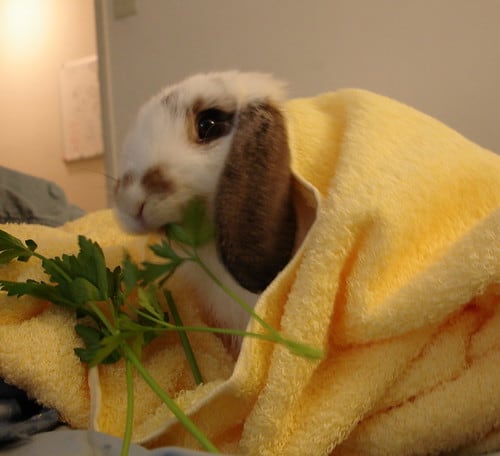
Yes, rabbits can eat parsley safely. Parsley is one of the most nutritious herbs you can offer your rabbit, packed with vitamins A, C, and K. Both flat-leaf and curly parsley are safe for rabbits older than 12 weeks, including the stems, leaves, and roots. The key is moderation: parsley contains higher levels of oxalic acid and calcium than many other greens, so rotate it with other safe vegetables rather than feeding it every day.
As breeders, we regularly include parsley in our rabbits' green rotations. It is one of the herbs that rabbits genuinely enjoy, and it provides real nutritional value when offered correctly. Below, we cover everything you need to know about feeding parsley to your rabbits, from portion sizes and frequency to oxalate concerns and safer alternatives.
Is Parsley Safe for Rabbits?
Parsley (Petroselinum crispum) is absolutely safe for rabbits when fed in appropriate amounts. It appears on the recommended leafy green lists from multiple rabbit welfare organizations, including the House Rabbit Resource Network. Veterinarians specializing in exotic animals also consider parsley a suitable addition to a rabbit's daily vegetable rotation.
The one exception is rabbits younger than 12 weeks old. At that age, their digestive systems are still developing, and introducing fresh greens too early can cause serious gastrointestinal distress. Wait until your rabbit is at least 12 weeks old before offering any fresh vegetables, including parsley.
For adult rabbits, parsley should be treated as one of several rotating greens in a diet that is primarily made up of unlimited timothy hay (about 80% of their total intake), a measured portion of pellets, and 1 to 2 cups of mixed fresh greens per 6 pounds of body weight daily.
What Types of Parsley Can Rabbits Eat?
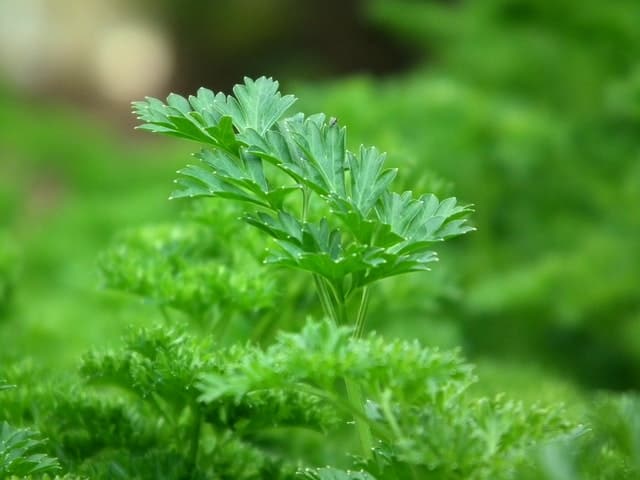
There are several varieties of parsley available, and rabbits can safely eat all of the common culinary types. Here is what you need to know about each one.
Flat-Leaf (Italian) Parsley
Flat-leaf parsley is the most common variety used in cooking and is perfectly safe for rabbits. It has a stronger flavor than curly parsley, which some rabbits prefer. Nutritionally, flat-leaf parsley tends to have slightly higher concentrations of essential oils and vitamins compared to curly varieties. In our experience, most rabbits accept flat-leaf parsley immediately and eat it with enthusiasm.
Curly Parsley
Curly parsley is equally safe for rabbits. It has a milder, slightly more grassy flavor. Many rabbit owners find that curly parsley is easier to offer because the textured leaves give rabbits something to grip and chew. Both varieties have similar nutritional profiles, so choose whichever your rabbit enjoys more or alternate between them for variety.
Parsley Root (Hamburg Parsley)
Parsley root is safe for rabbits in small quantities, but it has a higher starch and sugar content than the leafy portions. Treat parsley root more like a root vegetable (similar to carrots) and limit it to small pieces offered occasionally rather than as a daily green. A thin slice or two once or twice a week is plenty.
Nutritional Benefits of Parsley for Rabbits
Parsley is surprisingly nutrient-dense for a leafy herb. Per 100 grams of fresh parsley, your rabbit gets a meaningful dose of several essential vitamins and minerals that support overall health.
| Nutrient | Amount per 100g | Benefit for Rabbits |
|---|---|---|
| Vitamin A | 8,424 IU | Supports vision, immune function, and healthy skin |
| Vitamin C | 133 mg | Antioxidant support (rabbits produce their own, but extra helps) |
| Vitamin K | 1,640 mcg | Essential for proper blood clotting |
| Calcium | 138 mg | Supports bone and dental health |
| Potassium | 554 mg | Regulates fluid balance and muscle function |
| Iron | 6.2 mg | Supports healthy red blood cell production |
| Fiber | 3.3 g | Aids digestive function |
| Folate | 152 mcg | Supports cell growth and development |
The standout nutrients in parsley are vitamin A and vitamin K, both of which are present in exceptionally high amounts. Vitamin A is critical for maintaining healthy eyesight and a strong immune system in rabbits, while vitamin K supports proper blood clotting. This makes parsley particularly valuable for breeding does and growing kits who need extra nutritional support.
Parsley also provides a moderate amount of dietary fiber (3.3g per 100g), which contributes to the overall fiber intake that keeps a rabbit's digestive system functioning properly. However, hay remains the primary and most important source of fiber in any rabbit's diet, and parsley should never be treated as a fiber replacement.
How Much Parsley Should You Feed Your Rabbit?
The amount of parsley you can safely offer depends on your rabbit's size and age. As a general rule, parsley should be one component of a mixed salad of 3 to 5 different greens, not the only vegetable your rabbit eats in a sitting.
Here are recommended daily portions of mixed greens (including parsley) based on rabbit size:
| Rabbit Size (by breed) | Total Mixed Greens per Day | Parsley Portion (as part of mix) |
|---|---|---|
| Small breeds (1 to 3.5 lbs) | 1/2 to 1 cup | 3 to 5 sprigs |
| Medium breeds (6 to 10 lbs) | 1 to 2 cups | 5 to 10 sprigs |
| Large breeds (9 to 12+ lbs) | 2 to 3 cups | 8 to 15 sprigs |
These portions assume your rabbit is an adult (over 1 year old) and is already accustomed to eating fresh greens regularly. If your rabbit is new to parsley, start with smaller amounts and increase gradually over the course of a week.
Feeding Parsley by Age
Young rabbits need a more cautious introduction to fresh foods. Follow this age-based guideline when deciding how much parsley to offer:
| Age | Parsley Recommendation |
|---|---|
| Under 12 weeks | No parsley or other fresh vegetables |
| 12 weeks to 7 months | Introduce one new vegetable at a time, starting with less than 15g (1/2 oz) per day |
| 7 months to 1 year | Gradually increase variety and quantity of greens |
| Adult (1 to 5 years) | 1 to 2 cups of mixed greens per 6 lbs of body weight daily |
| Senior (6+ years) | Consult your veterinarian for a tailored diet plan |
Be especially careful when feeding leafy greens like parsley to young rabbits. Their digestive systems are the most vulnerable to disruption, and even a small amount of a new food introduced too quickly can trigger diarrhea or cecal dysbiosis.
How Often Can Rabbits Eat Parsley?
Because of its relatively high oxalic acid content, parsley should be fed 2 to 4 times per week rather than daily. On days when you do not offer parsley, rotate in lower-oxalate greens like cilantro, romaine lettuce, or bok choy.
A practical weekly rotation for a rabbit's greens might look like this:
- Monday: Parsley + romaine lettuce
- Tuesday: Cilantro + bok choy
- Wednesday: Basil + green leaf lettuce
- Thursday: Parsley + dandelion greens
- Friday: Mint + endive
- Saturday: Parsley + watercress
- Sunday: Cilantro + carrot tops
This rotation ensures your rabbit gets a wide range of nutrients while keeping oxalic acid and calcium intake at safe levels throughout the week. You do not need to follow this exact schedule, but the principle of rotating high-oxalate and low-oxalate greens is important for long-term urinary health.
Oxalic Acid and Calcium: Why Moderation Matters
The main reason parsley should not be fed daily is its oxalic acid and calcium content. Parsley contains up to 1,700 mg of oxalates per 100 grams, making it one of the higher-oxalate greens commonly fed to rabbits.
Oxalic acid binds with calcium in the digestive tract, forming calcium oxalate crystals. Rabbits process calcium differently than most mammals: they absorb all dietary calcium through their intestines and excrete the excess through their kidneys. This is why healthy rabbit urine often appears white or chalky. When calcium and oxalate levels are consistently elevated, the kidneys can become overloaded, leading to urinary sludge (thick, paste-like urine) or bladder stones.
According to the Rabbit Welfare Association and Fund (RWAF), urolithiasis is a relatively common condition in pet rabbits, and dietary management is a key part of prevention. Rabbits with a history of urinary problems, bladder sludge, or kidney disease should avoid high-oxalate and high-calcium greens like parsley, spinach, and kale entirely.
For healthy rabbits with no urinary history, feeding parsley 2 to 4 times per week and rotating with lower-oxalate options is sufficient to avoid problems. If you notice your rabbit's urine becoming consistently thick or gritty, reduce or eliminate high-calcium greens and consult your veterinarian.
What Are the Risks of Overfeeding Parsley to Rabbits?
Feeding too much parsley too often can lead to several health issues. Here are the three most common risks to be aware of.
Gastrointestinal Stasis
GI stasis is the most serious risk associated with any dietary imbalance in rabbits. When a rabbit fills up on parsley (or any fresh green) at the expense of hay, their fiber intake drops. Without enough long-strand fiber, the gut slows down or stops entirely. GI stasis is a medical emergency and can be fatal if not treated within 24 to 48 hours. The prevention is straightforward: always ensure hay makes up the bulk of your rabbit's diet, with greens like parsley serving as supplements rather than main courses.
Bladder Sludge and Urinary Issues
As discussed above, the calcium and oxalate content in parsley can contribute to urinary sludge and bladder stones when consumed in excess over time. Signs of urinary issues include thick white or gritty urine, straining to urinate, wet or stained fur around the hind end, reduced appetite, and hunched posture. If you notice any of these signs, remove high-calcium greens from the diet immediately and consult your veterinarian.
Diarrhea and Soft Cecotropes
Introducing too much parsley too quickly, especially to young rabbits or rabbits not accustomed to fresh greens, can cause loose stools or mushy cecotropes. Cecotropes are the nutrient-rich droppings that rabbits re-ingest directly from their anus, and when they become too soft, your rabbit may stop eating them. This leads to lost nutrition and messy fur around the tail area. Always introduce parsley gradually, starting with a small sprig and increasing the amount over the course of one to two weeks.
Which Parts of the Parsley Plant Can Rabbits Eat?
Rabbits can safely eat every part of the parsley plant. Here is a breakdown of each part and how to offer it:
- Leaves: The most commonly fed part. Rich in vitamins and easy for rabbits to eat. Offer freely as part of the recommended portion.
- Stems: Safe and provide a satisfying crunch. Slightly more fibrous than leaves, which is a bonus for dental wear. No need to remove them before feeding.
- Roots: Safe in small amounts. Higher in starch than the leafy parts, so treat them as an occasional addition rather than a staple. Wash thoroughly to remove dirt.
- Flowers: Safe to eat. If your parsley plant has bolted and produced small white or yellow flowers, your rabbit can still enjoy them without any concerns.
Always wash parsley thoroughly before feeding it to your rabbit. Store-bought parsley may carry pesticide residues, and garden-grown parsley can harbor soil-borne bacteria. A good rinse under cold running water for 30 seconds is sufficient. If possible, choose organic parsley to reduce pesticide exposure.
How to Introduce Parsley to Your Rabbit's Diet
If your rabbit has never eaten parsley before, follow these steps to introduce it safely and minimize the chance of digestive upset:
- Confirm your rabbit is at least 12 weeks old before offering any fresh vegetables.
- Start with one small sprig (about 2 to 3 leaves with the stem attached).
- Watch for digestive changes over the next 24 hours. Check for loose stools, reduced appetite, or changes in cecotrope consistency.
- If everything looks normal after 24 hours, you can offer a slightly larger portion the next day. Gradually increase to the full recommended amount over the course of 5 to 7 days.
- Only introduce one new food at a time. If you are introducing parsley this week, do not introduce any other new vegetables during the same period. This way, if your rabbit does have a reaction, you know exactly which food caused it.
Most rabbits tolerate parsley well from the very first feeding. It is one of the more digestible herbs available, and rabbits tend to eat it eagerly because of its appealing aroma and flavor.
What Other Herbs Can Rabbits Eat Instead of Parsley?
Variety is essential in a rabbit's diet. Offering the same greens every day, even safe ones, can lead to nutritional imbalances. Here are some other herbs that pair well with parsley in a weekly rotation:
- Cilantro: Low in oxalates and high in vitamins A and K. One of the best daily greens for rabbits.
- Basil: Safe and aromatic. Most rabbits enjoy the strong scent and flavor. Feed a few leaves at a time.
- Mint: Calming for the digestive tract and safe in moderate amounts. A good option when introducing variety.
- Dill: Low in both calcium and oxalates. A great choice for rabbits with urinary sensitivities or those prone to bladder sludge.
- Oregano: Safe in small amounts. Contains natural antibacterial compounds that may support gut health.
- Rosemary: Safe but very aromatic. Some rabbits will refuse it due to the strong scent, while others enjoy nibbling on the needles.
Rotating between these herbs throughout the week ensures your rabbit receives a broad spectrum of vitamins and minerals without overloading on any single compound like calcium or oxalic acid.
When Should You Avoid Feeding Parsley to Rabbits?
While parsley is generally safe, there are specific situations where you should remove it from your rabbit's diet entirely:
- Rabbits under 12 weeks old: Their digestive systems are too immature for fresh vegetables of any kind.
- Rabbits with known kidney disease or bladder sludge: The calcium and oxalate content can worsen these conditions significantly.
- Rabbits experiencing diarrhea or GI stasis: Remove all fresh foods and feed only hay until your rabbit recovers. Then reintroduce greens slowly under veterinary guidance.
- Rabbits already eating multiple high-oxalate foods: If your rabbit's daily greens already include spinach, beet greens, or Swiss chard, adding parsley on the same day pushes the total oxalate load beyond recommended levels.
- Pregnant does in late pregnancy (use caution): Parsley has historically been associated with mild uterine-stimulating properties in large doses. While the small amounts typically fed to rabbits are unlikely to cause issues, some experienced breeders prefer to limit parsley during the final week of pregnancy as a precaution.
Frequently Asked Questions
Can rabbits eat parsley every day?
It is better to limit parsley to 2 to 4 times per week. Daily feeding increases calcium and oxalic acid intake, which can contribute to urinary issues over time. Rotate parsley with lower-oxalate greens like cilantro, romaine lettuce, and bok choy for a balanced and varied diet.
Can baby rabbits eat parsley?
No. Rabbits under 12 weeks old should not eat any fresh vegetables, including parsley. After 12 weeks, introduce parsley gradually by starting with one small sprig and monitoring for digestive upset over 24 hours before increasing the amount.
Is flat-leaf or curly parsley better for rabbits?
Both types are equally safe and nutritious for rabbits. Flat-leaf parsley has a slightly stronger flavor, while curly parsley is milder and easier for rabbits to grip. Offer whichever variety your rabbit prefers, or alternate between the two for variety.
Can parsley cause bladder stones in rabbits?
Parsley alone does not cause bladder stones, but excessive consumption over time can contribute to calcium and oxalate buildup in the urinary tract. Feeding parsley in moderation (2 to 4 times weekly) and rotating with lower-calcium greens minimizes this risk for healthy rabbits.
Can rabbits eat dried parsley?
Yes, rabbits can eat dried parsley in small amounts. However, dried parsley is more concentrated in nutrients and oxalates per gram than fresh parsley, so use it sparingly. Fresh parsley is always the better option because it provides hydration and better mimics what rabbits eat naturally.
Cite this article:
BunnySync (February 27, 2026) Can Rabbits Eat Parsley? Safe Feeding Guide for 2026. Retrieved from https://bunnysync.com/blog/can-rabbits-eat-parsley.
"Can Rabbits Eat Parsley? Safe Feeding Guide for 2026." BunnySync - February 27, 2026, https://bunnysync.com/blog/can-rabbits-eat-parsley