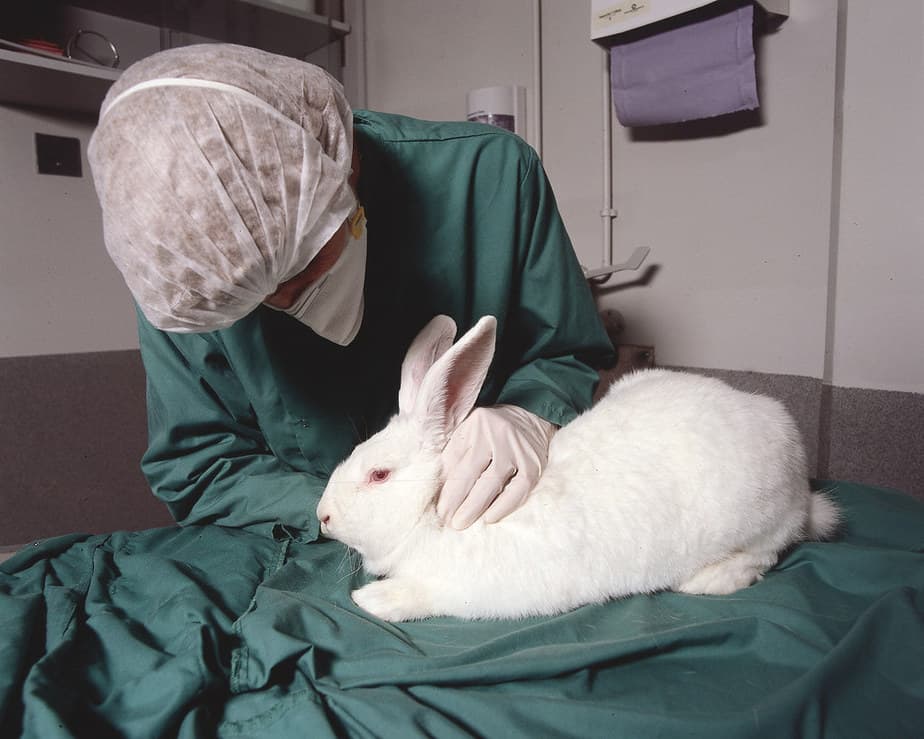
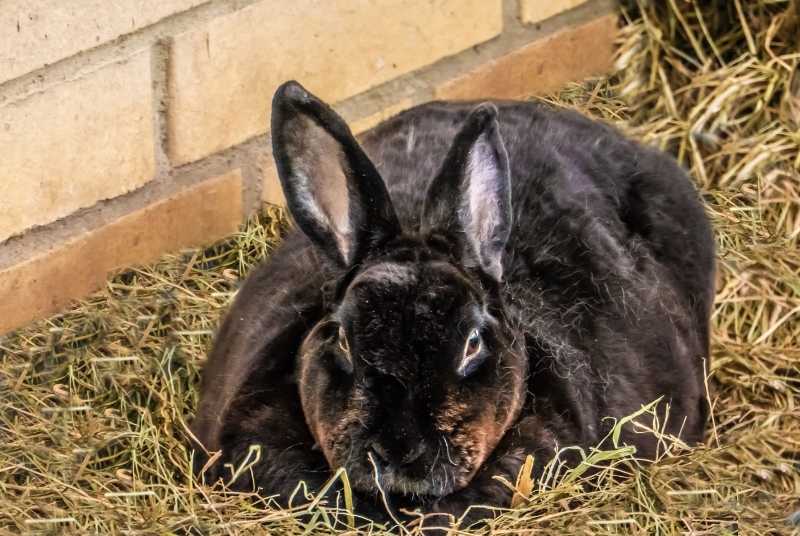
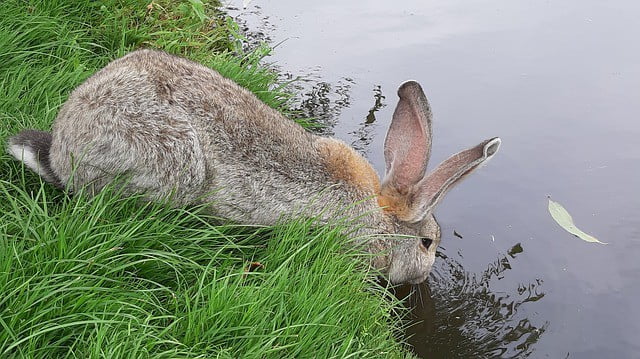
You can tell if your rabbit is blind by watching for behavioral changes like bumping into objects, hesitating before moving, not responding to visual cues, and going the wrong direction when called. Physical signs include cloudy or white eyes, swelling, redness, and pupils that do not react to light. As breeders, we have seen rabbits lose their vision from cataracts, E. cuniculi infections, corneal ulcers, and simple old age. The good news is that blind rabbits can still live full, happy lives with a few adjustments to their environment and routine.
What Are the Signs of Blindness in Rabbits?
Rabbits rely heavily on their other senses, especially hearing and smell, which means they can compensate for vision loss surprisingly well. This makes blindness tricky to spot early. Here are the most reliable signs to watch for.
1. Bumping Into Objects and Furniture
Healthy rabbits are agile and precise, even at full speed. Because rabbits can see nearly 360 degrees around them, they rarely collide with furniture, walls, or cage boundaries under normal circumstances.
A rabbit that has suddenly started bumping into objects, misjudging jumps, or running headfirst into walls is showing one of the clearest signs of vision loss. Pay close attention during free-roam time. If your rabbit clips the edges of furniture it used to avoid, or crashes into items that have not moved, that is a red flag.
One important note: if you rearrange furniture and your rabbit suddenly starts bumping into things, it may actually suggest that your rabbit has been blind for a while. Blind rabbits memorize the layout of their environment and navigate by memory. Move a chair, and their mental map no longer matches reality.
2. Hesitant or Cautious Movement
Blind rabbits often become noticeably more cautious in how they move. Instead of binkying and zooming around, a rabbit with vision problems may take slow, deliberate steps. You might notice them stretching their head forward before hopping, almost as if they are feeling their way through space.
Some rabbits will stick close to walls and edges, using them as guides. Others will stay in one spot for long periods, unwilling to venture into open areas. This reluctance to explore is especially telling in a rabbit that used to be confident and active. If your rabbit seems stressed and withdrawn for no apparent reason, impaired vision could be the cause.
3. Not Responding to Visual Cues
Try waving your hand or a favorite treat in front of your rabbit without making a sound. A rabbit with healthy vision will track the movement, perk up, or come toward the treat. A blind rabbit will show no reaction until the treat is close enough to smell.
Similarly, try approaching your rabbit from the side silently. A sighted rabbit will notice you coming and turn toward you. A blind rabbit will not react until you touch them or they hear your footsteps. This test is one of the most straightforward ways to check your rabbit's vision at home.
4. Going the Wrong Direction When Called
Sighted rabbits use both sight and sound to locate you. When you call a sighted rabbit, they look at you first, then hop over. A rabbit losing its vision will hear your voice but may head in the wrong direction, especially if the sound echoes or bounces off walls.
This disorientation tends to be most obvious in the early stages of vision loss, when your rabbit is still adjusting. Over time, most rabbits get better at pinpointing sound sources, but the initial confusion period is a clear warning sign.
5. Eyes Not Reacting to Light
A simple pupil test can reveal a lot. Shine a small flashlight (not too bright) toward your rabbit's eye from about 12 inches away. In a healthy eye, the pupil will constrict, or shrink, in response to the light. If the pupil stays dilated and does not change size, there may be significant damage to the retina or optic nerve.
Perform this test in a dimly lit room for the clearest results. Check both eyes individually, as rabbits can lose vision in just one eye while the other remains functional. One-sided blindness is harder to detect because the rabbit can still partially compensate.
6. Increased Sensitivity to Sounds and Touch
When a rabbit loses its vision, its brain starts relying more heavily on hearing and touch. You may notice your rabbit flinching, thumping, or startling at sounds that never bothered them before: footsteps, a closing door, or even your voice at normal volume.
This heightened startle response is especially common in the weeks after vision loss begins. The rabbit is essentially recalibrating how it interprets the world. If your rabbit is reacting strongly to everyday sounds, consider that their vision may be compromised.
7. Physical Changes in the Eyes
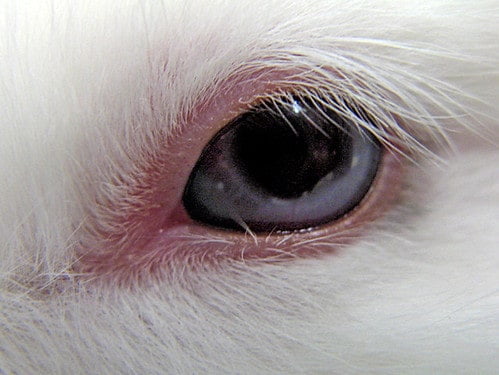
Physical signs are often the most definitive indicators. Look for any of the following:
- Cloudiness or white film over the lens, which usually indicates cataracts
- Redness and swelling around the eye or eyelids
- Bulging or sunken eyeball, which can signal glaucoma or infection
- Persistent discharge or crusting around the eyes
- A visible wound or scratch on the surface of the eye
- One pupil larger than the other, indicating uneven damage
- White mass inside the eye, which may indicate E. cuniculi or an abscess
If you notice any of these physical changes, do not wait. Schedule a vet visit immediately, as some causes of blindness are treatable if caught early.
How to Test Your Rabbit's Vision at Home
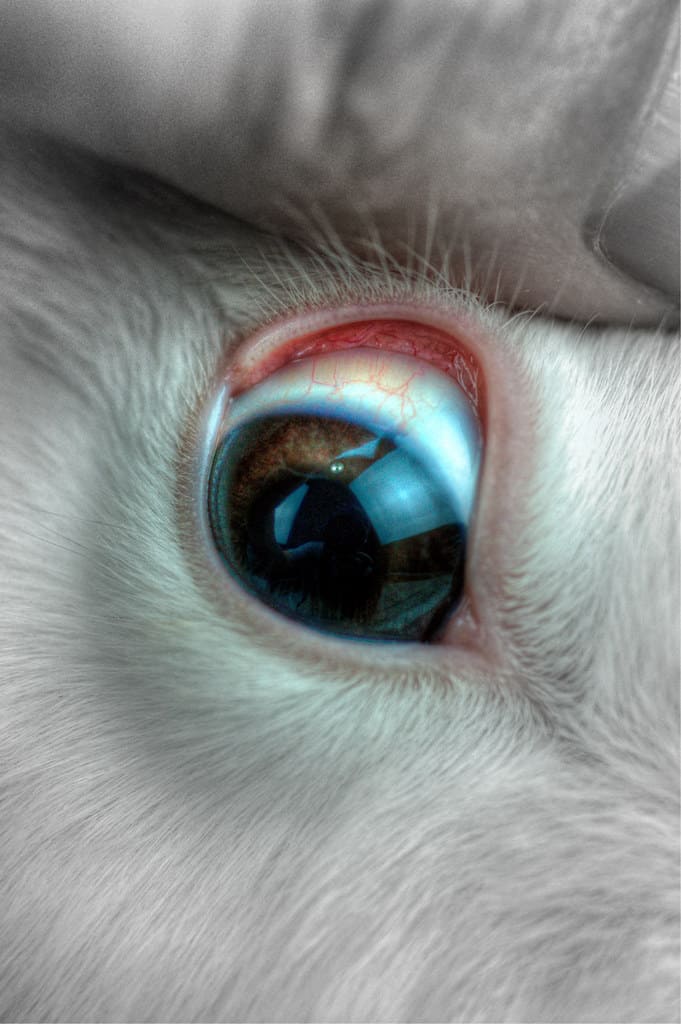
Before heading to the vet, you can run a few simple tests at home to assess your rabbit's vision. These are not replacements for a professional exam, but they can help you determine whether an urgent visit is needed.
| Test | How to Do It | What It Tells You |
|---|---|---|
| Menace response | Move your hand quickly toward your rabbit's eye (without touching or creating a breeze) | A sighted rabbit will blink or flinch. No reaction suggests vision loss. |
| Tracking test | Move a treat or toy silently across your rabbit's field of vision | A sighted rabbit will follow the object with their eyes or head. |
| Pupil light reflex | Shine a small flashlight at the eye from 12 inches away in a dim room | The pupil should constrict. No change may mean retinal or nerve damage. |
| Obstacle course | Place a few soft objects in your rabbit's free-roam area and observe | A blind rabbit will collide with or hesitate near the new objects. |
| Cotton ball drop | Drop a cotton ball silently in front of your rabbit | A sighted rabbit will track the falling object. A blind rabbit will not react. |
If your rabbit fails multiple tests, book an appointment with a rabbit-savvy veterinarian as soon as possible. Early diagnosis can make the difference between treatable and permanent vision loss.
What Causes Blindness in Rabbits?
Understanding why rabbits go blind helps you prevent it when possible and recognize the urgency of treatment. Here are the most common causes.
Cataracts
Cataracts are the leading cause of blindness in rabbits. They appear as a milky or cloudy film over the lens of the eye and can affect one or both eyes. In many cases, cataracts develop gradually with age, but they can also result from diabetes, poor nutrition, trauma, or E. cuniculi infection.
In older rabbits (7 years and above), cataracts are common and often unavoidable. Surgical removal is possible in some cases, but it requires a specialist veterinary ophthalmologist and carries anesthetic risk. Many rabbit owners choose to manage cataracts conservatively by adapting the rabbit's living space instead.
E. Cuniculi
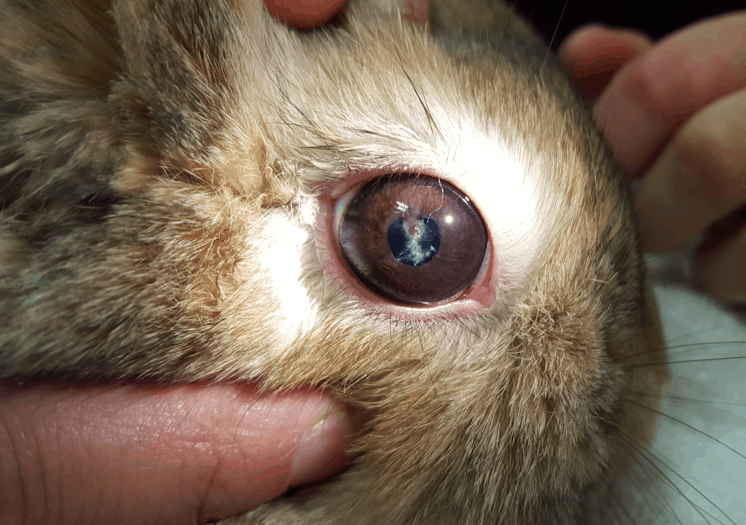
Encephalitozoon cuniculi is a microscopic parasite that infects the kidneys, brain, and eyes. It is one of the most serious causes of sudden blindness in rabbits. The parasite can live dormant in a rabbit's body for years before flaring up, often when the rabbit is stressed or immunocompromised.
When E. cuniculi targets the eyes, it causes a condition called phacoclastic uveitis, where the lens of the eye ruptures from the inside. You will often see a white, cottony mass forming inside the eye, along with severe inflammation, redness, and pain. The affected eye may need to be surgically removed (enucleated) if the infection cannot be controlled.
Treatment typically involves a course of fenbendazole (Panacur) for 28 days, along with anti-inflammatory medication. Early treatment is critical. If you suspect E. cuniculi, get to a vet within 24 to 48 hours.
Corneal Ulcers and Scratched Eyes
A scratch on the surface of the eye (the cornea) can develop into a painful corneal ulcer if left untreated. Common causes include hay poking the eye, rough bedding material, dust from poor-quality litter, or scratches from other rabbits during scuffles.
Corneal ulcers cause squinting, excessive tearing, and visible redness. The rabbit may paw at the affected eye or keep it closed. Untreated ulcers can perforate the cornea and cause permanent vision loss. Treatment involves antibiotic eye drops, pain medication, and sometimes a protective eye patch. Most ulcers heal within 1 to 2 weeks with proper care.
Glaucoma
Glaucoma occurs when fluid pressure inside the eye builds up, damaging the optic nerve. The affected eye often appears larger or more bulging than normal. Glaucoma is painful, and you may notice your rabbit squinting, rubbing their face, or becoming withdrawn.
Some rabbit breeds are more genetically predisposed to glaucoma, including New Zealand Whites and Dwarf breeds. Treatment options include pressure-reducing eye drops, pain management, and in severe cases, enucleation (removal of the eye). Glaucoma is considered a veterinary emergency because the longer the pressure remains elevated, the more permanent the nerve damage becomes.
Age-Related Vision Loss
Just like humans, rabbits experience a gradual decline in vision as they age. Rabbits older than 7 or 8 years commonly develop some degree of vision impairment, whether from cataracts, retinal degeneration, or general lens hardening.
Age-related vision loss is typically slow and progressive, giving the rabbit time to adjust. Many owners do not even realize their senior rabbit has lost significant vision because the rabbit compensates so effectively with its other senses.
Congenital Blindness
Some rabbits are born blind or with severely underdeveloped eyes. This is more common in certain color genetics, particularly in double-dwarf (peanut) kits and rabbits carrying the Vienna gene (which produces blue-eyed whites). Congenital blindness is not painful, and these rabbits adapt from birth, so they typically live perfectly normal lives without any special accommodations.
Can a Blind Rabbit Still Live a Happy Life?
Absolutely. Blind rabbits adapt remarkably well. Rabbits are not primarily visual animals the way humans are. Their world is built on smell, hearing, whisker sensation, and spatial memory. A rabbit that loses its sight will lean harder on these senses and, within a few weeks, often navigates its space with near-normal confidence.
We have personally worked with blind rabbits that binky, groom themselves, eat well, and interact socially with bonded partners just as happily as sighted rabbits. Blindness alone is not a reason to consider euthanasia. As long as the underlying cause is managed and the rabbit is not in chronic pain, blind rabbits can live out their full lifespan.
That said, blind rabbits are more prone to depression if they are isolated or under-stimulated. Companionship, consistent routine, and an enriching environment are essential for their mental health.
How to Care for a Blind Rabbit
Caring for a blind rabbit requires some adjustments, but nothing extreme. The core principles are consistency, safety, and communication.
Make the Living Space Safe
Remove sharp edges, cover wire flooring, and block off any drops or ledges. Keep food bowls, water bottles, litter boxes, and hiding spots in the exact same locations. Blind rabbits build a mental map of their space, so moving things around will disorient and stress them.
If you need to rearrange, do it gradually. Move one item at a time and give your rabbit a day or two to adjust before changing anything else. Use textured mats or rugs to create "landmarks" that your rabbit can feel with their paws, helping them orient themselves.
Keep a Consistent Routine
Feed at the same times each day. Approach from the same direction. Use the same verbal cues when you pick your rabbit up, offer food, or begin free-roam time. Predictability reduces anxiety for a rabbit that cannot see what is coming next.
Avoid startling your blind rabbit. Always speak softly before touching them so they know you are there. A sudden unexpected touch can cause panic and may even trigger a bite out of fear. Learning how to calm a scared rabbit is especially important when your rabbit cannot see.
Communicate Through Sound and Scent
Talk to your rabbit more often. Use a consistent word or sound when entering the room, offering food, or initiating handling. Blind rabbits quickly learn to associate specific sounds with specific events.
Scent is equally powerful. Avoid washing all of your rabbit's bedding and blankets at the same time, as this strips away the familiar scents they use for navigation. Wash items in rotation so there is always something that smells like "home." You can also place a small amount of your rabbit's own scent (from chin rubbing) on key landmarks in their space.
Provide Exercise and Enrichment
Blind rabbits still need daily exercise and mental stimulation. Create a safe, enclosed free-roam area with consistent boundaries. Use scented toys, crinkle balls, and treat-dispensing puzzles that engage their sense of smell and hearing rather than sight.
Tunnels are excellent for blind rabbits because the enclosed walls provide physical feedback and a sense of security. Willow balls and other chew toys also work well, as rabbits locate them by smell and texture.
When Should You Take Your Rabbit to the Vet?
Some causes of blindness are medical emergencies. Get to a rabbit-savvy vet as soon as possible if you notice any of the following:
- Sudden onset of blindness (within hours or a day)
- A visible white mass or growth inside the eye
- One eye noticeably larger or more protruding than the other
- Severe redness, swelling, or discharge from the eye
- Your rabbit is in obvious pain: grinding teeth, hunching, refusing to eat
- Head tilt or loss of balance alongside vision changes (may indicate E. cuniculi affecting the brain)
For gradual vision decline in an older rabbit with no pain or physical eye changes, a routine vet check within a week is usually sufficient. The vet can perform a thorough ophthalmic exam, check for underlying conditions, and advise on management.
Always choose a veterinarian experienced with rabbits. General small-animal vets may miss rabbit-specific conditions like E. cuniculi or lens luxation. If your regular vet is unsure, ask for a referral to an exotic animal specialist.
Frequently Asked Questions
Can rabbits go blind overnight?
Yes, sudden blindness can occur from acute E. cuniculi flare-ups, lens luxation, retinal detachment, or severe trauma. If your rabbit shows signs of sudden vision loss, treat it as an emergency and contact your vet within 24 hours. Early intervention can sometimes restore partial vision.
Do blind rabbits suffer?
Blindness itself is not painful. However, the underlying cause may involve pain, such as glaucoma, corneal ulcers, or infections. Once the cause is treated and pain is managed, most blind rabbits adapt well and show no signs of distress or reduced quality of life.
Can cataracts in rabbits be treated?
Cataract surgery (phacoemulsification) is available for rabbits but requires a specialist veterinary ophthalmologist. The procedure carries anesthetic risks, and not all rabbits are good candidates. Many owners manage cataracts conservatively by adjusting the rabbit's environment instead of pursuing surgery.
How long do blind rabbits live?
Blind rabbits have the same life expectancy as sighted rabbits, assuming the cause of blindness is not a life-threatening condition. With proper care, a safe environment, and regular vet checkups, blind rabbits commonly live 8 to 12 years, the same as their sighted counterparts.
Can blind rabbits live with other rabbits?
Yes, and bonded companionship is highly recommended. A sighted bonded partner can serve as a guide, helping the blind rabbit navigate and feel secure. Introduce new companions slowly and supervise initial interactions, as the blind rabbit may startle more easily during the bonding process.
Cite this article:
Cite this article:
BunnySync (February 26, 2026) How To Tell If Your Rabbit Is Blind: Signs, Causes, and Care Guide. Retrieved from https://bunnysync.com/blog/how-to-tell-if-your-rabbit-is-blind.
"How To Tell If Your Rabbit Is Blind: Signs, Causes, and Care Guide." BunnySync - February 26, 2026, https://bunnysync.com/blog/how-to-tell-if-your-rabbit-is-blind
Sources and further reading
- Buseth, Marit Emilie., and Richard A. Saunders. Rabbit Behaviour, Health, and Care. CABI, 2014.
- Lebas, F. The Rabbit: Husbandry, Health, and Production. Food and Agriculture Organization of the United Nations, 1997.
- Patry, Karen, et al. The Rabbit-Raising Problem Solver: Your Questions Answered about Housing, Feeding, Behavior, Health Care, Breeding, and Kindling. Storey Publishing, 2014.
- Corneal abrasion and ulceration in rabbits
- Cloudy Eye in Rabbits (PetMD)