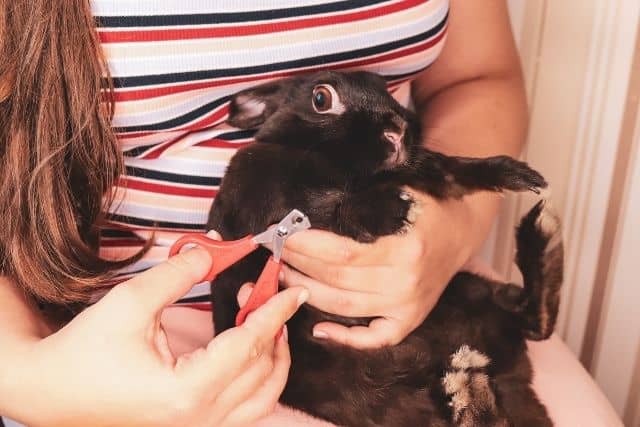
Yes, two female rabbits will fight, especially if both are unspayed. In fact, female rabbits (does) fight more frequently than two males housed together. Once does reach sexual maturity at around 3 to 4 months old, hormonal changes trigger territorial aggression that leads to regular scuffles. The most effective way to prevent fighting is to spay both rabbits before puberty and follow a proper bonding process.
If you already have two does that are fighting, or you are thinking about getting a second rabbit, this guide covers everything you need to know: why female rabbits fight, the warning signs to watch for, and proven strategies to stop the aggression for good.
Do Female Rabbits Fight More Than Males?
This surprises many rabbit owners, but female rabbits actually fight more frequently than two male rabbits housed together. The difference is in the nature of the fights themselves. Does tend to have shorter, more frequent scuffles throughout the day. Bucks fight less often but with far more intensity and violence.
Male rabbit fights are more likely to result in severe injuries or death. Female fights typically involve chasing, nipping, fur pulling, and lunging. While these are usually less violent than buck confrontations, repeated fighting still causes significant injuries over time. Shredded ears, bite wounds on the face and body, and patches of torn-out fur are all common results of ongoing doe aggression.
According to rabbit behaviorists and experienced breeders, the hormonal profile of unspayed does makes them particularly prone to territorial disputes. Female rabbits experience fluctuating hormone levels that trigger sudden bouts of aggression, even between rabbits that previously got along well.
Will Two Female Rabbit Siblings Fight?
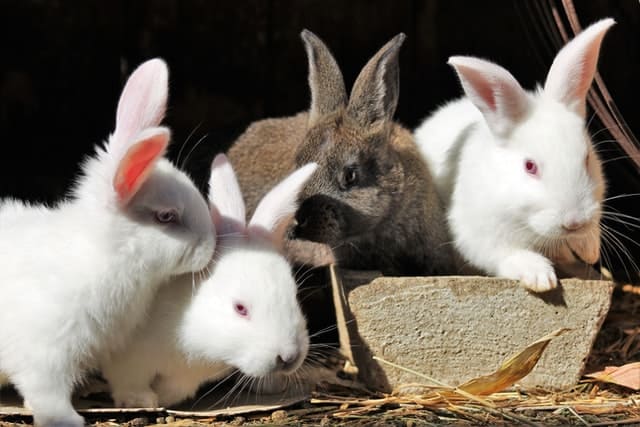
Two female rabbit siblings will be inseparable as babies, but once they hit puberty at 3 to 4 months old, fighting is almost guaranteed. The bond they formed as kits breaks down when hormonal changes kick in and territorial instincts take over.
Many owners make the mistake of assuming that because their two sister rabbits grew up together, they will always get along. This is one of the most common misconceptions in rabbit care. Littermate does that were cuddling and grooming each other at 8 weeks old can turn into enemies by 16 weeks.
The transition usually starts with subtle signs. You might notice one rabbit mounting the other (this is a dominance behavior, not mating), chasing the other away from food, or nipping during what used to be friendly interactions. If you do not intervene at this stage, the aggression will escalate into full-blown fights.
If you have two female siblings, get both of them spayed before they reach 3 to 4 months of age. If they are already fighting, you will need to separate them, get both spayed, wait for the hormones to settle (typically 4 to 8 weeks after surgery), and then re-bond them on neutral territory.
Why Do Two Female Rabbits Fight?

Understanding the root cause of aggression is the first step to solving it. Female rabbits fight for several reasons, and the cause determines the right solution.
Hormonal Aggression in Unspayed Does
This is by far the most common reason two female rabbits fight. Unspayed does experience surges in reproductive hormones that make them aggressive and territorial. These hormones are designed to help wild rabbits defend their nesting sites, but in a domestic setting they cause serious problems when two does share the same space.
Hormonal aggression typically begins at puberty (3 to 4 months) and gets worse as the rabbits mature. Some does become aggressive as early as 10 weeks, while others may not show signs until 5 or 6 months. Larger breeds tend to reach puberty slightly later than dwarf or medium breeds.
The House Rabbit Society strongly recommends spaying all female rabbits. Beyond behavioral benefits, unspayed does have up to an 80% chance of developing uterine cancer by age 4, making spaying a health priority as well.
Territorial Behavior
Rabbits are naturally territorial animals. In the wild, does establish and defend their own burrow systems. This instinct carries over to domestic rabbits. A female rabbit will consider her cage, food bowl, litter box, and even certain areas of the room as "hers."
When a second female rabbit enters this perceived territory, the resident doe will often react with aggression. This is why rabbits that seemed fine together can start fighting all of a sudden after a cage rearrangement, a move to a new home, or even after one rabbit returns from a vet visit smelling different.
Territorial aggression is especially intense around food and water sources. If two does share a single food bowl or water bottle, expect conflicts. Providing duplicate resources is a simple but effective way to reduce territorial disputes.
Protecting Kits or Pregnancy
A pregnant doe or a mother with a litter becomes extremely protective and aggressive. This is a strong survival instinct. In the wild, other rabbits (including other females) can pose a threat to newborn kits, so the mother will fight off any rabbit that comes too close to her nest.
If one of your female rabbits is pregnant, separate them immediately. Do not wait for fighting to start. A pregnant doe can inflict serious injuries on another rabbit, and the stress of fighting can cause complications with the pregnancy, including miscarriage or the mother killing her own kits after birth.
Pain or Illness
A rabbit that is sick or in pain may become aggressive toward cage mates. This is a defensive response. In the wild, showing weakness makes a rabbit vulnerable, so a sick rabbit may lash out to keep other animals at a distance.
If two spayed female rabbits that have been living peacefully together suddenly start fighting, pain or illness should be your first suspicion. Look for these signs:
- Loss of appetite or changes in droppings
- Grinding teeth loudly (a sign of pain, not contentment)
- Hunched posture or reluctance to move
- Patches of missing fur or visible wounds
- Swelling around the jaw, which could indicate dental problems
Take the aggressive rabbit to a veterinarian for a thorough examination. The problem may be something you cannot see externally, such as GI stasis, a urinary tract infection, or dental issues.
Improper Bonding Introduction
Throwing two female rabbits into the same space without a proper introduction process is a recipe for disaster. Rabbits need a slow, structured bonding process to accept a new companion. Skipping this step almost always results in fighting.
Even two spayed does with calm temperaments will fight if they are forced together in one rabbit's established territory. Bonding must happen on neutral ground where neither rabbit feels the need to defend her space.
Insufficient Living Space
Two rabbits living in a cage that is too small for even one rabbit will inevitably fight. Cramped quarters increase stress, limit escape routes during disagreements, and make it impossible for the subordinate rabbit to give the dominant rabbit enough space.
For two rabbits, the minimum recommended space is at least 12 square feet of living area (not including exercise time), though more is always better. Each rabbit should be able to get out of the other's line of sight. If space is limited, consider setting up separate hutches side by side so they can interact through the bars without being able to fight.
Warning Signs That Female Rabbits Are About to Fight
Rabbit fights can escalate quickly, but there are usually warning signs before a full fight breaks out. Recognizing these signals helps you intervene before injuries occur.
| Warning Sign | What It Looks Like | Severity |
|---|---|---|
| Thumping | One or both rabbits stomp their back feet repeatedly | Moderate |
| Chasing | One rabbit aggressively pursues the other around the enclosure | Moderate |
| Mounting | One rabbit climbs on top of the other (dominance behavior) | Moderate |
| Nipping | Quick bites to the face, ears, or rump during encounters | High |
| Boxing | Both rabbits rise on hind legs and swat with front paws | High |
| Lunging | One rabbit darts at the other with teeth bared | Very High |
| Circling | Rabbits circle each other rapidly, often a precursor to biting | Very High |
| Fur Pulling | Clumps of fur ripped out during physical contact | Fight in progress |
If you see boxing, lunging, circling, or fur pulling, separate the rabbits immediately. Use a towel or a piece of cardboard to break up the fight. Do not reach in with bare hands, as a biting rabbit can cause a serious wound to your fingers or hand.
How to Stop Two Female Rabbits From Fighting

Stopping two female rabbits from fighting requires addressing the root cause. Here are the most effective strategies, listed in order of importance.
Spay Both Rabbits Before Puberty
Spaying is the single most effective way to prevent and stop fighting between two female rabbits. The procedure removes the ovaries and uterus, eliminating the hormonal fluctuations that drive most doe-on-doe aggression.
The ideal time to spay is between 4 and 6 months of age, before puberty-driven aggression has a chance to become an established behavior pattern. If your rabbits are already fighting, spaying will still help, but you will also need to go through the full re-bonding process afterward.
After spaying, hormones do not disappear overnight. It typically takes 4 to 8 weeks for hormone levels to drop to baseline. During this period, keep the rabbits separated. Be aware that your rabbit may not eat right after being spayed, which is a common post-surgery concern that usually resolves within 24 to 48 hours.
Follow a Proper Bonding Process
Bonding two female rabbits is a gradual process that cannot be rushed. According to the Rabbit Welfare Association, the process should follow these steps:
- Side-by-side living: Place the rabbits in separate enclosures next to each other so they can see, smell, and hear each other without physical contact. Do this for at least 1 to 2 weeks.
- Scent swapping: Swap litter boxes, toys, or bedding between the enclosures so each rabbit gets used to the other's scent.
- Neutral territory sessions: Introduce the rabbits in a space that neither has claimed as territory. A bathroom, hallway, or playpen in a new area works well. Start with 10 to 15 minute sessions and gradually increase the duration.
- Supervised cohabitation: Once the rabbits are consistently grooming each other or lying next to each other during neutral territory sessions, try letting them share a freshly cleaned enclosure under close supervision.
- Full-time cohabitation: Only move to unsupervised living together after at least a week of peaceful supervised cohabitation with no signs of aggression.
Bonding can take anywhere from a few days to several months. Be patient and do not skip steps. Rushing the process will result in setbacks and more fighting.
Provide Enough Space and Duplicate Resources
Two rabbits need significantly more space than one. The enclosure should be large enough for both rabbits to eat, sleep, and move around without constantly invading each other's personal space. Provide two of everything: two food bowls, two water bottles or bowls, two hay racks, and two hiding spots.
The hiding spots are especially important. A rabbit that feels cornered with no escape route will fight out of fear. Make sure each rabbit has a way to get out of the other's line of sight when she needs space.
Use Neutral Territory for Introductions
Never put a new rabbit directly into the resident rabbit's cage. The resident doe will view this as an invasion of her territory and attack. Always introduce rabbits on neutral ground first, and clean the shared enclosure thoroughly with white vinegar (not chemical cleaners) before moving both rabbits in at the same time.
Separate Immediately If a Fight Breaks Out
If your female rabbits start fighting, do not wait to see if they work it out. Rabbit fights can cause serious injuries in seconds. Separate the rabbits immediately using a towel, a piece of cardboard, or thick gloves. Check both rabbits for injuries, paying close attention to ears, eyes, nose, and the genital area.
After a fight, you will need to go back to the beginning of the bonding process. Give both rabbits at least a few days to calm down before attempting neutral territory sessions again.
Can Two Female Rabbits Kill Each Other?

It is rare for two female rabbits to kill each other, but it is not impossible. Doe fights tend to be frequent but less intense than buck fights. Two male rabbits are far more likely to fight to the death than two females.
That said, repeated fighting can lead to serious cumulative injuries, infections from untreated bite wounds, and extreme stress that weakens the immune system. A rabbit that is constantly showing signs of chronic stress from ongoing aggression can develop GI stasis, stop eating, and potentially die from stress-related complications rather than the fight injuries themselves.
Even if the fights seem minor, you should never allow them to continue. Separate the rabbits and address the root cause before attempting to house them together again.
Can Two Spayed Female Rabbits Live Together Peacefully?
Yes, two spayed female rabbits can absolutely live together peacefully. Rabbits are social animals that benefit from having a companion. A bonded pair of spayed does can become very close, grooming each other, sleeping side by side, and playing together daily.
The key factors for success are:
- Both rabbits must be spayed. If only one is spayed, the hormonal imbalance between them will cause ongoing conflict.
- Proper bonding must be completed. Even two calm, spayed does need a structured introduction process.
- Adequate space must be provided. Cramped quarters cause fights regardless of hormonal status.
- Personalities should be compatible. Pairing a dominant rabbit with a more submissive one tends to work better than pairing two dominant does.
A male-female pair (both neutered and spayed) is generally the easiest combination to bond. However, two females can work very well together with patience and proper technique.
How Long Does It Take for Two Female Rabbits to Bond?
Bonding timelines vary depending on the rabbits' temperaments, ages, and histories. Here is a general guideline:
| Scenario | Typical Bonding Time |
|---|---|
| Two young spayed does (under 1 year) | 1 to 3 weeks |
| Two adult spayed does (new to each other) | 2 to 6 weeks |
| Two does re-bonding after a fight | 4 to 8 weeks |
| Two does with a history of severe aggression | 2 to 4 months (or may not bond) |
Some pairs bond in a single afternoon session, while others take months of daily work. If after 3 to 4 months of consistent bonding sessions the rabbits are still fighting or showing no progress, they may simply be incompatible. Not every pair of rabbits will bond, and that is okay. In those cases, they can live side by side in separate enclosures where they can still interact safely through the bars.
Frequently Asked Questions
Is it better to keep two female rabbits or a male and female pair?
A neutered male and spayed female pair is generally the easiest combination to bond and tends to have the fewest aggression issues. Two spayed females can also live together successfully, but the bonding process often takes longer. Either combination works as long as both rabbits are fixed and properly introduced.
At what age do female rabbits start fighting?
Female rabbits typically start showing aggression toward each other at 3 to 4 months of age when they reach sexual maturity. Some does may start as early as 10 weeks, while larger breeds may not show signs until 5 to 6 months. Spaying before puberty prevents this hormonal aggression from developing.
Can I keep three female rabbits together?
Keeping three or more rabbits together is possible but significantly more complex than bonding a pair. Group dynamics are harder to manage, and adding a third rabbit to an established pair can destabilize the existing bond. All rabbits must be spayed, and you will need considerably more space. Most experienced breeders recommend sticking to pairs.
My two bonded female rabbits started fighting again. What happened?
Previously bonded rabbits can start fighting again due to illness or pain, a stressful event (loud noises, a move, a new pet in the home), a change in their living environment, or one rabbit returning from a vet visit smelling unfamiliar. Identify the trigger, separate the rabbits temporarily, and restart bonding from the scent-swapping stage.
Should I let my female rabbits "work it out" when they fight?
No. Unlike some animals, rabbits do not resolve conflict through fighting. Allowing fights to continue only increases the risk of injury and makes future bonding attempts harder. Always separate fighting rabbits immediately and address the underlying cause before reintroducing them.
Cite this article:
Cite this article:
BunnySync (March 2, 2026) Will Two Female Rabbits Fight? Causes, Signs, and Solutions. Retrieved from https://bunnysync.com/blog/will-two-female-rabbits-fight.
"Will Two Female Rabbits Fight? Causes, Signs, and Solutions." BunnySync - March 2, 2026, https://bunnysync.com/blog/will-two-female-rabbits-fight
Sources and further reading
- Buseth, Marit Emilie., and Richard A. Saunders. Rabbit Behaviour, Health, and Care. CABI, 2014.
- Lebas, F. The Rabbit: Husbandry, Health, and Production. Food and Agriculture Organization of the United Nations, 1997.
- Patry, Karen, et al. The Rabbit-Raising Problem Solver. Storey Publishing, 2014.
- Should I Get a Second Rabbit - House Rabbit Society
- Pairing Up Rabbits (Bonding) - Rabbit Welfare Association