Rabbits are one of the most affectionate pets you can have once they trust you. But, as we all know, rabbits are prey creatures, so it’s only natural for them to be scared of us.
This behavior is one of the most common complaints rabbit owners have about their pets. So just how do rabbits show affection to humans so that we have a clue if what we’re doing is right?
Rabbits show affection to humans by licking them, getting excited when you get close, running towards you, following you, bumping you with their nose, and lying flat when you pet them.
Now that I’ve given the gist of the article, read on as I explain in more detail how a rabbit shows affectionate behavior towards humans:
Are rabbits affectionate?
Every rabbit has a different personality. Some are more affectionate than others, while some are snobbish.
Unlike dogs, where the majority of them like to please their masters, rabbits would rather spend the majority of their time on their own, usually eating.
How to know if your rabbit is being affectionate towards you?
Contrary to popular belief, rabbits are in fact affectionate towards those they truly trust.
Here are the different ways rabbits show affection to humans:
1. Your rabbit gets excited when you get close.
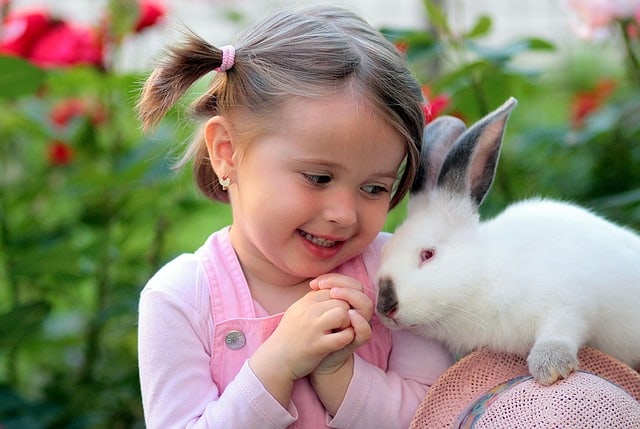
Does your rabbit suddenly get excited whenever they see you walking near them? If so, then you are in luck; your rabbit loves you.
It’s very rare for a prey animal to trust other animals. Especially us, at the very top of the animal food chain.
So when your rabbit is always excited when you walk past their territory (aka home), it’s a sure-fire way to tell that you earned your rabbit’s trust and affection.
My two rabbits, Freya and Tyr, would do this behavior every time I came home to visit them. But that isn’t always the case. I remember when I first got them, they were the most snobbish rabbits I ever had.
But with time and patience, I slowly earned their trust (with the help of treats, of course).
Here’s the step-by-step guide on how I earned my rabbits' trust:
- Give them time to get familiar with your place. Let them smell, wonder, and do whatever they want at first.
- Limit the time you pick them up because rabbits don’t like being picked up.
- When your rabbit is new, make no loud noises or sudden movements.
- Lure them with treats. I suggest hay-based treats if they are young.
- Give them small amounts of treats with your hands. Repeat them every day for a few weeks, or until they come to you at will.
- It’s important that you don’t rush your rabbit during the bonding period. Rushing your rabbit would just prolong the process and would likely scare your rabbit even more.
Tip
Hay-based treats are better, especially when your rabbit is young. Dried fruit treats are not good for young rabbits; they could cause diarrhea and gastrointestinal stasis.
2. Your rabbit licks you.
My two rabbits do this a lot, especially when they want to get my attention. They usually lick my feet whenever I’m sitting and doing my work.
In my case, I think it means that they want some treats or they are hungry. Whenever they do this behavior, I usually give them some treats or play with them for a while.
In addition, rabbits licking you could also mean that they are trying to groom you. Rabbits in social settings groom other rabbits to show affection.
So it’s safe to say that whenever your rabbit licks or grooms you, they see you as part of their social circle and trust you a lot.
3. Your rabbit would come to you on its own.
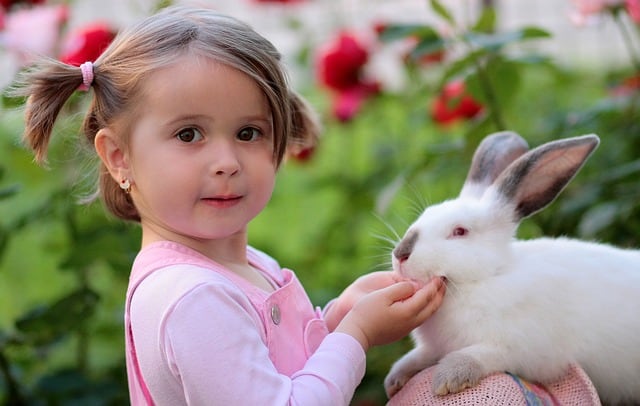
Rabbits that come to you on their own show that they trust you. Think about it. Why would a prey animal whose only defense is to run away from any potential danger would intentionally come close to us? The biggest predators in the animal world.
Rabbits only do this behavior when they are 100% sure that you’re not a threat to them.
However, it doesn’t mean that your rabbit will not be scared of you anymore. In fact, I think rabbits are always on guard, whether they trust you or not.
For instance, my two rabbits, Tyr and Freya, who I have had for many years now, would still get spooked when I moved suddenly or made any loud noises.
I believe that rabbits don’t lose this instinct to run away whenever they get spooked, even after many years of us being together.
But despite all of that, I believe rabbits still love you, even though they often get scared. It’s just their instinct kicking in.
4. Your rabbit follows you.
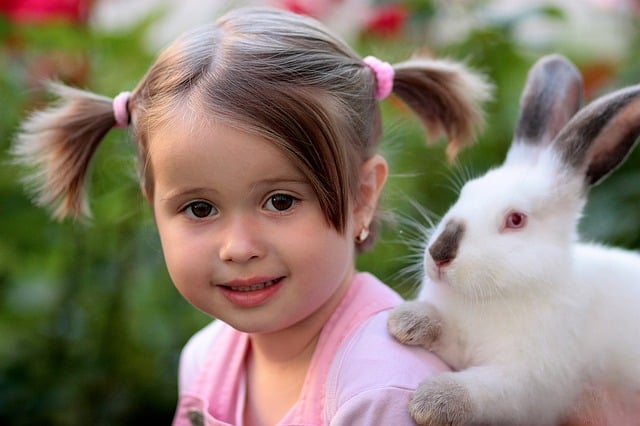
Rabbits following you or circling you means that your rabbits are excited to see you. It also means that they want to play or cuddle with you.
Personally, I don’t like this behavior in my rabbits because I’m worried that I might accidentally step on them or trip and injure them.
Be very careful that you don’t tolerate this behavior so that you don’t accidentally step on your rabbit and injure them. This is especially important for rabbit owners that let their rabbits run around the house freely.
5. Your rabbit would"boop" you with its nose.
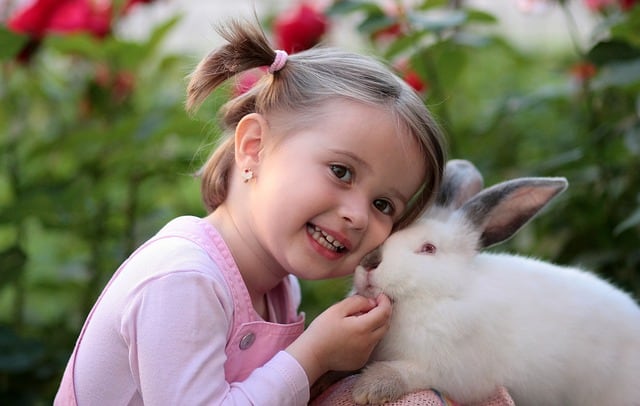
Rabbits often do this behavior when they are trying to get your attention and want to play. My two rabbits would boop at my feet whenever they wanted to play or cuddle.
Rabbits might also boop you to smell you. Rabbits explore the world around them by smelling and nudging everything.
It can also mean they are trying to investigate whether it is really you, their owner, because rabbits recognize stuff and people through smell.
You will know that your rabbits love and trust you when they smell or boop you, followed by getting excited or jumping on you after they confirm that it really is you.
6. Your rabbit lays flat when you pet them.
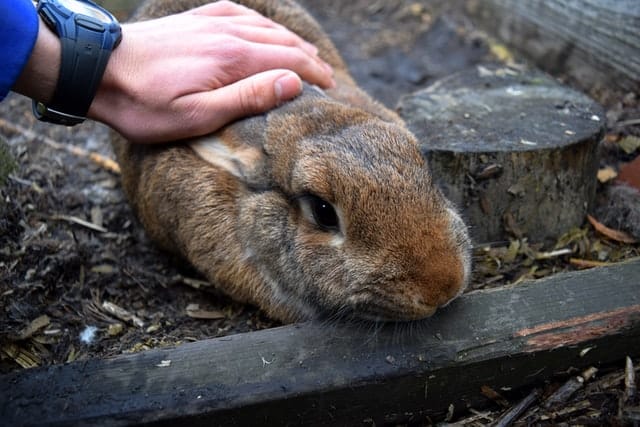
Rabbits that are laying flat when you pet them show that they submit to you and that they trust you. Rabbits only submit to other rabbits that are dominant or rabbits that they trust.
So it’s safe to say that whenever your rabbit lays flat when you’re petting them, they also love and trust you.
Another reason why your rabbit lays flat when you pet them is that they enjoy what you are doing. This usually happens during cuddling sessions or when you’re petting your rabbits.
How do you make your rabbit affectionate towards you?
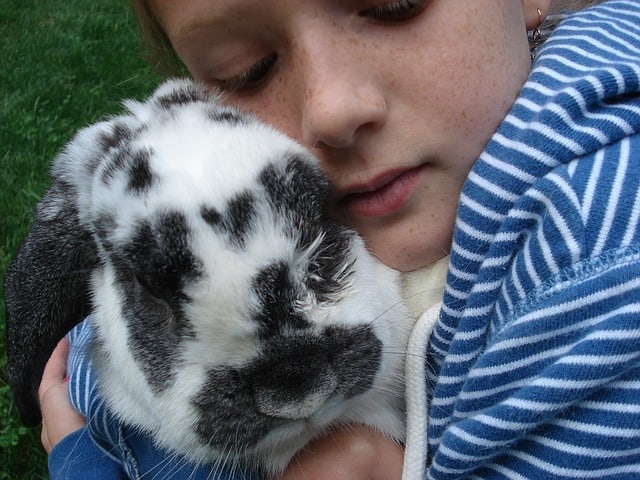
In order to make your rabbit affectionate towards you, they need to trust you. As we all know, rabbits are prey creatures. Their default mode is to suspect everyone might be a predator.
Listen carefully to the tips I’m about to give you to make your rabbit trust you because this is crucial. You can never make your rabbit affectionate towards you if they don’t trust you. Period.
There are different ways to tackle this, depending on the situation. If your rabbit is new, it’s natural for them to not trust you at the beginning.
Rabbits need time to gauge whether or not you are trustworthy enough to not hurt them. Never rush your rabbit, especially at the beginning. You will just prolong the process.
If your rabbit has already been with you for a while and still doesn’t trust you, then you need to start doing something about it.
Here are the ways you can make your rabbit trust you:
- Never do anything that might annoy or scare your rabbit. That means picking them up, petting them in places they don’t like, chasing them, playing loud music or anything that might startle your rabbit, or hurting them.
- Provide treats. You can make the process faster by providing your rabbits with some treats occasionally. Rabbits are suckers for anything sweet. Just make sure that your rabbit is old enough (7 months) for treats and you’re only giving small amounts of them two times per week.
- Spend time with your rabbit. You need to spend time with your rabbit even if it's scared or doesn’t trust you yet. This doesn’t mean forcing them to spend time with you or play with you when they don’t want to. Just take a few minutes to interact with your rabbit while filling up their food or water. Never force your rabbit to do anything if they are scared of you. It will just prolong the process.
- Make them feel secure. Security is a big deal for rabbits. So make sure that you make them feel secure in every facet of their life. That means being fed at the same time each day, having an adequate hutch, and protection from predators (if housed outside).
- Be patient. Making your rabbit trust you is not instant. You need to be patient because it could take a while for them to start trusting you. In my case, it takes a couple of months at least before my rabbit starts licking me (a sign of affection).
Summary
Every rabbit is different in how they show affection. But here are the most common ways they show affection to their owners:
When your rabbit gets excited when you are near them, it shows that they trust you and they want to play.
When your rabbit grooms or licks you, it shows that they love you because they only do this behavior to other rabbits to show affection.
When your rabbit comes close to you on its own, it shows that they trust and love you. Because rabbits are prey animals, they would only do this behavior to animals that they don’t see as a threat.
When your rabbit follows you around, it usually means that they want something from you. Rabbits usually follow their owners when they want food or cuddles.
When your rabbit boops you with their nose, it’s usually a sign that they want to play or to get your attention.
When your rabbit lays flat when you pet them, it’s a sign that they submit to you and that they trust you.
Cite this article:
Cite this article:
BunnySync (February 15, 2022) How Do Rabbits Show Affection To Humans? Here's How.. Retrieved from https://bunnysync.com/blog/how-do-rabbits-show-affection-to-humans.
"How Do Rabbits Show Affection To Humans? Here's How.." BunnySync - February 15, 2022, https://bunnysync.com/blog/how-do-rabbits-show-affection-to-humans
Related Articles
- Are Rabbits Social Animals?
- Do Rabbits Have Emotions?
- Every Reason Why Rabbits lick.
- How To Tell If A Bunny Is Happy?
- Why Do Rabbits Run Around In Circles In Their Cage: 5 reasons (with proven solution)
- Why is your rabbit headbutting You: 3 reasons (with solution)
- How to get your rabbit to cuddle with you: 5 steps (personally proven)
Sources and Further reading
- Buseth, Marit Emilie., and Richard A. Saunders. Rabbit Behaviour, Health, and Care. CABI, 2014.
- Patry, Karen, et al. The Rabbit-Raising Problem Solver: Your Questions Answered about Housing, Feeding, Behavior, Health Care, Breeding, and Kindling. Storey Publishing, 2014.
- Behaviour of the pet rabbit: what is normal and why do problems develop?