Rabbits dig on their owners for several reasons, including overgrown nails, hormonal behavior, attention-seeking, stress, or territorial instincts. In most cases, digging on you is completely normal and not a sign of aggression. It is a deeply ingrained instinct that all rabbits share with their wild cousins. The good news is that most causes are easy to address once you understand what is driving the behavior.
Digging is one of the most natural things a rabbit can do. Wild rabbits dig extensive burrow systems called warrens, where they sleep, raise their young, and hide from predators. When your pet rabbit digs on you, they are channeling that same instinct, but the reason behind it can vary widely. Below, we break down every common cause and give you practical solutions to manage or redirect the behavior.

What Causes a Rabbit To Dig On Its Owner?
There is rarely a single explanation for digging behavior. Rabbits communicate through body language, and digging is one of many signals they use to express needs, emotions, or discomfort. According to rabbit behavior resources, digging is classified as a normal, instinctive behavior. The key is figuring out which specific trigger applies to your rabbit.
Here are the ten most common reasons your rabbit digs on you.
1. Their Nails Need Trimming
Wild rabbits naturally wear down their nails by running across rocks, hard soil, and rough terrain. Pet rabbits walk on carpet, tile, and smooth flooring all day, so their nails grow long quickly. When a rabbit's nails become overgrown, it causes discomfort and even pain while hopping.
A rabbit with nails that are too long may dig on you as a way to file them down. If you notice your rabbit scratching at your clothes, check the length of their nails. Ideally, you should trim them every two to four weeks, depending on how active your rabbit is and what surfaces they walk on.
2. Hormonal Behavior in Unaltered Rabbits
Rabbits that have not been spayed or neutered are far more likely to dig on their owners. Hormones drive a range of behaviors, including territorial marking, mounting, and, yes, digging. Unneutered males are especially prone to this because they feel a constant urge to establish dominance and defend their space.
If your rabbit is over four months old and has not been spayed or neutered, hormones are very likely contributing to the digging. We strongly recommend getting this done by six months of age. It eliminates a huge range of unwanted behaviors and also reduces the risk of reproductive cancers, particularly in female rabbits.
3. Seeking Your Attention
Rabbits are highly social animals that crave interaction. A rabbit that digs on you may simply be saying, "Pay attention to me." This is especially common with solo rabbits that do not have a bonded companion. Without another rabbit to socialize with, they depend entirely on you for companionship.
Watch for the context. Does your rabbit dig on you when you are sitting on the couch looking at your phone? Do they stop once you start petting them or offering a treat? If so, attention-seeking is likely the cause. Consider spending more dedicated one-on-one time with your rabbit each day, or think about whether getting a second rabbit might be the right choice.
4. They Want You To Put Them Down
Many rabbits do not enjoy being held. As prey animals, being lifted off the ground triggers a fear response because it mimics being snatched by a predator. If your rabbit starts digging on your chest or lap while you are holding them, they are telling you to let them go.
Respect this signal. Forcing a rabbit to stay in your arms when they are uncomfortable damages the trust between you. Instead, sit on the floor and let your rabbit come to you on their own terms. Over time, many rabbits become more comfortable with gentle handling, but it requires patience and consistency.
5. Your Scent Has Changed
Rabbits have approximately 100 million olfactory receptors, making their sense of smell extremely powerful. They rely on familiar scents to feel safe. When something about your smell changes, whether you switched to a new soap, wore a different perfume, or came home smelling like another animal, your rabbit may become confused or anxious.
Digging in this case is your rabbit's way of investigating the unfamiliar scent and expressing their unease. If you recently changed any personal care products or spent time around other animals, give your rabbit time to adjust. Sitting quietly near them and letting them sniff you without forcing interaction usually resolves this quickly.
6. Asserting Dominance
Rabbits have a social hierarchy, even in a household setting. Some rabbits dig on their owners as a way of establishing that they are in charge. This is more common in unneutered males, but any rabbit can display dominant behavior.
Other signs of dominance include chinning (rubbing their chin on objects to mark territory), nudging your hand away, and thumping their hind feet. If dominance is the primary cause, neutering or spaying typically resolves it within a few weeks as hormone levels stabilize.
7. Territorial Instincts
Territorial digging is closely related to dominance but has a slightly different trigger. Instead of trying to rank above you, your rabbit is defending a specific space. If you sit in "their" spot on the couch or reach into their enclosure, they may dig on you as a warning to back off.
Territorial behavior is significantly reduced by spaying or neutering. You can also manage it by giving your rabbit a clearly defined space that they feel is their own, a spacious enclosure with hiding spots, where they are rarely disturbed.
8. You Are In Their Way
Sometimes the explanation is simple. Your rabbit wants to get somewhere, and you are blocking the path. Rabbits are surprisingly determined creatures. If they cannot go around you, they will try to go through you by digging.
You will usually notice this if your rabbit digs at your legs or feet while you are standing in a doorway or sitting on the floor near their favorite spot. Just move out of the way, and the digging should stop immediately.
9. Courting and Mating Behavior
In the wild, male rabbits show off their digging abilities to impress potential mates. They demonstrate that they can build a secure burrow for a doe and her future litter. Your unneutered male rabbit may perform this same courtship display on you, especially if there is a female rabbit nearby.
Other mating behaviors include circling your feet, honking, spraying urine, and chasing other rabbits around. Neutering eliminates these courtship-driven behaviors in the vast majority of cases.
10. Pain or Illness
While most digging is behavioral, sudden changes in your rabbit's habits can indicate a health problem. Rabbits are prey animals and instinctively hide pain. A rabbit that is suddenly digging on you when they never did before, especially if they also seem withdrawn, may be dealing with discomfort.
Watch for accompanying symptoms such as reduced appetite, changes in droppings, loud tooth grinding, lethargy, or a hunched posture. If you notice any of these alongside new digging behavior, take your rabbit to a rabbit-savvy veterinarian as soon as possible.
When Should You Be Concerned About Your Rabbit Digging On You?
On its own, digging is normal and healthy rabbit behavior. It becomes a concern only when it is paired with other warning signs. If your rabbit is eating well, producing normal droppings, and acting like their usual self apart from the digging, there is almost certainly nothing medically wrong.
However, seek veterinary attention if the digging is accompanied by:
- Loss of appetite or refusal to eat hay
- Changes in droppings (smaller, fewer, or mucus-coated)
- Loud tooth grinding, which indicates pain
- Lethargy or reluctance to move
- A bloated or hunched appearance
- Sudden aggression or biting that started out of nowhere
These symptoms together could point to GI stasis, dental disease, urinary issues, or other conditions that require prompt treatment.
How Do You Stop a Rabbit From Digging On You?

Once you have identified the likely cause, you can take targeted steps to reduce or eliminate the digging. Here are the most effective strategies, roughly in order of impact.
Spay or Neuter Your Rabbit
This is the single most effective step you can take. Spaying or neutering eliminates hormone-driven digging, territorial aggression, spraying, mounting, and a host of other unwanted behaviors. Most veterinarians recommend the procedure at around six months of age.
If your rabbit was recently altered, give it time. Hormones do not disappear overnight. It can take four to eight weeks for hormone levels to fully drop, and behavioral changes may follow gradually. The benefits also extend beyond behavior: spaying female rabbits drastically reduces their risk of uterine cancer, which affects up to 80% of unspayed does over four years old.
Keep Their Nails Trimmed
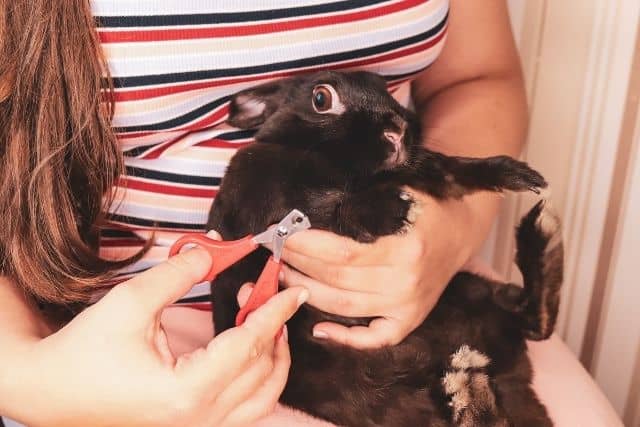
Trim your rabbit's nails every two to four weeks. If your rabbit spends time outdoors on rough surfaces, you can stretch this to every three or four weeks since the terrain helps wear down their claws naturally.
When trimming, be careful to avoid cutting the quick, which is the pink blood vessel visible inside lighter-colored nails. For rabbits with dark nails, use a flashlight held behind the nail to locate the quick. If you accidentally cut it, apply styptic powder or cornstarch to stop the bleeding from the nail. If you are uncomfortable trimming nails yourself, your veterinarian or a rabbit-experienced groomer can do it for a small fee.
Provide a Dedicated Digging Outlet
Rabbits need to dig. It is a core part of their behavioral repertoire. Rather than trying to suppress the instinct entirely, give your rabbit a proper outlet. A "dig box" is the easiest solution: fill a sturdy plastic storage bin or wooden crate with soil, shredded paper, or hay, and let your rabbit go to town.
You can also provide toys that satisfy the same urge:
- Willow balls and willow sticks for chewing and tossing
- Cardboard boxes with holes cut into them
- Toilet paper rolls stuffed with hay
- Twig tunnels
- Seagrass mats that they can shred and dig at
Ensure They Get Enough Exercise
A rabbit that is cooped up in a small cage all day will develop frustration-driven behaviors, including digging on you. Rabbits need a minimum of three to four hours of free-roaming time outside their enclosure every day. More is better.
Lack of exercise can cause serious health problems beyond just behavioral issues. It contributes to obesity, GI stasis, muscle weakness, and bone density loss. If possible, set up a rabbit-proofed room or a large exercise pen where your rabbit can run, binky, and explore freely.
Let Them Dig Outside

If you have a yard, supervised outdoor time is one of the best ways to satisfy your rabbit's digging instinct. Let them dig in a safe, enclosed area for a few hours each day. This channels their energy into something productive and dramatically reduces indoor digging behavior.
If you do not have outdoor space, a large indoor dig box filled with organic potting soil (no fertilizers or pesticides) works well. Place it on a tarp or in a bathtub to contain the mess. Your rabbit will spend extended periods happily excavating, which leaves them calmer and less likely to dig on you.
Address Stress and Anxiety
A stressed rabbit is more likely to exhibit repetitive behaviors like digging. Common stressors include loud noises, the presence of predator animals (dogs, cats, birds of prey outside windows), sudden changes in their environment, and lack of hiding spaces.
Make sure your rabbit has:
- At least one enclosed hiding spot in their enclosure
- A quiet area away from TVs, speakers, and high-traffic zones
- A consistent daily routine for feeding and free-roaming time
- No forced interactions with other pets that frighten them
Reducing environmental stressors often eliminates stress-related digging within days.
Can You Train a Rabbit Not To Dig On You?
You cannot fully suppress a rabbit's digging instinct, and you should not try to. What you can do is redirect it. When your rabbit starts digging on you, calmly place them on the floor near their dig box or a pile of hay. Do not yell, clap, or punish them. Rabbits do not respond to punishment; it only damages your bond and increases their stress.
Positive reinforcement works best. When your rabbit uses their dig box instead of your lap, reward them with a small treat or gentle praise. Over time, they learn that digging in the right place leads to good things, while digging on you simply results in being moved to the floor.
Consistency is critical. If everyone in the household redirects the rabbit the same way every time, the behavior change will happen much faster. Most rabbits learn the new pattern within two to three weeks of consistent redirection.
Understanding Rabbit Body Language Beyond Digging
Digging is just one piece of the puzzle. Learning to read your rabbit's full range of body language helps you understand what they need before they resort to more forceful communication. Here are some related behaviors and what they mean:
| Behavior | What It Usually Means |
|---|---|
| Digging on you | Attention-seeking, nails too long, hormones, or stress |
| Thumping hind feet | Warning signal, fear, or annoyance |
| Chinning objects | Marking territory with scent glands |
| Circling your feet | Courting behavior (especially unneutered rabbits) |
| Nudging with nose | Requesting attention or asking you to move |
| Licking you | Grooming behavior showing trust and affection |
| Flopping on their side | Complete relaxation and contentment |
| Lunging or grunting | Territorial aggression or fear |
Understanding these signals helps you respond appropriately and build a stronger relationship with your rabbit. For a deeper look at positive behaviors, read our guide on how rabbits show affection to their owners.
Frequently Asked Questions
Why does my rabbit dig on me when I sit on the floor?
Your rabbit likely sees you as an obstacle in their path or wants to interact with you. Floor-level digging is often attention-seeking behavior. Try placing a toy or dig box nearby so they can redirect their energy to an appropriate outlet instead of your clothing.
Is my rabbit angry when it digs on me?
Not usually. Digging is a natural instinct rather than an expression of anger. Your rabbit may be frustrated, seeking attention, or trying to communicate a need like overgrown nails. True anger in rabbits looks more like lunging, biting, and loud grunting combined together.
Will spaying or neutering stop my rabbit from digging on me?
Spaying or neutering eliminates hormone-driven digging, which accounts for a large percentage of cases. It also reduces territorial and dominance-related digging. However, instinctive or attention-seeking digging may continue at a lower intensity since those are not hormone-dependent.
At what age do rabbits start digging on their owners?
Digging behavior can start as early as three to four months old, which coincides with the onset of puberty in most rabbit breeds. This is when hormonal behaviors like territorial marking, mounting, and digging ramp up significantly. Early spaying or neutering at six months prevents these habits from becoming established.
How do I protect my clothes from a rabbit that digs?
Place a thick blanket or towel on your lap before letting your rabbit sit with you. This protects your clothing from snags and tears while still allowing your rabbit to express their digging instinct in a low-stakes way. Over time, redirect them to a proper dig box for longer digging sessions.
Cite this article:
Cite this article:
BunnySync (March 9, 2026) Why Does My Rabbit Dig On Me? 10 Reasons and How To Stop It. Retrieved from https://bunnysync.com/blog/why-does-my-rabbit-dig-on-me.
"Why Does My Rabbit Dig On Me? 10 Reasons and How To Stop It." BunnySync - March 9, 2026, https://bunnysync.com/blog/why-does-my-rabbit-dig-on-me