So, can rabbits eat dragon fruit? Yes, in small amounts, as an occasional treat. This exotic pitaya is not toxic to rabbits, but its high sugar content makes it a food to offer sparingly rather than regularly. A piece no larger than a teaspoon, given once or twice a week, is a safe upper limit for most adult rabbits. The foundation of any rabbit's diet must remain the correct amount of hay for their size, with fruit playing a very minor role. Dragon fruit for bunnies is a treat, not a dietary staple.
Can Rabbits Eat Dragon Fruit Safely?
Dragon fruit (Hylocereus undatus), also known as pitahaya or strawberry pear, is safe for rabbits in controlled portions. The flesh contains no compounds that are inherently toxic to rabbits the way, for example, avocado or rhubarb are. The risks come entirely from the sugar load, not from any specific toxin.
Dragon fruit averages around 9 to 10 grams of sugar per 100 grams of flesh. For a 2-kilogram rabbit, even a teaspoon of dragon fruit represents a meaningful sugar hit to a digestive system designed for near-zero sugar intake. The cecum, where rabbits ferment fiber, is particularly sensitive to sugar influxes. Too much sugar feeds the wrong bacteria and can shift the microbial balance in ways that cause soft cecotropes, diarrhea, and in persistent cases, GI dysbiosis.
When offered correctly, pitaya for rabbits provides a bit of variety and some useful micronutrients without causing harm. The key word is correctly.
Do Rabbits Like the Taste of Dragon Fruit?
Most rabbits are strongly attracted to dragon fruit. In my experience breeding Holland Lops and Flemish Giants, the mild sweetness of white-fleshed dragon fruit tends to get a more enthusiastic response than more tart fruits like cranberries, but a less frenzied reaction than banana, which most rabbits treat as the most prized treat possible.
The red-fleshed variety (Hylocereus costaricensis) tends to be slightly sweeter than the white-fleshed variety (Hylocereus undatus), and most rabbits pick up on this difference. If you are trying to limit sugar intake, stick to the white-fleshed variety. The yellow dragon fruit (Selenicereus megalanthus) has the highest sugar content of the three main commercial varieties and should be offered in even smaller amounts.
Some rabbits will initially hesitate at the unusual texture of dragon fruit, particularly the tiny black seeds embedded in the flesh. The seeds are completely harmless, and most rabbits eat around them naturally or consume them without issue. If your rabbit sniffs dragon fruit and walks away, do not force it. Not every rabbit likes every fruit, and that is perfectly fine.
What Nutrients Does Dragon Fruit Provide for Rabbits?
Dragon fruit is not a nutritional powerhouse for rabbits, but it does contain some useful compounds in small quantities. Understanding what is actually in pitahaya helps set realistic expectations about its value as a supplement to the core diet.
Key Nutrients per 100g of Dragon Fruit Flesh
| Nutrient | Amount per 100g | Relevance for Rabbits |
|---|---|---|
| Calories | 60 kcal | Low calorie, but sugar content still matters |
| Total sugar | 9.0 g | High relative to rabbit needs. Keep portions very small. |
| Dietary fiber | 3.0 g | Moderate. Does not offset sugar risk. |
| Vitamin C | 9 mg | Rabbits synthesize their own vitamin C, so this adds little benefit. |
| Calcium | 18 mg | Moderate. Excessive calcium causes bladder sludge in rabbits. |
| Magnesium | 40 mg | Supports muscle and nerve function. |
| Iron | 1.9 mg | Supports blood health in small amounts. |
| Phosphorus | 22.5 mg | Important for bone health in balance with calcium. |
| Antioxidants (betalains) | Present in red variety | May support immune function, though rabbit-specific research is limited. |
The betalain antioxidants in red-fleshed pitaya are what generate the most excitement from a human health perspective, and they may offer some anti-inflammatory benefit to rabbits as well. However, the quantities involved in a rabbit-appropriate portion are so small that this should not be a reason to increase serving sizes. Rabbits get their antioxidant needs met adequately through leafy greens.
The calcium content is worth noting. At 18 mg per 100g, dragon fruit is not a high-calcium food, but rabbits on diets already heavy in parsley, kale, or other calcium-rich greens should have this factored in. Excess calcium in rabbits leads to hypercalciuria, where the urine becomes thick and white from calcium deposits. This can progress to painful bladder sludge or kidney stones.
How Much Dragon Fruit Can You Feed a Rabbit?
The correct serving size depends on the rabbit's body weight and age. A standard guideline is 1 teaspoon of fruit per 2 pounds (approximately 1 kg) of body weight, no more than twice per week for any single fruit. This applies to dragon fruit the same as it does to watermelon or blueberries.
Dragon Fruit Portion Guide by Body Weight
| Rabbit Weight | Typical Breeds | Max Serving Size | Max Frequency |
|---|---|---|---|
| Under 2 lbs (under 0.9 kg) | Netherland Dwarf, young rabbits | 1/2 teaspoon | Once per week |
| 2 to 4 lbs (0.9 to 1.8 kg) | Holland Lop, Mini Rex, Lionhead | 1 teaspoon | Twice per week |
| 4 to 7 lbs (1.8 to 3.2 kg) | Dutch, Rex, Standard Chinchilla | 1.5 teaspoons | Twice per week |
| 7 to 11 lbs (3.2 to 5 kg) | New Zealand, Californian | 2 teaspoons | Twice per week |
| Over 11 lbs (over 5 kg) | Flemish Giant, French Lop, Checkered Giant | 1 tablespoon | Twice per week |
These portions assume the rabbit is otherwise healthy, not overweight, and getting no other fruit that day. If you are also offering blueberries or a piece of apple on the same day, reduce the dragon fruit portion accordingly or skip it entirely. Total daily fruit intake should never exceed the equivalent of 1 to 2 teaspoons for a small rabbit or 1 tablespoon for a large breed.
For context on how fruit fits into the broader diet, review correct pellet portions for rabbits by weight to understand how treats and pellets interact with overall calorie intake.
Can Baby Rabbits Eat Dragon Fruit?
No. Baby rabbits under 12 weeks of age should not eat any fruit, including dragon fruit. Their digestive systems are still maturing, and the beneficial bacteria in the cecum have not yet stabilized into the balance needed to handle sugar safely.
From birth to 3 weeks, kits rely entirely on their mother's milk. From 3 to 7 weeks, they begin nibbling hay and their mother's cecotropes (which transfer essential gut bacteria). From 7 to 12 weeks, the gut is still in a critical maturation phase. Introducing sugar during this window disrupts cecal bacteria and can cause enteritis, which is one of the leading causes of death in young rabbits.
Age-Based Feeding Guide for Dragon Fruit
| Age | Dragon Fruit? | Notes |
|---|---|---|
| 0 to 3 weeks | No | Mother's milk only |
| 3 to 7 weeks | No | Hay, mother's milk, cecotropes only |
| 7 to 12 weeks | No | Introduce hay and leafy greens only. No fruit of any kind. |
| 12 weeks to 6 months | Minimal | If offered, keep to 1/4 teaspoon maximum and watch closely for soft droppings |
| 6 months and older | Yes, in moderation | Follow the weight-based portion guide above |
Even in the 12-week to 6-month range, I personally wait until 6 months before introducing any fruit. The risk-reward ratio simply does not favor early introduction, and a rabbit that has never had fruit has no idea what it is missing. There is no developmental reason to introduce fruit early.
What Parts of Dragon Fruit Are Safe for Rabbits?
Not every part of the dragon fruit plant is created equal from a rabbit safety perspective. Here is a breakdown of each component:
The Flesh (White or Red)
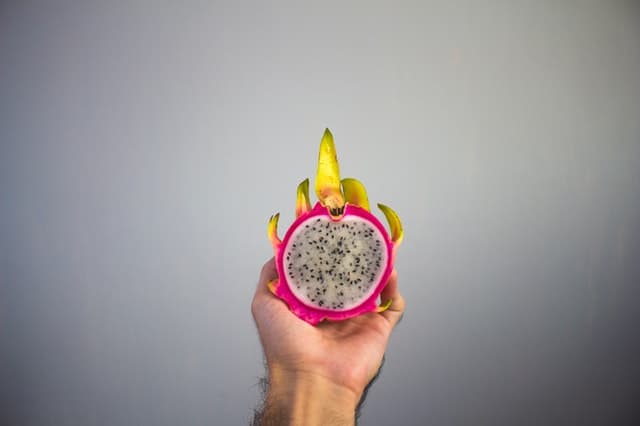
This is the only part of the dragon fruit that should be fed to rabbits. The soft, seeded interior is what contains the nutrients and sugars discussed above. Serve it fresh, not dried or canned. Dried dragon fruit is extremely concentrated in sugar due to water removal. Canned pitaya almost always contains added sugar and syrup. Both processed forms are unsuitable for rabbits.
The Seeds
The small black seeds distributed throughout the flesh are safe. They are soft enough that rabbits swallow them without issue, and they do not contain any compounds toxic to rabbits. Unlike apple seeds, which contain cyanogenic glycosides, dragon fruit seeds pose no chemical risk. Most rabbits do not chew each seed deliberately and simply consume them along with the flesh.
The Skin (Pink or Yellow Rind)
The outer skin of dragon fruit is generally not recommended for rabbits. The thick, leathery rind can be difficult to chew and digest, and commercial dragon fruit is often treated with wax or pesticides on the outer surface. While the skin itself is not inherently toxic, the pesticide exposure risk is not worth it. Always peel the skin completely and serve only the inner flesh.
The Flower and Leaves of the Dragon Fruit Cactus
Dragon fruit grows on a climbing cactus (Hylocereus species). The plant's stems and leaves are covered in spines and are not appropriate rabbit food. If you grow dragon fruit at home, keep the plant well out of reach. The flower buds of Hylocereus cacti are edible for humans and not acutely toxic to rabbits, but they have not been studied for rabbit safety and should be avoided.
When Should You Avoid Feeding Dragon Fruit to Rabbits?
Even within the safe-food category, there are specific circumstances where you should hold off on offering exotic fruits for rabbits entirely:
- During or after GI upset. If your rabbit has had soft cecotropes, mushy droppings, or any signs of diarrhea in the past 7 days, remove all fruit until droppings fully normalize. The gut needs fiber and stability, not additional sugar.
- During antibiotic treatment. Antibiotics disrupt cecal bacteria. Adding sugar on top of an already-destabilized gut microbiome increases the risk of bacterial overgrowth (particularly Clostridium and E. coli). Wait at least 2 weeks after finishing antibiotics before reintroducing fruit.
- In overweight or obese rabbits. Extra fruit calories compound the problem. Overweight rabbits should have fruit removed from their diet entirely until their weight returns to healthy range.
- In rabbits with dental disease. High-sugar foods accelerate dental disease progression in rabbits that already have molar spurs or malocclusion. Consult your vet before offering any treats to a rabbit with dental issues.
- In rabbits with a history of bladder sludge or kidney stones. The calcium in dragon fruit is not extreme, but it adds to total calcium load. Rabbits prone to urinary issues should be on a lower-calcium diet, and adding fruit complicates that picture.
What Are the Risks of Overfeeding Dragon Fruit?
Understanding the risks of excess sugar helps explain why the portion guidelines above exist. These are not arbitrary conservative estimates. They are based on how a rabbit's digestive system actually works.
Cecal Dysbiosis
The cecum is a large fermentation chamber at the junction of the small and large intestine. It is home to billions of bacteria and microorganisms that break down fiber and produce cecotropes, the nutrient-rich droppings rabbits eat directly from their anus each morning. When sugar reaches the cecum in significant quantities, it feeds fast-growing bacteria like Clostridium species at the expense of the beneficial fiber-fermenting bacteria. This imbalance is called cecal dysbiosis and causes soft, smelly cecotropes, diarrhea, and in severe cases, fatal enterotoxemia.
GI Slowdown
High sugar intake can slow gut motility in rabbits. A slower gut is the first step toward GI stasis, where the digestive system stops moving food through entirely. GI stasis is one of the most common causes of rabbit death and can develop within 12 to 24 hours of a gut slowdown. The reason hay is so critical for rabbits is precisely because its high fiber content keeps the gut moving constantly.
Obesity
Rabbits that regularly receive excess fruit develop obesity over months rather than days, making it harder to notice the pattern. Obese rabbits cannot groom their hindquarters properly, which leads to soiled fur, fly strike risk, and an inability to eat cecotropes. The excess weight also stresses joints, particularly in larger breeds like Flemish Giants that are already prone to spondylosis.
Dental Disease Progression
Sugar promotes the growth of bacteria in the mouth that contribute to periodontal disease. In rabbits, whose teeth grow continuously throughout their lives, dental disease is already a significant concern. A rabbit on a high-fruit diet is more likely to develop molar spurs and root abscesses over time than one whose treat intake is kept minimal.
How to Introduce Dragon Fruit to Your Rabbit's Diet
If your rabbit has never eaten dragon fruit before, introduce it gradually over 7 to 10 days to allow the gut bacteria to adjust. A sudden large introduction of any new food, even a safe one, can cause digestive upset in rabbits that have not encountered it before.
- Day 1 to 2: Offer a piece no larger than a pea (about 1/4 teaspoon). Watch droppings for the next 24 hours. Normal round, firm pellets mean the gut is handling it fine. Soft cecotropes stuck to the fur, mushy droppings, or a drop in appetite are signs to stop and wait a week before trying again with an even smaller amount.
- Day 3 to 5: If droppings are normal, you can offer the same small amount again. Do not increase the portion yet.
- Day 6 to 10: If your rabbit is tolerating the initial amount well, you can increase to the full weight-appropriate serving size from the table above.
- Ongoing: Stick to the twice-per-week maximum. Rotate dragon fruit with other safe fruits rather than offering it every time, to ensure dietary variety and prevent overconsumption of any single food.
Always serve dragon fruit at room temperature, not cold from the refrigerator. Cold food can cause mild digestive discomfort in rabbits with sensitive guts. Let the piece sit out for 10 to 15 minutes after cutting before offering it.
Remove any uneaten dragon fruit after 1 hour. At room temperature, the cut flesh attracts fruit flies and begins to ferment within a few hours, especially in warm environments. Fermented fruit has a much higher concentration of natural alcohol and can cause digestive distress even in small amounts.
Healthy Fruit Alternatives to Dragon Fruit for Rabbits
Dragon fruit is one of the more exotic options in the rabbit-safe fruit category. If you want to offer variety, here are other fruits that are equally or more suitable, along with how they compare:
| Fruit | Sugar per 100g | Max Serving (2kg rabbit) | Notes |
|---|---|---|---|
| Blueberries | 9.9g | 2 to 3 berries | High in antioxidants. One of the best fruit choices for rabbits. |
| Strawberry | 4.9g | 1 small strawberry | Lower sugar than most fruits. The leaves are also safe and nutritious. |
| Apple (no seeds) | 10.4g | 1 thin slice | Remove seeds and core. Seeds contain cyanogenic glycosides. |
| Dragon fruit (white) | 9.0g | 1 teaspoon of flesh | Safe, novel, and most rabbits enjoy it. Peel before serving. |
| Watermelon (no rind) | 6.2g | 1 small cube (2cm) | Very high water content. Great for hydration in summer. |
| Papaya | 7.8g | 1 teaspoon | Contains papain enzyme. Anecdotally used to help with hairball prevention, though research is limited. |
| Pear (no seeds) | 9.8g | 1 thin slice | High fiber relative to other fruits. Remove seeds. |
| Mango | 13.7g | 1/2 teaspoon | Higher sugar. Keep portions very small. Remove pit and skin. |
| Banana | 17.2g | 1/4 teaspoon | Very high sugar. Most rabbits love it intensely. Limit strictly. |
| Grapes | 15.5g | 1 grape, halved | Higher sugar. Remove seeds. Never offer raisins (dried grapes are extremely concentrated). |
According to the House Rabbit Society's fruit and vegetable guide, fruits should make up no more than 5% of a rabbit's total diet by volume, with the remaining 80 to 85% coming from hay and the remainder from leafy greens. Dragon fruit fits comfortably into this framework when portions are managed correctly.
If your rabbit has never tried any of these fruits before, always introduce one new fruit at a time, leaving at least 3 days between new introductions. This makes it easy to identify which food caused a reaction if droppings change.
Frequently Asked Questions
Can rabbits eat dragon fruit seeds?
Yes, dragon fruit seeds are safe for rabbits. The small black seeds embedded in the flesh are soft and non-toxic. Unlike apple or cherry seeds, dragon fruit seeds contain no cyanogenic compounds. Most rabbits swallow them whole along with the flesh without any issue. There is no need to remove the seeds before serving.
Can rabbits eat dragon fruit skin?
No. The tough pink or yellow rind of dragon fruit should not be fed to rabbits. The outer skin is difficult to digest, and commercial dragon fruit is routinely treated with pesticides and wax on the exterior. Always peel the dragon fruit completely and serve only the inner flesh to your rabbit.
How often can rabbits eat dragon fruit?
Rabbits can eat dragon fruit up to twice per week, with at least two to three days between servings. Portions should follow the weight-based guide: roughly 1 teaspoon per 2 pounds of body weight. Do not combine dragon fruit with other fruit on the same day, as total sugar intake adds up quickly across multiple treat types.
Is red dragon fruit or white dragon fruit better for rabbits?
White-fleshed dragon fruit (Hylocereus undatus) is the better choice for rabbits because it has a slightly lower sugar content than red-fleshed varieties. Both are safe in appropriate portions. Yellow dragon fruit (Selenicereus megalanthus) is the sweetest variety and should be given in the smallest amounts if offered at all.
What should I do if my rabbit ate a large amount of dragon fruit?
If your rabbit ate a large portion of dragon fruit, offer unlimited hay immediately and ensure fresh water is available. Monitor droppings closely over the next 24 to 48 hours. Watch for soft cecotropes, mushy stools, reduced appetite, or signs of gas pain such as a hunched posture or tooth grinding. Contact your vet if symptoms persist beyond 24 hours or if your rabbit stops eating entirely.
Cite this article:
BunnySync (March 21, 2026) Can Rabbits Eat Dragon Fruit? Safe Feeding Guide for 2026. Retrieved from https://bunnysync.com/blog/can-rabbits-eat-dragon-fruit.
"Can Rabbits Eat Dragon Fruit? Safe Feeding Guide for 2026." BunnySync - March 21, 2026, https://bunnysync.com/blog/can-rabbits-eat-dragon-fruit