Are Rabbits Social Animals? A Complete Guide to Rabbit Social Behavior

Share:

Yes, rabbits are social animals. In fact, they are one of the most social small pets you can own. Wild rabbits live in large colonies and spend most of their day grooming, playing, and sleeping beside one another. Domestic rabbits retain these same social instincts. If you are considering getting a second rabbit, your first rabbit will almost certainly benefit from the companionship. Rabbits that live with a bonded partner tend to be healthier, calmer, and more confident than those kept alone.

Understanding your rabbit's social needs is one of the most important parts of responsible ownership. A rabbit that lacks adequate social interaction can develop serious behavioral and health problems over time. This guide covers everything you need to know about rabbit social behavior, from wild colony dynamics to bonding tips for pet rabbits.

Are Rabbits Social or Solitary Animals?

Rabbits are absolutely social animals, not solitary ones. This is true for both wild European rabbits and the domestic breeds we keep as pets. The misconception that rabbits prefer to be alone likely comes from their quiet nature. Unlike dogs, rabbits do not bark, whine, or vocalize loudly to get attention. Their social behavior is more subtle: gentle nudging, mutual grooming, lying side by side, and following each other around.

Veterinary organizations across the world recognize that rabbits need social interaction to thrive. The RSPCA recommends keeping rabbits in compatible pairs or groups because solitary confinement causes measurable stress. Rabbits that live alone often display abnormal repetitive behaviors, such as excessive bar chewing, circling, or over-grooming, all of which are indicators of poor welfare.

The bottom line is simple: rabbits are wired for companionship. Whether that companionship comes from another rabbit or from dedicated daily interaction with you, your rabbit needs regular social contact to stay physically and emotionally healthy.

How Do Wild Rabbits Socialize?

Wild European rabbits live in complex underground tunnel systems called warrens. A single warren can house anywhere from 2 to 30 or more rabbits, depending on the habitat and food supply. Within these colonies, rabbits form structured social hierarchies with dominant and subordinate individuals of both sexes.

Inside the warren, rabbits spend a significant portion of their day engaging in social activities:

  • Mutual grooming (allogrooming): Rabbits groom each other's heads, ears, and faces. This behavior strengthens social bonds and helps maintain the group hierarchy. Subordinate rabbits typically groom dominant ones more frequently.
  • Sleeping in groups: Wild rabbits rest side by side or in small clusters. Physical closeness provides warmth, safety, and emotional comfort.
  • Sentinel behavior: While some rabbits feed, others stay alert for predators. This cooperative vigilance allows each rabbit to relax and eat without constantly scanning for danger.
  • Play and chasing: Young rabbits (and sometimes adults) engage in play behavior including chasing, leaping, and binkying, where they twist and jump in the air. These activities build social skills and strengthen bonds.

This colony structure is deeply ingrained in rabbit DNA. Domestic rabbits, despite generations of breeding, still carry these same social instincts. When you see your pet rabbit nudging your hand for attention or showing affection by licking you, that behavior traces directly back to wild colony interactions.

Do Rabbits Need a Companion?

The short answer is yes, most rabbits benefit enormously from having a bonded companion. A pair of rabbits can groom each other, sleep together, play together, and provide the kind of constant social presence that even the most dedicated owner cannot replicate 24 hours a day.

There are several practical reasons why keeping rabbits in pairs is recommended:

FactorSingle RabbitBonded Pair
Social interactionDepends entirely on owner availabilityConstant companionship from partner
GroomingCannot groom own head/ears properlyMutual grooming covers all areas
Stress levelsHigher when owner is awayReduced through shared security
Exercise and playLess motivated to moveEncouraged by partner's activity
Risk of depressionHigher, especially with limited owner timeSignificantly lower

The best pairing for most situations is a neutered male and a spayed female. This combination tends to produce the smoothest bonding process and the most stable long-term relationship. Same-sex pairs can also work well, particularly two females or two males that have been neutered before sexual maturity. If you are concerned about same-sex aggression, read about whether two male rabbits will fight before deciding.

Regardless of which pairing you choose, both rabbits must be spayed or neutered. Intact rabbits are driven by hormones that cause territorial aggression, mounting, and spraying. Neutering dramatically reduces these behaviors and makes successful bonding far more likely.

What Are the Signs of a Lonely Rabbit?

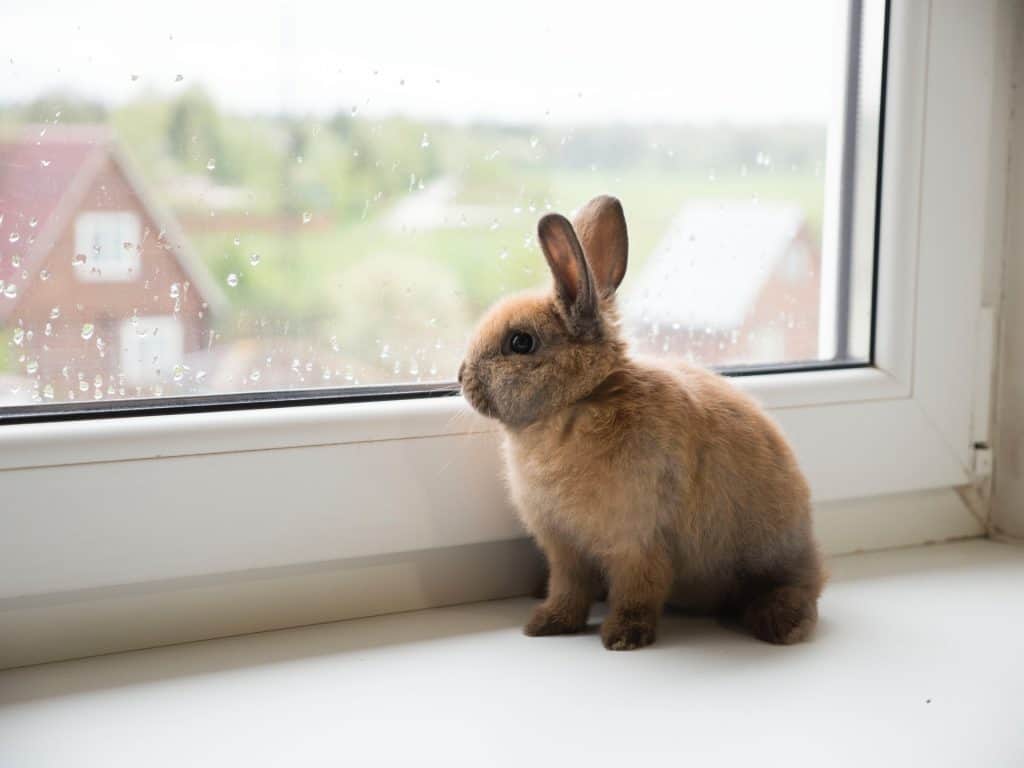
A lonely rabbit looking out a window showing signs of depression

Rabbits cannot tell you they are lonely, but their behavior and body language reveal a great deal. A lonely rabbit may display one or more of the following signs:

  • Withdrawal and hiding: A rabbit that was once curious and active but now spends most of its time hiding in a corner or inside a hideout is showing classic signs of low mood.
  • Loss of appetite: Loneliness and depression in rabbits can suppress appetite. A rabbit that stops eating hay is in immediate danger because reduced gut motility can lead to GI stasis within hours.
  • Destructive behavior: Excessive chewing on cage bars, digging at flooring, or destroying toys can be a frustrated rabbit's attempt to cope with boredom and social deprivation.
  • Over-grooming or fur pulling: Some lonely rabbits pull out their own fur or groom one spot obsessively until the skin becomes raw. This is a self-soothing behavior that signals chronic stress.
  • Aggression toward the owner: A rabbit that lunges, bites, or grunts when you approach may be acting out of frustration and pent-up social energy rather than genuine meanness.
  • Lethargy: A rabbit that sits in one spot for hours, shows no interest in exploring, and barely reacts to stimuli may be dealing with emotional distress.

If you notice several of these signs in your rabbit, the first step is to rule out medical causes with a vet visit. Once health issues are excluded, the most effective remedy is usually increasing social interaction, either by spending more one-on-one time with your rabbit or by introducing a compatible companion.

Left unaddressed, chronic loneliness can escalate into genuine depression and stress. Both conditions weaken the immune system and make rabbits more vulnerable to illness. In severe cases, prolonged isolation can even be fatal. Learn more about whether rabbits can die of loneliness.

Can a Single Rabbit Live a Happy Life?

Yes, a single rabbit can absolutely live a happy, healthy life, but it requires a real commitment from you as the owner. If you keep only one rabbit, you become that rabbit's primary social partner. That means daily, hands-on interaction, not just filling the food bowl and walking away.

Here is what keeping a single rabbit happy looks like in practice:

  1. Spend at least 3 to 4 hours of active time together daily. This means being in the same room, talking to your rabbit, offering treats from your hand, and letting your rabbit approach you on its own terms.
  2. Provide free-roaming time. A rabbit confined to a cage all day with no social interaction will become bored and depressed regardless of cage size. Let your rabbit explore a rabbit-proofed room or area every day.
  3. Offer enrichment. Puzzle feeders, digging boxes, tunnels, and foraging activities keep your rabbit mentally stimulated during the hours you cannot be present.
  4. Learn your rabbit's body language. Knowing how to tell if your rabbit is happy helps you gauge whether your social efforts are enough.
  5. Be patient during the trust-building phase. New rabbits, especially rescues, may take weeks or months to warm up to you. Consistency is everything.

For people who work from home or spend most of their day in the same space as their rabbit, a single rabbit setup can work well. But if you are away at work for 8 or more hours a day, a bonded pair is strongly recommended. There is only so much enrichment and toys can accomplish. Rabbits need living, breathing companionship. Learn more about how long a rabbit can be left alone safely.

How to Bond Two Rabbits Together

Bonding (also called "pairing" or "matchmaking") is the process of introducing two rabbits and helping them form a stable social partnership. It requires patience and careful management, but the reward is two rabbits that are genuinely happier and healthier together.

Step 1: Neuter or Spay Both Rabbits

This is non-negotiable. Intact rabbits are far too territorial and hormone-driven to bond successfully. Wait at least 4 to 6 weeks after surgery before beginning introductions, as hormones take time to leave the system.

Step 2: Start With Side-by-Side Housing

Place the two rabbits in separate enclosures next to each other so they can see, smell, and hear one another without physical contact. Swap items like litter boxes and toys between the enclosures so each rabbit becomes familiar with the other's scent. Continue this for 1 to 2 weeks.

Step 3: Introduce in Neutral Territory

Choose a space that neither rabbit has claimed as its own, such as a bathroom, hallway, or playpen in a room they do not normally access. Place both rabbits in this neutral area and supervise closely. Have a towel or oven mitt ready to separate them quickly if a fight breaks out.

Step 4: Keep Sessions Short and Positive

Initial bonding sessions should last 10 to 15 minutes. End each session on a positive note, even if the rabbits simply ignored each other (ignoring is actually a good sign). Gradually increase session length over the following days and weeks. You may see some chasing, mounting, and nipping. These are normal dominance behaviors as long as no fur is being ripped out and neither rabbit is screaming.

Step 5: Move in Together

Once the rabbits are consistently grooming each other, lying next to each other, and showing no aggression during bonding sessions, they are ready to share a living space. Clean the enclosure thoroughly before the move-in so neither rabbit feels territorial over existing scent marks.

Bonding can take anywhere from a single afternoon to several months, depending on the rabbits' personalities, ages, and histories. Rescued rabbits or rabbits with a history of aggression may need extra time. If fighting persists between your rabbits, take a step back and return to side-by-side housing before trying again.

Which Rabbit Breeds Are the Most Social?

All domesticated rabbit breeds are more social than their wild counterparts, thanks to generations of selective breeding for temperament. However, some breeds are especially known for being outgoing, affectionate, and eager to interact with humans.

Here are some of the most sociable rabbit breeds:

BreedSizeTemperament
Holland Lop2 to 4 lbsCalm, cuddly, loves being held and pet
Mini Rex3 to 4.5 lbsFriendly, curious, enjoys exploring alongside owners
Lionhead2.5 to 3.5 lbsPlayful, attention-seeking, bonds strongly with one person
Harlequin6.5 to 9.5 lbsOutgoing, clownish, thrives on interaction
Rex7.5 to 10.5 lbsGentle, intelligent, enjoys gentle handling
Polish2.5 to 3.5 lbsEnergetic, social, great for apartment living
Jersey Wooly2.5 to 3.5 lbsDocile, easygoing, rarely aggressive
Himalayan2.5 to 4.5 lbsCalm, patient, excellent for first-time owners

Keep in mind that individual personality matters just as much as breed. An unsocialized Rex can be shyer than a well-handled mixed breed. Early handling, neutering or spaying, and consistent positive interaction shape a rabbit's sociability far more than genetics alone. Rabbits that are not neutered tend to be more territorial and aggressive regardless of breed, so always get your rabbits fixed before expecting friendly, social behavior.

Can Rabbits Get Along With Other Pets?

A rabbit and a dog socializing with each other

Rabbits can coexist with some other pets, but the relationship requires careful management and realistic expectations. Rabbits are prey animals. Dogs and cats are predators. Even a "friendly" dog or cat retains natural hunting instincts that can be triggered by a rabbit's quick movements.

Rabbits and Dogs

Some dog breeds, particularly calm, low-prey-drive breeds like Cavalier King Charles Spaniels or Basset Hounds, can learn to coexist peacefully with rabbits. High-prey-drive breeds like terriers, greyhounds, and huskies are a much riskier match. Never leave a dog and rabbit unsupervised together, regardless of how well they seem to get along. One instinctive snap is all it takes.

Rabbits and Cats

Cats and rabbits can sometimes form genuine friendships, especially if introduced when both are young. Many cats learn to treat a rabbit as a housemate rather than prey, particularly when the rabbit is a similar size or larger. That said, cats can and do attack rabbits, so supervised interaction is essential during the early stages.

Rabbits and Guinea Pigs

While rabbits and guinea pigs were once commonly housed together, most veterinary experts and welfare organizations now advise against it. Rabbits can accidentally injure guinea pigs due to the size difference, and the two species communicate very differently. A rabbit's powerful hind legs can cause serious harm during normal play behavior.

The safest social companion for a rabbit is always another rabbit. Cross-species friendships can develop, but they should never be treated as a substitute for same-species bonding.

What to Do If Your Rabbit Refuses to Socialize

Not every rabbit warms up quickly, and some seem to resist social interaction altogether. Before you assume your rabbit is simply "not a people rabbit," consider these common causes and solutions:

The rabbit is unspayed or unneutered. Hormonal rabbits are often territorial, moody, and defensive. Neutering or spaying almost always improves sociability. Wait 4 to 6 weeks after surgery for the full behavioral change to appear.

The rabbit is in pain or sick. A rabbit dealing with dental problems, arthritis, ear infections, or GI discomfort will withdraw from social contact. If your normally social rabbit suddenly becomes avoidant, a vet visit should be your first step.

The rabbit needs more time. Rescued rabbits, rabbits from pet stores, and rabbits with little prior human handling can take weeks or months to build trust. Sit on the floor near your rabbit every day without forcing interaction. Let the rabbit come to you. Offer small treats like a piece of cilantro or a few oat flakes from your hand. Over time, most rabbits will begin approaching voluntarily.

The environment is too stressful. Loud noises, frequent visitors, other pets prowling nearby, and strong smells can all make a rabbit feel unsafe. A rabbit that does not feel secure in its environment will not socialize. Make sure your rabbit has a quiet retreat space and a predictable daily routine.

Bonding with another rabbit failed. Not every pair of rabbits will click. If two rabbits have had multiple introductions with consistent aggression (biting, fur ripping, chasing to exhaustion), they may simply be incompatible. Try a different partner rather than forcing a match that causes ongoing stress for both animals.

Patience is the most important tool in socializing a reluctant rabbit. With time, consistency, and respect for the rabbit's boundaries, most rabbits will eventually come around.

Frequently Asked Questions

Do rabbits get lonely without another rabbit?

Yes, rabbits can get lonely without a companion. They are colony animals that naturally seek social contact. A single rabbit that receives limited human interaction is at risk of developing depression, stress-related behaviors, and reduced appetite. If you cannot spend several hours daily with your rabbit, a bonded partner is strongly recommended.

How many rabbits should you keep together?

A bonded pair is the ideal setup for most owners. Two rabbits provide each other with constant companionship without the added complexity of managing group dynamics. Groups of three or more can work but require more space, careful introductions, and ongoing monitoring for hierarchy-related conflicts.

Can rabbits recognize their owners?

Yes, rabbits can recognize their owners by sight, sound, and smell. Bonded rabbits will often run to the door of their enclosure when they hear their owner's voice or footsteps. Some rabbits follow their owners around the house, nudge them for attention, and even respond to their name with enough consistent training.

Do rabbits grieve when they lose a companion?

Rabbits grieve deeply after losing a bonded partner. Surviving rabbits may stop eating, become lethargic, or sit beside the spot where their partner used to rest. Many breeders and rescue organizations recommend letting the surviving rabbit spend time with the body of the deceased companion so that it can process the loss before the body is removed.

At what age do rabbits become social?

Rabbits begin socializing almost immediately after birth. Kits huddle together for warmth in the nest and start interacting with their littermates by 2 to 3 weeks of age. The critical socialization window for human handling is between 3 and 12 weeks. Rabbits handled gently during this period are far more likely to be confident and social as adults.

BunnySync Team

Expert advice and insights on rabbit breeding, care, and management. Our team is dedicated to helping breeders succeed with their rabbitries.