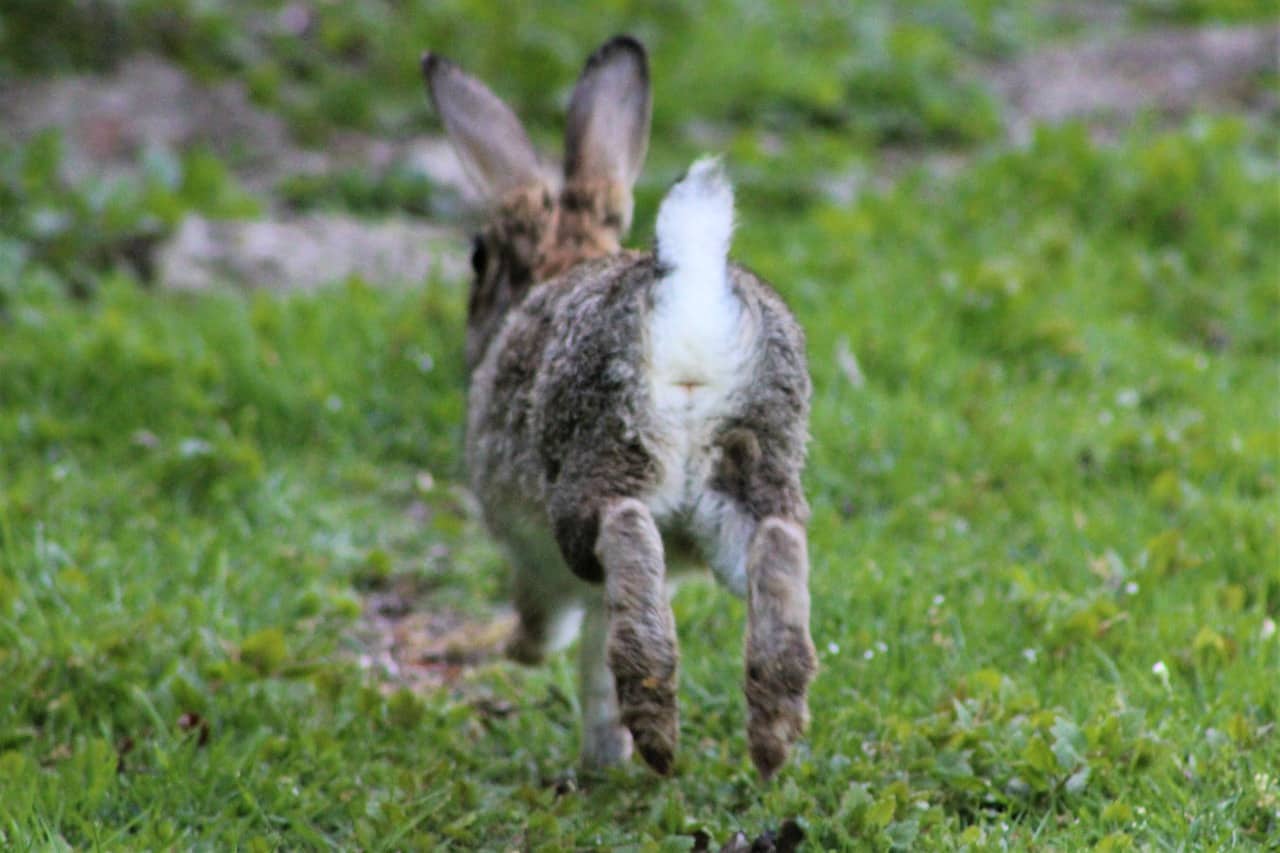
If your cat is scared of your rabbit, it is most likely not true fear. Cats are predators and rabbits are prey, so genuine terror is rare. What usually happens is that the cat is avoiding an aggressive, territorial rabbit to prevent injury. The most common cause is an unneutered rabbit displaying hormonal aggression, which makes the rabbit charge, lunge, or nip at the cat. Size differences, age gaps, and past negative encounters also play a role.
The good news is that most cat-rabbit conflicts are fixable. Neutering both animals, providing separate spaces, and using gradual introductions can turn a tense household into a peaceful one. Below, we cover every reason your cat might be backing away from your rabbit and exactly what to do about it.
Are Cats Actually Afraid of Rabbits?
In the wild, cats naturally hunt rabbits. Feral cats and wildcats are among the rabbit's primary predators, so the idea of a cat being "scared" seems counterintuitive. But domestic cats are not wild hunters. Most house cats have never hunted anything larger than a moth, and they have no desire to risk getting injured by a feisty rabbit.
A well-fed house cat views your rabbit less as prey and more as a housemate. If that housemate starts kicking, scratching, or lunging, your cat quickly learns that the rabbit is not worth the trouble. Cats are pragmatic. They weigh the cost of engagement against the reward. When there is no hunger motivation and a real risk of a scratch to the nose, retreat is the smart choice.
So when people say their cat is "scared" of their rabbit, what they usually mean is that the cat gives the rabbit a wide berth. This is avoidance behavior, not panic. The cat is simply choosing the path of least resistance.
Why Is Your Cat Scared of Your Rabbit?
Several factors explain why your cat seems intimidated by your rabbit. Understanding the root cause helps you pick the right solution.
Your Rabbit Is Unneutered
This is the number one reason cats avoid rabbits. An unneutered rabbit that has hit sexual maturity (around 3 to 6 months old) goes through dramatic hormonal changes. These hormones trigger territorial aggression that can be surprisingly intense. The rabbit may charge at anyone who enters its perceived territory, including your cat.
Unneutered male rabbits (bucks) often spray urine and lunge at perceived intruders. Unneutered females (does) can become equally territorial, especially around nesting areas. A neutered cat that has lost much of its own aggression drive simply does not want to deal with this level of hostility. The cat retreats, and owners interpret it as fear.
Neutering or spaying your rabbit typically reduces territorial aggression by 60 to 90 percent, according to the House Rabbit Society. Many breeders and veterinarians consider it the single most effective step for improving behavior in multi-pet households.
Size Difference
Cats instinctively assess threats based on body size. The average domestic cat weighs between 3.5 and 4.5 kilograms (roughly 8 to 10 pounds). Several rabbit breeds match or exceed that weight easily.
| Rabbit Breed | Average Adult Weight | Compared to Average Cat |
|---|---|---|
| Flemish Giant | 6 to 10 kg (13 to 22 lbs) | Much larger |
| French Lop | 4.5 to 6.8 kg (10 to 15 lbs) | Larger |
| New Zealand | 4 to 5.4 kg (9 to 12 lbs) | About the same or larger |
| Californian | 3.6 to 4.8 kg (8 to 10.5 lbs) | About the same |
| Mini Rex | 1.4 to 2 kg (3 to 4.5 lbs) | Smaller |
| Holland Lop | 1.4 to 1.8 kg (3 to 4 lbs) | Much smaller |
If your rabbit is a Flemish Giant or French Lop, your cat is looking at an animal that outweighs it by a significant margin. Even medium breeds like New Zealands or Californians are large enough that a cat thinks twice before picking a fight. The larger the rabbit, the more cautious the cat becomes.
Age Gap Between the Pets
A young kitten paired with an adult rabbit often results in the kitten being intimidated. Adult rabbits are calmer in some ways but much more territorial. They have established routines, scent-marked their space, and do not tolerate a bouncy kitten invading their area.
Kittens are naturally playful and curious, which rabbits can interpret as a threat. The rabbit thumps, lunges, or boxes with its front paws, and the kitten quickly learns to keep its distance. This dynamic often persists into adulthood because the cat remembers those early encounters.
The reverse scenario (adult cat with baby rabbit) rarely produces a scared cat. An adult cat is more likely to be curious about or indifferent to a small kit. However, this combination brings other risks because the cat's predatory instincts could endanger the young rabbit.
Past Negative Encounters
Cats have excellent long-term memories for negative experiences. If your rabbit bit, kicked, or charged at your cat even once, your cat will remember it. A single painful encounter can shape the cat's behavior for months or even permanently.
Rabbits have powerful hind legs and sharp claws. A well-aimed kick from a rabbit can leave a nasty scratch. Rabbits protect themselves from predators by kicking, biting, and using their strong hind legs to strike. A cat on the receiving end of one of these defensive blows learns the lesson fast.
Personality Mismatch
Just like people, individual cats and rabbits have unique personalities. Some cats are naturally bold and curious while others are timid and easily spooked. A shy, anxious cat paired with a confident, dominant rabbit creates an obvious imbalance.
Certain cat breeds tend to be more timid. Persian cats, Ragdolls, and British Shorthairs are generally laid-back and non-confrontational. Pair one of these with an assertive Dutch or Mini Rex rabbit, and the cat may consistently defer to the rabbit. This is not necessarily a problem as long as neither animal is stressed.
Territorial Rabbit Behavior
Rabbits are far more territorial than most people realize. In the wild, rabbits defend their warrens aggressively against intruders. This instinct carries over to domestic rabbits, especially around their cage, litter box, and feeding area.
Common territorial behaviors include thumping (slamming hind feet on the ground as a warning), lunging with the head extended, grunting or growling, circling, and chin-rubbing on everything to mark it with scent glands. A cat walking past a rabbit's cage can trigger a full territorial display, complete with thumping and lunging against the bars. After seeing this a few times, most cats decide the rabbit's zone is off-limits.

How Do Rabbits Intimidate Cats?
Rabbits have a surprisingly effective arsenal of defensive and aggressive behaviors that can startle even confident cats.
- Lunging and boxing: Rabbits rise on their hind legs and strike forward with both front paws. This quick motion startles cats and can land painful scratches.
- Biting: Rabbit teeth are sharp and designed to clip through tough plant material. A bite from a rabbit is painful and can break skin.
- Kicking: The hind legs are a rabbit's most powerful weapon. A rabbit can kick backward with enough force to cause bruising or scratches.
- Thumping: Loud thumps on the ground serve as both a warning and an intimidation tactic. The sudden noise startles cats.
- Charging: Some rabbits run directly at perceived threats. A rabbit charging full speed at a cat is surprisingly effective at making the cat flee.
- Grunting and growling: Rabbits produce low, guttural sounds when agitated. While quiet compared to a cat's hiss, these sounds signal genuine aggression.
These behaviors are more common in unneutered rabbits, but even neutered rabbits may display them if they feel genuinely threatened or if their territory is invaded.
How to Introduce Your Cat and Rabbit Safely
Whether you are bringing a new rabbit home to a cat household or vice versa, proper introduction is critical. Rushing the process almost always makes things worse. Follow these steps for the best outcome.
Step 1: Separate Spaces First
Keep your cat and rabbit in completely separate rooms for the first 1 to 2 weeks. Each animal should have its own food, water, litter area, and hiding spots. This lets both animals settle into the home without the stress of an unfamiliar animal nearby.
Step 2: Scent Swapping
After a few days, swap bedding or blankets between the two animals. Place the rabbit's blanket near the cat's food bowl and vice versa. This lets each animal get used to the other's scent in a safe, controlled way. Repeat this daily for at least a week.
Step 3: Visual Introduction Through a Barrier
Use a baby gate, mesh screen, or keep the rabbit in its properly sized cage while allowing the cat to observe from a distance. Watch both animals closely for signs of stress. If either animal shows fear, aggression, or panic, separate them and try again the next day.
Step 4: Supervised Face-to-Face Meetings
Once both animals seem calm during visual introductions (usually after 1 to 2 weeks of barrier exposure), allow short supervised meetings. Keep the sessions to 5 or 10 minutes at first. Have a towel or pillow ready to separate them if needed. Never pick up the rabbit during these meetings, as it could kick and injure itself or you.
Step 5: Gradually Increase Time Together
If supervised meetings go well, slowly increase the duration. Stay in the room the entire time. Over several weeks, you should notice both animals becoming more relaxed around each other. Some cats and rabbits eventually become genuine companions who groom each other and nap side by side.
Important: Never leave your cat and rabbit alone together unsupervised, regardless of how well they seem to get along. A sudden noise, an unexpected movement, or a hormonal shift can trigger instinctive behavior in either animal. If you need to leave the house, always separate them into different rooms.
Signs Your Cat Is Stressed Around Your Rabbit
Not all signs of stress are obvious. Your cat may not hiss or run away. Instead, watch for these subtler indicators that your cat is uncomfortable around your rabbit.
- Dilated pupils when the rabbit is nearby
- Flattened ears or ears rotated backward
- Low, crouching body posture when moving past the rabbit's area
- Excessive grooming after encounters with the rabbit
- Loss of appetite or changes in eating habits
- Hiding more than usual or avoiding rooms where the rabbit lives
- Increased vocalization (meowing, yowling) without apparent cause
- Litter box avoidance if the litter box is near the rabbit's space
Similarly, watch your rabbit for signs of stress such as thumping, hiding, refusing food, or over-grooming. Stress in either animal means you need to slow down the introduction process or increase their separation.
Should You Keep Cats and Rabbits Together?
Many households successfully keep cats and rabbits under the same roof. The key factors that determine success include:
- Neutering status: Both animals should be spayed or neutered. This dramatically reduces aggression and territorial behavior in both species.
- Individual temperament: A calm, older cat paired with a confident, social rabbit has a much better chance of success than a high-prey-drive cat with a nervous rabbit.
- Proper introduction: Rushing introductions is the most common mistake. Take weeks, not days.
- Adequate space: Each animal needs its own territory where it can retreat and feel safe. A small apartment with no separate rooms makes cohabitation harder.
- Supervision: Even bonded cat-rabbit pairs should not be left alone together. Instincts can override familiarity in a split second.
Keep in mind that rabbits can die from extreme fright. A sudden chase or attack from a cat, even if the cat is "just playing," can cause fatal cardiac arrest in a rabbit. This is why supervision and proper introduction are non-negotiable.
When to Separate Your Cat and Rabbit Permanently
Sometimes, despite your best efforts, a cat and rabbit simply cannot live together peacefully. Consider permanent separation if:
- Your cat shows persistent predatory behavior (stalking, pouncing, crouching with twitching tail) after several weeks of introductions
- Your rabbit shows chronic stress symptoms (weight loss, fur pulling, refusal to eat) that do not improve with more space or time
- Either animal has been injured during an encounter
- Your cat has a strong prey drive and becomes fixated on the rabbit despite barriers
- Your rabbit becomes so aggressive toward the cat that the cat cannot move freely around the home
Permanent separation does not necessarily mean rehoming one of the animals. Many households manage by keeping the cat and rabbit in entirely different areas of the home, with locked doors between them. The RSPCA advises that rabbits should never be left unsupervised with cats or dogs, even if they appear to get along well.
Tips for a Peaceful Multi-Pet Household
If your cat and rabbit are going to share a home, these practical tips make cohabitation smoother for everyone.
- Neuter both animals. This is the single most effective step. Hormonal aggression is the top cause of cat-rabbit conflict.
- Provide vertical space for the cat. Cat trees, shelves, and high perches give your cat escape routes and a sense of security. A cat that can jump to a high shelf feels less trapped when a rabbit charges.
- Give the rabbit a secure enclosure. Your rabbit needs a cage or pen where it can retreat from the cat. If your cat ever catches your rabbit, having a secure enclosure prevents access during unsupervised times.
- Keep litter boxes separate. Cats and rabbits should never share a litter box. Place them in different areas of the home.
- Feed them in separate locations. Food guarding can trigger aggression in both species. Separate feeding stations prevent conflict.
- Trim your rabbit's nails regularly. Shorter nails reduce the damage from kicks and scratches, making encounters less painful for the cat.
- Provide hiding spots for both animals. Cardboard boxes, tunnels, and covered beds give both your cat and rabbit places to escape and decompress.
Frequently Asked Questions
Can a rabbit hurt a cat?
Yes, rabbits can hurt cats. Rabbits have strong hind legs that deliver powerful kicks, and their claws and teeth can cause scratches and bite wounds. A large rabbit breed like a Flemish Giant can inflict serious injuries on a cat, especially if the cat is smaller than the rabbit.
Will my cat eventually stop being scared of my rabbit?
In most cases, yes. With proper gradual introductions and neutering of both animals, cats typically become comfortable around rabbits within 2 to 6 weeks. Some cats and rabbits even become close companions. However, if your cat has a high prey drive or your rabbit remains highly aggressive, permanent avoidance behavior may persist.
Is it safe to let my cat and rabbit play together?
Only under direct supervision. Cats and rabbits can interact peacefully, but their instincts as predator and prey never fully disappear. A playful swat from a cat can seriously injure a rabbit, and a panicked rabbit can kick hard enough to injure a cat. Never leave them together unsupervised.
Should I neuter my rabbit to reduce aggression toward my cat?
Absolutely. Neutering or spaying a rabbit significantly reduces hormonal territorial aggression. Most veterinarians recommend spaying or neutering rabbits between 4 and 6 months of age. The behavioral improvements typically become noticeable within 2 to 4 weeks after the procedure.
Do certain cat breeds get along better with rabbits?
Calm, low-prey-drive breeds like Ragdolls, Persians, British Shorthairs, and Maine Coons tend to coexist more peacefully with rabbits. High-energy breeds with strong hunting instincts, such as Bengals, Abyssinians, and Siamese, may be more challenging to pair with rabbits due to their prey drive.
Cite this article:
BunnySync (March 2, 2026) Why Is My Cat Scared Of My Rabbit? Causes and Solutions. Retrieved from https://bunnysync.com/blog/why-is-my-cat-scared-of-my-rabbit.
"Why Is My Cat Scared Of My Rabbit? Causes and Solutions." BunnySync - March 2, 2026, https://bunnysync.com/blog/why-is-my-cat-scared-of-my-rabbit