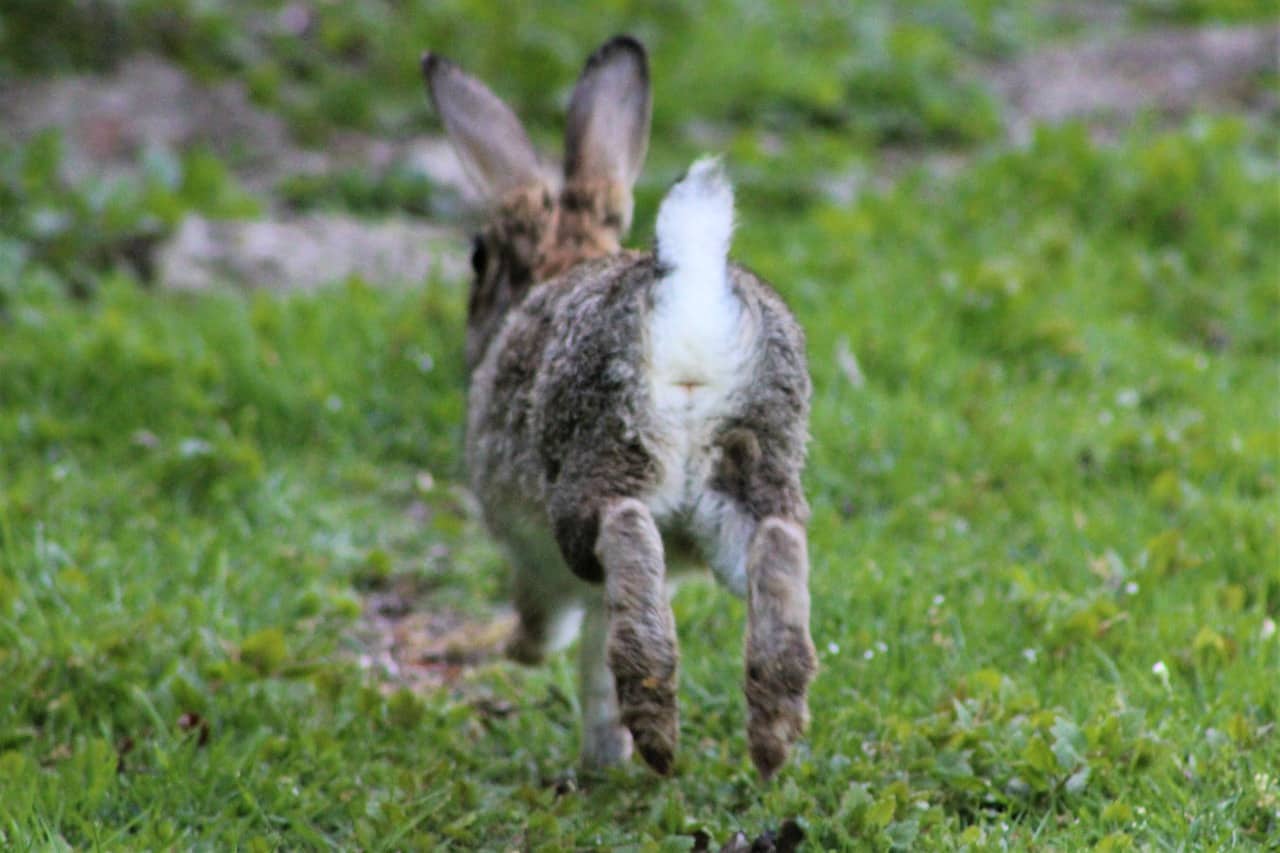
If your cat catches a rabbit, your first step should be to separate them immediately and call your local wildlife rehabilitator. For baby rabbits, place the rabbit in a warm, dark box lined with a soft towel and keep it away from your cat until help arrives. For adult wild rabbits, it is usually safer to remove your cat from the area and let the rabbit escape on its own, since handling a stressed adult rabbit can cause more harm than good. Time is critical because cats commonly attack rabbits, and even minor cat bites carry bacteria that can turn fatal within 24 to 48 hours without treatment.
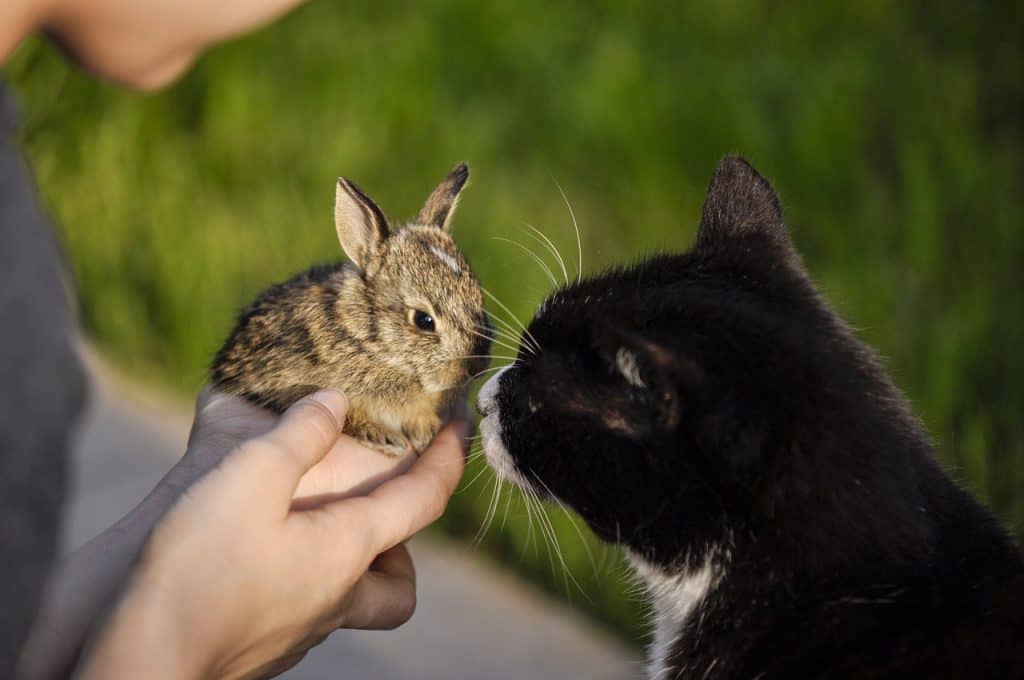
How to Save a Baby Rabbit Your Cat Caught
Baby wild rabbits (cottontails) are the most common victims of cat attacks because they spend their first few weeks hiding in shallow ground nests with no way to escape. If your cat brings you a baby rabbit or you find one being played with, follow these steps in order. Acting quickly and calmly gives the rabbit the best chance of survival.
Step 1: Separate Your Cat From the Rabbit
Get your cat away from the rabbit as fast as you can. If your cat is holding the rabbit in its mouth, do not pull the rabbit out. Pulling can cause tearing injuries far worse than the initial bite. Instead, gently press on the sides of your cat's jaw to encourage it to release its grip.
Once the rabbit is free, move your cat to a different room and close the door. A rabbit that senses a predator nearby will stay in a state of panic, and prolonged stress can cause rabbits to die from fright alone. The combination of a racing heart, shock, and adrenaline overload can trigger cardiac arrest in minutes.
Step 2: Check the Rabbit for Injuries
Handle the rabbit as little as possible while checking for visible injuries. Wear gloves if you have them. Look for:
- Open wounds or puncture marks from teeth or claws
- Bleeding from any part of the body
- Limbs that hang at unnatural angles (possible fractures)
- Labored breathing or open-mouth panting
- Wet or matted fur, which can indicate saliva from your cat's mouth
Even if you see no visible injuries, understand that cat saliva contains Pasteurella multocida bacteria. This bacterium is almost always fatal to rabbits if untreated. A tiny puncture wound that looks harmless on the surface can lead to septicemia within 24 hours. This is why every rabbit that has been in a cat's mouth needs professional care, regardless of how fine it appears.
Step 3: Build a Warm Temporary Shelter
While you wait for help, the rabbit needs a quiet, warm, and dark environment. Stress kills rabbits faster than most injuries, so reducing stimulation is essential. Here is how to set up a temporary shelter:
- Find a cardboard box or plastic bin with tall enough sides that the rabbit cannot jump out.
- Line the bottom with a soft towel or fleece cloth.
- Fill a plastic water bottle with warm (not hot) tap water, wrap it in a thin cloth, and place it on one side of the box. This gives the rabbit a heat source it can move toward or away from.
- Cover the box with a light towel, leaving a small gap for airflow.
- Place the box in the quietest room of your home, away from pets, children, and household noise.
Baby rabbits are especially vulnerable to hypothermia. Even on warm days, a shocked baby rabbit can lose body heat rapidly. The warm water bottle can make the difference between survival and death during the first critical hour.
Step 4: Do Not Offer Food or Water
Your instinct will be to feed the rabbit or give it water. Resist that urge. A rabbit's digestive system is extraordinarily delicate, and a stressed, injured rabbit that aspirates water or food into its lungs will die very quickly from aspiration pneumonia.
Wild baby rabbits also have very specific dietary needs. They survive on their mother's milk, which is unlike any formula you have at home. Cow's milk, almond milk, and even kitten milk replacer can cause fatal diarrhea in young cottontails. Leave feeding to the wildlife rehabilitator who will have the correct supplies and technique.
Step 5: Search for the Original Nest
If the baby rabbit has no visible injuries and was not in your cat's mouth, there is a good chance you can return it to its nest. Mother rabbits leave their babies alone for most of the day, visiting only at dawn and dusk to nurse. An unattended nest does not mean the babies are abandoned.
Look for a shallow depression in the ground, usually in your yard or garden, covered with grass and fur. If you find the nest:
- Place the baby rabbit back in the nest gently.
- Rearrange the grass and fur covering to look undisturbed.
- Lay a few pieces of string or thin sticks in a tic-tac-toe pattern over the nest.
- Check back after 12 hours. If the string pattern is disturbed, the mother has returned.
If the rabbit was in your cat's mouth at any point, do not return it to the nest. Cat saliva bacteria require antibiotic treatment, and the rabbit needs professional help even if it looks perfectly healthy right now.
Step 6: Call Wildlife Rehabilitators
Calling a licensed wildlife rehabilitator is always the best move when you have a wild rabbit that needs care. They have the training, medication, and enclosures to give the rabbit a genuine chance at survival and eventual release.
To find a rehabilitator near you, use the Humane Society's wildlife rehabilitator directory. If you cannot find a wildlife specialist, contact a rabbit-savvy veterinarian. Not all vets treat rabbits, so call ahead and specifically ask if they have experience with wild cottontails.
While waiting for pickup or transport, keep the rabbit in its temporary shelter and minimize handling. Every time you pick up, pet, or look at the rabbit, you are adding to its stress. Leave it alone in the dark, quiet box.
What to Do If Your Cat Catches an Adult Wild Rabbit
Adult wild rabbits are a different situation entirely. They are faster, stronger, and more likely to injure you if you try to handle them. Their powerful hind legs can deliver kicks that scratch and bruise human skin, and a panicking adult rabbit can actually break its own spine while thrashing in your hands.
If the adult rabbit is still mobile and able to hop away, the best course of action is simple: bring your cat inside and leave the rabbit alone. Most healthy adult rabbits will find cover on their own within minutes once the threat is removed.
If the rabbit is clearly injured and cannot move, you can try to contain it in a box using the same towel-and-box method described above. Approach slowly, drape a towel over the rabbit to cover its eyes (this reduces panic), and lift it gently into the box. Then call wildlife rehabilitators immediately.
Be aware that adult wild rabbits carry a higher risk of transmitting diseases like tularemia to humans through scratches and bites. Wearing gloves during any handling is not optional.
Can a Rabbit Survive a Cat Attack?
Rabbits can survive cat attacks, but survival depends on three critical factors: the severity of the injuries, how quickly the rabbit receives care, and whether antibiotics are administered in time to combat Pasteurella bacteria.
Here is a general breakdown of survival chances:
| Scenario | Survival Likelihood | Key Factor |
|---|---|---|
| No visible injuries, brief contact | High (with antibiotics) | Bacteria from saliva still present |
| Minor puncture wounds | Moderate (with prompt treatment) | Infection risk within 24 hours |
| Deep wounds or broken bones | Low | Shock and blood loss compound infection risk |
| Prolonged exposure to cat | Very low | Stress-induced cardiac failure |
The single most important thing you can do to improve survival odds is getting the rabbit to a professional within the first few hours. Even rabbits with no visible injuries need antibiotics because the puncture wounds from cat teeth are often too small to see but deep enough to introduce deadly bacteria directly into the bloodstream.
We have seen cases in our breeding experience where rabbits appeared completely fine after a cat encounter only to crash 18 to 36 hours later from sepsis. Never assume a rabbit is safe just because it looks alert and active after being caught.
What Diseases Can Wild Rabbits Pass to Cats and Humans?
This is a concern many cat owners overlook. When your cat catches a wild rabbit, the health risk runs both ways. Wild rabbits can carry several diseases and parasites worth knowing about:
- Tularemia (rabbit fever): A bacterial infection that can spread to cats and humans through contact with infected tissue or bodily fluids. Symptoms in humans include fever, skin ulcers, and swollen lymph nodes. Cats can develop lethargy, high fever, and organ damage.
- Fleas and ticks: Wild rabbits are common hosts for fleas and ticks, including species that carry Lyme disease and other tick-borne illnesses. Your cat can pick up these parasites during the encounter.
- Intestinal parasites: Coccidia and other intestinal parasites found in wild rabbits can be transmitted to cats that ingest rabbit tissue.
- Myxomatosis: While primarily a rabbit disease, myxomatosis-carrying fleas from wild rabbits can spread to domestic rabbits in your household if you keep pet rabbits.
If your cat has caught a wild rabbit, monitor it for the following week for any signs of illness: loss of appetite, lethargy, swollen lymph nodes, or discharge from the eyes or nose. If you notice any of these, take your cat to a veterinarian and mention the rabbit encounter. You can also learn more about whether rabbits can carry rabies and other zoonotic diseases.
How to Prevent Your Cat From Catching Rabbits
Prevention is always better than emergency response. If you live in an area where wild rabbits are common, there are several effective steps you can take to protect both the local wildlife and your cat.
Keep Your Cat Indoors During Peak Hours
Wild rabbits are most active at dawn and dusk. These are also the times when cats are most likely to hunt. Keeping your cat indoors during these periods eliminates the majority of potential encounters. If your cat needs outdoor time, supervised sessions during midday are the safest option.
Use a Breakaway Bell Collar
Attaching a bell to your cat's collar gives prey animals an audible warning before the cat gets close enough to pounce. Studies have shown that bells reduce successful hunting by roughly 50%. Make sure the collar is a breakaway design so your cat does not get caught on branches or fences.
Install Rabbit-Proof Fencing Around Nests
If you find a rabbit nest in your yard, place a small wire enclosure (chicken wire works well) around it with openings large enough for the mother rabbit to enter but too small for a cat. Remove the fencing once the babies leave the nest, usually after about three weeks.
Create a Catio or Enclosed Outdoor Space
A catio is an enclosed outdoor area that lets your cat enjoy fresh air and sunshine without being able to hunt. They range from simple window box designs to full walk-in enclosures. This is the most reliable long-term solution for cat owners who want to give their cats outdoor access while protecting wildlife.
Should You Punish Your Cat for Catching a Rabbit?
No. Punishing your cat will not stop the behavior and will damage your relationship with your pet. Hunting is hardwired into cat behavior. Even well-fed domestic cats will hunt because the drive is triggered by movement, not hunger.
Instead of punishment, focus on redirecting your cat's hunting instincts through interactive play with feather wands, laser pointers, and puzzle feeders. Cats that receive enough mental and physical stimulation indoors are less motivated to hunt when they go outside. Understanding how to calm down a scared rabbit is also valuable knowledge for any pet owner who keeps both cats and rabbits.
What to Do If Your Cat Kills the Rabbit
If you find that your cat has already killed the rabbit, there are a few practical steps to take:
- Remove the rabbit carcass. Wear gloves and place the body in a sealed plastic bag. Dispose of it in your outdoor trash bin. Do not leave it in the yard where your cat or other animals can continue to interact with it.
- Check your cat for injuries. Even a baby rabbit can scratch, and adult rabbits can deliver surprisingly hard kicks. Look for scratches on your cat's face and paws.
- Watch for signs of illness. Monitor your cat for a week for any unusual behavior, reduced appetite, or signs of stress in rabbits if you also have domestic rabbits in the home who may have witnessed the event.
- Review your prevention strategy. Consider whether additional measures like indoor-only time, bell collars, or a catio would prevent future incidents.
Frequently Asked Questions
Will a rabbit die from shock after a cat attack?
Yes, rabbits can die from shock even without physical injuries. The extreme stress of being caught by a predator triggers a massive adrenaline response that can cause cardiac arrest or stroke. This is why separating the rabbit from the cat and placing it in a dark, quiet space immediately is so critical. Shock deaths can occur within minutes to hours after the encounter.
Can I keep a wild baby rabbit my cat caught?
No. Wild rabbits are not domesticated animals and do not adapt well to captivity. In most states, it is also illegal to keep wild rabbits without a wildlife rehabilitation permit. Baby cottontails have a very low survival rate in human care without professional training, and they experience severe chronic stress when kept as pets. Always transfer them to a licensed rehabilitator.
How do I know if the mother rabbit has abandoned the nest?
Place string or thin sticks in a pattern over the nest and check 12 hours later. If the pattern is disturbed, the mother visited. Mothers only nurse once or twice per day, usually at dawn and dusk, so an empty nest during daytime is completely normal. A nest is only considered abandoned if the string remains undisturbed for a full 24 hours.
Should I give a rescued wild rabbit water from a syringe?
Do not attempt to syringe-feed water to a wild rabbit. Rabbits have a very narrow trachea, and it is extremely easy to accidentally push water into their lungs, causing aspiration pneumonia. This is often fatal and one of the most common mistakes well-intentioned rescuers make. Let the wildlife rehabilitator handle hydration using subcutaneous fluids if needed.
My indoor rabbit was attacked by my cat. Is the advice the same?
The medical urgency is the same. Cat saliva bacteria are just as dangerous to domestic rabbits as they are to wild ones. Take your pet rabbit to a rabbit-savvy veterinarian immediately for antibiotics. The behavioral approach differs since your domestic rabbit needs to feel safe in its home again. Separate the cat and rabbit completely and reintroduce them slowly over several weeks under close supervision.
Cite this article:
Cite this article:
BunnySync (March 3, 2026) What To Do When Your Cat Catches a Rabbit: Emergency Guide. Retrieved from https://bunnysync.com/blog/what-to-do-when-your-cat-catches-a-rabbit.
"What To Do When Your Cat Catches a Rabbit: Emergency Guide." BunnySync - March 3, 2026, https://bunnysync.com/blog/what-to-do-when-your-cat-catches-a-rabbit