You can comfort a dying rabbit by managing their pain with veterinary-prescribed medications, keeping them warm and clean, providing food and water within easy reach, and spending quiet time by their side. As breeders, we know how devastating it is to lose a rabbit. The goal in these final hours is simple: reduce suffering and let your rabbit feel safe. Below, we cover the signs that death is approaching, step-by-step comfort measures, when to consider euthanasia, and how to cope with the grief that follows.
How Do You Know Your Rabbit Is Dying?
Before you shift into comfort-only care, you need to confirm that your rabbit's condition is truly terminal. Rabbits are prey animals that hide signs of illness and stress until the very end, so by the time symptoms become obvious, the situation may already be critical. Always have a rabbit-savvy veterinarian confirm the prognosis before deciding that treatment is no longer an option.
Physical Signs That Death Is Near
- Severe lethargy. A dying rabbit will stay in one spot and refuse to move, even when offered favorite treats. This goes beyond normal rest. The rabbit appears limp and unresponsive to stimulation.
- Complete loss of appetite. Rabbits need a constant flow of fiber to keep their gut moving. When a rabbit stops eating entirely, it signals the body is shutting down. GI stasis alone can be fatal within 24 to 48 hours if left untreated.
- Labored or irregular breathing. Rapid, shallow breaths or long pauses between breaths indicate respiratory failure. Healthy rabbits breathe 30 to 60 times per minute. A dying rabbit may breathe much faster or much slower than that range.
- Lying on the side. Rabbits almost never lie flat on their side unless they are in extreme distress. If your rabbit is side-lying and breathing heavily, the end is likely very close.
- Cold extremities. Check the ears and feet. A normal rabbit body temperature ranges from 100 to 103 degrees Fahrenheit (38.3 to 39.4 degrees Celsius). When the extremities feel cold to the touch, circulation is failing.
- Abnormal vital signs. A healthy rabbit's heart beats 180 to 250 times per minute. A dying rabbit may have a heart rate well above or below this range, depending on the underlying condition.
- Seizures or tremors. Involuntary muscle spasms, head tilting, or full-body tremors can occur as organ systems begin to fail. If your rabbit is shaking and lying down, this is an emergency sign.
Behavioral Changes in a Dying Rabbit
- Withdrawal from companions. Rabbits that normally seek out bonded partners may isolate themselves. In the wild, sick rabbits separate from the group to avoid attracting predators.
- Grinding teeth loudly. Soft tooth purring means contentment, but loud, repetitive teeth grinding is a reliable indicator of pain in rabbits.
- Screaming. Rabbits scream only when in extreme pain or terror. If your rabbit screams, it is suffering badly and needs immediate veterinary intervention, whether that means stronger pain relief or euthanasia.
- Loss of litter habits. A rabbit that was previously litter trained may begin soiling itself as muscle control weakens.
Step-by-Step Guide to Comforting a Dying Rabbit
Once your veterinarian has confirmed that the prognosis is terminal, your focus shifts from treatment to comfort. Here is how to give your rabbit the most peaceful passing possible.
1. Work With Your Vet on Pain Management
Pain relief is the single most important thing you can do for a dying rabbit. Rabbits mask pain instinctively, so even a rabbit that appears calm may be suffering. Ask your veterinarian about appropriate analgesics. Common options include:
- Buprenorphine is the most commonly prescribed opioid for rabbit pain. It is given orally or by injection every 6 to 8 hours.
- Meloxicam (a non-steroidal anti-inflammatory) is often used for moderate pain and inflammation. Typical dosing is 0.3 to 0.5 mg per kg of body weight, given once daily.
- Gabapentin may be added for nerve pain or as a mild sedative to keep the rabbit calm.
Never give human painkillers like ibuprofen or acetaminophen to a rabbit. These are toxic and will cause organ damage. Only use medications prescribed by your vet, at the exact dosage they specify.
Signs your rabbit's pain is not adequately controlled:
- Hunched posture with eyes squinted shut
- Loud, repetitive tooth grinding (not the soft purring sound)
- Flinching or biting when touched
- Pressing the head against a wall or the floor
- Screaming or whimpering
If you see any of these signs, contact your vet immediately to adjust the pain medication.
2. Create a Warm, Quiet Environment
Move your rabbit to a quiet room away from loud noises, other pets, and foot traffic. Stress accelerates decline, and rabbits can actually die from extreme fright. A calm setting helps your rabbit conserve energy and rest more peacefully.
Set up the space with:
- Soft, clean bedding. Use fleece blankets or soft towels. Avoid wood shavings, which can irritate airways. Change the bedding as needed if your rabbit soils it.
- Low lighting. Dim the lights or use natural daylight. Bright overhead lights can be stressful.
- Familiar items. Place your rabbit's favorite blanket, toy, or a piece of your worn clothing nearby. The familiar scent can be soothing.
- Ground-level setup. Do not use elevated platforms or multi-level enclosures. A dying rabbit may fall and injure itself. Keep everything at floor level.
3. Regulate Your Rabbit's Body Temperature
A dying rabbit's body temperature will fluctuate unpredictably. The ideal body temperature for rabbits is 100 to 103 degrees Fahrenheit (38.3 to 39.4 degrees Celsius). Here is how to respond to temperature changes:
| Condition | Temperature | What to Do |
|---|---|---|
| Hypothermia | Below 100 degrees F (37.8 degrees C) | Place a warm water bottle wrapped in a towel next to (not under) the rabbit. Use a heating pad on the lowest setting beneath a blanket layer. |
| Normal | 100 to 103 degrees F (38.3 to 39.4 degrees C) | No intervention needed. Monitor every few hours. |
| Fever | Above 103 degrees F (39.4 degrees C) | Place a cool (not cold) damp cloth on the ears. Move the rabbit to a cooler area. A ceramic tile on the floor gives a cool surface to lie on. |
Check your rabbit's ears every 2 to 3 hours. Cold ears indicate hypothermia. Hot ears suggest fever. A rectal thermometer gives the most accurate reading, but if your rabbit is too stressed for that, ear temperature is a reasonable proxy.
4. Offer Food and Water Within Easy Reach
Even a dying rabbit may nibble on food. Keep fresh timothy hay and a water bowl (not a bottle, as bottles require effort) within reach at all times. Do not force-feed unless your vet specifically instructs you to.
If your rabbit is too weak to drink on its own:
- Use a small syringe (without the needle) to drip water onto the side of the mouth.
- Offer 1 to 2 ml at a time, slowly. Let the rabbit swallow before offering more.
- Watch for signs of dehydration, such as skin tenting (gently pinch the skin on the back of the neck; if it stays tented, the rabbit is dehydrated).
- Your vet may recommend subcutaneous fluids, which you can learn to administer at home.
You can also offer small pieces of the rabbit's favorite greens or herbs. Even if they only take a bite or two, it provides some comfort and stimulation.
5. Stay Close and Provide Gentle Comfort
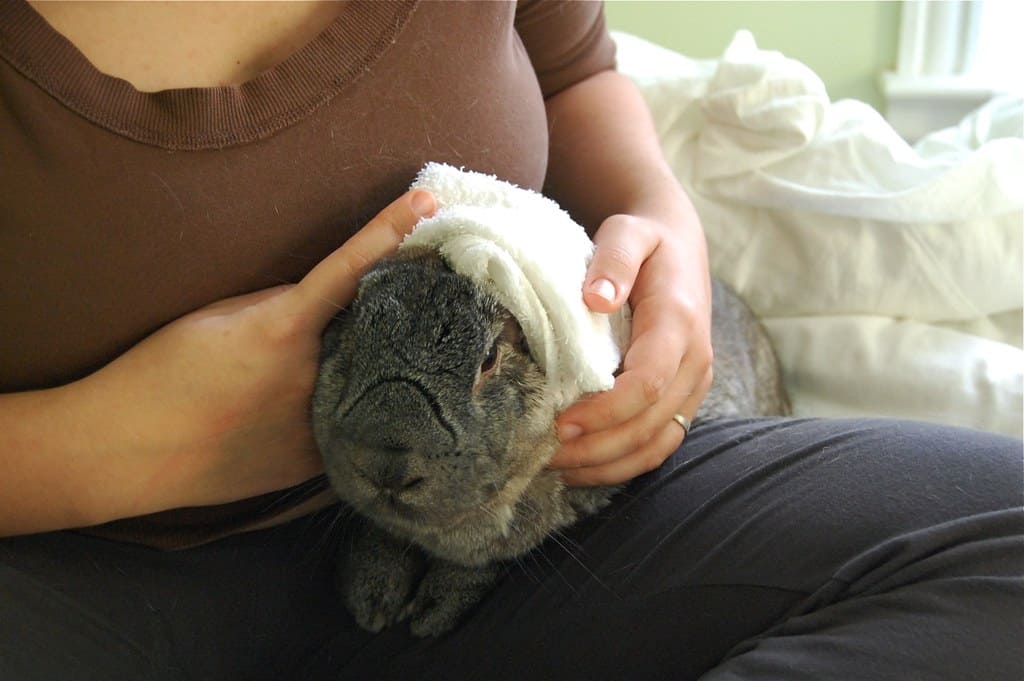
Rabbits are deeply social animals that form strong bonds with their owners. Your presence matters, especially now. Sit beside your rabbit, speak softly, and offer gentle pets on the forehead, cheeks, and behind the ears.
Some guidelines for physical comfort:
- Follow your rabbit's lead. If they lean into your touch, continue. If they flinch or pull away, give them space.
- Do not pick them up. Lifting a dying rabbit can cause pain, stress, and even broken bones if the rabbit is very weak. Stay at their level on the floor.
- Keep bonded partners nearby. If your rabbit has a bonded companion, allow them to stay together. The companion provides comfort that humans cannot replicate. After the passing, the companion will need time to grieve as well, as rabbits can suffer severely from the loss of a bonded partner.
- Minimize handling. Gentle strokes are fine. Avoid repositioning the rabbit unless it is lying in soiled bedding.
6. Keep the Area Clean
A dying rabbit may lose control of its bladder and bowels. Check the bedding every hour or two and change it when soiled. Urine-soaked fur can cause skin irritation and sores, adding to your rabbit's discomfort. Gently wipe any soiled areas with a warm, damp cloth and pat dry. Do not attempt a full bath, as this would cause extreme stress.
When Should You Consider Euthanasia?
Euthanasia is not giving up. It is the final act of care you can give a rabbit that is suffering beyond what pain medications can manage. As breeders, we have had to make this decision, and it never gets easier. But letting a rabbit suffer when relief is available is not compassion.
Consider euthanasia if:
- Your rabbit is screaming in pain despite being on the maximum safe dose of pain medication.
- Your rabbit has not eaten or had water in over 24 hours and is unresponsive to syringe feeding.
- Your rabbit is having repeated seizures with no periods of calm between them.
- Your veterinarian confirms there is no chance of recovery and suffering will only increase.
- Your rabbit's quality of life has deteriorated to the point where every moment is distress.
A veterinarian can perform euthanasia at the clinic or, in many cases, at your home. Home euthanasia allows the rabbit to pass in a familiar environment, which is less stressful for both the rabbit and you. The procedure itself is quick and painless: an injection of a barbiturate causes the rabbit to fall asleep within seconds, followed by a peaceful death.
According to the American Veterinary Medical Association (AVMA) guidelines on euthanasia, injection of barbiturates is the most humane method for companion animals, including rabbits.
How to Tell If Your Rabbit Is Comfortable While Dying
Rabbits are masters at hiding pain, which makes it difficult to know for certain whether your comfort measures are working. However, there are some positive signs that suggest your rabbit is at ease:
- Relaxed body posture. The rabbit is lying in a natural resting position rather than hunched or rigid.
- Soft tooth purring. Light, quiet tooth grinding when you pet them indicates contentment (as opposed to the loud grinding that signals pain).
- Closed or half-closed eyes. A rabbit that feels safe will close its eyes while resting. Wide, bulging eyes indicate fear or pain.
- Accepting food or water. Even small nibbles suggest the rabbit still has some comfort and interest in its surroundings.
- Leaning into your touch. A rabbit that presses its head against your hand is seeking comfort from you.
Conversely, signs that your rabbit is not comfortable include screaming, constant teeth grinding, head pressing against hard surfaces, and thrashing or attempting to flee despite being too weak to stand. If you see these signs, contact your vet about adjusting pain medication or discussing euthanasia.
What to Do After Your Rabbit Passes
After your rabbit dies, you will need to decide how to handle the remains. The main options are:
- Burial at home. Check your local regulations first. In most areas, you can bury a pet in your yard at a depth of at least 3 feet. Choose a spot away from water sources.
- Cremation. Many veterinary clinics offer cremation services. You can choose individual cremation if you want the ashes returned, or communal cremation.
- Veterinary disposal. Your vet can handle the remains for you if you prefer not to manage it yourself.
For more detailed guidance on this difficult topic, read our article on what to do with a dead rabbit.
Helping a Bonded Rabbit Grieve
If the deceased rabbit had a bonded companion, allow the surviving rabbit to see and sniff the body. This helps them understand that their partner is gone, rather than wondering why they disappeared. Surviving rabbits can become depressed after losing a companion, showing signs like loss of appetite, lethargy, and withdrawal.
Monitor the surviving rabbit closely for the next few weeks. Offer extra attention, maintain their routine, and consult your vet if they stop eating for more than 12 hours.
Coping With the Loss of Your Rabbit
Grief over a pet rabbit is real and valid. Rabbits live 8 to 12 years, and the bond you build over that time is deep. Do not let anyone minimize your loss by saying "it was just a rabbit."
Some things that help with the grieving process:
- Allow yourself to grieve. Crying, feeling angry, or feeling numb are all normal reactions. There is no wrong way to mourn.
- Create a memorial. Plant a flower or shrub where your rabbit is buried, create a photo album, or write down your favorite memories.
- Talk to others who understand. Online rabbit communities and pet loss support groups can provide comfort from people who truly understand.
- Give yourself time before getting another rabbit. Some people find comfort in a new companion quickly. Others need weeks or months. Both approaches are fine.
Frequently Asked Questions
How long does the dying process take for a rabbit?
The dying process can last anywhere from a few hours to several days, depending on the underlying condition. Acute emergencies like GI stasis or bloat can be fatal within hours, while chronic conditions such as cancer may cause a gradual decline over days or weeks. Your veterinarian can give you a more specific timeline based on your rabbit's diagnosis.
Should I force-feed a dying rabbit?
Do not force-feed a dying rabbit unless your veterinarian specifically instructs you to do so. Forcing food can cause choking or aspiration pneumonia. Instead, keep hay and fresh greens within easy reach and offer water via syringe in small amounts. Let your rabbit decide how much, if anything, they want to eat.
Can I give my dying rabbit human painkillers?
Never give human painkillers such as ibuprofen, aspirin, or acetaminophen to a rabbit. These medications are toxic to rabbits and can cause liver failure, kidney damage, or gastric ulcers. Only use pain medications prescribed by a rabbit-savvy veterinarian, such as buprenorphine or meloxicam.
Is it better to euthanize a rabbit at home or at the vet?
Home euthanasia is generally less stressful for the rabbit because they remain in a familiar, comfortable environment. Many veterinarians offer house calls for this purpose. However, clinic euthanasia is equally humane if a home visit is not available. Discuss both options with your vet to decide what works best for your situation.
Do rabbits know they are dying?
There is no scientific evidence that rabbits have an awareness of death in the way humans do. However, rabbits do seem to sense that something is wrong. They may become withdrawn, seek solitude, or, in some cases, seek extra closeness with their owners. Regardless of what they understand, they can still feel pain, fear, and comfort, which is why your care in these final moments matters so much.
Cite this article:
Cite this article:
BunnySync (March 6, 2026) How to Comfort a Dying Rabbit: A Breeder's Guide to End-of-Life Care. Retrieved from https://bunnysync.com/blog/how-to-comfort-a-dying-rabbit.
"How to Comfort a Dying Rabbit: A Breeder's Guide to End-of-Life Care." BunnySync - March 6, 2026, https://bunnysync.com/blog/how-to-comfort-a-dying-rabbit