Can Rabbits Eat Millet?
No, rabbits should not eat millet. While millet is not acutely toxic, it is a starchy grain that rabbits cannot properly digest. If you are wondering can rabbits eat millet, the short answer is that it poses real health risks and has no place in a healthy rabbit diet. We have seen rabbits in our rabbitry get into spilled millet from bird feeders, and the results, soft cecotropes, bloating, and GI slowdowns, are consistent and predictable. Millet offers nothing that hay, fresh greens, and quality pellets do not already provide in a safer form.
The digestive system of a rabbit is built for high-fiber, low-starch foods. Millet is the opposite: low in fiber, high in carbohydrates, and dense in calories. That mismatch is the root of every problem we will cover in this article.
What Exactly Is Millet?
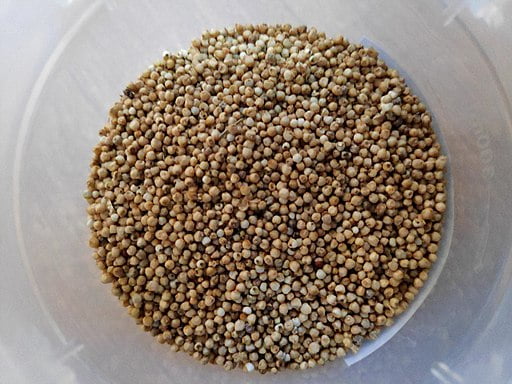
Millet is a group of small-seeded cereal grasses grown worldwide as a grain crop. It is commonly found in bird seed mixes, some human health foods, and livestock feed. There are several varieties, but the types most relevant to rabbit owners are pearl millet, foxtail millet, and proso millet.
Nutritional Profile of Millet
| Nutrient | Amount per 100g (cooked) | Rabbit Dietary Need |
|---|---|---|
| Calories | 119 kcal | Low-calorie diet preferred |
| Carbohydrates | 23.7 g | Very low carb requirement |
| Fiber | 1.3 g | High fiber essential (25%+ of diet) |
| Protein | 3.5 g | 12-14% from pellets/hay |
| Fat | 1.0 g | Low fat preferred |
| Starch | ~20 g | Minimal starch tolerance |
The numbers tell the story. Millet is a carbohydrate-heavy grain with very little fiber. A rabbit's cecum, the fermentation chamber where gut bacteria break down food, is designed for fibrous material, not starch. When starch enters the cecum in large amounts, it disrupts the microbial balance and can trigger a cascade of digestive problems.
Why Is Millet Dangerous for Rabbits?
The danger of millet is not that it contains a specific toxin. It is that its nutritional composition directly conflicts with how a rabbit's digestive system functions. Here are the specific risks we have observed and that veterinary literature supports.
GI Stasis
Gastrointestinal stasis is the most serious risk. When a rabbit consumes too much starch and too little fiber, gut motility slows or stops entirely. The cecum becomes a breeding ground for harmful bacteria, gas builds up, and the rabbit stops eating.
GI stasis can become life-threatening within 12-24 hours. We have had to rush rabbits to emergency vet visits after they accessed millet from improperly stored bird seed. It is not a theoretical risk, it is a common outcome when rabbits consume significant amounts of grain.
Cecal Dysbiosis and Soft Cecotropes
Even small amounts of millet can disrupt the delicate bacterial balance in a rabbit's cecum. The result is cecal dysbiosis, which presents as:
- Mushy, unformed cecotropes that stick to the rabbit's fur
- Foul-smelling droppings
- Uneaten cecotropes accumulating in the enclosure
- Reduced appetite for hay
Cecotropes are nutrient-rich droppings that rabbits re-ingest for essential vitamins and amino acids. When cecotropes become soft and malformed, the rabbit often refuses to eat them, missing out on critical nutrition. If your rabbit is experiencing digestive irregularities, our guide on how long rabbits can go without pooping explains what to watch for and when to seek veterinary help.
Obesity and Related Complications
Millet is calorie-dense. A rabbit that regularly consumes millet, even in small quantities, is taking in far more calories than it needs. Over time, this leads to weight gain, fatty liver disease (hepatic lipidosis), and reduced mobility.
Obese rabbits are also more prone to pododermatitis (sore hocks), arthritis, and difficulty grooming, which can lead to flystrike. The caloric density of grains is one reason we are cautious about any grain-based treat, including the ones discussed in our article on whether rabbits can eat oats.
Dental Problems
Rabbit teeth grow continuously and require constant grinding on fibrous material, primarily hay, to stay properly worn. Grains like millet are soft and do not provide the abrasive action that rabbit teeth need. A diet that includes too much grain and not enough hay can contribute to dental malocclusion over time.
But Some Breeders Feed Millet to Meat Rabbits, Is That Safe?
This is a fair point, and it requires context. Some commercial rabbitries and homestead breeders do include millet or other grains in feed mixes for meat rabbits. The goal in meat production is rapid weight gain, and the high calorie content of grains serves that purpose.
However, there are important distinctions:
- Meat rabbits are processed young. Long-term health consequences of a grain-heavy diet are less relevant when the rabbit's lifespan is measured in weeks, not years.
- Quantities are carefully controlled. Experienced breeders who use grain measure it precisely and balance it with high-fiber hay and pellets.
- Pet rabbits have different goals. For a companion rabbit expected to live 8-12 years, the priority is long-term digestive health, dental wear, and healthy weight, none of which grains support.
If you are raising meat rabbits and considering grain supplements, consult with a rabbit-savvy veterinarian or experienced breeder mentor about appropriate formulations. For pet rabbits, the answer is clear: skip the millet entirely.
What About Millet Sprays and Millet in Bird Seed?
Many rabbit owners encounter millet indirectly. Perhaps you keep birds and rabbits in the same household, or your rabbit free-roams near a bird feeder. Millet sprays, the dried stalks sold as bird treats, are a common accidental exposure route.
Millet Sprays
Millet sprays are whole millet seeds still attached to the stalk. They are designed for birds, whose digestive systems handle grain efficiently. For rabbits, millet sprays carry the same risks as loose millet seeds. The fact that they are "natural" or "whole" does not change the starch content.
Bird Seed Mixes
Bird seed blends often contain millet as a primary ingredient alongside sunflower seeds, safflower, and other grains. If your rabbit has access to areas where bird seed is stored or scattered, you need to secure those areas. Our article on whether rabbits can eat bird food covers this topic in detail, including which bird seed ingredients are most problematic.
Rabbits are opportunistic foragers and will readily eat bird seed if they can reach it. We have seen this happen multiple times in our own setup and learned to keep all bird feed in sealed containers well out of rabbit reach.
What Should Rabbits Eat Instead of Millet?
A healthy rabbit diet is straightforward, and there is no nutritional gap that millet would fill. Here is what your rabbit actually needs:
The Ideal Rabbit Diet Breakdown
| Food | Proportion | Purpose |
|---|---|---|
| Timothy or grass hay | 80-85% | Fiber, dental wear, gut motility |
| Fresh leafy greens | 10-15% | Vitamins, hydration, enrichment |
| Quality pellets | ~5% | Balanced nutrition supplement |
| Occasional fruit treats | <2% | Bonding and enrichment only |
Hay is the foundation. It is not optional, and it cannot be replaced by grains, pellets, or any other food. If you are unsure about quantities, read our guide on how much hay a rabbit should eat, the answer may surprise you. And for more context on why hay is irreplaceable, see can rabbits die without hay.
Safe Treat Alternatives
If you want to give your rabbit a special treat, these are far safer options than millet:
- Small pieces of banana, a teaspoon-sized portion once or twice a week
- Fresh herbs, basil, cilantro, parsley, and dill are favorites
- Apple slices, without seeds, in small amounts
- Bell pepper strips, high in vitamin C, low in sugar
- A few plain rolled oats, sparingly, as a high-value training treat
Even with safe treats, moderation is essential. Treats should never exceed 2% of the total diet. The bulk of what your rabbit eats should always be hay.
What to Do If Your Rabbit Ate Millet
If your rabbit got into millet, whether from a spilled bag of bird seed or an accidental exposure, do not panic, but do monitor closely. Here is our protocol based on years of breeding experience:
Immediate Steps
- Remove the millet source. Prevent further access immediately.
- Offer unlimited hay. Timothy hay is ideal. The fiber will help move the millet through the digestive tract.
- Ensure fresh water is available. Hydration supports gut motility.
- Temporarily remove pellets and treats. For the next 12-24 hours, offer only hay and water to let the gut recalibrate.
Warning Signs That Require a Vet Visit
Watch for these symptoms in the 24-48 hours following millet ingestion:
- No fecal droppings for more than 10-12 hours
- Hunched posture or tooth grinding (signs of pain)
- Bloated or hard abdomen
- Complete refusal to eat or drink
- Lethargy or hiding behavior
- Watery diarrhea (a veterinary emergency in rabbits)
If your rabbit shows any of these signs, contact a rabbit-savvy veterinarian immediately. GI stasis and enterotoxemia can escalate rapidly, and early intervention is critical. The House Rabbit Society's guide on GI stasis is an excellent resource for understanding the severity of this condition.
If the Amount Was Small
If your rabbit ate just a few seeds, it will likely be fine. Monitor droppings for the next 24 hours. You may notice slightly softer cecotropes, but in most cases, a small incidental exposure resolves on its own with adequate hay intake.
Can Baby Rabbits Eat Millet?
Absolutely not. Baby rabbits (kits) have even more sensitive digestive systems than adults. Kits under 12 weeks old are still developing their cecal microbiome, and introducing starchy foods like millet can cause severe, potentially fatal, digestive upset.
Kits should be on mother's milk (or appropriate formula if orphaned), transitioning slowly to alfalfa hay and quality pellets. No grains, no seeds, no treats until at least 12 weeks of age, and even then, only safe options introduced one at a time.
Millet vs. Other Grains: How Do They Compare for Rabbits?
| Grain | Safe for Rabbits? | Key Concern |
|---|---|---|
| Millet | No | High starch, low fiber, GI stasis risk |
| Rice | No | Expands in stomach, high starch |
| Oats (plain, rolled) | Sparingly | Higher fiber than most grains, but still calorie-dense |
| Wheat | No | High starch, gluten content |
| Corn | No | Indigestible hulls, high starch, mycotoxin risk |
| Barley | No | High starch, low fiber |
As you can see, most grains are problematic for rabbits. The pattern is consistent: high starch and low fiber are the defining issues. If you are curious about other grain-based foods, our articles on whether rabbits can eat rice and whether rabbits can eat cereal cover additional common questions.
Frequently Asked Questions
Can rabbits eat millet sprays?
No, millet sprays are not safe for rabbits. Millet sprays are dried millet stalks sold as bird treats, and they contain the same high-starch seeds as loose millet. Feeding millet sprays to rabbits can cause cecal dysbiosis, soft cecotropes, and GI stasis. Stick to timothy hay for safe chewing enrichment.
Is millet toxic to rabbits?
Millet is not technically toxic to rabbits in the way that some plants are poisonous. However, its high starch and low fiber content make it genuinely dangerous to rabbit digestive health. Even non-toxic foods can cause serious harm if they disrupt the delicate cecal microbiome that rabbits depend on.
My rabbit ate a small amount of millet, should I go to the vet?
A few seeds of millet are unlikely to cause an emergency. Monitor your rabbit for 24 to 48 hours, watching for reduced droppings, bloating, or lethargy. Offer unlimited hay and fresh water. If droppings stop entirely or your rabbit refuses food, seek veterinary care immediately.
Can I mix a little millet into my rabbit's pellets?
No, we do not recommend adding millet to rabbit pellets. Quality rabbit pellets are already formulated with the correct balance of fiber, protein, and nutrients. Adding millet increases starch intake without any nutritional benefit and can cause digestive problems over time, even in small amounts.
What grains can rabbits eat safely?
The only grain generally considered acceptable in very small amounts is plain rolled oats, and only as an occasional treat, not a dietary staple. Even oats should be limited to a pinch once or twice a week. All other grains, including millet, rice, corn, and wheat, should be avoided entirely.