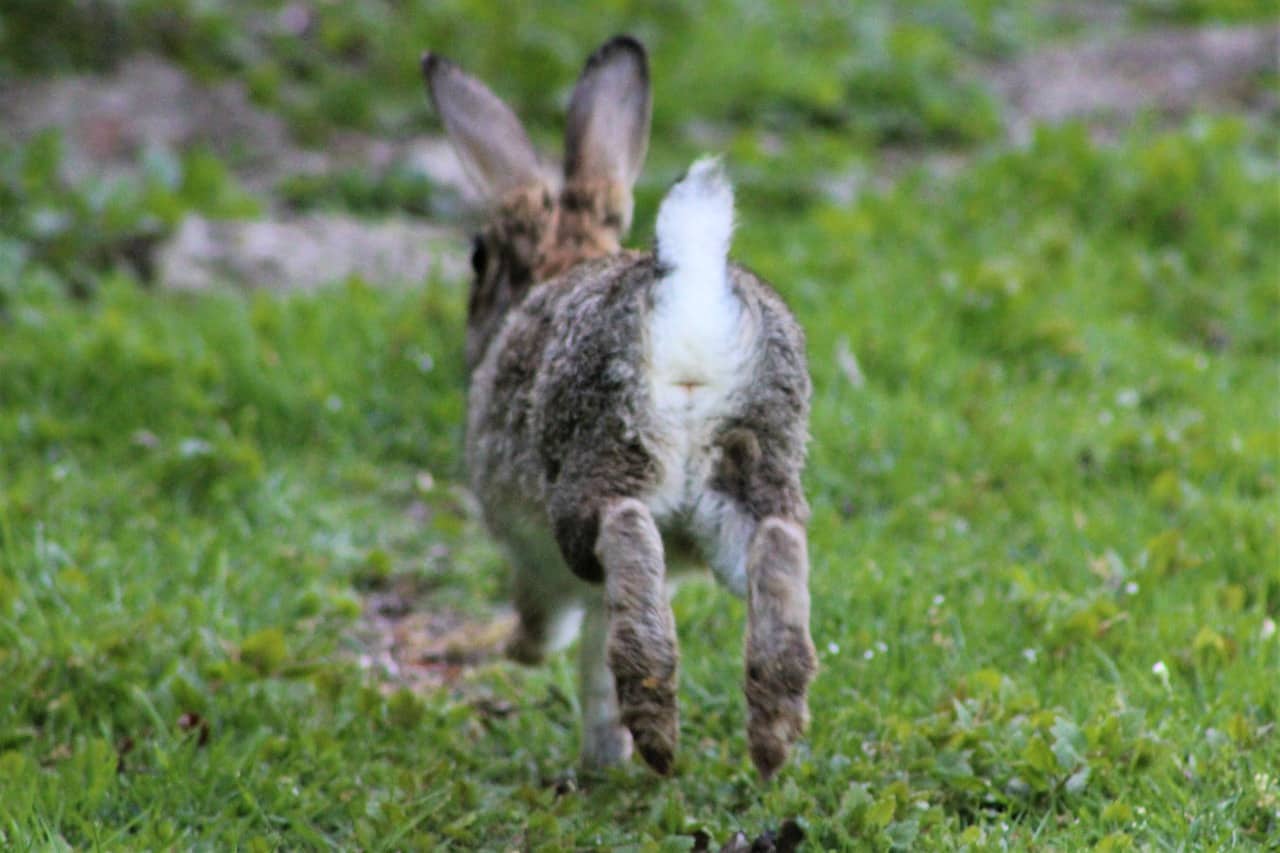
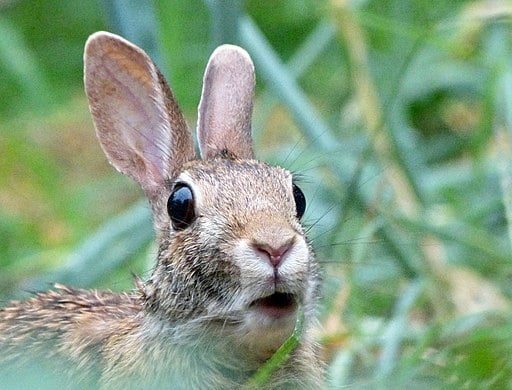
Wild rabbits get their food by foraging across meadows, fields, and woodland edges. They graze on grasses, weeds, wildflowers, and leafy plants, eating almost constantly throughout the dawn and dusk hours. Domestic rabbits, by contrast, depend entirely on their owners for a balanced diet of hay, fresh vegetables, and pellets. Understanding how rabbits find and process food in the wild can help you provide better nutrition for pet rabbits and appreciate the resourceful behavior of their wild cousins.
How Do Wild Rabbits Find Food?
Wild rabbits are crepuscular foragers, meaning they are most active at dawn and dusk when predator visibility is lowest. They leave their warrens or sheltered areas during these low-light periods and move through established routes to reach feeding grounds.
Rabbits rely on three main senses to locate food:
- Smell: A rabbit's nose contains over 100 million scent receptors, allowing them to detect edible plants from a distance and avoid toxic ones.
- Sight: Their nearly 360-degree field of vision helps them spot patches of vegetation while simultaneously watching for predators. Learn more about how rabbits protect themselves from predators while feeding.
- Memory: Rabbits memorize productive feeding areas and return to them regularly. They create worn paths between their burrows and favorite grazing spots.
A single wild rabbit can cover an area of 1 to 5 acres while foraging, though most prefer to stay within a few hundred feet of their burrow for safety. They eat quickly, taking small bites and chewing rapidly so they can retreat at the first sign of danger.
Rabbits also exhibit a behavior called "scouting." Before committing to a feeding area, a rabbit will sit upright on its hind legs, scan the surroundings with its ears rotating independently, and sniff the air for predators. Only after determining the area is safe will it begin to eat. This cautious approach is a survival instinct shared across all wild rabbit species, from European rabbits to cottontails.
What Do Wild Rabbits Eat?
Wild rabbits are strict herbivores with a diet that changes throughout the seasons. Their digestive system is designed for high-fiber, low-nutrient plant material, which is why they spend so much time eating. A wild rabbit may spend six to eight hours per day foraging to meet its caloric needs.
Grasses and Weeds
Grass makes up the largest portion of a wild rabbit's diet, accounting for roughly 80% of what they consume during spring, summer, and fall. Common grasses they eat include timothy, orchard grass, brome, and meadow fescue. They also eat broadleaf weeds like plantain, dandelions, and clover.
This heavy reliance on grass is why hay is so critical for pet rabbits. If you keep domestic rabbits, understanding how much hay a rabbit needs daily is essential for their digestive health.
Wild Plants and Flowers
Beyond grass, wild rabbits eat a wide variety of plants and flowers throughout the growing season:
- Dandelion greens and flowers
- Clover (red and white)
- Chickweed
- Shepherd's purse
- Plantain (the weed, not the banana relative)
- Wild parsley
- Yarrow
- Violets
Wild rabbits develop an instinctive understanding of which plants are safe and which are toxic. Young rabbits learn what to eat by following their mothers and observing which plants the colony avoids. This social learning is one reason why orphaned wild rabbit kits have a harder time surviving on their own.
Fruits and Berries
When available, wild rabbits eat fallen fruits and wild berries. These include wild strawberries, blackberries, raspberries, and crabapples. However, fruit makes up only a small percentage of a wild rabbit's diet because it contains high sugar levels that can disrupt their delicate gut bacteria.
Wild rabbits typically eat fruit only when they stumble upon it during regular foraging routes. They do not seek it out the way they do grass and leafy plants. In late summer and early fall, berries may account for up to 5% of their total intake, but never more.
Bark, Twigs, and Woody Plants
During colder months or when green vegetation is scarce, rabbits turn to woody plant material. They gnaw on bark from young trees, strip thin branches, and eat fallen twigs. Preferred woody foods include willow, apple, hazel, and birch branches. This behavior also helps wear down their constantly growing teeth, which grow at a rate of about 1 to 5 millimeters per week.
How Do Rabbits Stay Safe While Foraging?
Foraging is one of the most dangerous activities for a wild rabbit. They are exposed and focused on eating, which makes them vulnerable to predators like foxes, hawks, owls, and cats.
Wild rabbits use several strategies to manage this risk:
- Timing: They forage primarily at dawn and dusk when many predators have reduced visibility.
- Group feeding: Rabbits in a colony take turns as sentinels. While some eat, others watch for danger. When a sentinel detects a threat, it thumps its hind legs to warn the group.
- Proximity to cover: Rabbits rarely feed far from brush, hedge rows, or their burrow entrances. They choose feeding spots that offer quick escape routes.
- Speed eating: Rabbits chew quickly and take frequent pauses to scan their surroundings. A rabbit may stop eating every 10 to 15 seconds to check for threats.
- Cecotrophy: Rabbits produce special droppings called cecotropes that they eat directly from their body, usually while safe inside their burrow. This allows them to extract additional nutrients from food without spending more time exposed while foraging.
These behaviors are so deeply ingrained that even domestic rabbits display some of them. You may notice your pet rabbit pausing mid-meal to look around or thumping its feet if startled while eating. These are remnants of wild survival instincts passed down through generations.
How Do Rabbits Get Food in Winter?
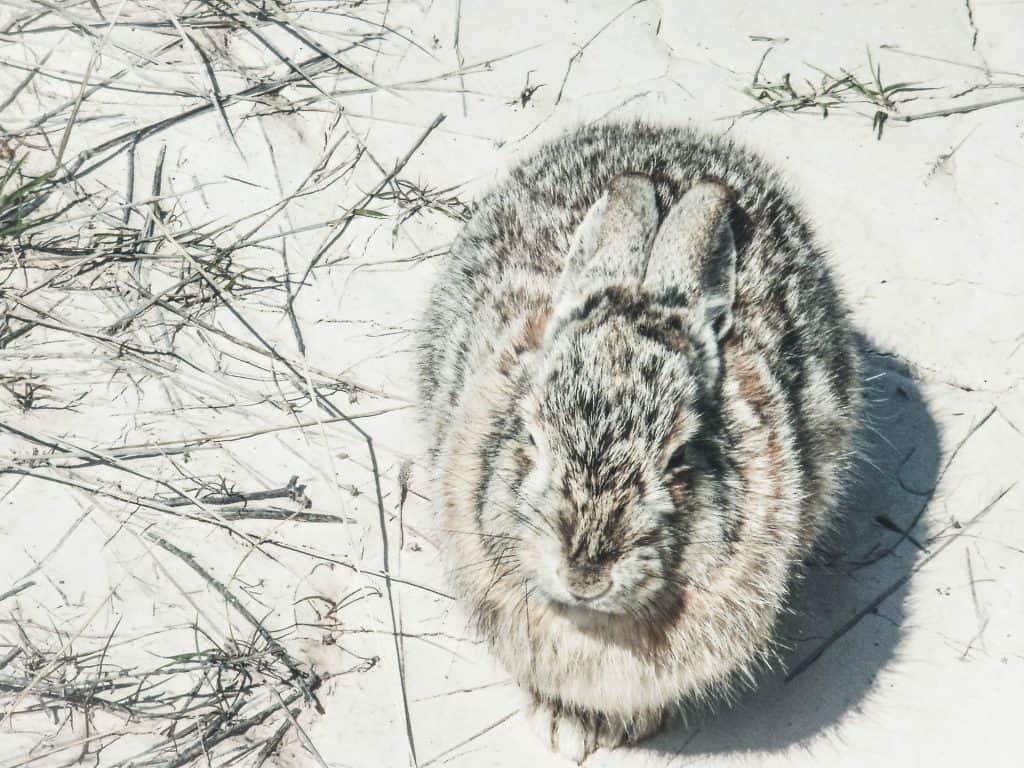
Winter is the most challenging season for wild rabbits. Fresh grass and leafy plants die back or become buried under snow, forcing rabbits to adapt their diet significantly.
During winter months, wild rabbits rely on:
- Tree bark: Rabbits strip bark from young trees, especially willow, maple, birch, and fruit trees. The inner bark (cambium layer) provides some nutritional value and is the most calorie-dense winter food available.
- Twigs and small branches: Fallen branches and low-hanging twigs become primary food sources. Rabbits can digest woody fiber more efficiently than most other small herbivores.
- Conifer needles: Pine and spruce needles offer a small amount of vitamin C and fiber during winter.
- Dried grass: Rabbits dig through shallow snow to reach dried grass and plant matter underneath. They use their front paws to scrape away snow, sometimes digging down several inches.
- Evergreen plants: Any green vegetation that survives through winter, such as certain mosses and evergreen ground cover, becomes highly sought after.
Winter weight loss is common in wild rabbit populations. Some rabbits lose 10% to 20% of their body weight between November and March. Their metabolism slows to conserve energy, and they spend more time in their warrens to reduce calorie expenditure.
Cecotrophy becomes especially important in winter. By re-digesting their cecotropes, rabbits can extract up to 80% more nutrients from the limited food available. This process is essentially a second pass through the digestive system, and it makes the difference between survival and starvation during harsh winters.
How Do Baby Rabbits Get Their Food?
Newborn rabbits (kits) are born blind, deaf, and hairless. They depend entirely on their mother's milk for the first three weeks of life. A mother rabbit (doe) typically nurses her litter only once or twice per day, usually at dawn and dusk, spending just five to ten minutes per feeding session.
Despite these brief feedings, rabbit milk is extraordinarily rich. It contains roughly 12% to 13% fat and 10% to 12% protein, making it one of the most calorie-dense milks among mammals. This concentrated nutrition allows kits to grow rapidly even with minimal nursing time.
At around three weeks old, baby rabbits begin nibbling on grass and soft plant material near the nest. By four to five weeks, they eat solid food regularly alongside their mother's milk. Most kits are fully weaned by six to eight weeks of age and forage independently shortly after.
In captivity, this transition period is critical. If a doe dies or rejects her litter, hand-rearing rabbit kits is extremely difficult because no commercial formula matches the nutritional profile of rabbit milk. Breeders who encounter this situation often try to foster kits onto another nursing doe when possible.
What Should You Feed a Domestic Rabbit?
Pet rabbits cannot forage for themselves, so their owners must replicate the nutritional profile of a wild diet as closely as possible. The foundation of any domestic rabbit's diet should mirror what wild rabbits eat most: high-fiber grasses and leafy plants.
Hay (80% to 85% of the Diet)
Timothy hay, orchard grass, or meadow hay should be available to your rabbit 24 hours a day in unlimited quantities. Hay provides the fiber necessary for healthy digestion and proper tooth wear. A rabbit that does not eat enough hay will develop GI stasis, dental problems, or both.
According to the House Rabbit Society, a rabbit should eat a pile of hay roughly the size of its own body every single day.
Fresh Vegetables (10% to 15% of the Diet)
Offer a variety of safe vegetables for your rabbit daily. Good options include romaine lettuce, cilantro, parsley, bok choy, and carrot tops. Rotate vegetables regularly to provide a range of nutrients and prevent oxalate buildup from any single green.
The general guideline is one packed cup of leafy greens per two pounds of body weight per day.
Pellets (5% or Less of the Diet)
High-quality timothy-based pellets can supplement the diet but should not be the main food source. Adult rabbits need only about 1/4 cup of pellets per 5 pounds of body weight daily. Many experienced breeders and rabbit-savvy veterinarians recommend reducing or even eliminating pellets for healthy adult rabbits, relying instead on hay and fresh vegetables for complete nutrition.
Water
Fresh, clean water must always be available. A typical rabbit drinks 50 to 150 milliliters of water per kilogram of body weight daily. Rabbits eating lots of fresh vegetables may drink slightly less, but water should never be restricted.
How Much Food Does a Rabbit Need Per Day?
Feeding amounts vary based on your rabbit's weight, age, and activity level. Use the table below as a starting guide for adult rabbits:
| Rabbit Weight | Hay | Fresh Vegetables | Pellets |
|---|---|---|---|
| 2 to 4 lbs (1 to 2 kg) | Unlimited (body-sized pile) | 1 to 2 packed cups | 1/8 cup |
| 4 to 7 lbs (2 to 3 kg) | Unlimited (body-sized pile) | 2 to 3.5 packed cups | 1/4 cup |
| 7 to 10 lbs (3 to 4.5 kg) | Unlimited (body-sized pile) | 3.5 to 5 packed cups | 1/4 to 1/2 cup |
| 10+ lbs (4.5+ kg) | Unlimited (body-sized pile) | 5+ packed cups | 1/2 cup |
Baby rabbits under 12 weeks should have unlimited access to alfalfa hay and pellets to support their rapid growth. After 12 weeks, gradually transition them to timothy hay and reduce pellet portions to adult levels by 6 to 7 months of age.
Should You Feed Wild Rabbits?
Feeding wild rabbits directly is generally not recommended by wildlife experts. Leaving out bowls of food or scattering pellets creates several problems:
- Dependency: Rabbits that associate humans with food lose their natural foraging instincts and become reliant on handouts.
- Predator attraction: Food stations attract not just rabbits but also predators like foxes, cats, and birds of prey to the area.
- Disease spread: Communal feeding points increase the risk of transmitting diseases like RHDV (Rabbit Hemorrhagic Disease Virus) between wild rabbit populations.
- Nutritional imbalance: Human-provided food rarely matches what wild rabbits actually need and can cause digestive upset.
If you want to support wild rabbits in your area, a better approach is to plant rabbit-safe vegetation in your garden. Clover, dandelions, and native grasses provide natural food sources that rabbits can discover on their own foraging routes. If you enjoy watching wild rabbits visit your yard, learning how to befriend a wild rabbit through patience rather than food is a safer approach for both you and the rabbit.
Wild vs. Domestic Rabbit Diet: Key Differences
The table below highlights how a wild rabbit's natural diet compares to what we should provide for pet rabbits:
| Factor | Wild Rabbits | Domestic Rabbits |
|---|---|---|
| Primary food source | Wild grasses and weeds | Timothy or orchard grass hay |
| Vegetables | Whatever leafy plants are available | Owner-selected safe vegetables |
| Fruit | Occasional wild berries | Small treats only (1 to 2 tbsp daily) |
| Pellets | None | Small supplemental amount |
| Water source | Dew, puddles, streams | Fresh bowl or bottle |
| Feeding schedule | Crepuscular (dawn and dusk) | Hay 24/7, vegetables once or twice daily |
| Cecotrophy | Critical for winter survival | Still essential for gut health |
Frequently Asked Questions
Do rabbits store food for later?
No, rabbits do not store or cache food like squirrels do. They eat food immediately when they find it and rely on cecotrophy to maximize nutrient absorption from each meal. During winter, they simply adapt their diet to whatever plant material remains available rather than drawing from stored supplies.
Can wild rabbits eat the same food as pet rabbits?
Wild rabbits can eat timothy hay and many of the same vegetables that pet rabbits eat. However, they should not be given pellets or processed food. Their digestive systems are adapted to wild plants, and sudden dietary changes can cause GI stasis or bloating that could be fatal.
How long can a rabbit go without food?
A rabbit should never go more than 12 hours without eating. Their digestive system requires near-constant fiber intake to function properly. After just 12 to 24 hours without food, a rabbit can develop GI stasis, a potentially fatal condition where the gut slows down or stops moving entirely.
Do rabbits eat at night?
Wild rabbits primarily eat at dawn and dusk, not during full darkness. Domestic rabbits with constant access to hay may nibble small amounts throughout the night. Rabbits are crepuscular rather than nocturnal, so their peak eating times align with low-light periods rather than complete darkness.
Cite this article:
Cite this article:
BunnySync (February 24, 2026) How Do Rabbits Get Their Food? Wild Foraging and Domestic Feeding Guide. Retrieved from https://bunnysync.com/blog/how-do-rabbits-get-their-food.
"How Do Rabbits Get Their Food? Wild Foraging and Domestic Feeding Guide." BunnySync - February 24, 2026, https://bunnysync.com/blog/how-do-rabbits-get-their-food