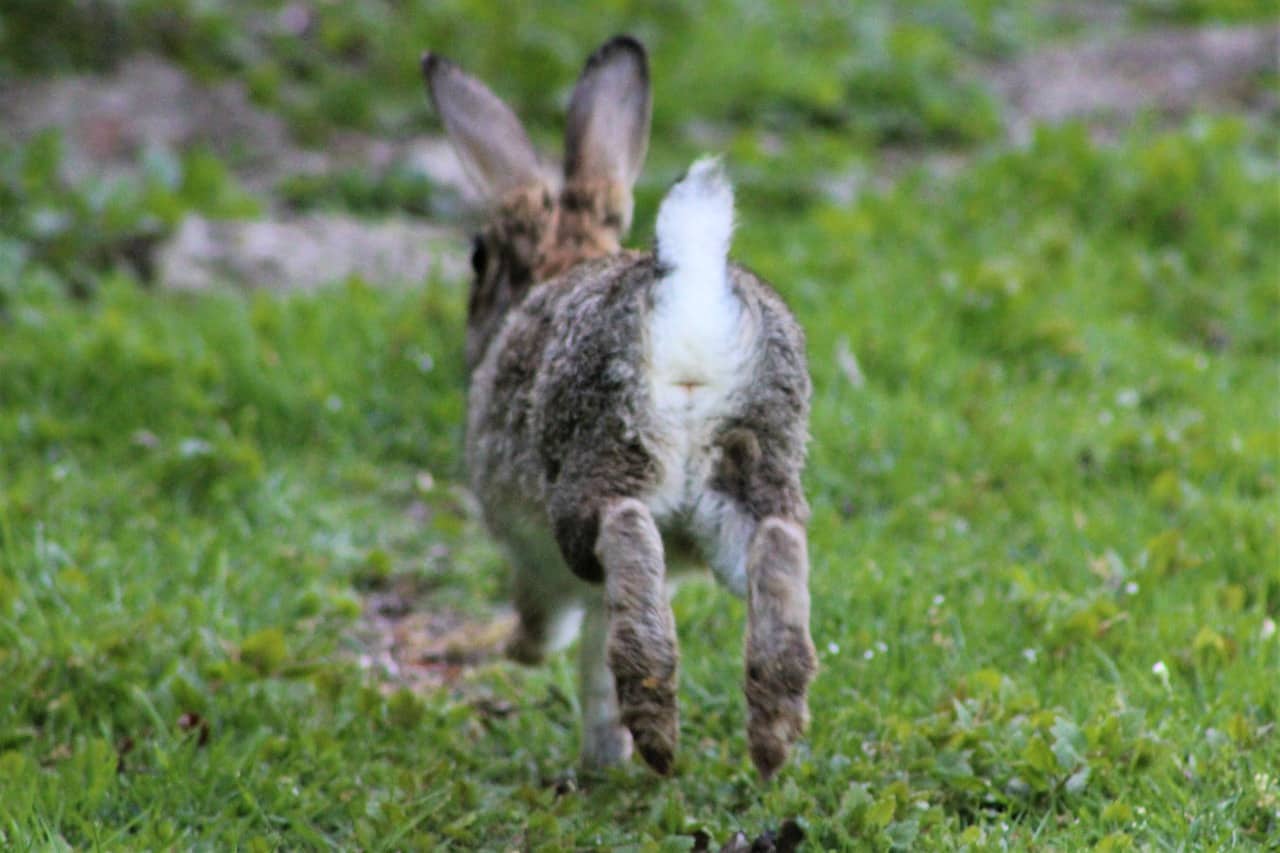
Yes, cats do attack rabbits. Cats are natural predators with a strong hunting instinct, and rabbits are prey animals that trigger that drive. Even well-fed domestic cats will stalk, chase, and attack rabbits if given the opportunity. A single bite or scratch from a cat can cause fatal infections in rabbits due to the Pasteurella bacteria found in cat saliva. However, with proper precautions, supervision, and careful introductions, some cats and rabbits can learn to coexist peacefully in the same household.
As breeders who have raised rabbits alongside other pets for years, we have seen both successful cat-rabbit households and tragic outcomes when owners underestimate the risks. This guide covers everything you need to know about the cat-rabbit dynamic, from understanding predator-prey instincts to practical protection strategies that actually work.
Why Do Cats Attack Rabbits?
Understanding why cats target rabbits requires looking at feline biology. Cats are obligate carnivores with millions of years of predatory evolution hardwired into their brains. Even the laziest indoor cat retains the same hunting sequence as a wild cat: stalk, chase, pounce, and kill.
Rabbits trigger nearly every predatory instinct a cat has. Their quick, erratic movements activate a cat's chase response. Their small size makes them appear as manageable prey. Even the way rabbits freeze when frightened can trigger a cat's pounce reflex, since the sudden stillness followed by a burst of movement is exactly what cats are wired to respond to.
The Role of Hunting Instinct
Many owners assume that a well-fed cat won't hunt. This is a dangerous misconception. Studies from the University of Exeter published in 2021 found that domestic cats kill an estimated 55 million birds annually in the UK alone, despite being fed regular meals. Hunger and hunting are controlled by different parts of the brain. Your cat can be completely full and still attack your rabbit purely for the thrill of the chase.
Breed and Temperament Factors
Some cat breeds have stronger prey drives than others. Bengal cats, Abyssinians, and Siamese tend to be more active hunters compared to breeds like Persians or Ragdolls. However, every individual cat is different. We have seen laid-back Bengals ignore rabbits entirely and supposedly docile Ragdolls fixate on them. Never assume your cat is "too gentle" to attack.
Age also plays a role. Kittens and young cats under two years old tend to be more playful and unpredictable. Senior cats over ten years old are generally less interested in hunting, though they can still react instinctively if a rabbit bolts past them.
Can Cats and Rabbits Live Together Safely?
Yes, cats and rabbits can coexist in the same household, but it requires careful management and realistic expectations. The key word here is "coexist," not "become best friends." While viral videos show cats and rabbits cuddling together, these are the exception rather than the rule.
The most successful cat-rabbit households share a few common traits:
- Both animals were introduced at a young age. Kittens under 12 weeks and baby rabbits under 8 weeks are most adaptable to cross-species socialization.
- Both animals are spayed or neutered. This reduces territorial aggression and hormone-driven behavior in both species.
- They are never left unsupervised together. Even bonded pairs can have sudden behavioral shifts triggered by stress, illness, or external stimuli.
- The rabbit has a safe space the cat cannot access. This gives the rabbit a retreat option, which significantly reduces stress levels.
How to Introduce a Cat and Rabbit
Proper introductions take weeks, not days. Rushing this process is one of the biggest mistakes owners make. Here is a step-by-step approach that we recommend:
- Scent swapping (Week 1): Exchange bedding between the cat and rabbit so they become familiar with each other's scent before any visual contact.
- Visual contact through a barrier (Week 2): Use a baby gate or the rabbit's enclosure to allow both animals to see each other without physical access. Watch the cat's body language carefully. Dilated pupils, a twitching tail tip, and a crouched posture are all warning signs of predatory intent.
- Supervised short sessions (Week 3-4): Allow both animals in the same room with the cat on a harness or leash. Keep sessions to 10-15 minutes. Reward calm behavior from both animals with treats.
- Extended supervised time (Week 5+): Gradually increase the time they spend together, always with you present and ready to intervene.
If at any point the cat shows stalking behavior, fixation, or attempts to pounce, go back to the previous step. Some cats will never be safe around rabbits, and that is okay. Your rabbit's safety must always come first.
Are Rabbits Scared of Cats?

Rabbits are hardwired to fear predators, and cats are one of their most common natural threats. A rabbit's first reaction to a cat will almost always be fear. Their prey instincts activate immediately when they detect a predator nearby, often before you even notice the cat's presence.
Signs that your rabbit is afraid of a nearby cat include:
- Freezing completely still ("playing dead")
- Thumping their back feet repeatedly as a warning signal
- Rapid breathing and a racing heart rate
- Attempting to bolt or hide
- Flattening their body against the ground
- Wide eyes showing the whites ("whale eye")
Chronic exposure to a cat they fear can cause serious health problems in rabbits. Prolonged stress suppresses a rabbit's immune system, disrupts gut motility (potentially causing GI stasis), and in severe cases can trigger fatal cardiac arrest. Rabbits genuinely can die from fright, and a stalking cat is one of the most common triggers. A well-documented case reported by the BBC involved multiple rabbits dying from cardiac arrest caused by nearby fireworks, demonstrating just how sensitive these animals are to perceived threats.
If your rabbit shows persistent signs of stress around your cat, keeping them in the same room is not worth the risk. Separate living areas with no visual contact may be necessary for your rabbit's wellbeing.
Can a Rabbit Defend Itself Against a Cat?
Rabbits do have some natural defenses, but against a domestic cat in a home environment, their options are severely limited.
A Rabbit's Natural Defense Mechanisms
| Defense | Effectiveness Against Cats | Notes |
|---|---|---|
| Running (up to 35 mph) | Low indoors | Rabbits cannot reach full speed on smooth flooring and lack escape routes indoors |
| Powerful hind leg kicks | Moderate | Can stun a cat temporarily but rarely stops a determined attack |
| Biting | Low | Rabbit bites can draw blood but are not strong enough to deter most cats |
| Screaming | Low to moderate | A rabbit's scream can startle a cat, but this only happens during extreme distress |
| Hiding in burrows | High in the wild | Not available to house rabbits without purpose-built hideaways |
In the wild, a rabbit's primary defense is speed and access to burrow systems. They can outrun most cats in open terrain and disappear underground within seconds. A house rabbit has neither of these advantages. Hardwood, tile, and laminate flooring are slippery for rabbits, and their claws cannot grip the way they do on dirt or grass. Without a burrow to escape to, a cornered rabbit is extremely vulnerable.
Larger rabbit breeds (Flemish Giants, Continental Giants, and French Lops weighing 10-15+ pounds) may intimidate some cats due to their size. In fact, some owners report that their cat is actually scared of their rabbit. But size alone is not a reliable defense, and even a large rabbit can be injured by a quick cat attack.
The Hidden Danger: Cat Scratches and Bites
Even a "playful" swipe from a cat can be fatal to a rabbit. This is something many owners do not realize until it is too late.
Cat claws and teeth harbor Pasteurella multocida bacteria. While this bacterium rarely causes serious illness in cats themselves, it is extremely dangerous to rabbits. A single scratch that barely breaks the skin can introduce Pasteurella into the rabbit's bloodstream, causing:
- Septicemia (blood poisoning): Can kill a rabbit within 24-48 hours without treatment
- Abscesses: Deep, painful infections that are difficult to treat in rabbits
- Upper respiratory infections: Chronic snuffles that may never fully resolve
- Peritonitis: If the scratch penetrates the abdominal wall
If your cat scratches or bites your rabbit, even if the wound looks minor, take your rabbit to a veterinarian immediately. Rabbits need antibiotics within hours of a cat wound to prevent Pasteurella infection. Do not wait to see if symptoms develop.
How to Protect Your Rabbit from Cats
Whether you are protecting your rabbit from your own cat or from neighborhood strays, a layered defense approach works best.
Protecting Indoor Rabbits from Your Own Cat
- Provide a cat-proof enclosure: Your rabbit's primary living space should be completely inaccessible to your cat. An appropriately sized enclosure with a secure top and sides that a cat cannot reach through is essential. Wire spacing should be no wider than 1 inch to prevent cat paws from reaching inside.
- Create separate zones: Designate specific rooms as "rabbit only" zones where your cat is never allowed. Use baby gates with small enough gaps that the cat cannot squeeze through.
- Never leave them unsupervised: This is the single most important rule. Even bonded pairs that have lived together for years can have incidents. All it takes is one moment of instinct overriding familiarity.
- Supervise exercise time: When your rabbit is out for exercise, either confine your cat to another room or keep the cat on a harness. Rabbits need at least 3-4 hours of exercise daily, and this time must be safe.
- Watch for behavioral changes: If your cat starts showing increased interest in the rabbit (staring, crouching near the enclosure, tail twitching), increase the separation between them. These are precursors to an attack.
Protecting Outdoor Rabbits from Stray and Neighborhood Cats
Outdoor rabbits face significantly higher risks from cats. Here are proven protection measures:
- Secure hutch construction: Use 16-gauge welded wire mesh (not chicken wire, which cats can bend). Ensure the hutch has a solid floor, secure latches, and no gaps larger than 1 inch.
- Motion-activated deterrents: Ultrasonic cat deterrents and motion-activated sprinklers are effective at keeping stray cats away from your rabbit's area. Place them along likely approach paths.
- Fence modifications: Cat-proof roller bars or angled netting on top of fences prevent cats from climbing over. These are relatively inexpensive and highly effective.
- Scent deterrents: Citrus peels, lavender, and commercial cat repellent sprays around the hutch perimeter can discourage cats from approaching. Reapply after rain.
- Supervised outdoor time only: If your rabbit has outdoor exercise time, be present the entire time. Cats can appear from nowhere and cover ground quickly.
Even with all these precautions, an outdoor rabbit is never completely safe from cats. If cat attacks are a frequent concern in your area, consider transitioning to an indoor setup.
What to Do If a Cat Attacks Your Rabbit
If a cat attack happens despite your precautions, acting quickly is critical. Here is what to do:
- Separate the animals immediately. Make a loud noise to startle the cat, then remove the rabbit. Do not reach between them with bare hands, as a panicked cat may redirect aggression.
- Check for injuries. Examine the rabbit thoroughly, including under the fur. Cat scratches can be hidden beneath thick fur and easy to miss. Part the fur and look for any broken skin, puncture wounds, or wet spots that could indicate saliva from a bite.
- Apply gentle pressure to bleeding wounds with clean gauze or a soft cloth.
- Get to a rabbit-savvy veterinarian immediately. Even if you cannot find visible wounds, internal injuries and stress-related complications can develop. Your vet will likely prescribe antibiotics as a precaution against Pasteurella infection.
- Monitor for shock. A rabbit in shock will have cold ears, pale gums, rapid shallow breathing, and may become limp. Keep them warm and quiet during transport to the vet.
For detailed guidance on handling the aftermath, see our guide on what to do when your cat catches a rabbit.
Do Cats Kill Rabbits?
Yes, cats can and do kill rabbits. Domestic cats are responsible for significant wildlife mortality worldwide, and wild rabbits are among their most common prey. A study published in Nature Communications estimated that free-roaming domestic cats kill 6.3 to 22.3 billion mammals annually in the United States alone.
Adult domestic cats are fully capable of killing rabbits up to about their own body weight. Kittens, dwarf breeds, and smaller rabbit breeds are at the highest risk. Even a cat that does not intend to kill can inflict fatal injuries through rough play.
The most common causes of death in cat-on-rabbit attacks are:
- Spinal fractures: A cat's bite to the back of the neck can sever or damage the spinal cord
- Pasteurella septicemia: Bacterial infection from even minor cat wounds
- Cardiac arrest from fright: Rabbits can literally die of fear during an attack
- Internal injuries: Puncture wounds to the abdomen or chest cavity
Other Common Predators That Threaten Rabbits
Cats are not the only predators rabbit owners need to worry about. Snakes, birds of prey (hawks, owls, and eagles), foxes, raccoons, and dogs all pose serious threats to rabbits, especially those kept outdoors. Understanding the full range of predator threats helps you build more comprehensive protection for your rabbit.
If your rabbit has had a frightening encounter with any predator, knowing how to calm down a scared rabbit can be the difference between recovery and a fatal stress response.
Frequently Asked Questions
Will a cat attack a rabbit that is bigger than it?
Most cats will avoid attacking rabbits that are significantly larger than themselves. Large breeds like Flemish Giants (weighing 15+ pounds) often intimidate cats. However, size is not a guarantee of safety. A determined or highly prey-driven cat may still attack a large rabbit, and even a failed attack can cause stress-related health problems.
Can a rabbit give a cat a disease?
Rabbits can potentially transmit a few conditions to cats, including ringworm (a fungal skin infection), Encephalitozoon cuniculi (a parasitic infection, though rare in cats), and external parasites like fleas and mites. The risk is generally low but increases with close physical contact between the animals.
How do I know if my cat is safe around my rabbit?
No cat should be considered completely "safe" around a rabbit. Watch for predatory body language: dilated pupils, a low crouching posture, a twitching or lashing tail tip, intense staring, and slow stalking movements. A cat that shows relaxed body language, slow blinks, and disinterest in the rabbit's movements is a better candidate for cohabitation, but supervision remains essential.
Should I get a cat if I already have a rabbit?
It is possible but requires careful planning. Consider adopting a kitten rather than an adult cat, since kittens are easier to socialize with rabbits. Choose a breed known for lower prey drive. Most importantly, commit to the ongoing management required, including separate spaces, supervised interactions, and permanent awareness that predator-prey instincts can surface at any time.
Can outdoor rabbits survive a cat attack?
Survival depends on the severity of the attack and how quickly the rabbit receives veterinary care. Minor scratches can be treated successfully with prompt antibiotics. Bite wounds to the neck, spine, or abdomen are often fatal. Even rabbits that survive the physical injuries may develop chronic stress and health problems afterward. Immediate veterinary attention is critical for any rabbit that has been attacked by a cat.
Sources cited: University of Exeter (2021), "The impact of domestic cats on wildlife"; Nature Communications (2013), "The impact of free-ranging domestic cats on wildlife of the United States"; BBC News (2015), "Rabbits die after fireworks set off near hutch in Derby." Article updated March 2026.