Yes, rabbits can eat radishes safely, and radish tops are actually one of the best leafy greens you can offer your rabbit. The bulb itself is also safe in moderate amounts, though most rabbits prefer the leafy greens over the root. As breeders, we consider radishes a reliable addition to a rabbit's vegetable rotation because they are low in sugar, non-toxic, and provide useful vitamins and minerals when fed alongside a proper hay-based diet.
That said, radishes should never replace hay or pellets as a staple food. They work best as part of a varied vegetable mix that keeps your rabbit healthy and mentally stimulated. Below, we cover every part of the radish, proper portion sizes, nutritional details, and the risks you need to watch for.
What Parts of a Radish Can Rabbits Eat?
Radishes have several distinct parts, and each one is safe for rabbits. However, there are important differences in nutritional value and how eagerly your rabbit will eat them.
Radish Tops and Greens
Radish tops (the leafy greens attached to the bulb) are the most nutritious part for rabbits. They are rich in fiber, vitamin C, and calcium. Most rabbits prefer the greens over the root because the flavor is milder and the texture is easier to chew.
In our experience, when you toss a whole radish into the enclosure, many rabbits will go straight for the greens and ignore the bulb entirely. If your rabbit is new to radishes, start with the tops. They are gentle on the digestive system and rarely cause any issues.
You can feed radish greens daily as part of your rabbit's leafy green rotation, mixing them with other safe greens like cilantro, parsley, or romaine lettuce.
Radish Bulbs (The Root)
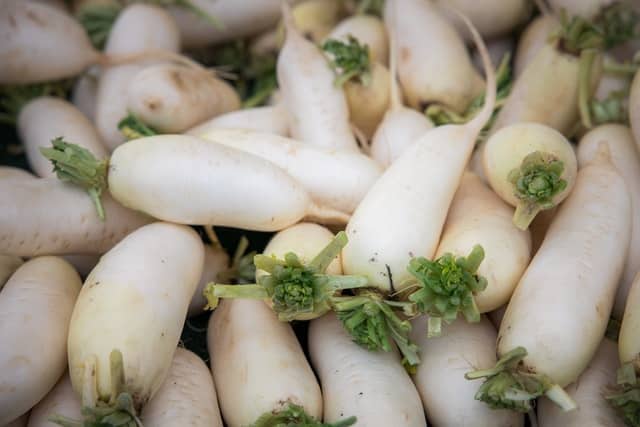
The round or elongated root is what most people think of when they picture a radish. Red radishes, white radishes (daikon), and other varieties are all safe for rabbits. The bulb contains more starch and natural sugars than the greens, so it should be treated more like a treat than an everyday food.
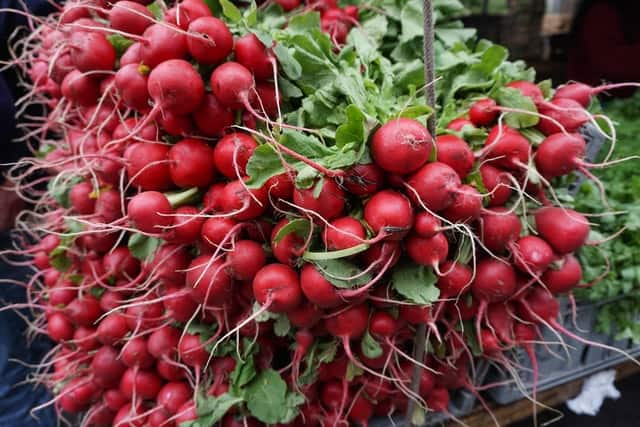
Some rabbits love the peppery crunch of the bulb, while others refuse it completely. This is normal. Every rabbit has individual taste preferences. If your rabbit turns away from the root portion, do not force it. Just offer the greens instead.
When feeding the bulb, wash it thoroughly to remove any pesticide residue or soil. Cut it into small pieces to reduce choking risk, especially for smaller breeds.
Radish Sprouts and Microgreens
Radish sprouts and microgreens are safe and actually packed with concentrated nutrients. Studies show that microgreens can contain up to 40 times more nutrients by weight than mature vegetables. They make an excellent occasional treat for rabbits.
The texture is soft and the flavor is mild, so most rabbits accept them readily. You can grow radish sprouts at home in just 5 to 7 days, giving you a fresh, pesticide-free supplement for your rabbit's diet.
What Are the Nutritional Benefits of Radishes for Rabbits?
Radishes are not a nutritional powerhouse on their own, but they do contribute useful vitamins and minerals when included as part of a varied diet. Here is a breakdown of what 100 grams of raw radish provides:
| Nutrient | Amount per 100g | Benefit for Rabbits |
|---|---|---|
| Calories | 16 kcal | Very low, prevents obesity |
| Fiber | 1.6 g | Supports digestive motility |
| Vitamin C | 14.8 mg | Immune system support |
| Potassium | 233 mg | Muscle and nerve function |
| Calcium | 25 mg | Bone health (moderate levels) |
| Water Content | 95.3% | Hydration support |
| Sugar | 1.86 g | Very low, minimal risk |
The most notable advantage is the low sugar content. At just 1.86 grams per 100g, radishes are one of the lowest-sugar vegetables you can offer. This makes them safer than many fruits and starchy vegetables that can disrupt a rabbit's cecal fermentation.
The high water content (95.3%) also helps with hydration, which is particularly useful during warmer months. However, feeding too many high-water vegetables at once can cause loose stools, so balance is key.
Radish greens specifically contain higher levels of vitamin A, vitamin K, and folate compared to the bulb. If you are looking for the most nutritional value from radishes, the greens are the clear winner.
How Much Radish Should You Feed Your Rabbit?
The correct portion depends on your rabbit's size, age, and overall diet. Radishes should make up only a small portion of the daily vegetable allowance, not the entire serving.
Portion Sizes by Breed Size
As a general rule, adult rabbits should receive 1 to 2 cups of mixed fresh vegetables per 6 pounds (2.7 kg) of body weight daily. Radishes (bulb and greens combined) should make up no more than one-third of that vegetable mix on any given day.
| Rabbit Size | Body Weight | Daily Vegetable Allowance | Max Radish Portion |
|---|---|---|---|
| Small breed (Netherland Dwarf, Mini Rex) | 1.1 to 3.5 lbs | 1/2 to 1 cup | 2 to 3 small slices + a few leaves |
| Medium breed (Holland Lop, Rex) | 6 to 10 lbs | 1 to 2 cups | 1/3 of a small radish + a handful of greens |
| Large breed (Flemish Giant, New Zealand) | 9 to 12+ lbs | 2 to 3 cups | 1/2 of a radish + generous greens |
These are maximums, not targets. You do not need to feed radish every day. Two to three times per week is a reasonable frequency for the bulb, while the greens can be included more often as part of the daily leafy mix.
Age Guidelines for Feeding Radishes
A rabbit's age determines whether it can handle vegetables at all. Young rabbits have developing digestive systems that rely heavily on hay and their mother's milk. Introducing vegetables too early can cause dangerous digestive upset.
| Age | Radish Feeding Guideline |
|---|---|
| Under 12 weeks | No vegetables of any kind. Hay and mother's milk only. |
| 12 weeks to 6 months | Introduce one new vegetable at a time. Start with a single radish leaf and wait 24 hours to check for digestive issues. |
| 7 months to 1 year | Gradually increase vegetable variety and volume. Radish greens and small amounts of the bulb are fine. |
| Adult (1 to 5 years) | Full portions as described in the table above. |
| Senior (6+ years) | Consult your veterinarian. Some seniors need adjusted diets based on dental or kidney health. |
The most important rule: always introduce radishes slowly. Give a small piece, then monitor your rabbit's droppings for 24 hours. If the stools remain firm, round, and consistent, you can gradually increase the amount over the following week.
Do Rabbits Actually Like Eating Radishes?
This varies from rabbit to rabbit. Some rabbits love the peppery, slightly spicy taste of radish bulbs, while others will sniff it once and walk away. This is completely normal and nothing to worry about.
From our experience raising multiple breeds, here is what we have noticed:
- Radish greens are accepted by about 8 out of 10 rabbits. The flavor is mild, similar to other leafy greens they are already used to.
- Red radish bulbs have a sharper, more peppery taste. About half of rabbits enjoy them. Younger radishes harvested early tend to be milder and more palatable.
- Daikon (white radish) has a milder flavor than red varieties and is often better accepted by picky eaters.
- Radish sprouts are almost universally accepted because they are tender and mild.
If your rabbit rejects radishes, do not worry. There are plenty of safe vegetables for your rabbit to choose from. Never force a rabbit to eat something it does not want.
When Should You Avoid Feeding Radishes to Your Rabbit?
While radishes are generally safe, there are specific situations where you should remove them from your rabbit's diet entirely.
During digestive problems: If your rabbit's droppings change in size, shape, or consistency, stop all vegetables immediately and feed only hay and water. Digestive issues like GI stasis are one of the leading causes of death in pet rabbits, and high-fiber hay is the best way to get the gut moving again.
For rabbits under 12 weeks old: Their digestive systems are not mature enough to process vegetables. Stick to unlimited hay (alfalfa for young kits, transitioning to timothy hay) and age-appropriate pellets.
When the rabbit is on medication: Some medications interact with certain foods. If your rabbit is being treated by a vet, ask whether fresh vegetables are still appropriate during the treatment period.
If your rabbit produces uneaten cecotropes: Soft cecotropes stuck to your rabbit's fur can indicate that the diet is too rich in vegetables and not high enough in fiber. Scale back all vegetables and increase hay until the cecotropes return to normal.
After surgery or during illness: Stick to your veterinarian's post-operative feeding instructions. Most vets recommend hay-only diets during recovery periods.
What Are the Risks of Overfeeding Radishes to Rabbits?
Radishes themselves are not toxic, but overfeeding any vegetable at the expense of hay creates real health risks:
- Gastrointestinal (GI) stasis: This is the most serious risk. When rabbits eat too many vegetables and not enough hay, the gut slows down or stops completely. GI stasis can be fatal within 24 to 48 hours if not treated. Symptoms include loss of appetite, small or absent droppings, and a hunched posture.
- Soft uneaten cecotropes: Overfeeding vegetables can make cecotropes too soft for your rabbit to consume properly. This leads to messy fur around the tail area and can attract flies, which creates a risk of flystrike in warmer months.
- Diarrhea: The high water content of radishes (over 95%) combined with excessive portions can cause loose stools, especially in rabbits that are not used to fresh vegetables.
- Gas and bloating: Cruciferous vegetables, including radishes, can produce gas in some rabbits. While this is usually mild, severe bloating is painful and may require veterinary attention.
- Nutritional imbalance: Radishes alone do not provide enough calcium, protein, or fiber to sustain a rabbit. Using them as a primary food source will lead to deficiencies over time.
The takeaway is simple: hay should always make up 80% or more of your rabbit's diet. Vegetables like radishes are a supplement, not a replacement. If you want to understand how much fiber your rabbit needs, read our guide on how much hay a rabbit should eat daily.
How Should You Introduce Radishes to Your Rabbit's Diet?
Introducing any new food to a rabbit requires patience. Their digestive systems are sensitive, and sudden dietary changes can trigger GI problems. Follow this step-by-step approach:
- Start with one small radish leaf. Offer a single leaf and nothing else that is new. Continue feeding the rabbit's regular diet of hay, pellets, and already-established vegetables.
- Wait 24 hours. Monitor your rabbit's droppings carefully. Normal droppings are round, dry, and uniform in size. If you see soft stool, mucus, or a significant decrease in droppings, do not offer radish again for at least two weeks.
- Increase gradually over one week. If day one went well, offer two leaves the next time. By the end of the first week, you can try a small piece of the radish bulb alongside the greens.
- Monitor for two weeks total. Some digestive reactions are delayed. Even if the first few days seem fine, keep watching for any changes in eating behavior, energy levels, or stool quality.
- Add to the regular rotation. Once your rabbit has tolerated radishes for two weeks without any issues, you can include them as a regular part of the vegetable rotation, two to three times per week.
This slow introduction method applies to every new food, not just radishes. Rushing the process is one of the most common mistakes new rabbit owners make.
What Types of Radishes Are Safe for Rabbits?
All common radish varieties are safe for rabbits. Here is a quick comparison of the most popular types:
| Radish Variety | Flavor | Size | Rabbit Acceptance |
|---|---|---|---|
| Red Radish (Cherry Belle, Scarlet Globe) | Peppery, slightly spicy | Small (1-2 inches) | Moderate |
| Daikon (White Radish) | Mild, slightly sweet | Large (6-18 inches) | High |
| French Breakfast Radish | Mild, slightly nutty | Medium (2-3 inches) | High |
| Watermelon Radish | Sweet, mild | Medium (3-4 inches) | High |
| Black Radish | Very spicy, strong | Medium (3-4 inches) | Low |
Regardless of the variety, always wash radishes thoroughly before feeding. If possible, choose organic radishes to minimize pesticide exposure. If organic is not available, scrub the skin under running water and consider peeling the bulb.
What Are the Best Vegetable Alternatives to Radishes?
Variety is essential for a healthy rabbit diet. Rotating between different vegetables ensures your rabbit gets a broad range of vitamins and minerals. Here are some of the best alternatives to radishes that we regularly feed our rabbits:
- Spinach (feed in moderation due to oxalic acid)
- Celery (cut into small pieces to prevent choking on strings)
- Kale (nutrient-dense, feed a few times per week)
- Bell peppers (remove seeds, high in vitamin C)
- Parsley (a favorite among most rabbits)
- Romaine lettuce (avoid iceberg lettuce, which has almost no nutritional value)
- Bok choy (excellent source of vitamins A and C)
- Carrot tops (the greens are better for rabbits than the root)
- Watercress (high in calcium, feed occasionally)
Aim to rotate at least 3 to 4 different vegetables throughout the week. This prevents nutritional imbalances and keeps your rabbit interested in their food. For a complete list, check out our guide on what vegetables you can feed your rabbit.
Frequently Asked Questions
Can rabbits eat radish tops and greens?
Yes, radish tops are one of the best parts of the radish for rabbits. They are high in fiber, low in sugar, and most rabbits prefer the greens over the bulb. You can include them as part of your rabbit's daily leafy green rotation alongside other safe greens.
Can rabbits eat radish sprouts?
Yes, radish sprouts are safe and nutritious for rabbits. They contain concentrated vitamins and minerals and have a mild flavor that most rabbits accept easily. Offer them in small amounts as a treat or supplement to the regular diet.
Can rabbits eat daikon (white radish)?
Yes, daikon is safe for rabbits and often better tolerated than red radishes because it has a milder flavor. Cut it into small pieces and feed it in the same moderation as any other radish variety, no more than a few times per week.
Can radishes cause gas in rabbits?
Radishes are a cruciferous vegetable, so they can cause mild gas in some rabbits, particularly when introduced too quickly or fed in large amounts. Start with small portions and increase gradually to give your rabbit's gut bacteria time to adjust.
How often can I feed radishes to my rabbit?
Radish greens can be fed daily as part of a leafy green mix. The radish bulb should be limited to two or three times per week. Always ensure that hay makes up the majority of your rabbit's diet and that radishes are just one part of a varied vegetable rotation.
Cite this article:
Cite this article:
BunnySync (February 24, 2026) Can Rabbits Eat Radishes? Safe Feeding Guide for 2026. Retrieved from https://bunnysync.com/blog/can-rabbits-eat-radishes.
"Can Rabbits Eat Radishes? Safe Feeding Guide for 2026." BunnySync - February 24, 2026, https://bunnysync.com/blog/can-rabbits-eat-radishes