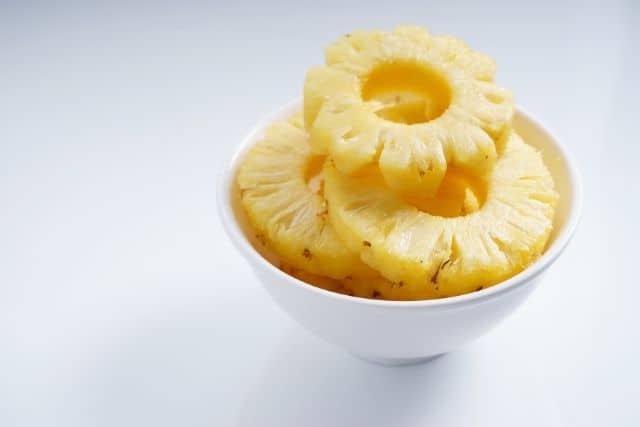
Yes, rabbits can eat pineapple in small amounts as an occasional treat. Fresh pineapple flesh is safe for adult rabbits when limited to one or two servings per week. However, pineapple is high in sugar, so portion control is critical. Overfeeding pineapple can lead to obesity, dental issues, and gastrointestinal problems. Rabbits under seven months old should not eat pineapple at all, as their digestive systems are too sensitive for sugary foods.
Pineapple is one of the more popular fruit treats among rabbit owners, partly because of a persistent myth that its enzymes dissolve hairballs. While that claim has been debunked, pineapple still makes a perfectly fine occasional treat when you follow the right guidelines. Here is everything you need to know about feeding pineapple to your rabbits safely.
Can Rabbits Safely Eat Pineapple?
Pineapple (Ananas comosus) is safe for adult rabbits to eat in moderation. It appears on most veterinary lists of rabbit-safe fruits alongside strawberries, blueberries, and papaya. The flesh of the pineapple is the only part you should offer, and it should always be fresh rather than canned. Canned pineapple contains added sugars and preservatives that are harmful to a rabbit's digestive system.
The key principle with any fruit treat is that it should never replace the core components of your rabbit's diet. A healthy rabbit diet consists of roughly 80% timothy hay, 10-15% fresh leafy greens, and a small portion of quality pellets. Fruits like pineapple should represent no more than 5% of your rabbit's total food intake.
When introducing pineapple for the first time, start with a very small piece, roughly the size of your thumbnail. Watch your rabbit over the next 24 hours for any signs of soft stool, gas, or reduced appetite. If everything looks normal, you can gradually increase to the recommended serving size for your rabbit's breed.
What Nutritional Value Does Pineapple Offer Rabbits?
Pineapple contains several vitamins and minerals, though rabbits get most of their nutritional needs met through hay and leafy greens. The nutritional profile of pineapple is still worth understanding so you know what your rabbit is consuming as a treat.
Here is the nutritional breakdown per 100 grams of fresh pineapple:
| Nutrient | Amount per 100g | Relevance for Rabbits |
|---|---|---|
| Calories | 50 kcal | Moderate energy, watch portions |
| Sugar | 9.85 g | High, primary concern for rabbits |
| Fiber | 1.4 g | Low compared to hay |
| Vitamin C | 47.8 mg | Rabbits produce their own, not essential |
| Vitamin A | 58 IU | Supports eye and immune health |
| Manganese | 0.93 mg | Supports bone and metabolic health |
| Potassium | 109 mg | Supports muscle and nerve function |
| Water content | 86% | Provides hydration but can soften stools |
The most notable component is the sugar content at nearly 10 grams per 100 grams. For perspective, a rabbit's digestive system is designed to process high-fiber, low-sugar foods. Their gut bacteria thrive on hay and fibrous greens, not simple sugars. This is why pineapple must remain an occasional treat rather than a dietary staple.
Pineapple also contains bromelain, a proteolytic enzyme that breaks down proteins. This enzyme is found primarily in the stem and core of the fruit. While bromelain has documented anti-inflammatory properties in humans, its effects in rabbits are minimal at the small quantities appropriate for treats.
How Much Pineapple Can You Feed a Rabbit?
The correct portion size depends on your rabbit's body weight and breed size. As a general rule, fruit treats should be limited to one to two tablespoons per five pounds of body weight, offered no more than two times per week. For pineapple specifically, err on the smaller side because of its high sugar content.
Here are the recommended pineapple portions based on breed size:
| Rabbit Size | Weight Range | Pineapple Per Serving | Frequency |
|---|---|---|---|
| Small breeds (Netherland Dwarf, Mini Rex, Holland Lop) | 1.1 to 3.5 pounds | 1 teaspoon of diced pineapple | 1 to 2 times per week |
| Medium breeds (Dutch, Mini Lop, Rex) | 6 to 10 pounds | 1 to 2 tablespoons of diced pineapple | 1 to 2 times per week |
| Large breeds (Flemish Giant, French Lop, New Zealand) | 9 to 12+ pounds | 2 to 3 tablespoons of diced pineapple | 1 to 2 times per week |
Source: Patry, Karen, et al. The Rabbit-Raising Problem Solver. Storey Publishing, 2014.
Tips for Serving Pineapple to Rabbits
- Always use fresh, ripe pineapple. Never use canned, dried, or frozen pineapple with added sweeteners.
- Cut the pineapple into small, bite-sized cubes roughly half an inch across.
- Remove all skin, rind, and leaves before serving.
- Offer pineapple separately from regular meals so you can monitor how much your rabbit eats.
- Rotate pineapple with other safe fruits throughout the week rather than giving the same fruit every time.
Does Pineapple Juice Really Dissolve Hairballs in Rabbits?
No, pineapple juice does not dissolve hairballs in rabbits. This is one of the most persistent myths in rabbit care, and it has been thoroughly debunked by veterinary research.
The myth originated from the fact that pineapple contains bromelain, an enzyme that breaks down proteins. The reasoning was that since hair (keratin) is a protein, bromelain could dissolve hair accumulations in a rabbit's stomach. However, according to the BSAVA Manual of Rabbit Medicine, bromelain does not exhibit any significant ability to dissolve hairballs in the rabbit's digestive tract.
The reason some owners reported success with pineapple juice likely comes down to hydration. Administering any liquid to a rabbit with a mild gut slowdown can help soften stomach contents and encourage motility. Water would achieve the same effect without the added sugar.
If your rabbit is showing signs of a hairball blockage, such as reduced appetite, smaller or fewer droppings, or lethargy, do not rely on pineapple juice as a remedy. These symptoms can indicate GI stasis, which is a veterinary emergency. Bring your rabbit to a vet immediately rather than attempting home treatments.
Which Parts of a Pineapple Are Safe for Rabbits?
Not all parts of a pineapple are appropriate for rabbits. Here is a breakdown of each part and whether it is safe to feed.
Pineapple Flesh
The soft, yellow flesh is the only part of the pineapple you should feed to your rabbit. It is sweet, easy to chew, and contains the nutrients listed above. Always choose ripe pineapple, as unripe flesh is more acidic and can irritate your rabbit's mouth and digestive tract.
Pineapple Core
The core is technically safe for rabbits to eat, but it is much tougher and more fibrous than the surrounding flesh. Some rabbits will chew on it happily, while others will ignore it. If you offer it, cut it into very small pieces to prevent choking. The core actually contains higher concentrations of bromelain than the flesh, though as discussed, this has no practical benefit for hairball prevention.
Pineapple Skin and Rind
Do not feed pineapple skin or rind to your rabbit. The outer shell is extremely tough and covered in small, sharp protrusions that can irritate your rabbit's mouth, throat, and digestive lining. The rind may also contain pesticide residues if the pineapple was conventionally grown. Even organic pineapple rind is too rough and fibrous for a rabbit's delicate GI tract.
Pineapple Leaves (Crown)
Do not feed pineapple leaves to your rabbit. The spiky leaves at the top of the pineapple contain sap that acts as an irritant. This sap can cause inflammation in your rabbit's mouth and throat. The tough, fibrous texture of the leaves also poses a choking risk. Discard the crown entirely when preparing pineapple for your rabbit.
What Are the Risks of Overfeeding Pineapple to Rabbits?
Feeding too much pineapple, or offering it too frequently, can cause several health problems. As breeders, we have seen firsthand how quickly a rabbit's gut can go from healthy to dangerously compromised when their diet is thrown off balance.
Obesity and Weight Gain
Pineapple's sugar content of nearly 10 grams per 100 grams makes it a significant calorie source relative to a rabbit's small body size. Regular overconsumption leads to weight gain, which in turn causes a cascade of problems. Obese rabbits struggle to groom themselves properly, leading to skin conditions like dermatitis in the folds around their dewlap and hindquarters. They also become more prone to sore hocks from carrying extra weight on their feet.
Overweight rabbits are less mobile, which reduces their natural inclination to exercise. This sedentary behavior compounds the weight problem and can contribute to muscle wasting over time.
Dental Problems
Sugar feeds harmful bacteria in the mouth and accelerates tooth decay. While a rabbit's teeth grow continuously, dental disease can still develop at the root level and along the gum line. Signs of dental problems include reduced food intake, weight loss, drooling, bad breath, and watery eyes.
If dental disease progresses, your rabbit may stop eating altogether. This is especially dangerous because rabbits who stop eating for even 12 hours are at risk of developing GI stasis. If you notice your rabbit's eating habits changing, have a vet check their teeth. You can also learn more about how overgrown teeth affect rabbits and what warning signs to watch for.
Gastrointestinal Stasis
GI stasis is the most dangerous risk associated with dietary imbalances in rabbits. When a rabbit eats too much sugar and not enough fiber, the balance of gut bacteria shifts. Beneficial bacteria die off while harmful gas-producing bacteria multiply. This causes the gut to slow down or stop moving entirely.
Symptoms of GI stasis include:
- Reduced or absent droppings
- Small, dry, or misshapen fecal pellets
- Bloated or hard abdomen
- Loss of appetite
- Hunched posture and reluctance to move
- Teeth grinding from pain
GI stasis is a life-threatening emergency. If you notice any of these symptoms, contact your veterinarian immediately. Do not wait to see if the rabbit improves on its own, and do not attempt to treat it with pineapple juice or other home remedies.
Soft Uneaten Cecotrophs
Cecotrophs are the nutrient-rich droppings that rabbits produce and re-ingest, usually overnight. They are essential for proper nutrient absorption. When a rabbit's diet contains too much sugar or too little fiber, the cecotrophs become soft and mushy. The rabbit may refuse to eat them, leaving sticky droppings stuck to their fur and around the cage.
This condition is sometimes confused with diarrhea, but true diarrhea in rabbits is far more serious and requires immediate veterinary attention. If you see soft, grape-like clusters stuck to your rabbit's hindquarters, the first step is to cut all treats and feed only unlimited timothy hay until the cecotrophs return to normal.
Can Baby Rabbits Eat Pineapple?
No. Rabbits under seven months of age should not eat pineapple or any other sugary fruit. Young rabbits have immature digestive systems that are still developing the complex balance of gut bacteria needed to process different foods.
For the first three weeks of life, baby rabbits rely entirely on their mother's milk. Between three and seven weeks, they begin nibbling on hay and their mother's cecotrophs. After weaning at around eight weeks, their diet should consist exclusively of alfalfa hay, alfalfa-based pellets, and water until they reach approximately 12 weeks of age. After 12 weeks, you can slowly introduce leafy greens one at a time.
Fruit treats should only be introduced after your rabbit reaches seven months old and is already eating a stable diet of timothy hay, pellets, and a variety of greens. Even then, start with the tiniest amounts and monitor closely for any digestive upset.
Can Pregnant or Lactating Rabbits Eat Pineapple?
It is best to avoid giving pineapple to pregnant or lactating does. During pregnancy and nursing, a rabbit's nutritional demands increase significantly. Every calorie should come from nutrient-dense foods like hay, fresh leafy greens and vegetables, and quality pellets.
Sugary treats like pineapple provide empty calories that take the place of more nutritious foods. A pregnant doe who fills up on fruit may not consume enough hay and pellets to support healthy kit development. Lactating does need even more nutrition, as they are producing milk for multiple kits simultaneously.
Wait until after the doe has weaned her litter and returned to her normal weight before reintroducing fruit treats.
What Are Safer Fruit Alternatives to Pineapple?
Variety is important when offering fruit treats to your rabbit. Rotating between different safe fruits prevents your rabbit from becoming fixated on one particular sweet food and ensures a broader range of nutrients. All of the following fruits are safe for adult rabbits in the same moderation guidelines described above.
- Watermelon (remove seeds and rind)
- Apples (remove seeds and core)
- Bananas (very high in sugar, small portions)
- Blueberries
- Papaya
- Strawberries (including the leafy tops)
- Pears (remove seeds)
- Raspberries
- Cherries (remove pit and stem)
Avoid dried fruits entirely, as the drying process concentrates the sugar content to dangerous levels. A single dried pineapple ring contains far more sugar than the equivalent amount of fresh pineapple.
Frequently Asked Questions
Can rabbits drink pineapple juice?
Rabbits can drink small amounts of pure, fresh-squeezed pineapple juice with no added sugar. However, juice removes the fiber and concentrates the sugar, making it less healthy than fresh pineapple flesh. Plain water is always the better choice for hydration. Limit pineapple juice to a teaspoon or less on rare occasions.
Can rabbits eat dried pineapple?
No, rabbits should not eat dried pineapple. The dehydration process removes water and concentrates sugar to extremely high levels. Dried pineapple also often contains added sugar, sulfites, or other preservatives. A small piece of dried pineapple can contain three to four times more sugar than the same weight of fresh pineapple.
Can rabbits eat canned pineapple?
No. Canned pineapple is packed in sugar syrup or juice that dramatically increases its sugar content. It may also contain citric acid and preservatives that can upset your rabbit's stomach. Always use fresh pineapple only.
How do I know if my rabbit ate too much pineapple?
Watch for soft or runny stool, reduced appetite, bloating, or lethargy within 12 to 24 hours of eating pineapple. Mild cases of soft cecotrophs will resolve on their own if you remove all treats and feed only hay. If your rabbit stops eating, shows signs of pain, or produces no droppings at all, seek veterinary care immediately.
Is pineapple better or worse for rabbits than other fruits?
Pineapple is comparable to most other safe fruits in terms of sugar content. It contains slightly more sugar than watermelon or strawberries but less than bananas or grapes. The main advantage of pineapple is its bromelain content, which has mild anti-inflammatory properties, though this benefit is minimal at treat-sized portions.
Conclusion
Pineapple is a safe and enjoyable treat for adult rabbits when fed in moderation. Stick to fresh pineapple flesh only, avoid the skin and leaves, and limit servings to one or two times per week based on your rabbit's size. Never feed pineapple to rabbits under seven months old or to pregnant and nursing does.
The most important thing to remember is that no fruit treat should ever replace hay as the foundation of your rabbit's diet. As long as your rabbit is eating plenty of hay, a small amount of fresh pineapple can be a welcome addition to their weekly treat rotation.
Cite this article:
Cite this article:
BunnySync (February 24, 2026) Can Rabbits Eat Pineapple? Safe Feeding Guide for Rabbit Owners. Retrieved from https://bunnysync.com/blog/can-rabbits-eat-pineapple.
"Can Rabbits Eat Pineapple? Safe Feeding Guide for Rabbit Owners." BunnySync - February 24, 2026, https://bunnysync.com/blog/can-rabbits-eat-pineapple