Yes, rabbits can eat nectarines safely as an occasional treat. Nectarines are non-toxic to rabbits and most bunnies love the sweet flavor. The key is moderation: offer only small portions, no more than 1 to 2 times per week, and never feed nectarines to rabbits younger than 7 months old. Always remove the pit before serving, as nectarine pits contain amygdalin, which breaks down into cyanide and poses a serious choking hazard.
As breeders, we treat nectarines the same way we treat other stone fruits like peaches and plums. They make excellent training rewards and enrichment treats, but they should never replace the foundation of a rabbit's diet: unlimited timothy hay, fresh leafy greens, and measured pellets.
Are Nectarines Safe for Rabbits?
Nectarines are safe for rabbits when fed properly. The flesh of the fruit is completely non-toxic, and rabbits can digest the natural sugars and fiber it contains without any problems, as long as portions stay small.
That said, there are parts of the nectarine you must avoid:
- The pit (stone): Nectarine pits contain amygdalin, a compound that releases hydrogen cyanide when crushed or digested. Even if your rabbit doesn't crack the pit open, it presents a serious choking risk due to its size and hardness.
- The stem and leaves: Like other members of the Prunus family, nectarine leaves and stems contain cyanogenic glycosides. Keep your rabbit away from nectarine tree branches and foliage.
- The skin: The skin itself is safe, but if you're buying conventionally grown nectarines, wash them thoroughly to remove pesticide residues. Organic nectarines are preferable when possible.
As long as you remove the pit, wash the fruit, and cut it into small pieces, nectarines are a perfectly safe treat for adult rabbits.
What Nutrients Do Nectarines Provide for Rabbits?
Nectarines are not a significant source of nutrition for rabbits. Their primary value is as an enrichment treat that adds variety and mental stimulation. That said, they do contain some beneficial vitamins and minerals in small amounts.
Here is the nutritional breakdown per 100 grams of raw nectarine:
| Nutrient | Amount per 100g | Benefit for Rabbits |
|---|---|---|
| Calories | 44 kcal | Moderate energy source |
| Water | 87.6g | Helps with hydration |
| Fiber | 1.7g | Supports gut motility |
| Sugar | 7.9g | Reason to limit portions |
| Vitamin A | 332 IU | Supports eye health and immune function |
| Vitamin C | 5.4mg | Rabbits produce their own, but it doesn't hurt |
| Potassium | 201mg | Supports muscle and nerve function |
| Phosphorus | 26mg | Bone health when balanced with calcium |
| Vitamin E | 0.77mg | Antioxidant protection |
| Niacin (B3) | 1.13mg | Supports metabolism |
The standout nutrient is Vitamin A, which supports healthy vision, immune function, and reproductive health in breeding rabbits. Nectarines also have a decent water content at 87.6%, which can contribute to hydration on warm days.
However, the sugar content of 7.9g per 100g is the main concern. This is why nectarines should only be given as a treat, not a dietary staple. Your rabbit's nutritional needs should be met through unlimited hay, which provides the fiber essential for healthy digestion.
How Many Nectarines Can a Rabbit Eat?
The amount of nectarine you should offer depends on your rabbit's body weight. As a general rule, fruit treats should make up no more than 5% of your rabbit's daily food intake. For most rabbits, this works out to about 1 to 2 tablespoons of fruit per 5 pounds of body weight.
Here is a portion guide based on rabbit size:
| Rabbit Size (by breed weight) | Nectarine Portion | Frequency |
|---|---|---|
| Small breeds (1 to 3.5 lbs), e.g., Netherland Dwarf, Mini Rex | 1 teaspoon of diced flesh | 1 to 2 times per week |
| Medium breeds (6 to 10 lbs), e.g., Dutch, Rex, Mini Lop | 1 to 2 tablespoons of diced flesh | 1 to 2 times per week |
| Large breeds (9 to 12+ lbs), e.g., Flemish Giant, New Zealand | 2 to 3 tablespoons of diced flesh | 1 to 2 times per week |
Source: Patry, Karen, et al. The Rabbit-Raising Problem Solver. Storey Publishing, 2014.
Portion Tips from Our Rabbitry
We cut nectarines into roughly pea-sized cubes. This makes it easy to measure out the right amount and prevents rabbits from biting off large chunks that could cause choking. A single small nectarine, once you remove the pit, yields enough treat portions for 3 to 4 medium-sized rabbits.
If your rabbit has never eaten nectarine before, start with just a small piece (about half a teaspoon) and monitor their droppings for 24 to 48 hours. Loose stool, mushy cecotropes, or a drop in appetite all signal that the fruit didn't agree with them. If their droppings remain firm and round, you can gradually increase to the full recommended portion.
When Can Rabbits Start Eating Nectarines?
Rabbits should be at least 7 months old before you introduce nectarines or any other fruit treat. Before this age, a young rabbit's digestive system is still developing, and the sugars in fruit can disrupt the delicate balance of gut bacteria.
Here is an age-based feeding guide for nectarines:
| Age | Nectarine Recommendation |
|---|---|
| 0 to 7 weeks | Mother's milk and alfalfa hay only |
| 7 weeks to 7 months | No fruit. Focus on hay, pellets, and slowly introducing leafy greens |
| 7 months to 1 year | Start with tiny amounts (half a teaspoon). No more than 1 oz per 6 lbs body weight |
| Adult (1 to 5 years) | Standard portions from the table above, 1 to 2 times per week |
| Senior (6+ years) | Consult your veterinarian. Some seniors have slower digestion and may not tolerate fruit well |
Source: LaFeber Veterinary: Basic Rabbit Care
The critical point is that young rabbits under 7 months should never receive fruit of any kind. Their gut flora is still establishing, and introducing sugary foods too early is one of the leading causes of enteritis in juvenile rabbits.
When Should You Not Feed Nectarines to Your Rabbit?
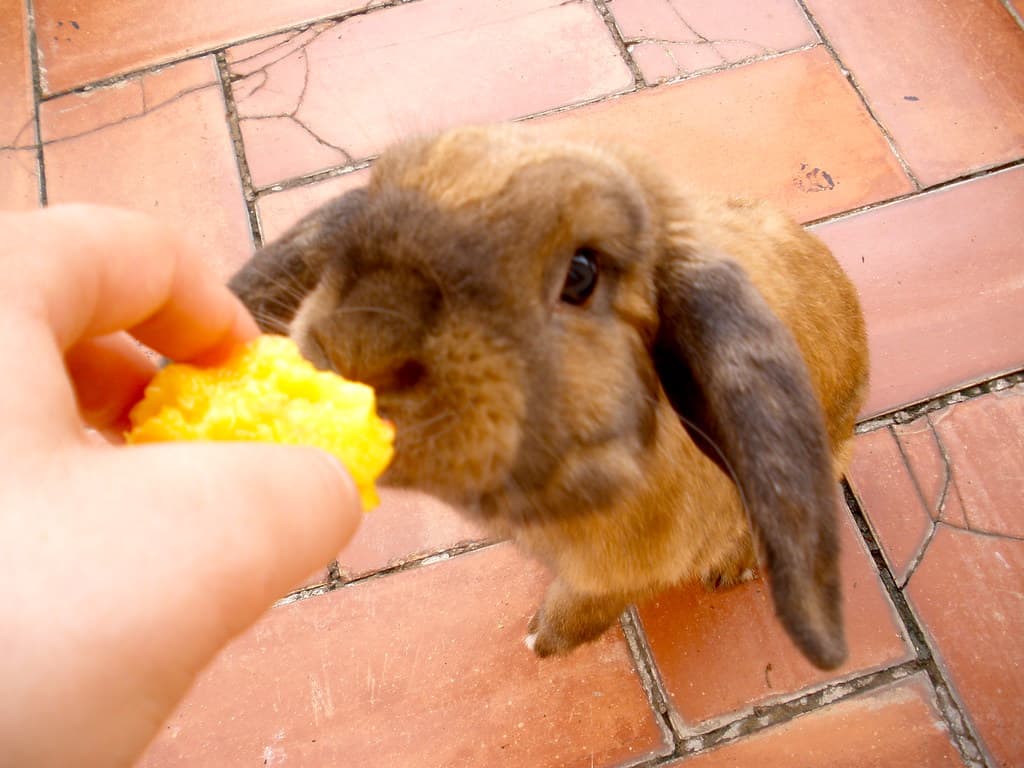
There are several situations where you should skip nectarines entirely and stick to hay and water:
- Digestive upset: If your rabbit has soft stool, diarrhea, or is producing uneaten cecotropes, remove all treats immediately. Offer only unlimited timothy hay and fresh water until their droppings return to normal. If symptoms persist beyond 24 hours, contact your veterinarian.
- GI stasis: A rabbit showing signs of GI stasis (reduced or no droppings, hunched posture, loss of appetite, bloated belly) needs veterinary attention, not treats. GI stasis is a medical emergency.
- Post-surgery recovery: After spaying, neutering, or any surgical procedure, stick to your vet's recommended recovery diet. Fruit can sometimes cause gas, which is painful for a recovering rabbit.
- Obesity: If your rabbit is overweight, cut out all fruit treats. The sugar content only contributes to further weight gain. Focus on increasing exercise and providing unlimited hay instead.
- Dental problems: Rabbits with malocclusion or other dental issues may struggle with the sticky texture of fruit. The sugar can also worsen dental decay in rabbits with compromised teeth.
When in doubt, err on the side of caution. Hay alone provides everything a rabbit needs nutritionally. Treats like nectarines are a bonus, never a necessity.
What Are the Risks of Overfeeding Nectarines to Rabbits?
Feeding too many nectarines, or feeding them too frequently, can cause several health problems. The high sugar content is the main culprit, as it disrupts the balance of beneficial bacteria in your rabbit's cecum.
Gastrointestinal Stasis
When a rabbit fills up on sweet treats instead of fiber-rich hay, gut motility slows down. This can lead to gastrointestinal stasis, a potentially fatal condition where the digestive system essentially shuts down. Signs include a sudden drop in droppings, a bloated abdomen, teeth grinding from pain, and refusal to eat.
Diarrhea and Soft Cecotropes
Excess sugar causes an overgrowth of harmful bacteria in the cecum, leading to diarrhea or abnormally soft cecotropes. You may notice mushy droppings stuck to your rabbit's fur around their hindquarters. This is often called "poopy butt" and is a clear sign that the diet contains too much sugar and not enough fiber.
Obesity
Nectarines contain roughly 44 calories per 100 grams, which might not sound like much, but for a 4-pound rabbit whose daily caloric needs are only around 200 to 250 calories, a few extra tablespoons of fruit every day adds up quickly. Obese rabbits face higher risks of heart disease, liver problems (hepatic lipidosis), sore hocks, and difficulty grooming, which leads to uneaten cecotropes.
Dental Issues
The natural sugars in nectarines can contribute to tooth decay and worsen existing dental problems. Rabbit teeth grow continuously and need the abrasive action of hay to wear down properly. If a rabbit is choosing sweet treats over hay, their teeth may become overgrown, leading to painful spurs and abscesses.
Selective Feeding
Rabbits have a strong sweet tooth and can become "picky eaters" if given too many fruit treats. They may start refusing hay and pellets in favor of waiting for more nectarines. This behavioral pattern is dangerous because it leads to nutritional deficiencies and reduced fiber intake over time.
How to Prepare Nectarines for Your Rabbit
Proper preparation takes less than a minute and makes nectarines much safer for your rabbit. Follow these steps:
- Wash thoroughly: Rinse the nectarine under running water and gently scrub the skin to remove any pesticide residue, wax, or dirt. Organic nectarines are ideal, but washing conventional ones well is acceptable.
- Remove the pit completely: Cut the nectarine in half and twist to separate. Remove the pit and discard it. Check that no pit fragments remain in the flesh.
- Cut into small pieces: Dice the flesh into pea-sized cubes. Small pieces are easier for your rabbit to eat and reduce the risk of choking.
- Serve at room temperature: Cold fruit straight from the fridge can cause mild digestive discomfort. Let the pieces sit for a few minutes before offering them.
- Remove uneaten pieces: After 2 to 3 hours, remove any nectarine pieces your rabbit hasn't eaten. Fruit spoils quickly at room temperature and can attract flies, especially in outdoor hutches.
You can leave the skin on. It contains additional fiber and most rabbits eat it without any issues. Just make sure you've washed it well.
Nectarines vs. Peaches: What's the Difference for Rabbits?
Nectarines and peaches are actually the same species (Prunus persica). The only genetic difference is a single gene that determines whether the skin is fuzzy (peach) or smooth (nectarine). Nutritionally, they are nearly identical.
| Factor | Nectarine | Peach |
|---|---|---|
| Calories (per 100g) | 44 kcal | 39 kcal |
| Sugar (per 100g) | 7.9g | 8.4g |
| Fiber (per 100g) | 1.7g | 1.5g |
| Vitamin A | 332 IU | 326 IU |
| Skin texture | Smooth | Fuzzy |
| Safe for rabbits? | Yes (flesh only) | Yes (flesh only) |
Both fruits follow the same feeding rules: remove the pit, wash the skin, cut into small pieces, and limit to 1 to 2 times per week. If your rabbit enjoys peaches, they'll almost certainly enjoy nectarines too, and vice versa. Just remember to count both toward the total weekly fruit allowance. Don't give peaches on Monday and nectarines on Wednesday, as that's too much fruit in one week for most rabbits.
Safe Fruit Alternatives to Nectarines
Variety is good for enrichment, so rotating through different safe fruits keeps your rabbit interested. Here are some alternatives that follow the same 1 to 2 times per week rule:
- Blueberries: Low in sugar compared to other fruits, high in antioxidants. A favorite for training rewards due to their small size.
- Strawberries: Most rabbits love these. Remove the green tops or leave them on; both are safe.
- Cherries: Safe flesh, but always remove the pit and stem. Same cyanide concern as nectarine pits.
- Apples: A classic rabbit treat. Remove all seeds and the core. The skin is fine to leave on.
- Watermelon: High water content makes this great for hot days. Remove seeds and limit the rind.
- Pears: Similar sugar content to nectarines. Remove seeds and core before serving.
- Raspberries: Lower sugar than most fruits and rich in fiber. Leaves are also safe for rabbits.
Regardless of which fruit you choose, the total weekly fruit intake should stay within the recommended limits. Don't stack multiple fruits in the same day.
Can Rabbits Eat Dried or Canned Nectarines?
No. Avoid both dried and canned nectarines for your rabbit.
Dried nectarines have roughly 3 to 4 times the sugar concentration of fresh nectarines because the water has been removed. A small piece of dried nectarine delivers far more sugar per gram than the equivalent amount of fresh fruit. This concentrated sugar load can easily overwhelm your rabbit's digestive system.
Canned nectarines are even worse. They're typically packed in sugar syrup, which can contain added preservatives, citric acid, and artificial sweeteners. Some artificial sweeteners are outright toxic to small animals. Even canned nectarines packed in "natural juice" contain significantly more sugar than fresh fruit.
Always stick to fresh, raw nectarines. If fresh nectarines aren't in season, choose a different fruit rather than reaching for a dried or canned alternative.
Can Rabbits Eat Nectarine Skin?
Yes, nectarine skin is safe for rabbits and actually provides a bit more fiber than the flesh alone. Most rabbits eat the skin without any issue since nectarine skin is smooth (unlike the fuzzy skin of a peach, which some rabbits dislike).
The only precaution is pesticide residue. Nectarines appear on the Environmental Working Group's "Dirty Dozen" list of produce with the highest pesticide residues. If you're feeding conventional (non-organic) nectarines, wash them under running water for at least 30 seconds and gently scrub the surface. Better yet, choose organic when possible.
Signs Your Rabbit Ate Too Many Nectarines
Even careful owners sometimes misjudge portions, or a rabbit gets into a fruit bowl left within reach. Watch for these signs that your rabbit has eaten too much nectarine:
- Soft or runny droppings: The first and most common sign. Normal rabbit droppings are firm, round, and dry. If they become soft, mushy, or have a strong odor, cut out all treats immediately.
- Uneaten cecotropes: You'll see small clusters of shiny, grape-like droppings stuck to the cage floor or your rabbit's fur. Healthy rabbits eat their cecotropes directly, so finding them left behind indicates digestive disruption.
- Reduced appetite for hay: If your rabbit suddenly loses interest in hay after eating nectarines, the sugar has likely suppressed their appetite. This is concerning because hay is essential for gut health.
- Bloating or gas: A rabbit with a swollen, tight belly that feels hard to the touch may be experiencing gas from excess fruit sugar. This can progress to GI stasis if not addressed.
- Lethargy: A rabbit that's unusually quiet, sitting hunched in a corner, or not responding to their normal stimuli may be in discomfort from digestive upset.
If you notice any of these signs, remove all treats, provide unlimited hay and fresh water, and monitor closely. If symptoms worsen or persist beyond 12 hours, contact your rabbit-savvy veterinarian immediately.
Frequently Asked Questions
Can baby rabbits eat nectarines?
No. Rabbits must be at least 7 months old before eating any fruit, including nectarines. Young rabbits have sensitive digestive systems that cannot handle the sugar content in fruit. Stick to hay, age-appropriate pellets, and slowly introduced leafy greens until they reach 7 months.
Can rabbits eat nectarine pits?
Absolutely not. Nectarine pits contain amygdalin, which breaks down into hydrogen cyanide during digestion. The pit is also large enough to cause choking or intestinal blockage. Always remove the pit completely and check for any remaining fragments before serving nectarine to your rabbit.
How often can I give my rabbit nectarines?
Limit nectarines to 1 to 2 times per week, and count any other fruit treats toward this total. For example, if you give your rabbit blueberries on Tuesday, wait until at least Friday before offering nectarines. Total weekly fruit intake should stay within the portion guidelines for your rabbit's size.
Are nectarines better than peaches for rabbits?
Nectarines and peaches are nutritionally almost identical. The main difference is skin texture: nectarines have smooth skin while peaches are fuzzy. Some rabbits prefer one over the other, but both are equally safe and should be fed in the same portions with the same frequency limits.
Can rabbits eat frozen nectarines?
It's best to avoid frozen nectarines. Very cold food can cause mild digestive discomfort in rabbits. If you only have frozen nectarines available, thaw them completely to room temperature before serving. However, fresh nectarines are always the preferred option.
Cite this article:
BunnySync (February 26, 2026) Can Rabbits Eat Nectarines? Safe Feeding Guide for 2026. Retrieved from https://bunnysync.com/blog/can-rabbits-eat-nectarines.
"Can Rabbits Eat Nectarines? Safe Feeding Guide for 2026." BunnySync - February 26, 2026, https://bunnysync.com/blog/can-rabbits-eat-nectarines