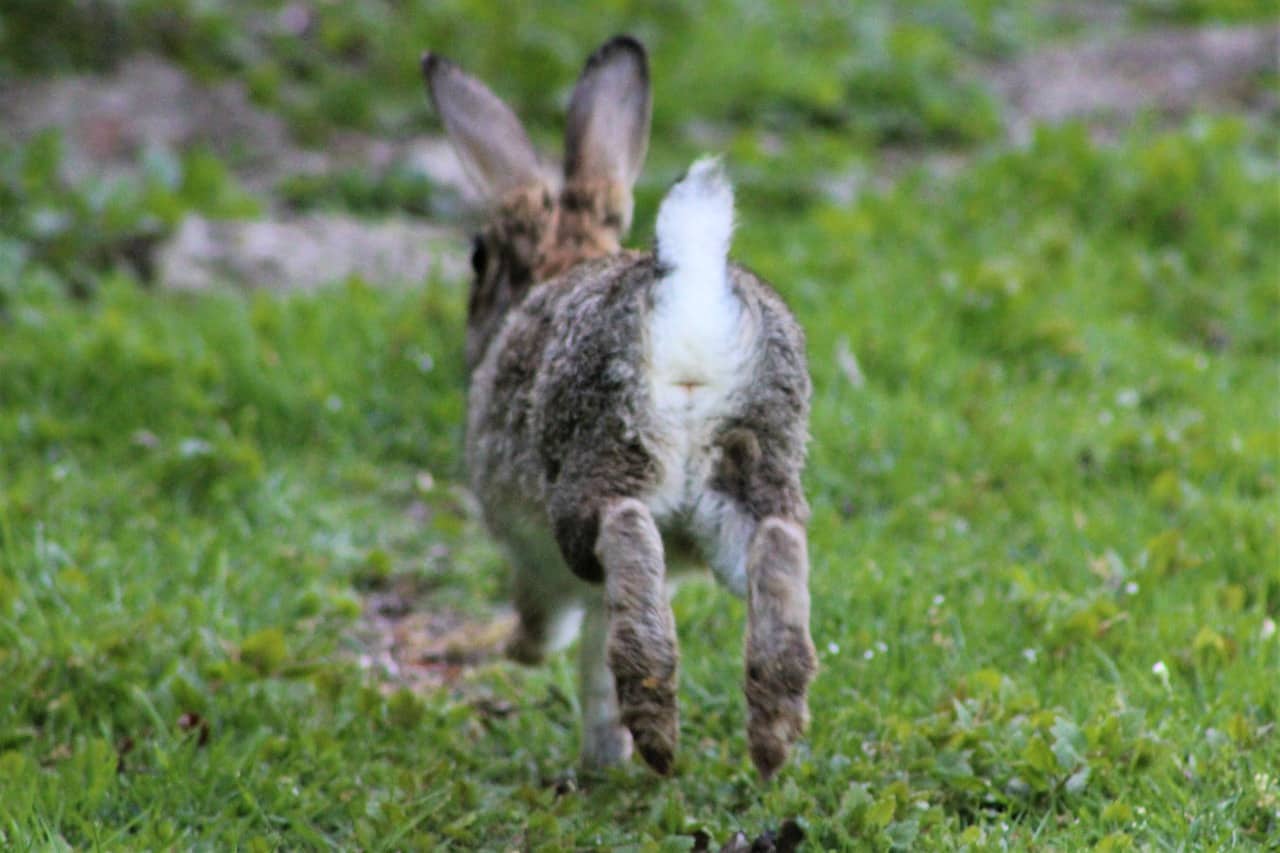
No, rabbits are not stupid. Rabbits are surprisingly intelligent animals that can learn tricks, recognize their names, solve problems, and form complex social bonds. The misconception that rabbits are unintelligent comes from comparing them to predator animals like dogs and cats, but rabbit intelligence simply works differently because they are prey animals wired for survival.
As breeders who have worked with hundreds of rabbits over the years, we can tell you firsthand that rabbits demonstrate intelligence in ways that catch most people off guard. From navigating obstacle courses to manipulating their owners for treats, rabbits are far more clever than they get credit for.
In this guide, we break down exactly how rabbit intelligence works, what science says about their cognitive abilities, and how you can see your own rabbit's smarts in action.
How Intelligent Are Rabbits, Really?
Rabbits possess a level of cognitive ability that rivals many popular pets. Research published in the journal Animal Cognition has shown that rabbits can learn through classical and operant conditioning, meaning they form associations between actions and outcomes just like dogs do.
Here are some specific cognitive abilities rabbits demonstrate:
- Memory retention: Rabbits remember spatial layouts of their environment for months. If you rearrange their living space, they will notice immediately and investigate every change.
- Name recognition: Most rabbits learn to respond to their name within a few weeks of consistent use, especially when paired with a treat reward.
- Problem solving: Rabbits can figure out puzzle feeders, unlatch cage doors, and navigate mazes. Some breeders report rabbits learning to open specific types of latches after watching humans do it just a few times.
- Social learning: Rabbits housed together often learn behaviors from each other, including litter box habits and foraging techniques.
- Time awareness: Rabbits develop strong internal clocks. They know when feeding time is and will remind you, often by thumping, nudging their bowl, or rattling cage bars at the exact same time each day.

Why Do People Think Rabbits Are Stupid?
The "rabbits are dumb" myth persists for several reasons, and most of them have nothing to do with actual rabbit intelligence.
Rabbits Are Prey Animals, Not Predators
Dogs and cats are predator species that evolved to interact with humans as hunting partners or pest controllers. Centuries of selective breeding reinforced traits like eagerness to please, eye contact, and responsiveness to commands.
Rabbits, on the other hand, are prey animals. Their survival depends on being cautious, quiet, and alert. A rabbit's first response to a new situation is to freeze or flee, which people mistake for a lack of understanding. In reality, the rabbit is processing threats at an incredible speed. Their natural defense mechanisms are a sign of heightened awareness, not stupidity.
Rabbits Show Intelligence Differently
A dog will fetch a ball because it has been bred for thousands of years to retrieve. A rabbit will not fetch a ball because, in the wild, running toward a moving object could mean running toward a predator. That does not make the rabbit less intelligent. It means the rabbit is making a survival-based decision.
Rabbits show their smarts through:
- Mapping their environment and remembering escape routes
- Recognizing individual humans and animals by sight and smell
- Communicating needs through specific behaviors (nudging, thumping, circling)
- Learning routines and anticipating events
People Do Not Spend Enough Time With Rabbits
Many rabbit owners keep their rabbits in a cage or hutch with minimal interaction. A rabbit that sits in a cage all day with no stimulation will not display intelligent behavior for the same reason a dog locked in a crate all day will seem listless. Intelligence requires stimulation to develop and express itself.
When rabbits are given free-roam time, enrichment toys, and regular interaction, their personalities and intelligence shine through. If your rabbit seems scared or anxious, it may be a matter of building trust rather than a reflection of low intelligence.
What Can Rabbits Be Trained to Do?
Rabbits respond extremely well to positive reinforcement training, particularly clicker training. The same method professional animal trainers use with dolphins, parrots, and dogs works with rabbits.
Tricks Rabbits Can Learn
| Trick | Difficulty Level | Average Training Time |
|---|---|---|
| Come when called | Easy | 1-2 weeks |
| Spin in a circle | Easy | 3-5 days |
| Stand up (beg) | Easy | 1 week |
| High five | Medium | 2-3 weeks |
| Jump through a hoop | Medium | 2-4 weeks |
| Agility course | Advanced | 1-2 months |
| Fetch (retrieve small objects) | Advanced | 1-3 months |
Litter Training as Proof of Intelligence
One of the strongest pieces of evidence for rabbit intelligence is their ability to be litter trained. Most rabbits can learn to use a litter box within one to two weeks, and some pick it up in just a few days.
Rabbits naturally prefer to do their business in one spot, which means they already have the cognitive framework for this behavior. You are not teaching them something entirely new. You are redirecting an existing preference.
Even older rabbits can be litter trained successfully, which speaks to their ability to learn new habits regardless of age. One thing that does help tremendously is getting your rabbit neutered or spayed. Unfixed rabbits have a hormonal drive to spray urine as territorial marking, which makes litter training harder (but not impossible).
How Clicker Training Works With Rabbits
The clicker method follows a simple sequence:
- Your rabbit performs the desired behavior (or a step toward it).
- You immediately click the clicker to mark the exact moment.
- You give a small treat reward within 1-2 seconds of the click.
- Repeat until the rabbit associates the behavior with the reward.
Sessions should be kept short, around 3-5 minutes, because rabbits have shorter attention spans than dogs. But this is not a sign of lower intelligence. It simply reflects their prey-animal wiring. In the wild, staying focused on one thing for too long could be fatal.
Rabbit Emotional Intelligence
Intelligence is not just about learning tricks. Emotional intelligence, the ability to feel, express, and respond to emotions, is a critical form of cognition. Rabbits score remarkably high in this area.
Emotions Rabbits Experience
Rabbits experience a wide range of emotions, including:
- Happiness: Expressed through binkies (jumping and twisting mid-air), zoomies, and soft tooth purring.
- Fear: Shown by freezing, thumping, or bolting to a hiding spot.
- Anger: Displayed through grunting, lunging, or boxing with front paws.
- Grief: Rabbits mourn the loss of bonded partners. Some stop eating, become lethargic, or even die of loneliness after losing their companion.
- Affection: Shown by licking, grooming, nudging, and choosing to sit near their favorite human.
- Jealousy: Rabbits may act out when attention is given to another pet or even another person.
Rabbits Form Complex Social Bonds
Rabbits are deeply social animals that form hierarchies, establish friendships, and grieve losses. In bonded pairs, rabbits groom each other, sleep pressed together, and become visibly distressed when separated.
This level of social cognition requires significant brain power. The rabbit must recognize individuals, remember past interactions, gauge social dynamics, and adjust behavior accordingly. These are not the actions of a "stupid" animal.
Are Wild Rabbits Smarter Than Pet Rabbits?
Wild rabbits face life-or-death challenges daily, and only the sharpest survive. A wild cottontail must memorize dozens of escape routes, detect predators using subtle environmental cues (shadow movement, wind shifts, vibrations), and make split-second decisions about whether to freeze or flee.
According to research from the Encyclopaedia Britannica, wild European rabbits build complex warren systems with multiple exits, ventilation shafts, and separate chambers for nesting and sleeping. This level of architectural planning requires spatial intelligence that many mammals do not possess.
Domestic rabbits have been selectively bred for traits like coat color, body type, and temperament rather than survival instincts. This means wild rabbits likely have a sharper "street smart" intelligence, while domestic rabbits may have a higher capacity for human-directed learning because they are less fearful overall.
Neither type is "smarter" in absolute terms. They simply apply their intelligence to different challenges.
How to See Your Rabbit's Intelligence in Action
If you want proof that your rabbit is smarter than you think, try these simple tests at home:
1. The Name Test
Say your rabbit's name from another room in a calm voice. If your rabbit has bonded with you and associates its name with positive interactions, it will perk up, turn toward the sound, or come to you. Most rabbits pass this test within a month of ownership.
2. The Puzzle Feeder Test
Hide a treat inside a toilet paper roll with the ends folded shut. Place it near your rabbit. Most rabbits will figure out how to tear open the roll and retrieve the treat within minutes. Some will even learn to unroll the folds rather than destroy the whole tube.
3. The Routine Test
Feed your rabbit at the exact same time for two weeks, then skip that time by 30 minutes. Your rabbit will likely be at its food bowl, thumping, or showing signs of anticipation at the usual time. This proves they have internalized a time-based routine.
4. The Social Recognition Test
Have a family member and a stranger both sit on the floor near your rabbit. In most cases, the rabbit will approach the familiar person first and may avoid or cautiously investigate the stranger. This shows individual recognition and memory.
5. The Obstacle Course
Set up a simple obstacle course with tunnels, ramps, and platforms. After a few sessions of guided exploration with treat rewards, most rabbits will navigate the course independently. Some will even invent their own routes.
Smartest Rabbit Breeds
While individual personality matters more than breed, some breeds are consistently noted by breeders as being particularly quick learners:
| Breed | Known For | Trainability |
|---|---|---|
| Holland Lop | Curious, social, eager to interact | High |
| Mini Rex | Calm, observant, quick learners | High |
| Netherland Dwarf | Alert, energetic, fast problem solvers | Medium-High |
| Flemish Giant | Gentle, food-motivated, trainable | High |
| Rex | Affectionate, attentive, responsive | High |
| Lionhead | Playful, inquisitive, strong memory | Medium |
Keep in mind that mixed-breed rabbits can be just as smart or smarter than purebreds. Intelligence in rabbits, as in all animals, varies widely between individuals.
How to Keep Your Rabbit Mentally Stimulated
A bored rabbit is an unhappy rabbit, and an unhappy rabbit will not display its full intelligence. Here are proven ways to keep your rabbit's mind active:
- Rotate toys weekly: Rabbits get bored with the same toys. Swap them out every week to keep things fresh.
- Use puzzle feeders: Scatter pellets in a foraging mat or hide treats in cardboard boxes with holes cut in them.
- Provide digging boxes: Fill a large box with shredded paper or child-safe sand. Digging is a natural behavior that engages both body and brain.
- Create exploration zones: Rearrange furniture or add new tunnels to your rabbit's play area periodically. Novel environments stimulate curiosity and spatial mapping.
- Train regularly: Even 3-5 minutes of clicker training per day builds mental sharpness and strengthens your bond.
- Provide a companion: A bonded partner gives your rabbit social stimulation that no toy can replace. According to the RSPCA, rabbits are happier and more mentally engaged when housed with a compatible companion.
Frequently Asked Questions
Are rabbits smarter than cats?
Rabbits and cats have different types of intelligence. Cats excel at hunting-based problem solving, while rabbits excel at spatial memory and social cognition. Neither is definitively "smarter," but rabbits can learn tricks and routines just as effectively as cats when trained with positive reinforcement methods.
Can rabbits recognize their owners?
Yes, rabbits recognize their owners by sight, sound, and smell. They will approach familiar people, respond to their names, and show clear preferences for their primary caregiver. Most rabbits learn to distinguish their owner from strangers within the first few weeks of bonding.
Do rabbits understand words?
Rabbits do not understand language the way humans do, but they learn to associate specific sounds with outcomes. They can learn their name, simple commands like "come" or "no," and even tone of voice. A calm tone relaxes them, while a sharp tone signals danger.
Why does my rabbit seem dumb?
If your rabbit seems unintelligent, it is likely stressed, under-stimulated, or not yet trusting of its environment. Rabbits that are kept in small cages with little interaction will appear passive and unresponsive. Give your rabbit more space, enrichment, and bonding time, and its intelligence will become obvious.
What is the IQ of a rabbit?
There is no standardized IQ test for rabbits. However, comparative cognition studies suggest rabbits have cognitive abilities roughly comparable to cats in areas like memory, spatial reasoning, and social learning. They can learn sequences, solve simple puzzles, and adapt their behavior based on past experience.
Cite this article:
Cite this article:
BunnySync (March 11, 2026) Are Rabbits Stupid? The Truth About Rabbit Intelligence. Retrieved from https://bunnysync.com/blog/are-rabbits-stupid.
"Are Rabbits Stupid? The Truth About Rabbit Intelligence." BunnySync - March 11, 2026, https://bunnysync.com/blog/are-rabbits-stupid